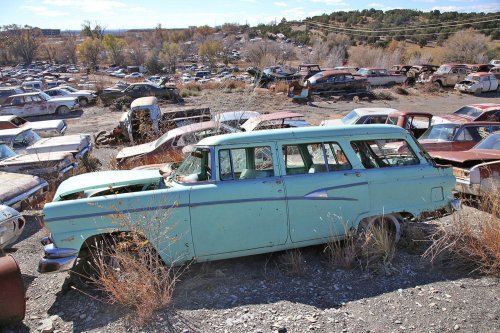
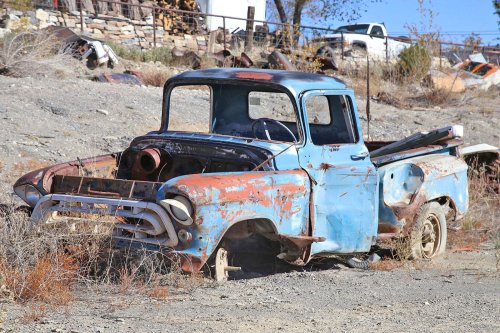
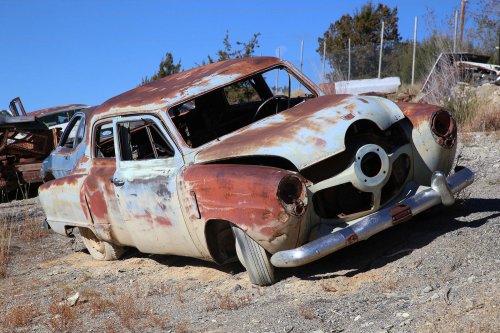
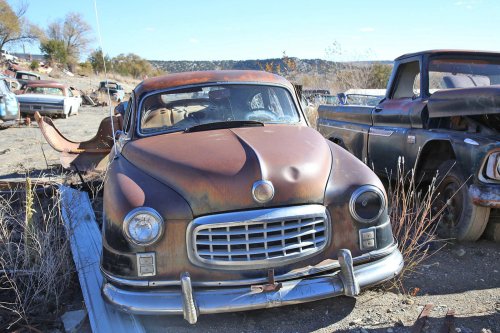
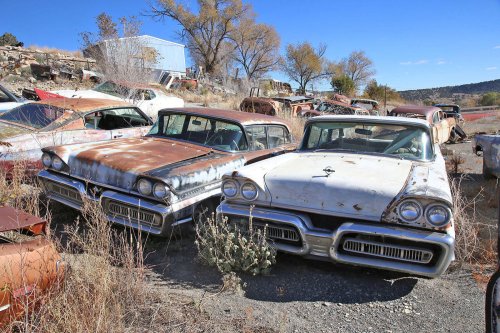
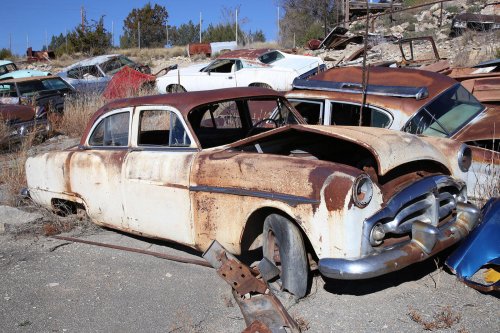
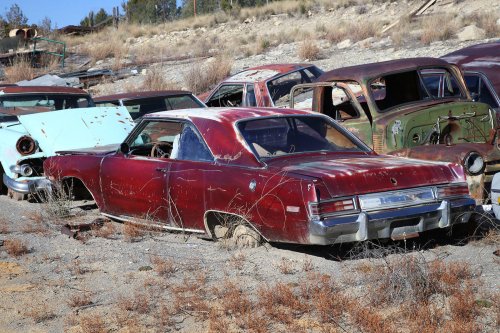
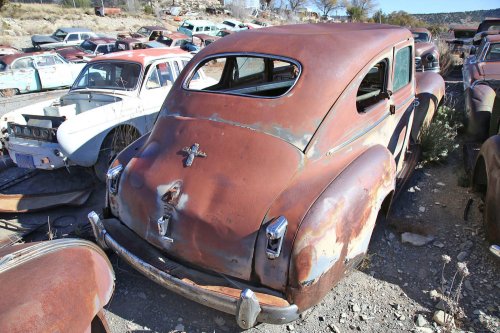
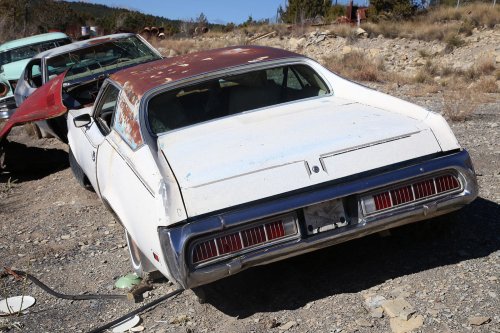
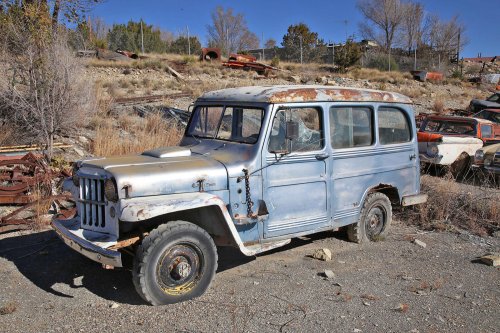
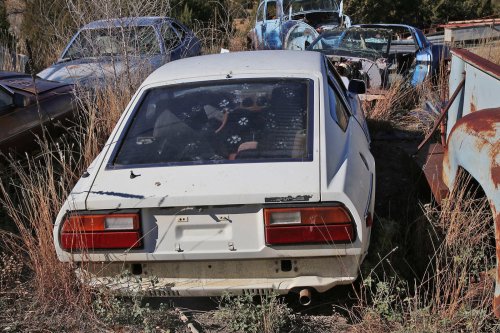
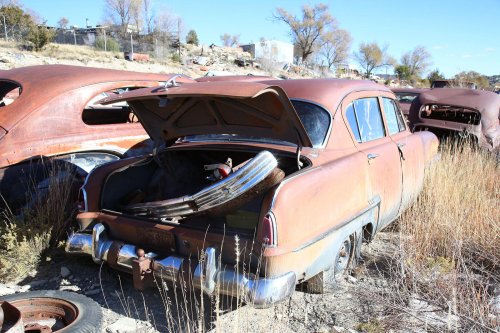
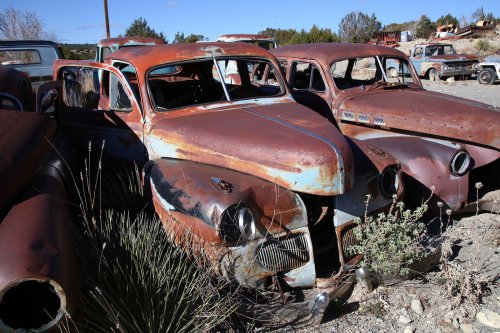
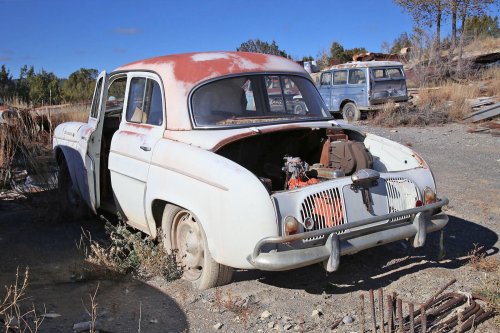
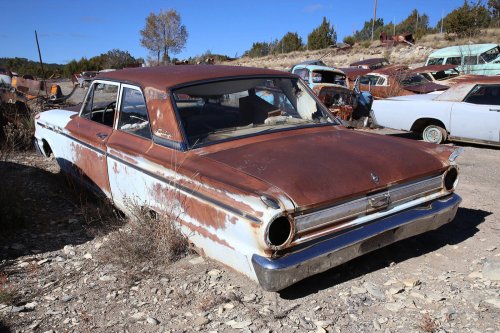
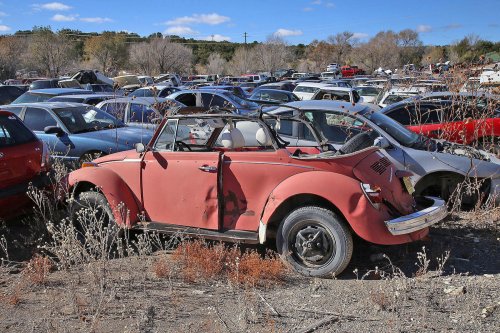
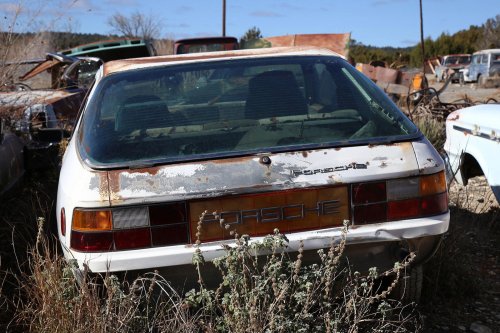
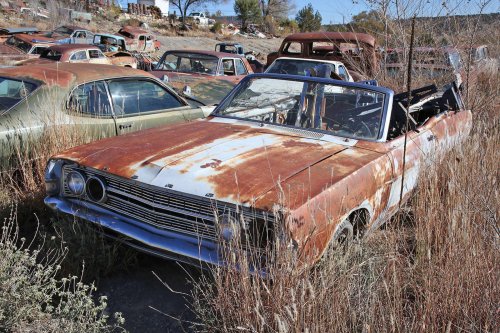
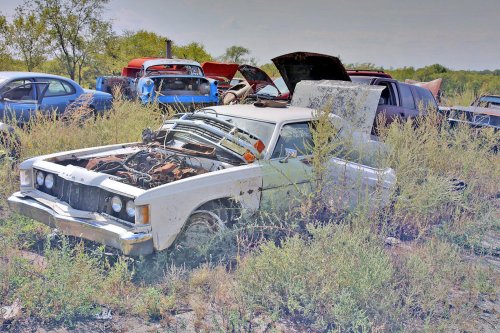
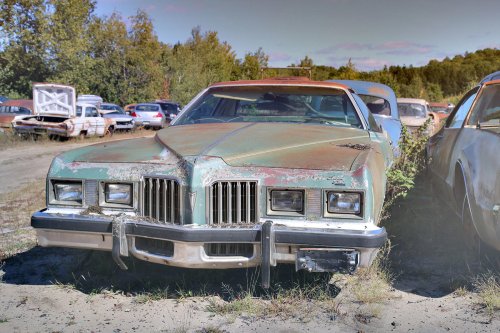
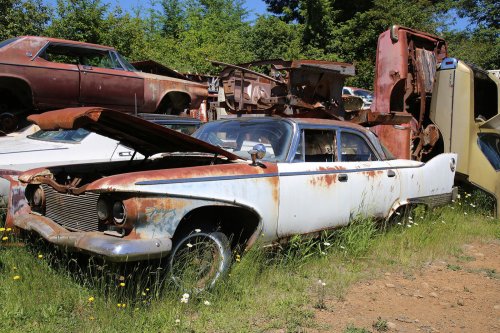
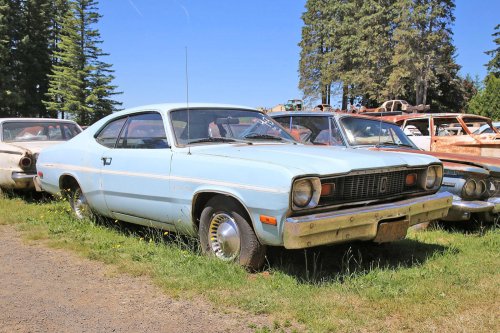
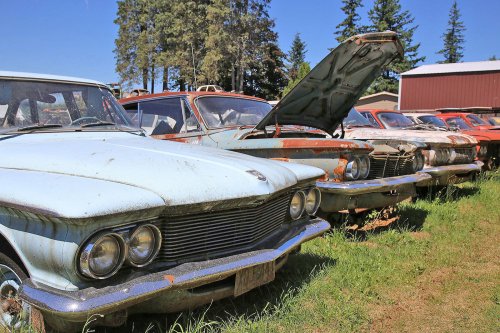
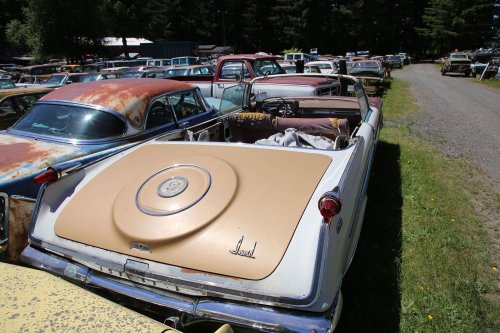
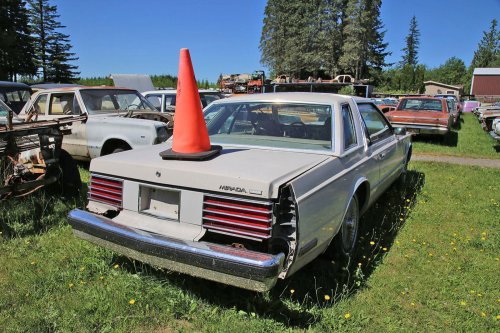
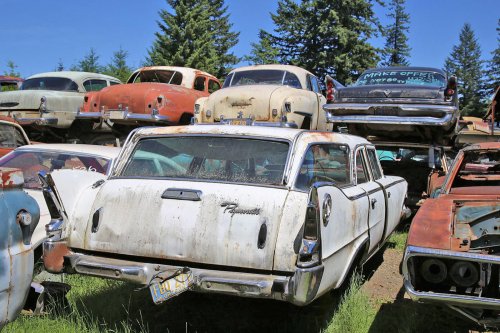
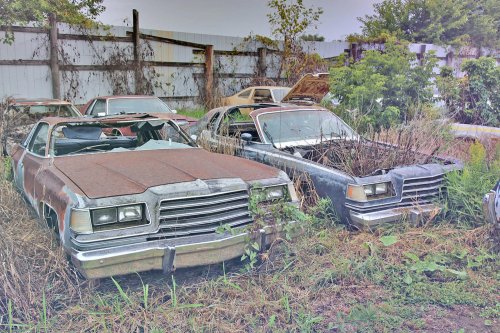
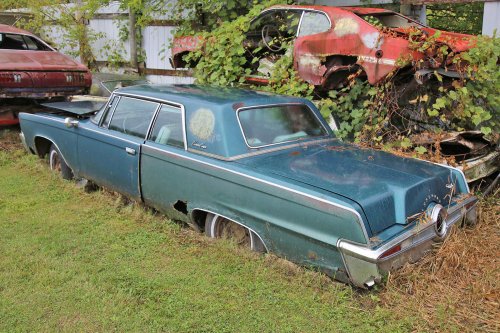
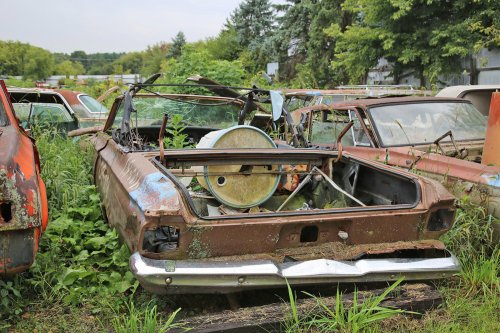
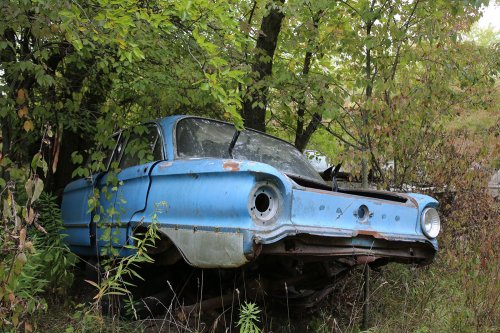
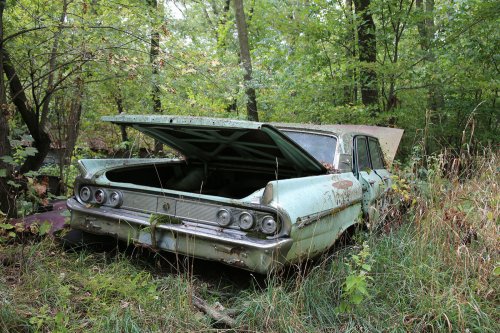
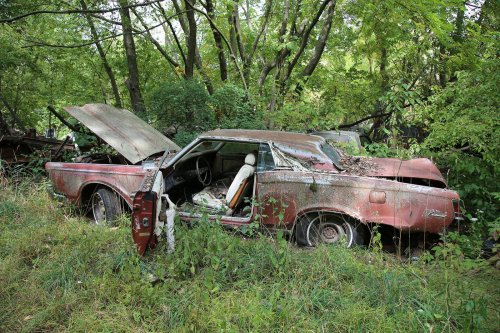
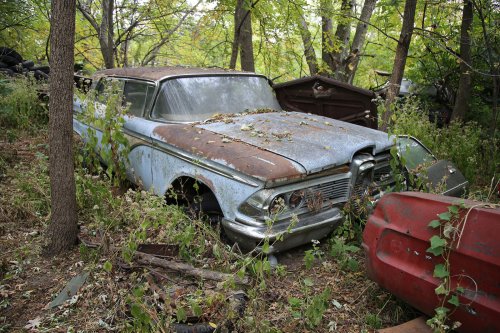
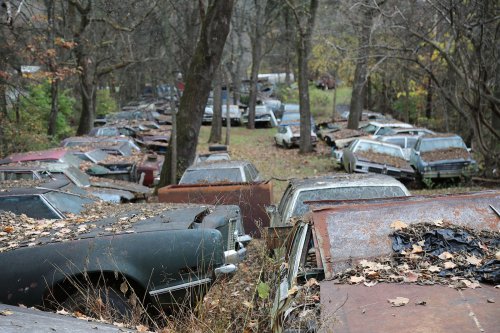
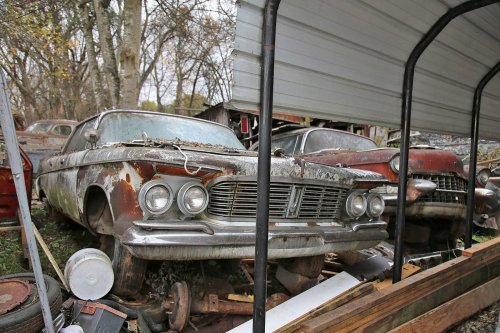
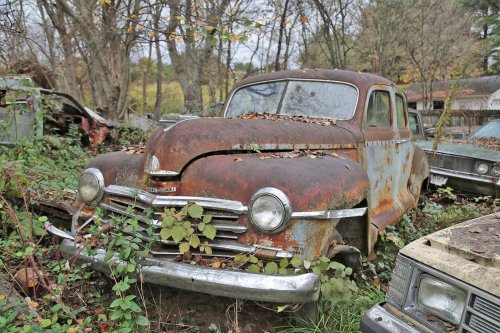
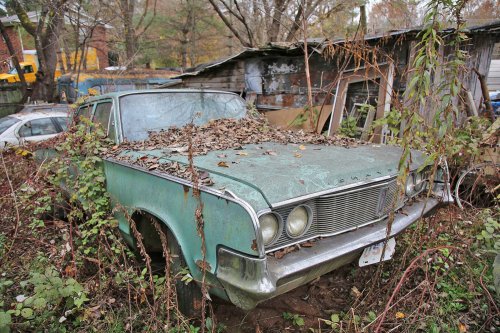
While it may not have the glitz and glamor of its Nevada namesake, the town of Las Vegas, New Mexico is well worth a visit.This place has been used as the location for so many Hollywood films – including Convoy, No Country for Old Men and Easy Rider.Ulibarri’s Auto Towing ServiceBut for us, the real highlight of our visit was Ulibarri’s Auto Towing & Repair. Sprawled over the hillside were a few hundred old cars and trucks. Las Vegas, New Mexico may not have any casinos, but we certainly hit the jackpot when we found this place.FORD COUNTRY SEDAN - 1956This photograph gives you an idea of how large Ulibarri’s Auto Towing & Repair is. During our visit, most of the classics, like this 1956 Ford Country Sedan Wagon, were grouped together at the top of the hill. There were a handful of post-War cars, but the majority of vehicles dated back to the 1950s, 1960s and 1970s. In the distance you can see the younger vehicles, which made up the bulk of the stock.CHEVROLET TRUCK - 1957Like many of the vehicles at Ulibarri’s, this stepside truck had definitely seen better days. In fact there appeared to be very little on it worth saving.The Chevrolet Task Force series (1955 to 1959) featured wrap-around windscreens, which were a first for a truck. This one dated to 1957, and was one of more than 350,000 commercial vehicles to wear a Chevrolet badge that year.STUDEBAKER CHAMPION - 1950While this 1950 Studebaker Champion four-door saloon stood little chance of ever driving again, there was no reason why its rust-free body panels couldn’t have been saved.The Champion was built from 1939 to 1958, spanning five generations, before finally being replaced by the Lark. 1950 would be the brand’s most successful year from a sales point of view, with 320,884 finding buyers.NASH AMBASSADORIn order to set itself apart from the Big Three in Detroit, Nash President George Mason decided he wanted his cars to stand out from the crowd. Well he certainly succeeded with the Airflyte Ambassador.Designed using a wind tunnel, it was billed as "the most streamlined form on the road". They were made between 1949 and 1951, but we were unsure of the exact year this example was built.MERCURY MONTCLAIRS - 1958Finding one 1958 Mercury Montclair in a salvage yard is rare enough, but a pair is almost unheard of. Although both were a bit rough, they were solid, and appeared to be complete. On the left is a four-door hardtop sedan, one of just 3609 built. The two-door hardtop coupe on the right sold slightly better, achieving 5012 sales.PACKARD 200 - 1951The 200 series was Packard’s poverty-spec car in 1951, riding on the smallest wheelbase and featuring the least powerful 4.7-liter eight-cylinder engine. It had a $2214 price tag (about $26,000 in today’s money), and achieved respectable sales of 24,000 units.The model only lasted for two years, becoming the Clipper in 1953.DODGE DART - 1974This appears to be a 1974 Dodge Dart, but we were confused by those taillights. Have they been switched from a similarly aged Plymouth Valiant?Judging by the way in which it had sunk into the dirt, it must have been sat in this same spot for a long time.CHRYSLER WINDSOR - 1941The dented roof on this 1941 Chrysler Windsor was likely caused by children jumping on it. We wonder if they were also responsible for smashing some of its windows? The Windsor was part of Chrysler’s line-up from the late 1930s to the early 1960s. When this one was built, the Windsor was an upmarket, more powerful version of the Royal.MERCURY COUGAR - 1973Although second generation Mercury Cougars were based on Ford Mustangs, they sold considerably less. This was one of 60,000 built in 1973, compared with 135,000 Mustangs.While they get some cold winters in this part of New Mexico, the roads aren’t gritted with salt. This helps to explain why this car’s bodywork was in such great shape. Surely it was worth saving.WILLYS JEEPThe Willys Jeep Station Wagon was decades ahead of its time, arguably being the world’s first SUV. Between 1946 and 1964 some 300,000 of them were built in the US, with very few changes to the external design. That said, we can at least narrow this one down to the 1950s, as it got a one-piece windshield from 1960. Incredibly, the car would remain in production in Brazil until 1977.At first glance this one looked to be in reasonable condition, but check out the corrosion on that rear wheel arch.DATSUN 280ZXLook at the paw prints that were on this Datsun 280ZX’s rear windshield - we wonder what animal they belonged to. The 280ZX was built in Japan between 1978 and 1983. It was a direct replacement for the 280Z, and although a completely redesigned car, it did share its predecessor’s driveline.They were badged as “Datsun by Nissan”, while the manufacturer gradually got its biggest export market used to its new global name.PLYMOUTH CRANBROOK - 1953The Plymouth Cranbrook had a short production run, lasting only from 1951 to 1953. Like its sister car the Cambridge, the Cranbrook was likely named after a street in Detroit, near to the Dodge factory, which in turn - in common with so many other places in America – was named after a place in England.This 1953 four-door example, complete with tow hitch, was one of the better cars at Ulibarri’s.FORD DELUXE - 1941A large number of cars at Ulibarri’s were missing their windows. And it’s no coincidence that the same vehicles had next to no interiors left. This 1941 Ford Deluxe is a good example, as it had nothing but bare rusted metal inside. Of the 255,504 Deluxes built that year, three-quarters were two-door Tudors like this.RENAULT DAUPHINEThe Renault Dauphine was hugely popular, selling more than 2 million units globally between 1956 and 1967. The economical French-made car, which was powered by an 845 cm3 rear-mounted engine, had mixed fortunes in the US. It was initially welcomed with open arms, achieving sales of 28,000, 57,000 and 102,000 in 1957, 1958 and 1959 respectively.Not only did this make it the second most popular imported car brand after Volkswagen, but in some states it took the top spot. However, despite being good in urban areas, with just 27 hp it was hopelessly underpowered for highway use, then crowded with big V8s. What’s more, it didn’t cope well with salt-strewn winter roads, and corroded badly. Demand diminished rapidly, and by the mid-1960s annual sales were down to 12,000 units.Fun Fact: Queen Elizabeth was once given a Dauphine, and her son – now King Charles – learned to drive in it.FORD FAIRLANE - 1963In 1963, when this Ford Fairlane rolled off the line, the US automobile industry celebrated its second-best production year in history. But while car sales reached 6.9 million (which was still 1 million down on 1955’s record), Ford only managed to grab a 1.5 million unit slice of the action. Meanwhile it was trounced by arch rival Chevrolet, which recorded an all-time high of 2,237,201.VOLKSWAGEN BEETLEThere can’t be a salvage yard anywhere in the US that doesn’t have at least one Volkswagen Beetle residing in it. After all, of the 21.5 million produced, close to five million went to America. They were the best-selling imported car for years, and due to their continued popularity, they have a high survival rate. However, it’s definitely more unusual to stumble upon a convertible. This appeared to be a relatively late car with fuel injection.PORSCHE 924The Porsche 924 was a sales success, with 150,000 finding buyers between 1976 and 1988. Of these, almost 37,000 of them were exported to the US, and we found two of them residing in Ulibarri’s. While this is a base model, the yard also had a rarer 924S.The same basic 2.0-liter four-cylinder engine was also utilized by the Audi 100, Volkswagen LT van, AMC Gremlin, Spirit and postal van.FORD FAIRLANE CONVERTIBLE - 1968In decent condition, 1968 Ford Fairlane convertibles fetch relatively big bucks, due to their rarity. After all, of the 371,787 examples built, less than 4,000 were ragtops. However, this one was far from being a decent example. While the bodywork appeared to be solid, it was a very different story inside the car.It must have parted company with its soft top decades ago, and the entire interior had completely rotted out.OLDSMOBILE F85 - 1964Of the 156,490 F-85s built by Oldsmobile in 1964, roughly one-third were four-door sedans like this. Power came from a choice of the standard 3.7-liter inline six or an optional 5.4-liter V8. If you opted for the six-cylinder, 60 mph would appear in 10.9 seconds. But with the hottest V8 under the hood, matched to the three-speed manual transmission, you could knock 4sec off that time.