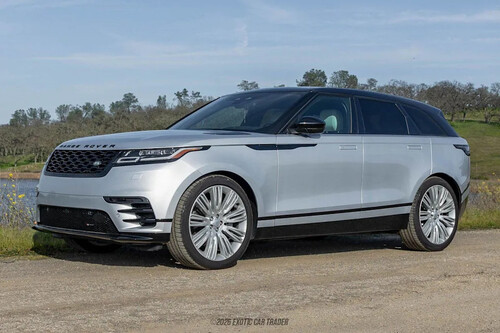
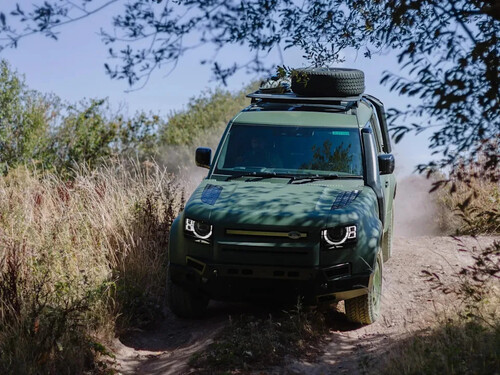
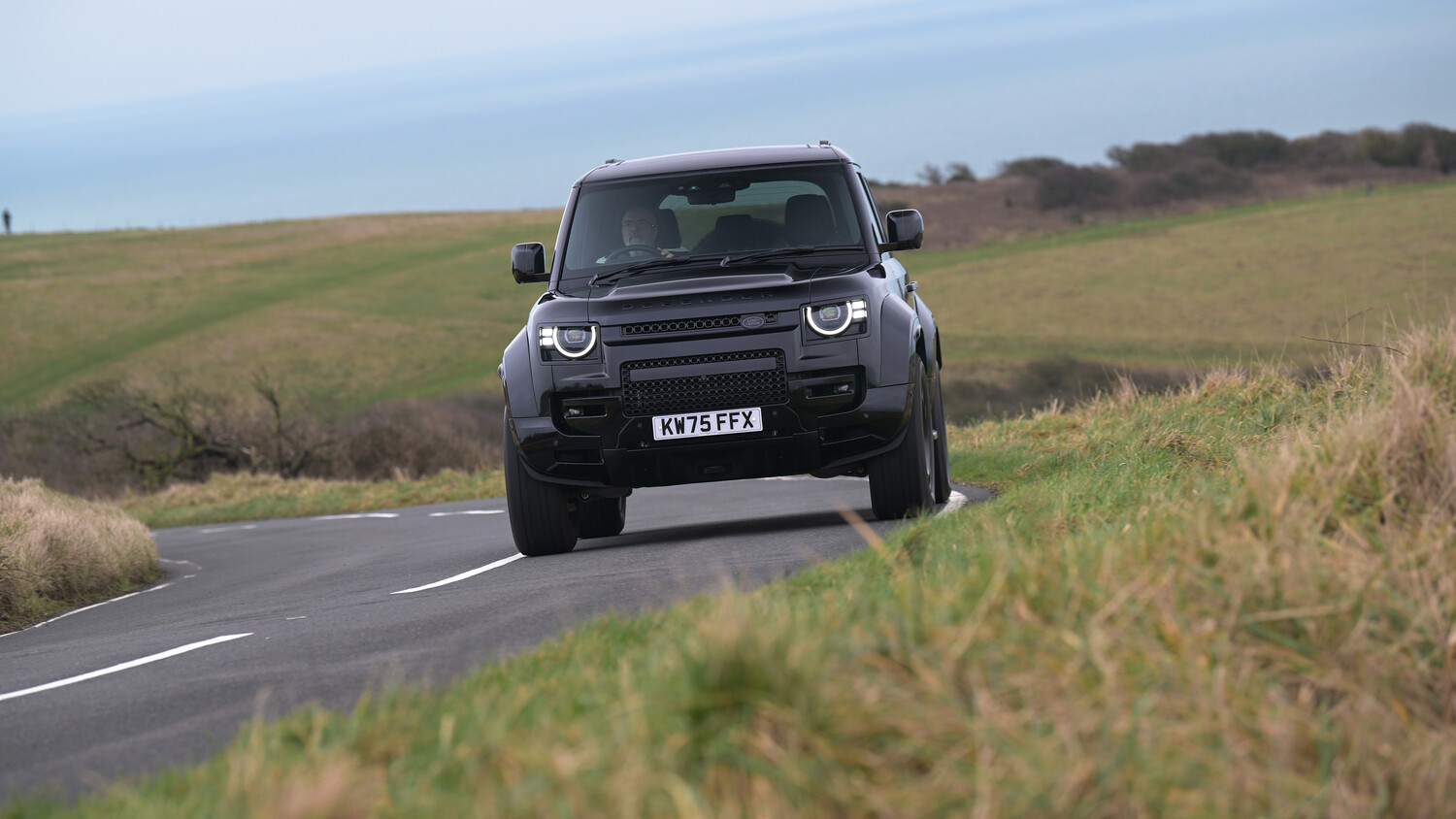
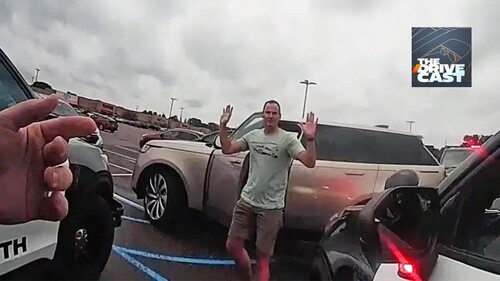
Screenshot Plymouth Police Department By now, millions of people have seen our story about how a series of errors between Flock Safety and law enforcement led police to track me for days via automated license plate cameras and ambush me in a coordinated takedown. Millions more have seen the body cam footage of the incident we obtained and published. It’s become part of an even larger and more heated conversation about privacy in America, and one week later, I’ve learned a lot more about how and why it happened—including from Flock itself. What I found is that the clear combination of human error, the limitations of Flock’s AI-powered system, and an overall lack of guardrails that led to me being detained on suspicion of grand theft auto was not a perfect storm. It’s a situation that has, can, and will continue to happen to anyone until large-scale changes are made by both Flock and law enforcement, neither of whom seem to know exactly how to work together to prevent it. And in fact, it just happened again. In the meantime, our story has already prompted the city council of Plymouth, MN, where I live and where the stop took place, to open a conversation about the use of Flock cameras within the city. The Plymouth Police Department has a transparency portal as part of its Flock setup and it notes there are currently 18 cameras in the city and they have read over 580,000 license plates in the last 30 days with over 14,800 hotlist hits, which I was one of, and 45 manual user searches. How It Happened A brief recap: a few weeks ago I’d taken the $155,000 Range Rover I was testing out to run some errands with my wife in Plymouth, Minnesota. I was backing out of a parking space in front of my local Kohl’s when four cop cars came screaming up and “initiated a box and pin on the vehicle,” as the police report says. Hands on their guns, the officers ordered us out of the vehicle, patted us down, and eventually told us the Range Rover’s license plate—New Jersey 34 10 DTM—was stolen, they suspected the vehicle itself was stolen too, and they’d used Flock cameras to track me down over the last two days. It would be quite a thing for Jaguar Land Rover to loan a car with stolen plates to a journalist to review, so I knew that couldn’t be true, but the officers were convinced. It took a few phone calls to JLR and JLR’s fleet management company as they held us at the scene, plus a follow-up interview with the Plymouth chief of police to learn what happened. A similar New Jersey manufacturer license plate—34 03 DTM—had been reported stolen in California (actually it was lost by Land Rover during a photo shoot, I later found out). That “stolen” plate was entered into the National Crime Information Center (NCIC) database missing the middle two digits, which are smaller than the rest of the characters on the physical plate. Just 34 DTM. Joel Feder Flock’s uses NCIC data to flag suspicious plates, and when it saw mine, its AI vision system ignored the “10” in the middle of my plate and alerted police of a match. And finally, when police got that alert and saw the photo Flock had taken of my plate, where the 10 is visible, they didn’t enter the full 34 10 DTM sequence into their system to verify. Both the humans and the machines were locked onto 34 DTM. Target fixation, I guess. Whoops. The whole sequence was so absurd, I initially called the situation an edge case within an edge case that Flock’s AI camera network was unable to handle, but it just happened again. Tim Esterdahl/Pickup Truck + SUV Talk On Wednesday, fellow auto journalist Tim Esterdahl, publisher of Pickup Truck + SUV Talk, was pulled over by two officers in Scotts Bluff, Nebraska while driving his 14-year-old kid in a $105,000 Range Rover Sport that JLR loaned him to review. The plates on it? Yep: New Jersey 34 08 DTM. The lead officer informed him that the plates on the vehicle were reported stolen. Having seen our story, Esterdahl in turn showed it to the officers to hopefully prove to them he wasn’t a master thief. He says the officer reacted calmly, no pat downs, no hands on weapons, and after about an hour he too was let go. But it’s worth noting the officers who detained me predicted this would happen—any car with a New Jersey plate with the 34 ## DTM sequence would continue to get flagged by Flock because that’s what it was hunting for. Jaguar Land Rover has a number of vehicles with a 34 ## DTM plate sequence circulating around the country as loaners for journalists, dealers, or other corporate uses. For its part, a spokesperson told me it’s been attempting to swap those out and get the original police report in California corrected. But it didn’t happen in time for Esterdahl. Joel Feder What Flock Says I didn’t reach out to Flock prior to running the first story because it wasn’t necessary to publish my firsthand account—the officers literally showed me the Flock app on their phone and explained how they used it. But after we ran it, I heard from someone with inside knowledge that Flock was very concerned about the attention it was getting, and eventually, I had multiple phone calls with Flock’s Chief Communications Officer Joshua Thomas. Thomas told me, “I’m just telling you that my intention was not to try to get coverage or defend the system or whatever, it was legitimately to try to understand someone who’s experienced something that you experienced. I’d love to hear from your point of view. You seem very rational about this whole thing.” The obvious question was that Flock cameras were looking for 34 DTM, and the plate on the car I was driving was 34 10 DTM. Why was that flagged as a match? “The way that the ML [machine learning] works is it correctly read what it was supposed to read. It was fed those characters that you said, 34 DTM, and it spit back out [a result] with the characters, 34 DTM,” Thomas said. “It was asked, can you find this? And it did find that. It just didn’t say if there’s more here, then don’t do it. It just simply said, is it there? And the answer was yes.” He explained that even if the 10 was normal size, Flock would still have flagged it as a match, because that’s how they’ve set it up according to law enforcement’s requests. Sometimes partial plates are all they have to go on at first. “The way that law enforcement likes to use these tools is, if any of the characters that they have put into these hot lists get read, they want to get those alerts,” he said. “Now, what we try to train officers to do is to do what you said, which is to verify that 34 DTM is what I’m looking for, and what I’m seeing is 34 10 DTM.” Clearly, that didn’t happen in my case. But it is true that had the officers taken that step, they (probably) wouldn’t have come after me so aggressively, or even at all, and the whole thing could’ve been avoided. But still, the main question we’re left with is why Flock’s system doesn’t have a way to distinguish partial reads from full reads and alert police accordingly. “I think you’re right. I think there’s a lot to what you said about anything that’s an automated alert that isn’t put in as a custom alert by an individual agency, but it goes to the NCIC, our machine learning should look to see: Is it a perfect match as opposed to just, is it there?” Thomas said. “I mean, that’s fair feedback that I should take back to our team and see, what can we do about that.” Thomas explained some of the steps Flock is taking in the wake of this, including trying to get the original police report corrected and meeting with the FBI officials who curate the NCIC database to establish a way for bad or incomplete data to be quickly and obviously labeled as such for officers in the field who are simply seeing automated alerts flash across their screens. At the same time, Thomas kept coming back to the idea that Flock’s system depends on both valid data inputs and humans in the loop to double check the outputs. “A human entered this into a system. And a human didn’t put enough information into the system,” he said. “The system made a read. And the outcome was a problem. But the steps to get there were riddled with errors of humans making mistakes.” Though we initially reported that the incorrect or incomplete plate number entered into the NCIC came from the Los Angeles Police Department, the LAPD later told us it was actually someone with the Los Angeles Sheriff’s Department who did so, and LASD has not returned our request for comment. It speaks to how messy and hard it is to ensure the data will always be clean going into a system like Flock—what it needs is stronger guardrails within it. The scenario involving my wife and I is just one of many like it. Thomas noted that the system is 99% accurate today, but it’s performing 20 billion reads a month. That 1% error rate, of which I was a part of in June, makes for two hundred million misreads a month. How many lead to aggressive stops that put civilians and officers in a dangerous situation? We don’t know. But Thomas was clear, Flock’s position is that an alert from one of its cameras “does not equal probable cause. It’s like an alarm going off. It doesn’t mean that there’s necessarily anything there.” They believe they’ve made a valuable tool for law enforcement that can make communities safer. It’s up to law enforcement to use it correctly. This is similar to the position being taken by companies like ChatGPT or Anthropic regarding AI safety. They’ve proudly made LLMs they claim are powerful enough to change the world, but it’s up to us to not use them to destroy it instead. They just built the thing. The Police POV My last stop—for now—was a frank chat with Plymouth Chief of Police Erik Fadden, where he acknowledged his officers didn’t get it right, but always being 100% correct isn’t a realistic expectation for any system, human or otherwise. “Everything comes down to the fact that people sometimes make mistakes. So that’s the one human factor piece that we’re never going to be able to completely eliminate,” he said. “In the case with this too, is we also have a very unique and not very common license plate [format].” Chief Fadden noted there are over 8,000 different license plate formats across the country, and a single police officer can’t be expected to be familiar with every one. Had an officer seen the Range Rover’s plate, skimmed past the 10, and just typed 34 DTM into their computer at a stoplight, it would’ve come back as stolen because of the initial error made in California, and the result might’ve been the same regardless of Flock’s existence. “Unfortunately, with human error, this kind of stuff happens pretty frequently where officers have a vehicle that they come across that is reported stolen or the persons wanted. And, it’s simply when an officer comes in contact with a stolen plate. That’s why we have to verify them. We have to check the entering agency to make sure that, you know, the vehicle is in fact wanted or the plates are stolen,” Chief Fadden told me. This time, the plates were not stolen. The Range Rover wasn’t stolen. My wife and I were not “persons wanted.” The same story goes for Esterdahl, and who knows how many other people are getting caught up in the 200 million misreads a month by Flock’s cameras and the police making mistakes. The technology is moving so fast without guardrails in place and it’s amplifying human errors, humans aren’t catching the errors on the front or middle or back end of the loop, at least not in this case, and it could’ve led to someone getting hurt or even killed. Thomas agreed and told me, “This was a really bad thing that happened to you. I’m really thankful that your kids weren’t in the car. I’m thankful.” I’ll bet he is.