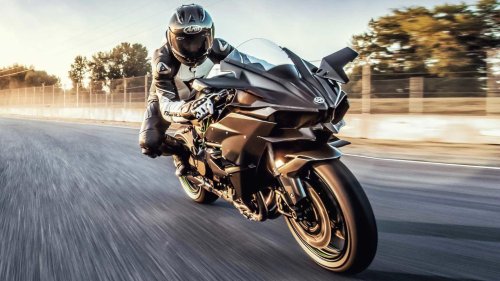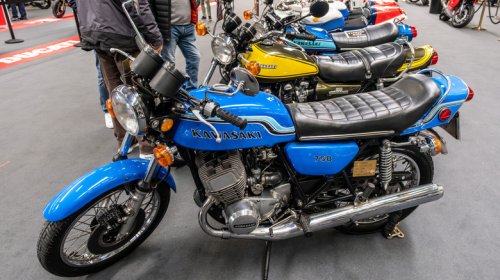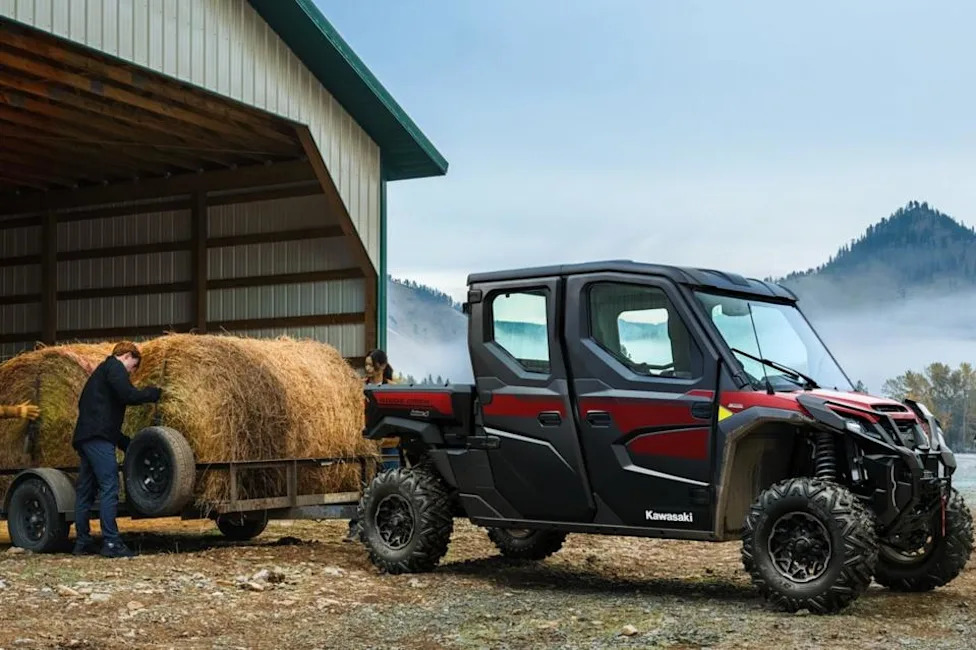
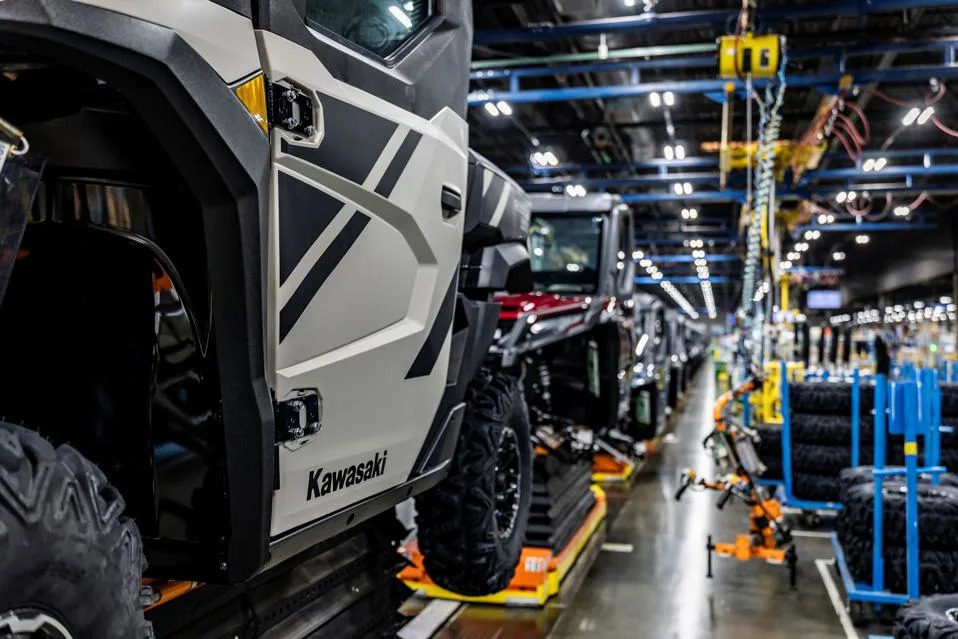
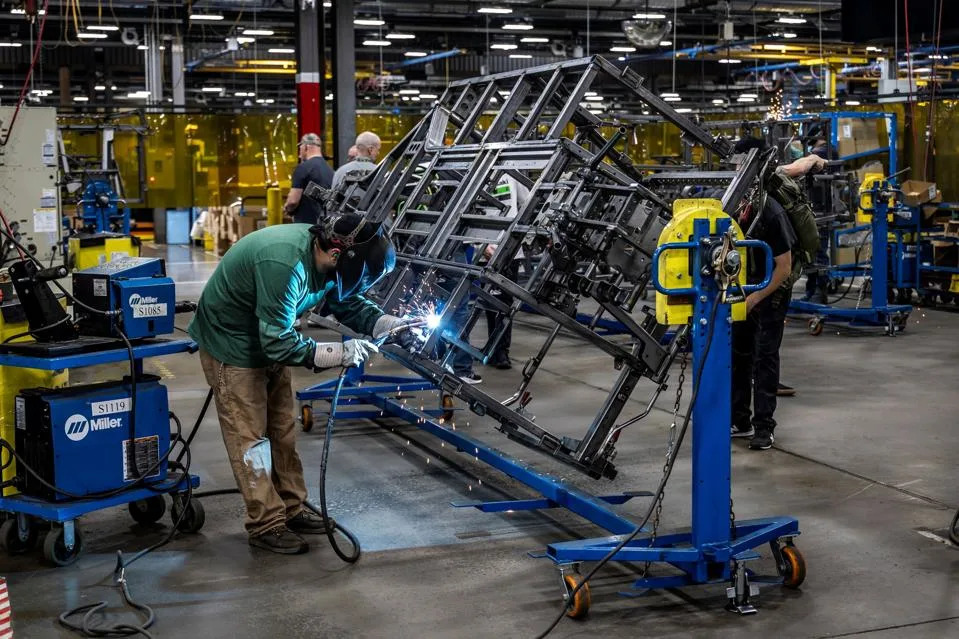


















Kawasaki's side x side models are fit for work or play.KawasakiAuto and powersports manufacturing has been shaken and stirred in the past few years with a flurry of tariffs and uncertainty about what’s next. Companies like Toyota are considering ramping up their U.S. manufacturing operations; news broke last week that the Japanese company is looking at a $2 billion investment in its San Antonio, Texas facility.American Kawasaki Motorcycle Corporation was ahead of its time in that way. Back in 1966, Kawasaki set up its first headquarters at a former meat warehouse in Chicago. As such, the company became the first foreign vehicle manufacturer to have an assembly plant on U.S. soil.KMC opened its consumer products manufacturing facility in Lincoln, Nebraska in 1974 on 335 acres of land and has grown from the original 286,000 square feet to 2.4 million square feet. In Lincoln, Kawasaki builds not just powersports equipment but industrial robots, rail cars, and Boeing aircraft cargo doors, then exports its products to 100+ countries.AdvertisementAdvertisementEver heard of Jet Ski? That’s a Kawasaki brand. The watercraft is so ubiquitous, the name JetSki became a word that encompasses the entire segment. Kawasaki is making a major impact in both the U.S. and overseas.The production line in Lincoln, NebraskaKawasakiRobots And Humans Work Side By SideIn 2025, Kawasaki announced the launch of two especially notable products along with updates to its model lineup. First, the company debuted its all-new triple-synthetic engine oil blend called KPO 4-Stroke Racing Oil, engineered for high-performance racing applications. Second, Kawasaki’s first-ever electric four-wheeled vehicle—the NAV 4e—is a pumped-up golf cart convenient for neighborhood runs to the store or pickleball court. The NAV 4e is designed and assembled in Lincoln, with a dedicated team and precise assembly line.For the Mule, the NAV, Teryx, and other models Kawasaki uses its company-built welding robots to work alongside its human welders. And while a robot lays a perfect bead, they don’t replace human workers, says deputy director of research and development Tyler Furman. They work side by side.“There are some places the robot can’t reach, so you have to hand weld it," Furman explains.AdvertisementAdvertisementIn many cases, there’s a welder on one side of a turntable loading the fixture while the robots are welding on the other side. When the cycle’s finished, the table rotates and the robot will start welding again. Then the human welder has to finish the areas where the robot can’t reach, then pull it out and start loading new parts.Throughout its operations, much of Kawasaki’s manufacturing strategy is to use more in-house equipment and bespoke processes versus relying on suppliers. Not only does it keep costs down, Furman says, that ensures high quality. The company’s production engineering group and its purchasing group work together and decide what makes the most sense to build in-house and in which cases it’s better to work with a supplier.At Kawasaki's American manufacturing facility, humans and robot welders work side by side.KawasakiHigh-Tech Processes, Run By Smart PeopleFurman’s domain in the research and development lab. This is where the magic happens for Kawasaki and where Furman’s team is planning and testing vehicles for the next three or four years. A road simulator allows the team to drive any track anywhere in the world 24 hours a day, seven days a week if they want to, he says. They also push suspensions and frames as far as they can to ascertain the limits of the machines.Back out on the floor, Kawasaki uses Mitsubishi 3,000-ton injection molding machines and an 18-stage dip process to prepare the vehicle frames. The frames are cleaned, rinsed in 6,000-gallon tanks, and coated using a custom process. Some parts get electrophoretic coating, in which charged particles in the solution are drawn to the metal, creating a microscopic, uniform layer. Finally, the frames are cured in a high-heat oven.AdvertisementAdvertisementAlongside the Kawasaki-made motors, well-oiled line, and high-tech equipment and softward, there is an excellent balance between humans and machines, Furman says.Although Kawasaki is based in Japan, this company has built a robust U.S. manufacturing and assembly presence that will continue to serve it well through the myriad changes in the market.MORE FROM FORBESAustin-To-Vegas ‘Fool’s Roll’: A Wild And Adventurous Bucket List TripHyundai Unveils A Big Surprise—And An Aggressive U.S.-Built StrategyComedian And Ventriloquist Jeff Dunham Premieres ‘The Cars That Drove Us’This article was originally published on Forbes.com