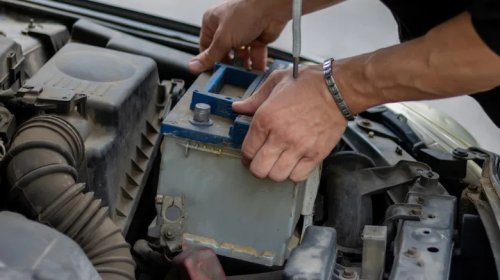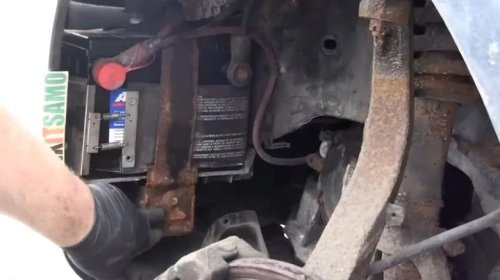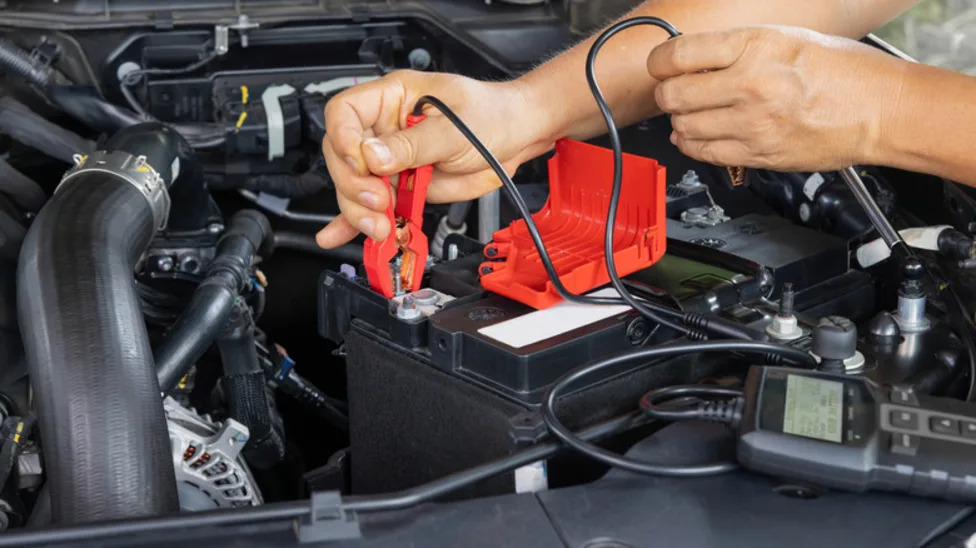
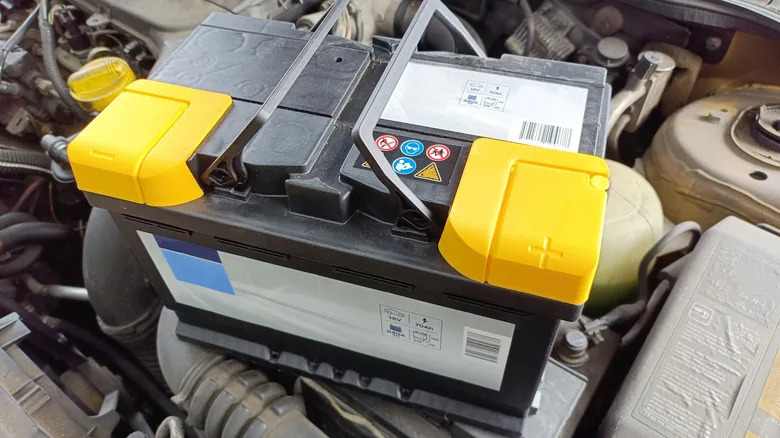




















Hands attaching a tester to a car battery - Toa55/Getty ImagesIf you're a big fan of glamping and don't own a high-tech travel trailer, streaming is likely something you've already thought about. Who hasn't dreamed of being parked up at a campsite, or deep in the woods at the end of a long highway, and firing up the latest episode of your favorite Netflix show? You can stream using a Starlink Mini satellite dish for internet or dig into the back catalogue of HD Blu-rays to revisit some of your favorite films.It's not as far-fetched as it sounds. Powering a TV (or nearly any other appliance) via your car's battery is feasible, though the issue is that most car batteries are designed for short bursts of power, unlike deep cycle batteries, which are designed for more continuous operation. That said, temporarily powering a TV or other appliance with your car's 12-volt battery is certainly possible. The question then becomes, will you be able to power it for long enough to enjoy your favorite media without completely draining your car battery?How long you can power a TV with your car battery (and have plenty of juice left over) depends in large part on your TV. You may be able to run a portable travel TV for 24 hours or more with a fully charged car battery, while a big 4K OLED may drain the same battery to empty in six hours or less.AdvertisementAdvertisementRead more: 10 Major Car Battery Brands Ranked Worst To Best, According To Consumer ReportsHow to power a TV with your car batteryCar battery sitting on an engine block - Oleksandr Sadovenko/Getty ImagesSo how do you actually get set up to power a TV with your car? Most standard car batteries aren't an ideal choice for powering standard electronics. They're intended to provide short bursts of power to start your car, not sustained power to drive appliances. If at all possible, consider buying a separate, deep-cycle battery if you intend to run a lot of gear for extended periods of time while out in the wild.That said, your standard car battery will work in a pinch, given the proper support. First, you'll need an inverter, a device that transforms the direct current (DC) your car battery provides into the alternating current (AC) your TV needs to run. While there are two kinds of inverters that are primarily sold commercially (modified sine wave inverters and pure sine wave inverters), you'll want to opt for the latter, as the current it produces is less likely to damage your television. You can grab a pure sine wave inverter on Amazon for anywhere between $40 and $200, depending on factors like brand and wattage.It's then just a matter of connecting the battery to the inverter (positive terminal to positive, negative to negative) and the inverter to the TV. Be sure the battery and inverter both have plenty of open-air ventilation around them, that you wear safety glasses and gloves when attaching the cables, and that you disconnect the negative terminal first.How long can your car battery power your television?Two people sitting behind a car under a string of lights - Nikola Spasenoski/Getty ImagesTo figure out how long your car battery can run your TV, you'll need to figure out some of the specs of both and plug them into a simple formula. First, you'll need to determine the capacity of your battery, which is measured in amp hours (Ah). Most batteries will list the Ah on the manufacturers label on the top of the battery. You'll also need to know what wattage your TV operates at. This will usually be listed on a sticker somewhere on the frame of the TV, on the manufacturer's website, or somewhere in the instruction manual.AdvertisementAdvertisementWith those two figures in hand, you'll need to do some light math. First, convert the watts your TV uses to amps by dividing the wattage by the voltage (12V in this instance). Then, to determine how long your battery can supply that amperage, divide the battery's capacity (Ah rating) by that amp number. For instance, if your TV is a big 4K flatscreen that draws 200W: 200÷12=16.7.If your car battery has a 70Ah capacity, that means 70÷16.7=4.2. So you could run that giant, beautiful 4K panel for just over four hours before completely draining your battery. Again, however, it's not recommended that you do this frequently or that you allow your battery to drain completely, and having some kind of recharging mechanism, like solar panels, on hand while out in the field is highly advisable.Enjoyed this article? Sign up to BGR's free newsletter and add us as a preferred search source for the latest in tech and entertainment, plus tips and advice you'll actually use.Read the original article on BGR.