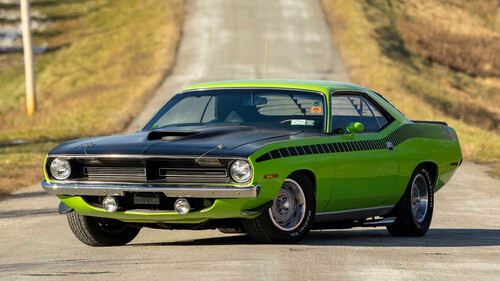
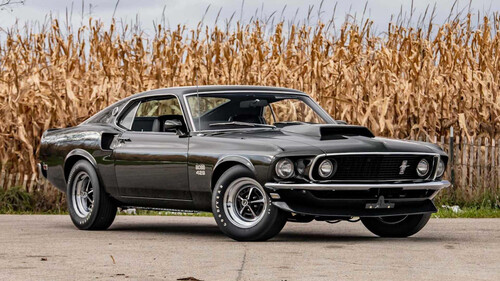
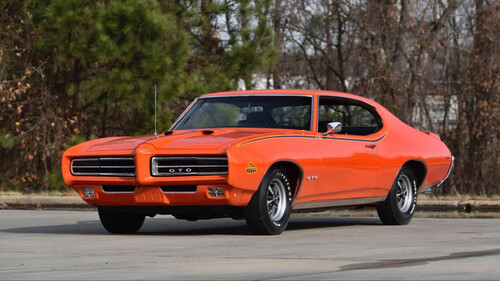
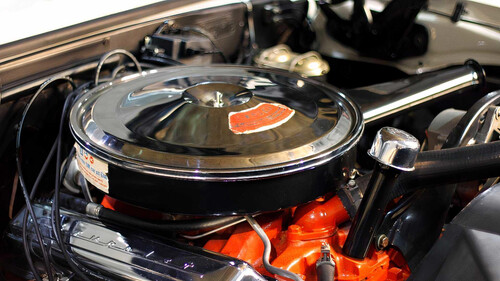
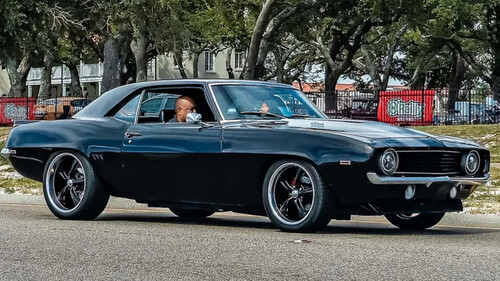
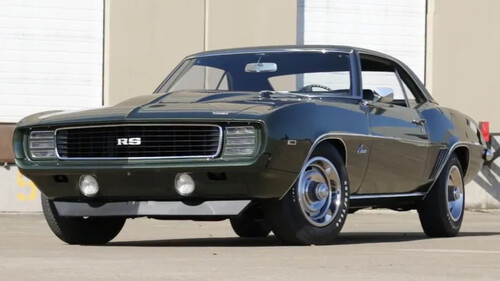
In the late 1960s, Detroit was a battlefield. The muscle car wars were raging, and the "Big Three" manufacturers were making some of the most powerful cars at the time. The formula was quite simple, and that was to stick the biggest and most powerful engine you had into the lightest car available and try to go as fast as you can in a straight line. But at General Motors, it seemed like the Camaro was going to lose this race. Ford and Chrysler were dropping massive 427 and 426 (about 7.0-liter) engines into anything with four wheels, but GM limited its engine size to 400 cubic inches for its pony car.For the Camaro, this was a death sentence. It was automatically outgunned by the competition, but car enthusiasts are resourceful, and they found a way around this. By using a special order method only known to a few racers and dealers, they were able to get GM's very own engineers to build a "forbidden" engine so powerful and so expensive that most people couldn't afford it even if they knew about it. This gave birth to one of the most powerful and sought-after muscle cars today that sits among the holy grails of muscle cars. The ZL-1 Is An Aluminum Masterpiece Bring A Trailer The ZL-1 engine first started as the high-powered L72 cast-iron 427 cubic-inch beast that was the most powerful engine you could get in the COPO Camaros. This option was COPO 9561, which designated that you wanted the biggest and most powerful engine available in your Camaro. It was a legendary engine that transformed the Camaro's performance, but it was heavy. Engineers knew that if they could keep the power of the 427 but shed the weight of the iron block, they would have a power-to-weight ratio that would make the car competitive.With the help of a few dealers, enthusiastic racers, and GM engineers, the result was an all-aluminum masterpiece. The original L72 now used an aluminum block, aluminum cylinder heads, and even an aluminum intake manifold; this engine was called the ZL-1. This wasn't just a "lightweight" version of a street engine; it was built to dominate NHRA drag racing. By switching to aluminum, the engineers shaved roughly 100 pounds off the front end of the car. However, building an all-aluminum engine in 1969 was extremely expensive. The ZL-1 option alone cost $4,160 (about $36,000 today). To put that in perspective, a base V8 Camaro cost about $2,700 (about $24,000 today) at the time. You were paying nearly double the price of the entire car just for a new engine. Only Available Through The COPO Program Mecum Because of the internal displacement ban imposed by GM, you couldn't just walk into a Chevy dealership and order this engine. You couldn't even do this with the less expensive cast-iron L72 engine. The only way you could get these engines was through the COPO (Central Office Production Order) program. COPO was originally intended to cater only to fleet sales to businesses and government agencies. If you wanted 500 yellow taxis or heavy-duty trucks for construction, you ordered them through this program.Since these had no limitations on engine size, Camaros were ordered with the 427 engine. By using COPO code 9561, savvy dealers like Fred Gibb and Chevy performance manager Vince Piggins bypassed the corporate limits and ordered a fleet of "special" Camaros that just happened to come equipped with a hand-assembled, race-bred aluminum 427 ZL-1 engine. The ZL-1 Vs The Competition Bring A Trailer On paper, Chevrolet claimed the ZL-1 produced 430 horsepower. But many believed these were just fabricated numbers. On a dyno, a stock ZL-1 was actually producing closer to 550 horsepower. When lined up against the competition, this was one of the fastest cars on road and track. Ford’s Boss 429 had a formidable NASCAR-derived engine, but it was notoriously restricted from the factory with 375 horsepower, although real-world testing suggests it made close to 500 horsepower.Dodge had the powerful 426 Elephant engine, but it was a big, heavy iron giant. The ZL-1 engine was lighter than the Boss 429 engine and significantly lighter than the Elephant engine, which allowed the Camaro to turn and stop in ways the Mopars simply couldn't. In a quarter-mile sprint, a ZL-1 Camaro with headers and slicks could run into the 11s, which would easily beat most sports cars today and enter the realm of supercars. Cars Powered By The ZL-1 Engine Worldwide AuctioneersOnly 69 ZL-1 Camaros were ever built in 1969, and this was not done to make the car rare; it was simply a very expensive purchase. Fred Gibb ordered 50 cars, and when they arrived, each one had a sticker price of over $7,200 (about $73,000 today). He managed to sell only 13 of them initially; the rest had to be sent back to GM to be redistributed to other high-performance dealers. Besides the Camaro, the engine was also put in the C3 Corvette. Only two factory ZL-1 Corvettes are officially known to have this engine, making them the rarest production Corvettes in history. Performance And Racing Legacy Mecum The ZL-1 was a successful racing engine that dominated in the NHRA Super Stock drag racing, where its lightweight front end allowed for better weight transfer and incredible launches. But that wasn't the only type of racing the engine did. It also took part in the Can-Am series with a displacement ranging between 430 and 494 cubic inches (7.0–8.0 liters). It powered cars from different teams, including McLaren racecars.McLaren used the ZL-1 engine in the McLaren M8B to dominate and win every race it entered in that season. Jim Hall's team used a ZL-1 to power the Chaparral 2J, making 650+ hp. British manufacturer Lola used the ZL-1 to power its T160 and T165 racecars. This proved that Chevy's forbidden engine was one of the most durable and versatile racing powerplants ever designed. How Much Is A ZL-1 Powered Car Worth Today? Mecum Back in 1969, $7,000 was a lot to pay for a souped-up Camaro, but if you were crazy or lucky enough to pay for one and still have it, you made quite a good investment. With the tiny production run of only 69 cars, these represent the absolute pinnacle of the first-generation Camaro, and their values have increased dramatically in recent years. Today, a genuine, numbers-matching 1969 ZL-1 Camaro is a high six-figure car. In "good" condition, you can expect to see them cross the auction block for anywhere between $600,000 and $800,000. For "Concours" level examples, prices have been known to exceed $1,000,000.That might seem crazy for an old muscle car, but the classic car market has been seeing special cars like this sell for big money. The ZL-1 is a great example of what happens when engineers decide to build something without the constraints of a board of executives or accountants. It was an engine that shouldn't have existed, sold through a program that wasn't meant for it, at a price almost no one could afford, but it ended up achieving its objective. Beyond that, it also inspired the ZL-1 name to return for the fifth and sixth-gen Camaro, which were the fastest versions of the road cars. But true to its roots, the biggest and baddest engines were built specifically for drag racing, and that is exactly why the ZL-1 is a legend.Sources: General Motors, Chevrolet, Classic.com.