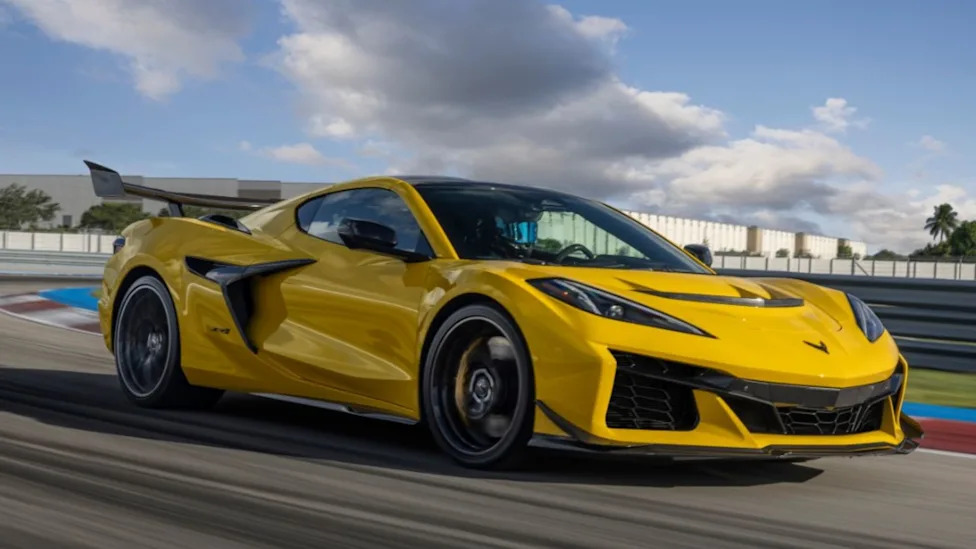
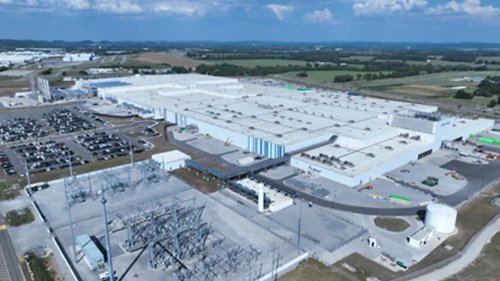
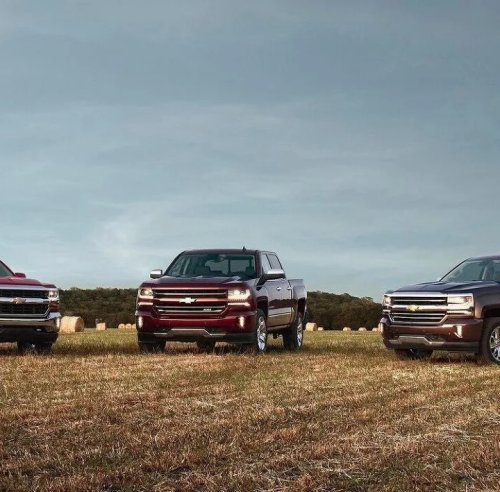
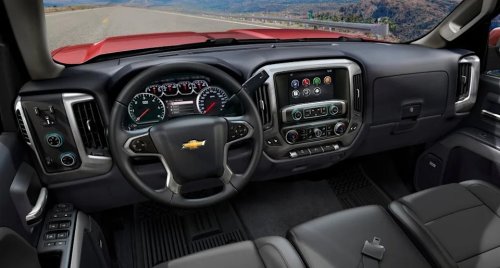
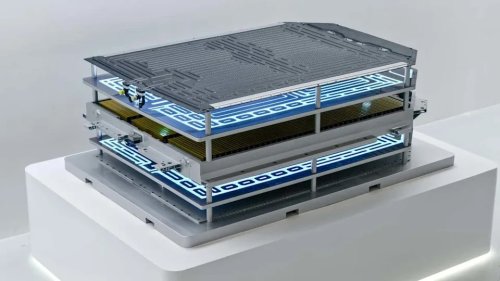
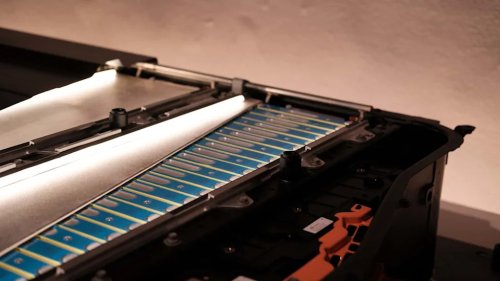
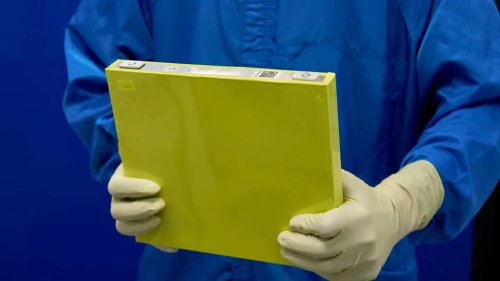
GM Crammed 721 Horsepower Into a Corvette With a Battery the Size of a Cordless DrillThe Number Nobody's Talking AboutChevrolet just started building the least Instagrammed, most quietly important Corvette in a decade, and the number that matters most isn't on the window sticker. It isn't 721 horsepower, either. It's 1.9 — as in kilowatt-hours, the entire capacity of the battery pack that turns a Corvette Grand Sport into an all-wheel-drive hybrid.Production of the 2027 Corvette Grand Sport X began at the Bowling Green, Kentucky assembly plant on August 17, with the first customer cars now moving into shipping. It replaces the E-Ray in the lineup for the 2027 model year, and on paper it reads like a straightforward power upgrade. Underneath, it's something more interesting: proof that Chevrolet has decided hybrid power isn't a one-time experiment for the Corvette. It's infrastructure now.What Actually Changed Under the SkinThe Grand Sport X pairs a new naturally aspirated LS6 6.7-liter V8, 535 horsepower and 520 lb-ft of torque, with a 13.0:1 compression ratio Chevrolet says is the highest ever fitted to a production Corvette engine, with an electric drive unit bolted to the front axle. That motor contributes 186 horsepower and 145 lb-ft, sent exclusively to the front wheels, for a combined 721 horsepower. Assistant chief engineer Mike Kociba summed up the philosophy in Chevrolet's own marketing materials: "There is no replacement for displacement."AdvertisementAdvertisementThat combination pushes pricing to $109,700 for the coupe and $116,700 for the convertible before destination fees, positioning the Grand Sport X above the naturally aspirated Grand Sport and below the flat-plane-crank Z06. The Auto Wire flagged the LS6's existence back in January, when leaked GM parts data hinted at a bigger V8 headed for the Corvette lineup, months before Chevrolet confirmed any of it.A Battery Built to Cheat Physics, Not the EPAHere's the part that should surprise anyone who assumes "hybrid" means "efficient." A 1.9 kWh battery is tiny, smaller than the packs found in some cordless power tools, and a fraction of the size used in plug-in hybrids that advertise 20-plus miles of electric range. The Grand Sport X can't be plugged in, can't drive on electricity alone in any meaningful way, and won't move the needle on Corvette's fuel economy numbers. That's not an oversight. That's the entire point.Chevrolet isn't chasing range with this system. It's using the battery the way a sprinter uses a starting block: for one explosive burst of torque to the front wheels that a rear-drive V8 alone can't deliver off the line. It's the same basic formula Acura used on the NSX hybrid supercar before that car was discontinued in 2022, a small battery pairing with front-axle electric motors for traction and torque-vectoring rather than commuting range. GM just built its version around a 6.7-liter small block instead of a twin-turbo V6, and priced it for a fraction of what the NSX cost.The Slow Line at Bowling Green Isn't a FlukeEarly reports from the assembly line describe the same painfully slow ramp-up that plagued the E-Ray at launch, with only a handful of customer cars clearing the line so far and higher volumes promised in the coming weeks. That's worth remembering, because Chevrolet's own production figures for 2025 put total Corvette output at roughly 25,835 units, with the hybrid and ultra-high-output variants representing a disproportionate share of the bottleneck.AdvertisementAdvertisementA slow launch is normal for any new model. A slow launch that repeats itself, on the same line, with the same architecture, is a pattern. Bowling Green wasn't built as a clean-sheet electrified plant the way GM's Ultium factories were designed from scratch. It's a facility that assembled naturally aspirated small-block Corvettes for decades and is now threading a high-voltage battery pack and electric drive unit through a line built around a transmission tunnel and a V8. Every Grand Sport X, and every ZR1X, the twin-turbo hybrid topping the lineup at 1,250 horsepower, has to survive that same retrofit.Every Repair Shop's Future ProblemThis matters beyond Bowling Green. Hybrid all-wheel drive used to be a one-model curiosity on the Corvette price list. Now it's built into two different trims spanning the middle and the top of the range, meaning a meaningfully larger share of Corvettes on the road, and eventually in the used market, will carry a high-voltage battery and a front-mounted electric motor. GM already eased its six-month resale restriction on E-Ray and Z06 buyers while keeping tighter rules on the ZR1, a sign of how differently the company views these cars once they leave the showroom.Independent shops that have rarely needed high-voltage certification to service a Corvette will need it more often. Insurers pricing collision risk on a car that looks like an ordinary V8 sports car will need to account for a battery pack and motor sitting ahead of the front axle. None of that shows up in a horsepower figure, but it shows up on every future repair estimate and every future premium.What This Really MeansNone of this happens in a vacuum, either. Corvette pricing has been climbing steadily, the 2026 model's interior overhaul alone added up to $21,000 to the sticker, and the hybrid premium stacked on top of that is now a permanent fixture of the lineup rather than a limited-run add-on.AdvertisementAdvertisementIt also previews where Chevrolet is headed next. Reporting on the next-generation C9 Corvette has already suggested a bigger architectural shift is coming, and a lineup that now treats front-axle electrification as standard equipment on two separate trims is exactly the kind of groundwork a company lays before it stops treating hybrid power as optional at all.Engineering one hybrid Corvette proves a team can be clever. Building a second one, sharing the same front-axle hardware, crawling through the same slow assembly line, proves the company is committed to a strategy, not a stunt. The Grand Sport X isn't really the story of a more powerful Corvette. It's the story of hybrid power graduating from GM's science project to its permanent architecture, growing pains included.Join our Newsletter, follow our Instagram page, and connect with us on Facebook.