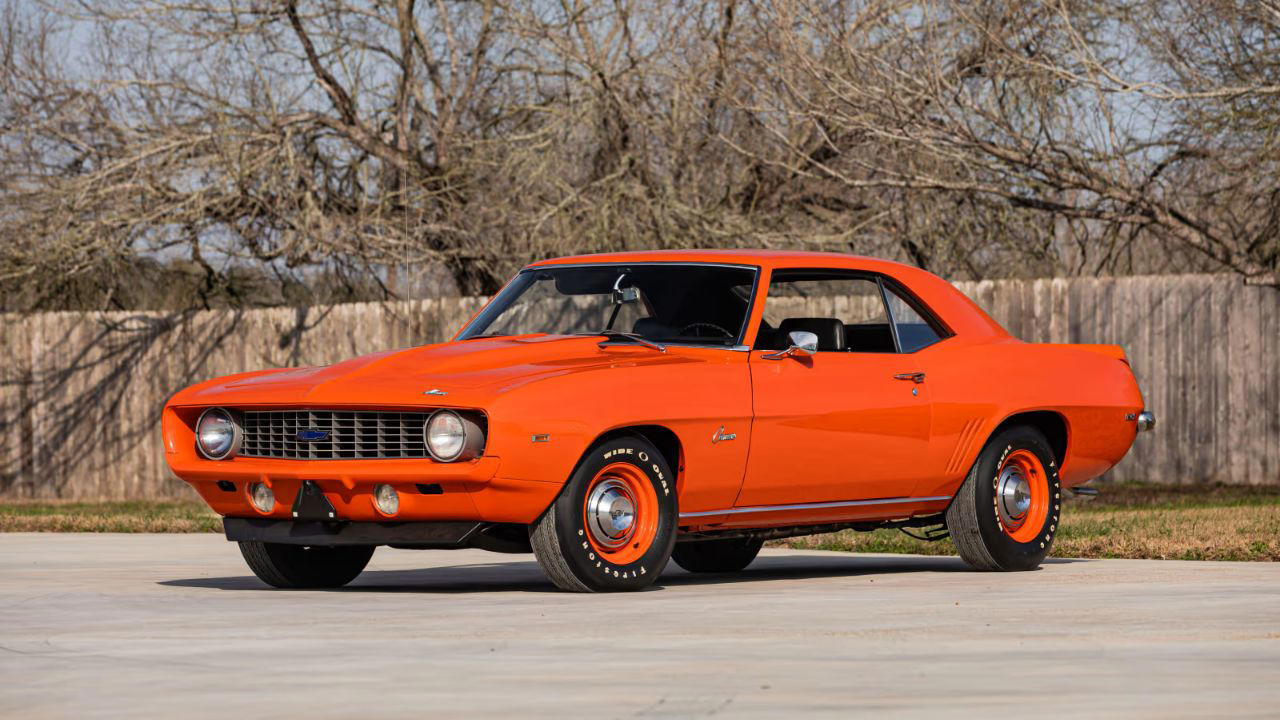



















GM built a 1969 Camaro COPO so fast even buyers didn’t fully understand itIn 1969, General Motors quietly built a Camaro so focused on drag racing that even many buyers did not fully grasp what they were getting. The Central Office Production Order program turned an ordinary pony car into a bare-knuckle factory hot rod, hiding race engineering behind fleet paperwork and obscure codes. That mix of secrecy, loopholes and brutal performance is why the 1969 Camaro COPO still feels half misunderstood, even as it has become one of the most studied muscle cars on earth. How a fleet-order back door birthed a drag-strip monster The story starts with a corporate rule that should have killed the idea at once. In the late sixties, General Motors had a firm internal limit that no midsize or smaller car could leave the factory with an engine larger than 400 cubic inches. That ceiling protected insurance reputations and kept the Camaro in its lane under the company’s own hierarchy. Officially, the big 427 big-blocks were reserved for larger cars and Corvette. Chevrolet also had a bureaucratic tool that did not care about enthusiast politics. The Central Office Production Order system, or COPO, existed to handle low-volume fleet requests that fell outside the normal option sheets. It was intended for bulk orders such as police cruisers, taxicabs or low-powered utility cars for meter readers, the kind of workhorse fleets that might need odd paint codes or special equipment. As one detailed look at the 1969 Chevrolet Camaro explains, this system was never meant to create halo drag machines. Performance-minded dealers and racers saw something different. If the rulebook said no 427 in a Camaro through normal channels, the COPO paperwork offered a way to ask for exactly that while still staying inside General Motors procedures. The result was a car that looked like a regular 1969 Camaro on the showroom floor but had the heart of a big-block race car. The secret codes only insiders knew The secrecy around these cars was not just cultural, it was literal. The most famous COPO Camaros were tied to internal codes such as 9561 and 9560 that did not appear in standard consumer brochures. Ordering one required knowledge of those numbers and access to someone willing to submit the special paperwork. One detailed breakdown of the 1969 Chevrolet Camaro COPO 427 notes that a secret order code was known to only 50 people in America. That figure captures how closed the circle really was. These were not casual options that any walk-in buyer could stumble into. They were insider arrangements that moved through a handful of dealers and racing contacts who understood both the COPO system and the drag racing rulebook. Those internal codes also split the cars into distinct personalities. COPO 9561 centered on an iron-block big-block package aimed at serious street and strip use. COPO 9560, by contrast, was an all-out experiment that dropped an aluminum racing engine into the same basic shell. Both relied on the same back door inside Chevrolet’s bureaucracy, but they targeted different kinds of competitors and budgets. What “COPO Camaro” really meant For Chevrolet, COPO was never meant as a marketing term. It was an internal acronym that stood for Central Office Production Order, a label used on forms rather than fenders. A factory overview of the program, presented as a Brief History Of, traces how that bureaucratic label gradually turned into a performance badge once racers realized what could be specified through the system. In that context, “COPO Camaro” simply meant a car that had been built outside the normal retail option structure. Some were bare-bones fleet cars. Others, like the 1969 427 combinations, were essentially factory-built race cars that happened to carry a warranty and a VIN like any other production model. The same Central Office process that might create a run of taxicabs could also authorize a batch of drag-strip specials, as long as someone with the right connections filled out the forms. That dual identity explains why some period buyers did not fully understand what they were getting. To an untrained eye, a COPO Camaro could look like a plain coupe with minimal badging and steel wheels. The magic was in the build sheet, not on the trunk lid. The iron 427 that broke the rules The core of the most common 1969 COPO package was the big-block RPO L72, a 427-ci iron engine that had already built a reputation in full-size Chevrolets and Corvette. A focused review of the 1969 COPO Camaro highlights that the RPO L72 was a 427-ci iron block with an 11.0:1 compression ratio, achieved with aluminum pistons and serious internal hardware. In a compact Camaro shell, that combination turned a pony car into something closer to a factory dragster. Officially, Chevrolet rated the L72 at 425 horsepower, but drag racers quickly learned that the real output felt far stronger. One enthusiast listing for a 1969 Chevrolet Camaro COPO notes a 427/425 hp V8 paired with a 4-speed manual, a setup that mirrored what many of the street COPO cars carried from the factory. The torque curve, combined with relatively short gearing, made these cars brutally quick in quarter-mile use even when delivered with street tires and full interiors. Because the L72 had already been validated in other Chevrolet models, it fit neatly into the COPO logic. The engine itself was not new. What was new was the willingness to bolt it into a smaller platform that corporate rules said should have stopped at 400 cubic inches. The wilder aluminum ZL1 experiment If the iron L72 cars stretched the rules, the aluminum ZL1 cars simply rewrote them. COPO 9560 created a Camaro built around an all-aluminum 427 racing engine that had been developed for Can-Am competition. A detailed history of the COPO program notes that Gibbs’ COPO 9560 used an aluminum block 427 rated at 430 horsepower, along with an upgraded rear axle, heavy-duty cooling and functional cowl induction to feed the engine. That 430 figure was conservative. The true output of the ZL1 engine has long been estimated well north of that rating, especially in uncorked trim. The combination of a lightweight aluminum block and serious internals made the ZL1 Camaro one of the quickest factory muscle cars ever offered, but it also made it extremely expensive. That price shock is one reason production remained tiny, which later helped the ZL1 earn a reputation as Rarest Muscle Car in collector circles. Period buyers often did not realize how exotic the engine really was. To some, it was just another 427 option listed on paperwork that already looked confusing. Only later, as drag racers and historians pieced together the specifications, did the full scope of the ZL1 experiment become clear. Why drag racers needed a factory freak The COPO Camaros did not exist in a vacuum. They were built to win in specific sanctioning bodies that required production-based cars. In the late sixties, the National Hot Rod Association structured many classes around the idea that cars had to be built in a minimum quantity with factory part numbers. That pushed manufacturers to create limited runs of overpowered street cars that could serve as legal starting points for race builds. A detailed history of COPO Camaro history places these cars firmly inside that arms race. Automakers were locked into a cycle of one-upmanship, each trying to homologate a slightly quicker combination without triggering corporate backlash or insurance panic. The COPO paperwork gave Chevrolet a way to satisfy both the rulebook and the internal politics at General Motors. Dealers such as Yenko and other performance-focused outlets became key intermediaries. They knew which combinations would be competitive, they knew the internal codes, and they had customers who were willing to sign on the line for something that looked like a regular Camaro but carried a competition-grade powertrain. Production numbers that hide in a sea of 1969 Camaros One reason the 1969 COPO Camaros remained misunderstood for so long is sheer scale. Over 240,000 Camaros were built in 1969, which means the COPO cars were statistical noise inside the larger production run. Most buyers saw standard small-block or big-block cars on dealer lots. The handful of 427 COPO builds were scattered across the country, often sold through specific performance dealers or delivered straight to racers. That imbalance created a strange dynamic. On paper, the COPO Camaros were regular production cars with warranty coverage and factory documentation. In practice, they were so rare that many Chevrolet fans never saw one in person, and some owners did not realize their car carried a special build code until years later when collectors and restorers began decoding tags in detail. Modern restorations and auctions have brought those numbers into sharper focus. Presentations of surviving cars, such as a multiple award winning COPO ZL1 coupe introduced by Jim Pope of Worldwide Auctioneers in Auburn Indiana, the classic car capital of the world, show how much documentation and research now surrounds each individual chassis. Factory-built beasts hiding in plain sight Part of the charm of the 1969 COPO Camaro is how ordinary many of them look. A profile of Dennis Albaugh’s subtle 1969 Chevrolet COPO Camaro describes it as a Factory Built Beast, a car that could pass as a six-cylinder grocery getter at a glance but in reality carried a 425 horsepower 427 under the hood. Many COPO cars were ordered with minimal exterior flash, often in plain colors with dog-dish hubcaps and no wild striping. That sleeper aesthetic suited both racers and dealers. On the street, it kept attention low at a time when insurance companies were already nervous about high-horsepower muscle cars. On the track, it meant the car could be stripped and prepped without sacrificing any factory aero add-ons or styling packages, since most of those did not exist in the first place. Today, restorers often face a choice between preserving that understated look or leaning into the car’s performance identity with period-correct wheels and graphics. Either way, the underlying chassis and drivetrain still reflect the original intent: a car that could leave the dealer lot and head straight for the staging lanes. Double-COPO oddities and the “loophole” legend The COPO system was flexible enough that some cars ended up with more than one special order code. Enthusiast coverage of a double-COPO 1969 Camaro explains how certain builds combined the 427 engine package with additional COPO instructions for items like appearance or suspension, creating rare one-off combinations inside an already tiny pool. That same reporting describes the COPO process itself as a COPO Loophole. The term captures how racers and dealers viewed the program. They were not breaking General Motors rules in a literal sense, since every car still went through official channels. Instead, they were using a legitimate internal pathway for a purpose the corporate authors had never intended. That mindset still shapes how enthusiasts talk about the cars. When a modern owner describes the COPO Camaro as a loophole special, they are acknowledging both the cleverness of the original dealers and the tension inside General Motors between corporate restraint and racing ambition. More from Fast Lane Only Unboxing the WWII Jeep in a Crate 15 rare Chevys collectors are quietly buying 10 underrated V8s still worth hunting down Police notice this before you even roll window down The post GM built a 1969 Camaro COPO so fast even buyers didn’t fully understand it appeared first on FAST LANE ONLY.