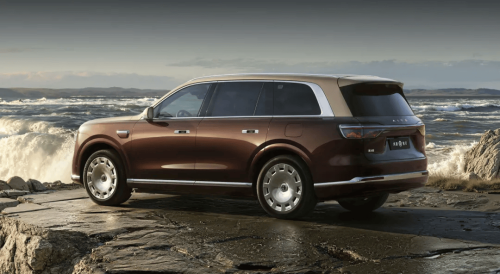
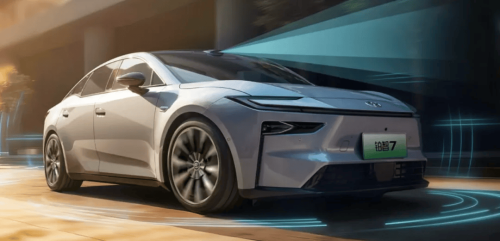
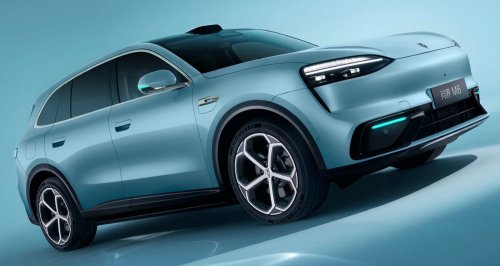
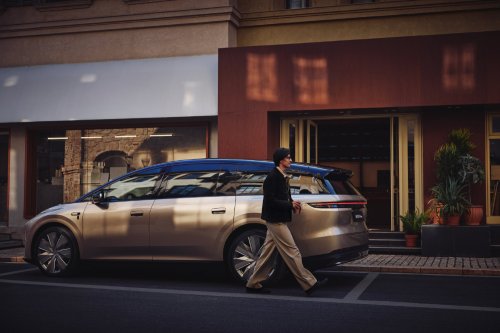
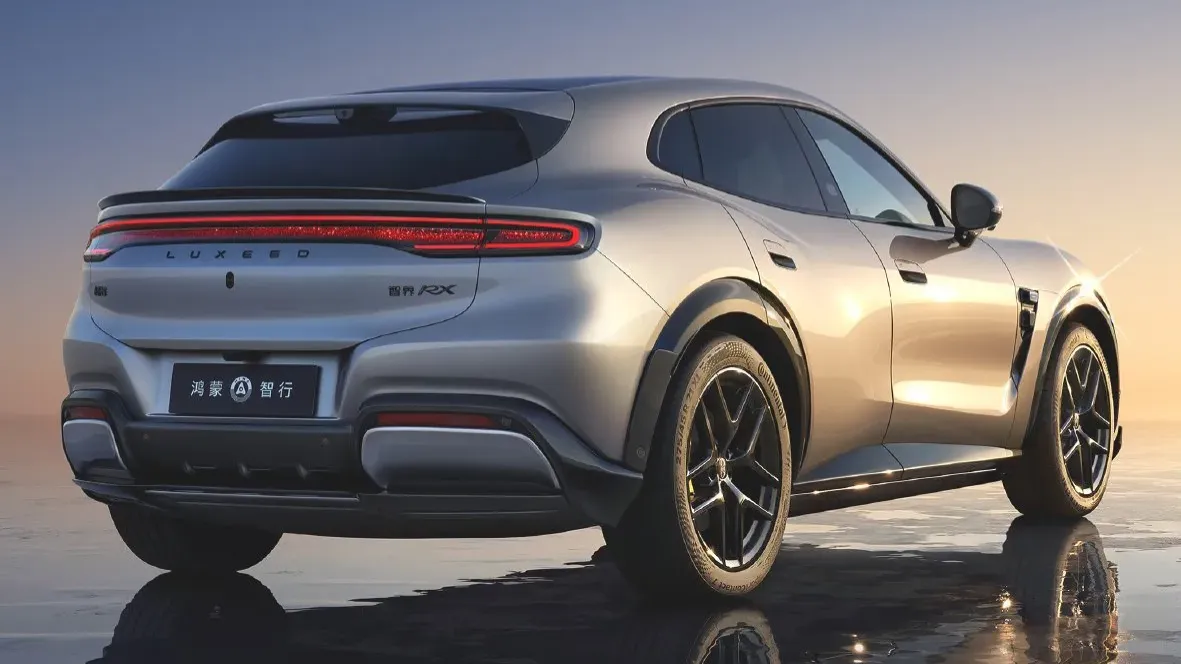
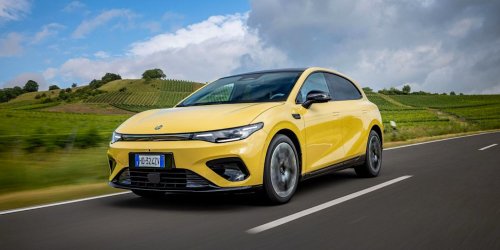
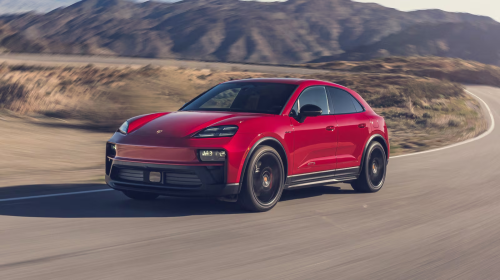
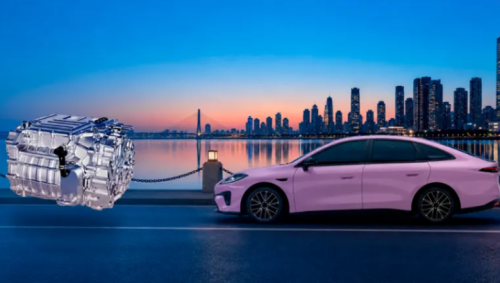
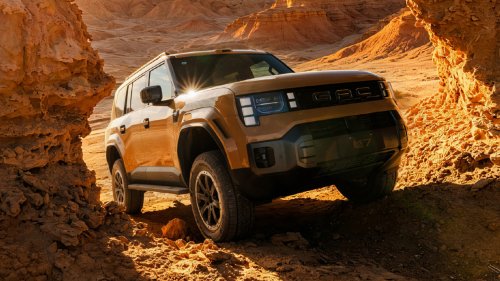
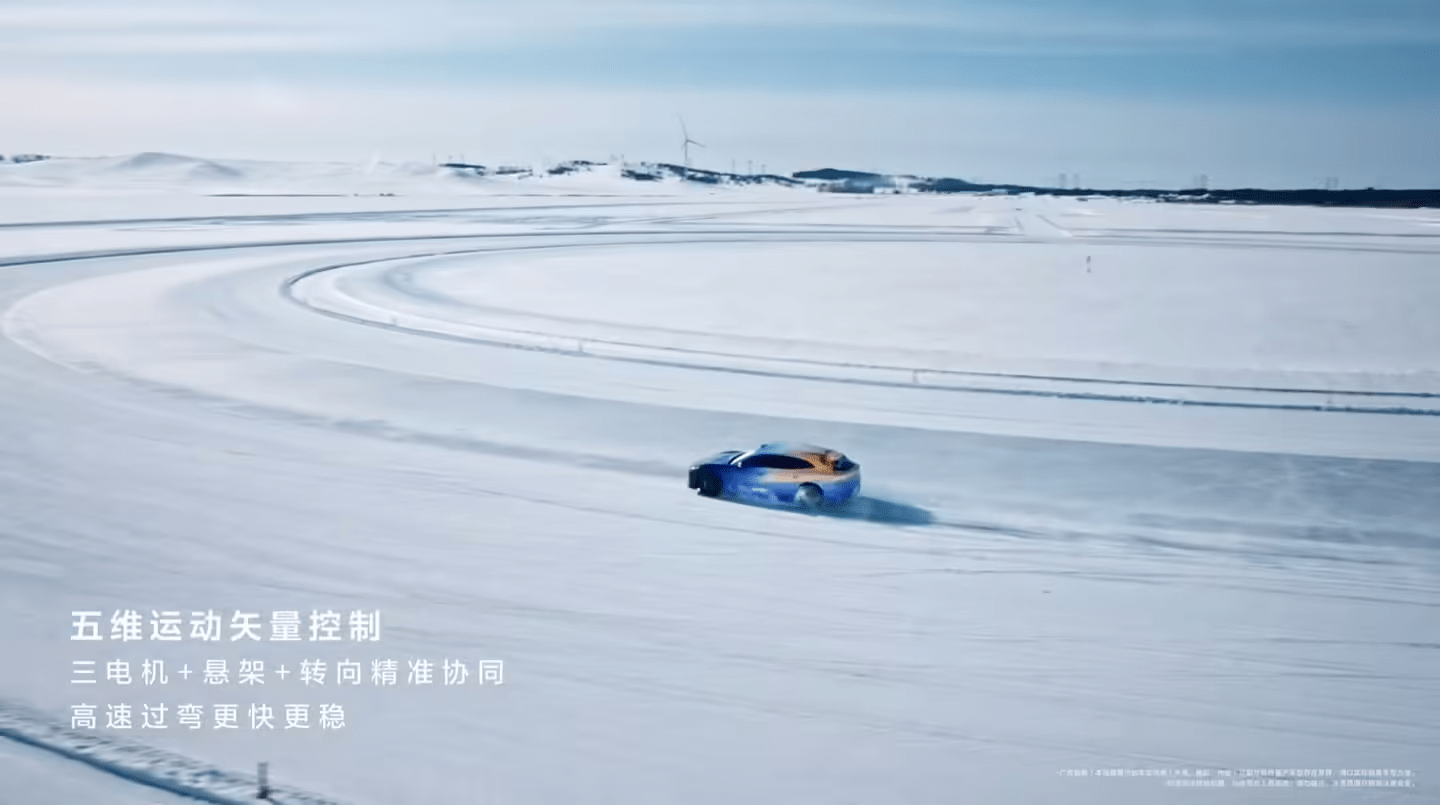
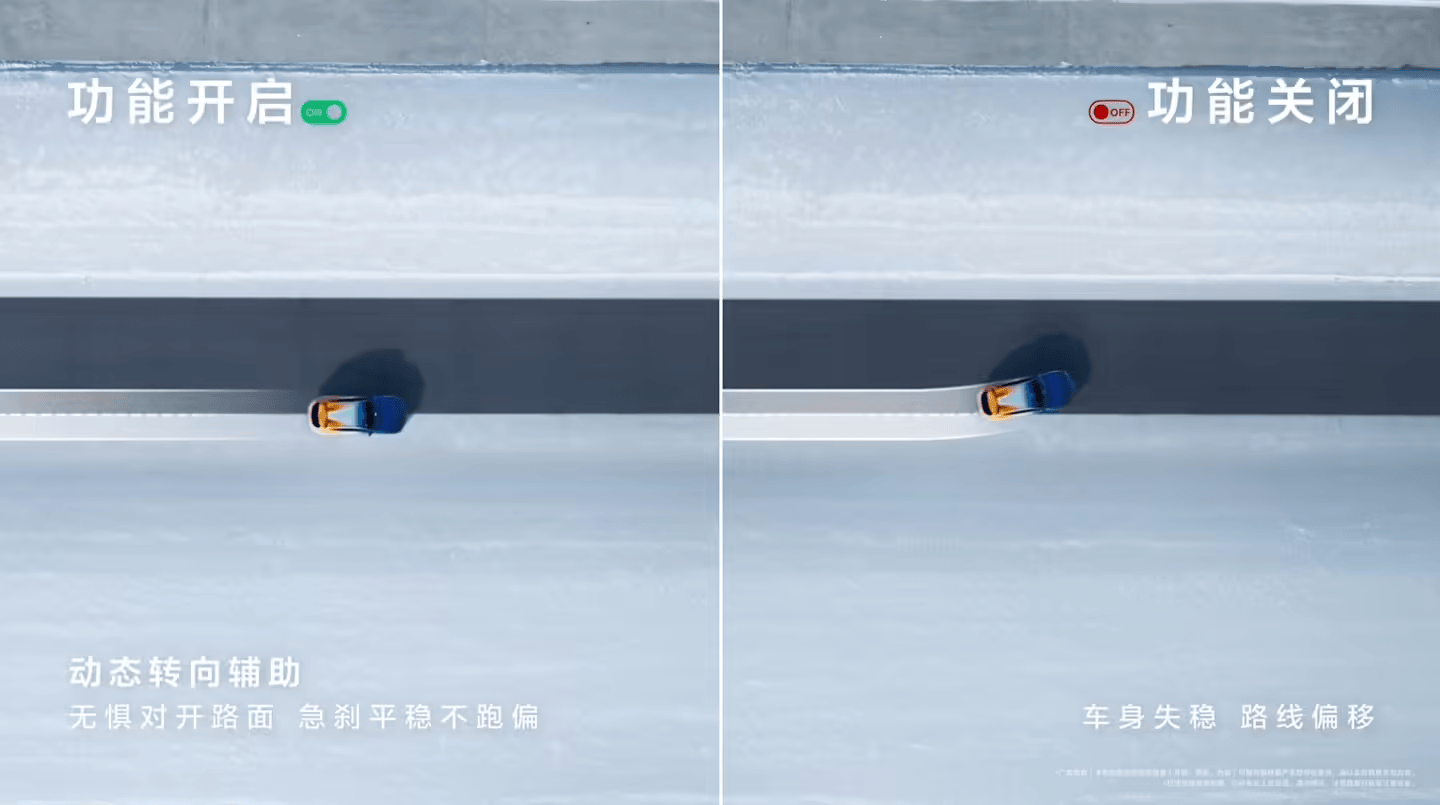
The L3-capable model will debut in April and launch in June, with a planned retail footprint spanning 70 cities and over 300 outlets. On March 3, Qijing, co-developed by GAC Group and Huawei, released winter testing footage of its new-generation intelligent shooting brake sedan. Qijing’s new shooting brake is undergoing a cornering test. The model is equipped across the lineup with the HUAWEI XMC Qiankun Digital Chassis Engine, which the company describes as delivering “million-class handling performance.” Testing was conducted on the frozen surface of Nogan Lake at latitude 47°55′ north, under temperatures as low as -35°C, focusing on extreme cold and low-adhesion conditions. Test scenarios included constant-radius cornering on split ice-snow surfaces, emergency braking, slalom maneuvers and 40% gradient ice climbs. According to official footage, the vehicle completed constant-radius cornering at 68 km/h on mixed ice and asphalt surfaces without noticeable oversteer or trajectory deviation. Under alternating surface conditions with an estimated friction coefficient of approximately 0.7 on asphalt and 0.1 on ice, the vehicle performed emergency braking and consecutive lane-change tests. Qijing’s new shooting brake is undergoing a stability test. Stability was maintained through coordinated dynamic steering assistance and intelligent braking control. At the core of the system is the HUAWEI XMC Qiankun Digital Chassis Engine. The platform integrates tri-motor drive with coordinated control of steering, braking and suspension, supporting what the company terms “five-dimensional motion vector control.” During the ice slalom test, the vehicle completed the course at 60 km/h. Its domain-integrated architecture executed unified regulation of body dynamics, steering, braking, suspension and power delivery within milliseconds. Qijing’s new shooting brake is undergoing a 40% gradient ice climb test. The vehicle also attempted a 40% gradient ice climb. Through tri-motor traction control, the system adaptively identified optimal slip ratios on the slope, preventing wheelspin and rollback. According to previous reporting by ChinaEV Home, Qijing’s first model began large-scale nationwide road testing last year. The vehicle adopts Huawei’s Qiankun L3 conditional autonomous driving hardware architecture and is scheduled for market launch in June this year. Company disclosures at the end of January indicated the model will make its official debut in April, followed by a trial sales phase. On the retail side, the brand plans to establish a presence in 70 cities with more than 300 outlets prior to launch, including 100 user centers and 200 experience centers.




















 +27 others