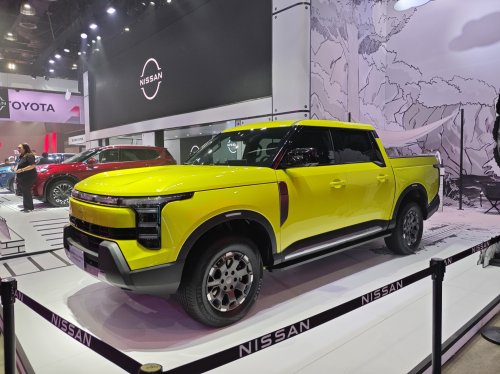
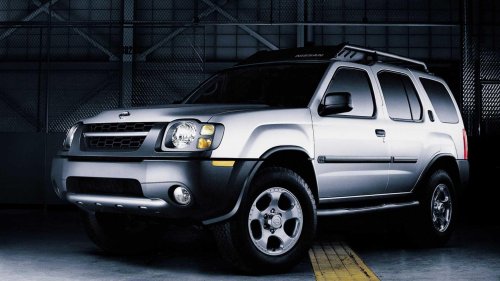
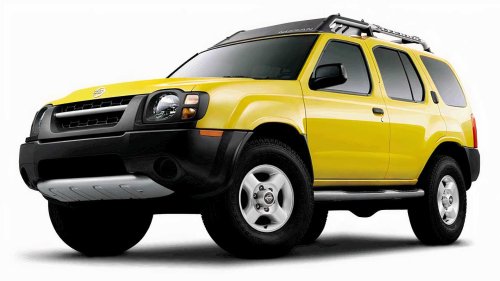
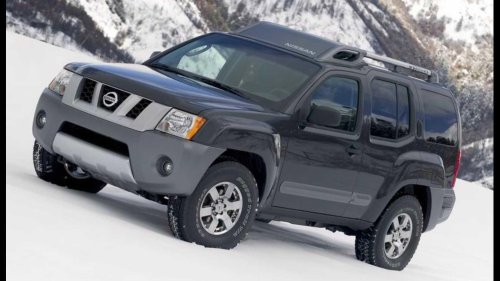
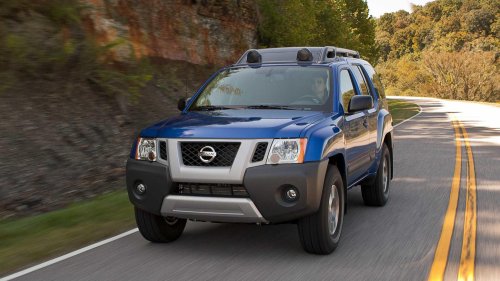
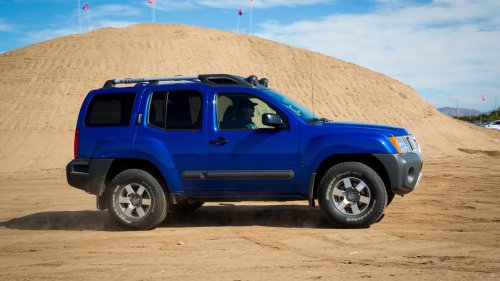
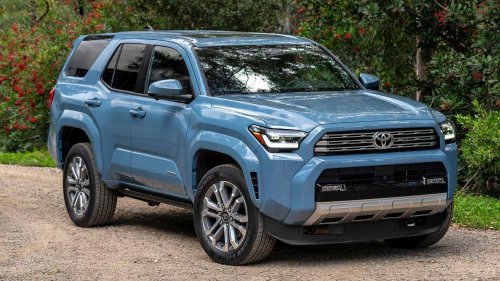
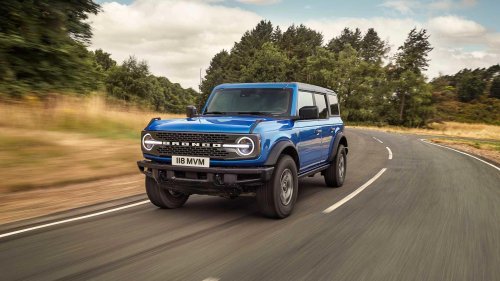
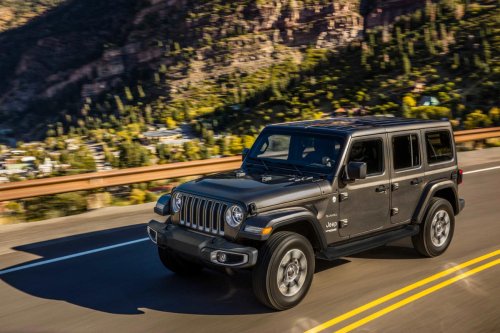
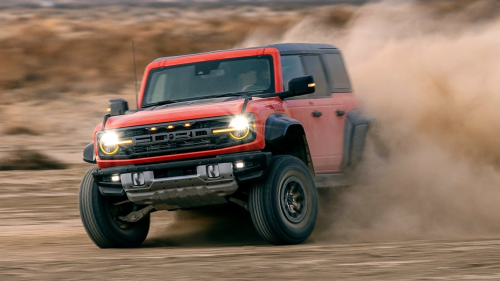



















UPDATE: 2026/03/30 13:02 EST Added segment sales figures as reference.This article has been updated with sales data from core segment rivals to prove why Nissan needs to enter this segment before its too late.Around a decade or so ago, it seemed like the off-road SUV segment was on the way out, so much so that automakers were discontinuing models in that segment. One of the more notable ones to get the axe was the Nissan Xterra. It's final model year was 2015, which was about a decade and a half since the Frontier-based SUV was introduced. Today, the Xterra is still absent, and since Americans now can't seem to get enough of off-roaders like the new Bronco, Defender, Land Cruiser, and 4Runner, we have been wondering if the Nissan Xterra is ever coming back. It's such a hot market that we even have spin-offs like the Bronco Sport.Nissan Thus, it comes as much relief to find out that Nissan is getting back in the game. The new Xterra will follow in the footsteps of the original in some ways; it will still be related to the Frontier, and it will be a body-on-frame SUV. It'll also be breaking new ground, since it will be now be a hybrid Nissan SUV. With any luck, the automaker will be able to blend the charms of the originals with modern technology to make something to help turn around the company's business prospects. Why It’s So Important Nissan Over the course of the Xterra's lifetime, it only had two main generations, with each one getting a midcycle refresh. The first generation launched in 2000, and lasted only until the 2004 model year. It filled an open spot for an entry-level truck-based SUV that the Pathfinder had moved out of. The connection to the Frontier was obvious from the front, but the shape of the Xterra at the rear was quite distinct with how the roof stepped up over the rear seats, offering extra rear headroom and cargo space. It also had a rear hatch with a unique bulge that stored a first-aid kit, and the tubular roof rails were especially prominent.Being shorter in length, with less overhang, also made it handy off-road compared with a pickup truck like the Frontier. That off-road capability was supported by the available part-time four-wheel drive and solid rear axle. The Xterra also stood out at the time by offering an off-road SUV that wasn't quite as old as the contemporary Chevy Blazer or Jeep Cherokee, and more spacious than something like a Suzuki Vitara.Nissan The second generation was introduced for the 2005 model year, and it was based on the new Frontier platform. It continued to fit below the Pathfinder, and it was very much an evolution of the original's design, simplifying some of the lines and curves. The new generation still had the same basic suspension and drivetrain arrangement, though it dropped the sluggish four-cylinder and unusual supercharged V6 engine options for a single naturally aspirated 4.0-liter V6. This generation also introduced an available electronic locking differential, rather than just a limited-slip unit, further bolstering the off-road capability.This generation lasted until 2014, and sales weren't great toward the end. In 2011, Nissan sold a little more than 18,000 examples, and that mostly declined every year to the end of production. Perhaps more notable was the fact that it was selling in lower numbers than the larger Titan pickup, Armada SUV, and even the Quest minivan, none of which were sales phenoms at the time, either. Being an old model may have played a role, but the closely-related and just-as-old Frontier was selling in numbers two to three times that of the Xterra, even increasing over the years.Nissan The Xterra wasn't the only small off-roader to disappear around this time. Toyota discontinued the retro-inspired FJ Cruiser after the 2014 model year, too. It was a similar size with similar capabilities to the Xterra, though it was more unique in design to other Toyota products, and somewhat less practical due to a lack of four full doors. The fact that Toyota also dropped its niche off-roader, though, was a sign that the market had cooled off a little too much for these vehicles. Of course, that's since changed, and it seems like Nissan is the last to return to the table. Right Segment, Right Time For A Comeback But outside of the Xterra's importance because of its history, the retro off-roader segment is also booming. Looking at sales figures for rivals from Jeep, Ford, and Toyota paints a clear picture as to why now is the right time.For the longest time, the Wrangler was the only truly successful retro-flavored body-on-frame off-roader. But Ford brought the Bronco back in 2021, and just four years later, at the end of 2025, it managed to sell 146,000 units, up from 109,172 the year before. Meanwhile, the Wragnler has sustained its strong sales, selling 167,322 units in 2025, and 151,163 the year before. And then there's Toyota, who reintroduced the Land Cruiser nameplate with a retro midsize rival to the Wrangler, and sold it alongside the new 4Runner, and it saw sales boom, with 98,805 4Runners sold in 2025 and 43,946 Land Cruisers sold. Nissan would be foolish to overlook a nameplate as strong as the Xterra in a booming segment. Platform And Powertrain While the new Nissan Xterra won't appear until the 2028 model year, the company has confirmed a number of details. Like its predecessors, it will feature body-on-frame construction, and it will use a platform that will underpin both a next-generation Frontier pickup and Pathfinder SUV. The Frontier and Xterra will probably have independent front suspension and a live rear axle for off-road capability and simplicity, and the Pathfinder may go the path of the third-generation model and use an independent rear suspension. Two- and four-wheel drive are pretty much a given, with the latter surely featuring a two-speed transfer case. What The Brand Needs To Get Right Nissan Sales may not have been amazing toward the end of its life, but the buyers who did pick one up clearly wanted the Xterra for its unique characteristics. One of those was certainly its design, which wasn't quite like anything else on the market. So, the new one needs to have a similar roofline, chunky roof bars, and a generally blocky and tough shape. Additionally, it needs to deliver on the genuine off-road capability of the original.Nissan Nissan has already confirmed a lot of details that show the SUV will probably have impressive capability, provided by a combination of the truck platform and likely punchy hybrid V6. Also, in Nissan's preview image of upcoming models that it released last year, one of the vehicles in the back is an SUV that has a very upright shape, like an Xterra, and we believe it may very well be the production model. Rivals Toyota The three main competitors for the Xterra will be the Toyota 4Runner, Jeep Wrangler, and Ford Bronco. Of the three, the 4Runner is arguably the most direct competitor, as it's the only one with a completely solid body (not a convertible) and offered only as a four-door. However, all three models have very similar performance and pricing, with a few exceptions. The base models start between $35,000 and $42,000, and the mainstream models have around 300 horsepower. The Xterra is going to need numbers at least in this range to be competitive. It also has the potential to rival the 4Runner's shocking 465 lb-ft of torque from that model's hybrid powertrain.Ford All three models have fairly standard versions and some more specialty off-road variants. Nissan will likely have a Pro-4X model that will compete with the 4Runner TRD Off-Road. Depending on how serious Nissan makes the trim, it could even be a competitor for the Wrangler Rubicon and Bronco Badlands, but it will probably need a few extra tricks like front and rear locking differentials and possibly anti-roll bar disconnects.Jeep Ford and Jeep have some seriously extreme variants, too. The Bronco Raptor packages the most extreme suspension and tire package Ford could imagine, one made for both slow and fast off-roading, along with the most powerful engine available. The Jeep Wrangler can be had with a 6.4-liter V8 in the Moab trim. It offers the most power and torque of all, along with bigger tires and an exhaust to die for. Toyota also has the Trailhunter and TRD Pro, which have some impressive suspension, but use the same hybrid available on other trims.Ford We don't think Nissan will have a competitor for these SUVs, at least not until a couple of years into the new Xterra's life. Those vehicles, while commanding large price tags, are also niche and expensive to develop. Plus, Nissan hasn't developed extreme versions of the Frontier to take on similar pickups like the Ranger Raptor and Chevy Colorado ZR2.Here's how these rivals compare in terms of power and pricing:Sources: Nissan