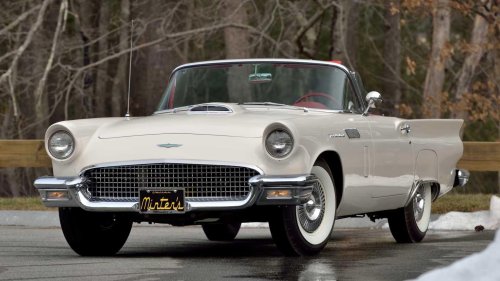
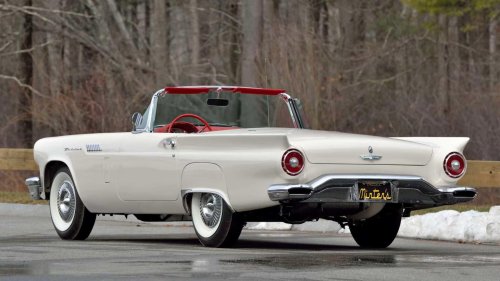
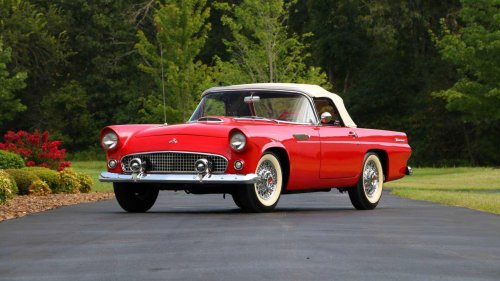
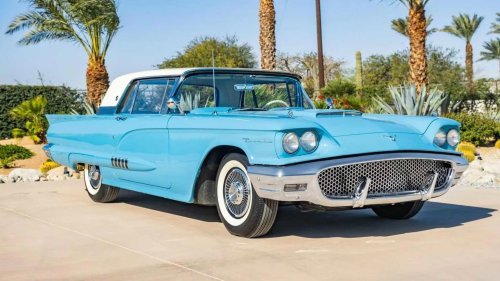
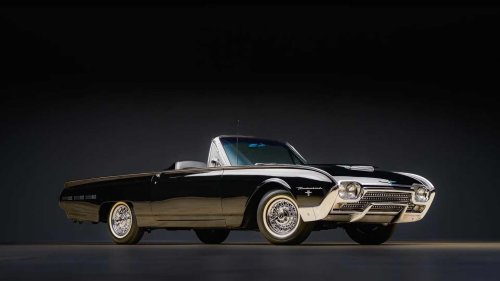
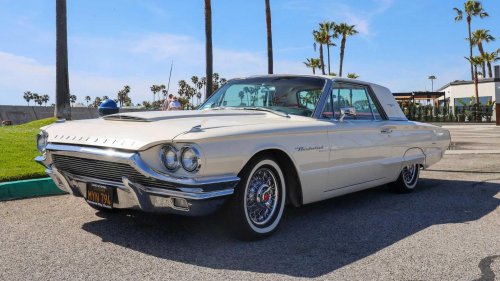
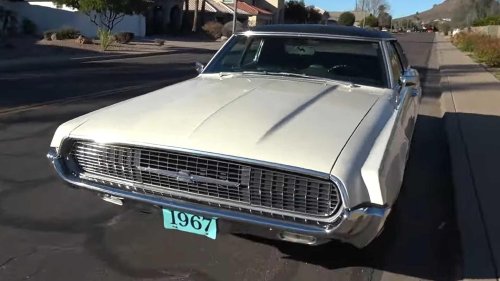
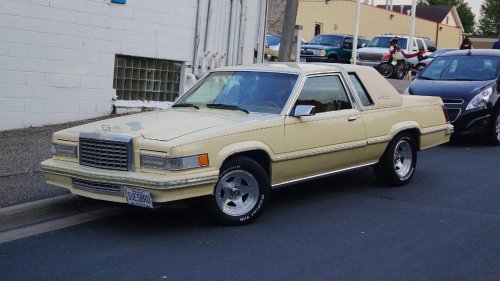
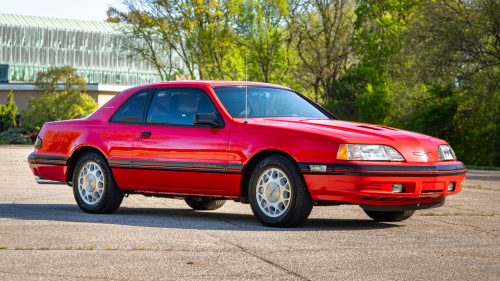
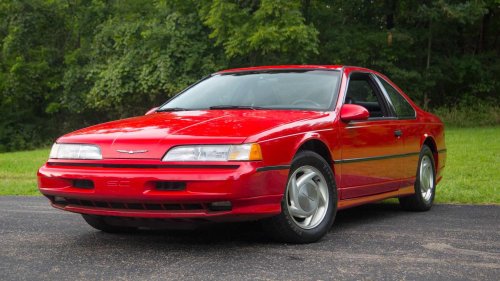
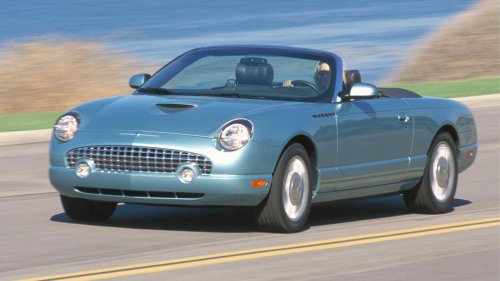
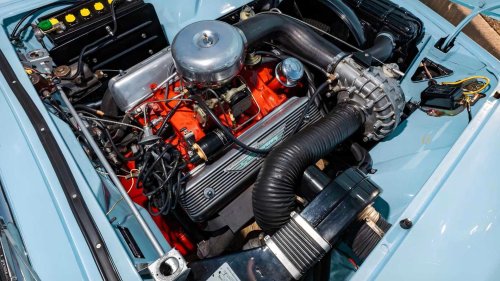
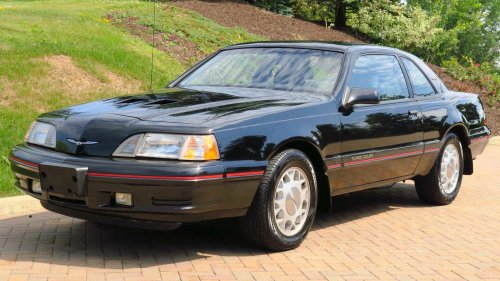



















When you think of quintessentially American Cars, there aren't many that fit that better than the Ford Thunderbird. A staple of the American luxury car market for generations, this car helped to create an entire automotive niche. It was also often stylish, and typically reflected the times of whatever era it was being produced in. It also helped that a few iterations of the T-Bird ended up featuring prominently in the media!If you've ever thought about buying a Thunderbird, knowing where to start can be a bit confusing. It's got such a long history as a car, and it changed so many times over the decades. Here, we're going to break down the overall history of the Thunderbird, as well as what you need to know when you're looking at getting one for yourself. The Ford Thunderbird Was One Of America's Best Luxury Coupes Mecum AuctionsWhen it first appeared in 1955, the Ford Thunderbird helped to define an entire segment of the American car market. That was the Personal Luxury Car. These cars are big, luxury cars with powerful engines, almost like European grand tourers. But, they're decidedly more American in feel. The Thunderbird was consistently one of the best out of the Personal Luxury Cars you could buy. That was even the case during the malaise era, when these cars definitely were not as good as they were during the heyday of Americana. The History And Evolution Of The Ford Thunderbird Mecum AuctionsThe Ford Thunderbird is one of the longest-running nameplates ever in the history of the American auto industry. As a result, it went through a lot of changes over its lifespan. This included changing platforms, changing engines, and adaptations to the two malaise eras of American cars. There was also a gap where the Thunderbird was not produced, before it returned as an all-new car that paid homage to its 1950s roots. First Generation (1955-1957) MecumThe original Ford Thunderbird popped up in the mid-1950s, as Ford's response to the Chevrolet Corvette. It wasn't intended to be a direct rival to the Corvette, or any European sports car. That led Ford to focus on comfort rather than speed, birthing the whole idea of the Personal Luxury Car. It was exclusively available as a 2-seat convertible (with either a removable fiberglass top or a fabric folding top), and had three engine options. One of those engine options was a supercharged version of the bigger 312 cubic inch V8. This variant has now become the rarest Thunderbird variant ever, and it's now highly desirable. Second Generation (1958-1960) Bring A TrailerThe second-generation Thunderbird built on the successful foundations the first version had laid out. Its styling was different (this change made it known as the 'Square Bird'), it had a unibody construction instead of a body-on-frame construction, and it was now available as a coupe as well as a convertible. It also gained new engines. The standard engine was a 352 cubic inch V8, while a bigger 430 Cubic Inch V8 was introduced as an optional engine from 1959. This was also the final generation of the Thunderbird to be offered with a manual transmission, until the turbocharged version of the ninth-generation Thunderbird appeared. The manual was only available with the standard 352 cubic inch V8.Interestingly, the second generation of the Thunderbird was the first generation to be offered with a rear seat. This was done to make it competitive with the Studebaker Speedster and the Chrysler 300C, which both offered rear seats at the time. Third Generation (1961-1963) Bring A TrailerThis version of the Thunderbird is probably one of the most iconic. That's because it's had some of the most time in the media out of all of them! It was the pace car for the 1961 Indianapolis 500, featured prominently in the inauguration parade of President John F. Kennedy (possibly thanks to former Ford executive Robert McNamara being appointed as JFK's Secretary of Defense), and was the car of choice for Robin Williams's character in the movie Flubber. It was available as both a hard top and a convertible, with the hard top version having the option of a Landau top. The Landau model was introduced in 1962, and became one of the torchbearers for the trend of vinyl roof treatments on cars.As well as that distinctive new styling, the third-generation Thunderbird got a new set of engines. The smallest is the 390 cubic inch version of the FE engine, which was the only engine option at launch. 406 cubic inch and 427 cubic inch versions of the FE engine were added later. The 427 was a proper big-block monster, producing 410 horsepower and 476 pound-feet of torque.Another distinctive feature these Thunderbirds got was Ford's 'swing away' steering wheel, which could swing around 18 inches to the right when the car was in park. This helped drivers get out of the car more easily. Fourth Generation (1964-1966) Bring A TrailerWith the fourth generation, the Thunderbird underwent another big styling change. It was intended to look more formal and upmarket than the third-generation car, focusing more on class and luxury. That didn't mean it still didn't get powerful engines, though. If a dealer would do it for you, you could have the absolutely monstrous 427 cubic inch 'side-oiler' V8 installed. This is the same engine that was used in the Shelby Cobra 427 and the Ford Fairlane 500 R-Code, producing 425 horsepower and 480 pound-feet of torque. Like the third-generation Thunderbird, the fourth generation was available as a coupe, a convertible or a Landau.This version of the Thunderbird is also very recognizable, thanks to multiple famous appearances in movies. One was driven by CIA agent Felix Leiter during a chase scene in the James Bond movie Goldfinger, and another was shown briefly in Thunderball. That's probably quite fitting, as Bond author Ian Fleming is known to have owned multiple Thunderbirds during his life! Fifth Generation (1967-1971) Via: YouTube via Lou CostabileThe fifth-generation Thunderbird has to have one of the most dramatic changes ever made to this nameplate. It moved back to body-on-frame construction, and was made bigger to bring it closer to the cars sold by the Lincoln brand. The styling was also completely different, fitting it in with how many other mid and full-sized American luxury cars were being designed during the late '60s. It was also the first Thunderbird to be offered as a 4-door sedan, which took the place of the convertible version in the lineup. The sedan version is possibly one of the most distinctive Thunderbirds ever, as it features rear suicide doors!The engines offered were similar to the ones you could find in the fourth-generation Thunderbird. The only difference is that the 427 'side-oiler' wasn't available as a dealer-fitted option. This was replaced with the 429 V8, which produced up to 365 horsepower. Sixth Generation (1972-1976) The sixth-generation Thunderbird was another big change. It had markedly changed its styling again, and it was now only available as a 2-door coupe. The malaise era had also fully taken effect, neutering the power of its engines. Those engine choices were now a 400, 429 and 460 cubic inch V8, with the biggest option only being able to produce as much as 220 horsepower. The Thunderbird also now shared a lot of components with the Continental Mark IV. This included the interior, which was lifted almost wholesale from the Continental Mark IV - the only real difference with how it was in the Ford Thunderbird is that the T-bird had round instead of square instrument gauges. This version of the Thunderbird also got the mandatory 5-mph safety bumpers in 1974, something that blighted it like many other US-market cars of the time. Seventh Generation (1977-1979) The seventh-generation model was yet another attempt to keep the Thunderbird moving with the times (and the ongoing malaise of American automaking). It had now been downgraded from a full-sized to a mid-sized model, keeping the body-on-frame construction but changing to a platform also used by several other Ford and Mercury models. These included the Ford Torino and the Mercury Cougar of that era. The engine options were also downsized, with the smallest one on offer being the 130 horsepower 302 cubic inch Windsor V8. Eighth Generation (1980-1982) Greg Gjerdingen, via Wikimedia CommonsThe eighth generation of the Thunderbird heralded another platform change. This time, it was a move to the Fox platform. The Thunderbird now shared a platform with the Fox Body Mustang, a car that's become beloved in more recent times. The same can't really be said for this version of the Thunderbird. This version was the deepest you could go into the malaise of this model. This was the first time in the Thunderbird's history where you didn't get a V8 by default. The smallest engine option (a 200 cubic inch inline-6) also only produced as little as 85 horsepower! Even the V8s were relatively asthmatic too, with the biggest and most powerful option being the Windsor V8 that was the entry-level choice in the old model.The only real progress this version of the Thunderbird made was that it was the first to finally start doing away with the 3-speed automatic transmission. It now had a 4-speed unit, and this was the only transmission option across all engine choices. Ninth Generation (1983-1988) via Bring A TrailerThe ninth-generation Thunderbird continued to use the Fox platform. This time, though, it was definitely more like what a Fox Body Thunderbird should have been. Power was now up, and it now had the same engine options as the Fox Body Mustang. This included the 5-liter V8, which produced up to 160 horsepower in the Thunderbird. The manual transmission also returned, as an option reserved for the most powerful Turbo Coupe version of the car. This was given the 2.3-liter turbocharged version of the Lima engine, producing 145 horsepower at first and then 190 horsepower after its mid-cycle refresh. That bump in power was thanks to the Turbo Coupe's engine getting the intercooler from the then-discontinued Ford Mustang SVO. Tenth Generation (1989-1997) Mecum AuctionsThe tenth-generation Thunderbird saw the nameplate into the '90s. This generation switched from the Fox platform to the MN12 platform. This meant it shared an entire platform and plenty of components with the massively underrated Lincoln Mark VIII, as well as that era's Mercury Cougar. It also gained the Lincoln's 4.6-liter V8 from 1994, replacing the old 5-liter V8. That change in the V8 was part of a major mid-cycle refresh, which saw other changes in powertrains as well as a major change to the front fascia, a total redesign of the interior and new safety features being added.Much like the ninth-generation Thunderbird, the V8 wasn't the 'real' performance option. That was the Super Coupe, powered by a supercharged version of the 3.8-liter Essex V6. This produced 210 hp in pre-facelift models, and 230 hp in post-facelift models. That made it one of the most powerful Thunderbird variants since the early 1970s, and as a result, it's prized by enthusiasts. Eleventh Generation (2002-2005) FordAfter a hiatus of 4 years, Ford brought back the Thunderbird in 2002. This version of the Thunderbird was all-new, and it capitalized on the trend of retro-style cars that was all the rage back in the early 2000s. Its styling deliberately harked back to the original 1950s Thunderbird, while at the same time keeping a modern feel. Its powertrain was also a brand new, modern setup for the T-bird. Taking advantage of its ownership of Jaguar at the time, Ford borrowed a 3.9-liter V8 from the legendary British brand. The result was a decently powerful sports car, with that proper V8 growl that everyone really wants from a Thunderbird. This version of the Thunderbird also got a bit of time in the media spotlight, being featured as the car driven by Halle Berry's Bond girl in Die Another Day.While the eleventh-generation Thunderbird was a genuinely good car, and a genuinely good revival for the brand, it ended up failing in the end. Even a mid-cycle update that boosted the power up to 280 horsepower and 286 pound-feet of torque couldn't improve things. The Thunderbird was discontinued again in 2005, and we haven't seen it again since. What Should You Look For When You're Buying A Ford Thunderbird? MecumAs you'll no doubt have gathered by now, the Ford Thunderbird is a car with a long and complicated history. As a result, it can get quite difficult to work out what you should be looking for when you buy one. Earlier Thunderbirds will have different issues to later ones, and some of those issues may be inherent to the platform they're using.The eleventh-generation Thunderbird has some known common problems. These include electrical issues, transmission issues, problems with engine misfires and suspension problems. Repairing suspension issues is especially known for being an expensive problem to fix—you might want to make sure you factor that in when you're looking at buying one. The transmission issues, surprisingly, don't seem to be a huge problem to sort out. They've been known to be sorted by just updating the firmware code in the transmission's controller. How Much Is A Ford Thunderbird Worth Today? Bring A TrailerBecause the Ford Thunderbird was around for so long, its used values can vary wildly. Classic T-birds from the '50s and '60s can be incredibly valuable, while more recent models are still selling for bargain-basement prices. The average used value for a first generation Ford Thunderbird is $39,021, but the rarest and best-condition examples frequently sell for over $100,000. It's a similar story for the third-generation version, which has an average used value of $33,739, but plenty of documented examples of cars that have sold for over $50,000 or over $100,000.If you want a real bargain, the tenth-generation Thunderbird is the one to go for. Average used values are almost laughably low, at $7,508. It's also very rare to see examples sell for more than $15,000.Sources: Classic.com, Ford, fordthunderbirdforum.comFAQQ: What year Ford Thunderbird is the most valuable?The most valuable year for the Thunderbird is 1957. That's when the supercharged "F-Code" models were available, which are incredibly rare and highly valued.Q: Is the Ford Thunderbird a muscle car?No. The Ford Thunderbird is a luxury coupe (known as a Personal Luxury Car while it was in production).Q: How much is a 1957 Ford Thunderbird worth?Q: Why did Ford stop making the Thunderbird?It was discontinued due to low demand and poor sales.Q: What engine came in the original Thunderbird?A 292 cubic inch V8, which produced 193 horsepower.