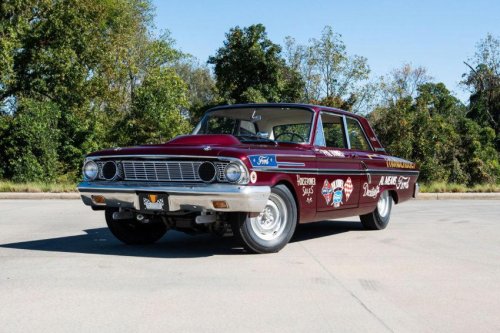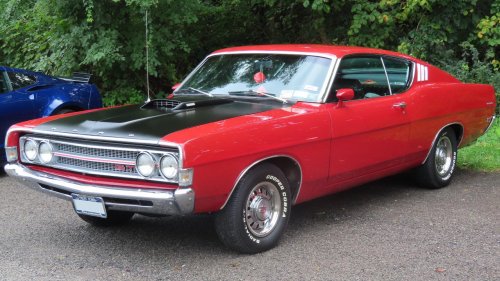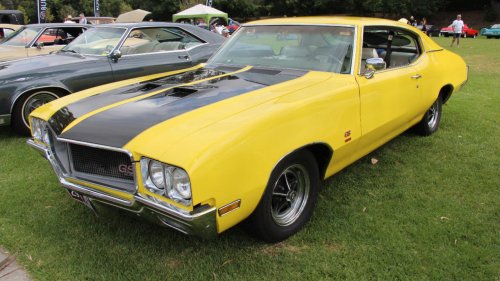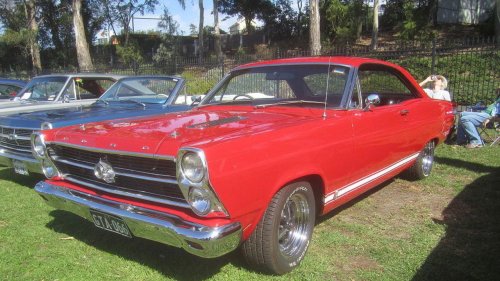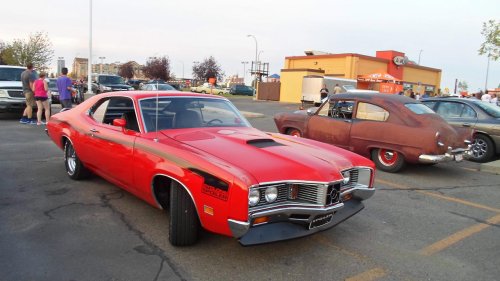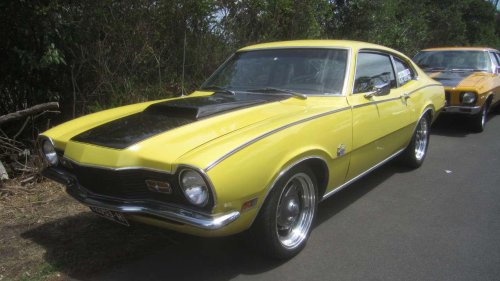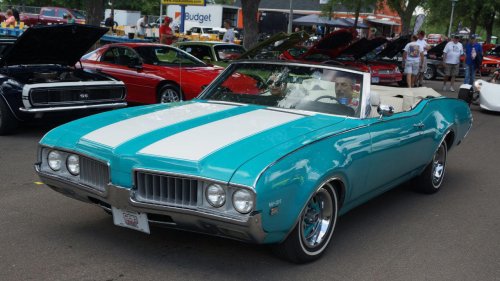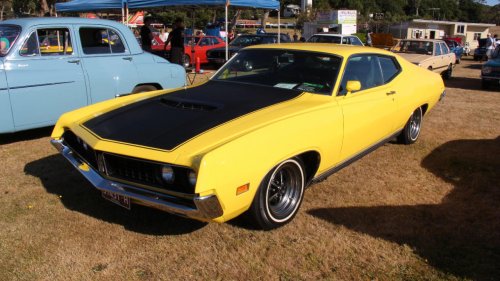
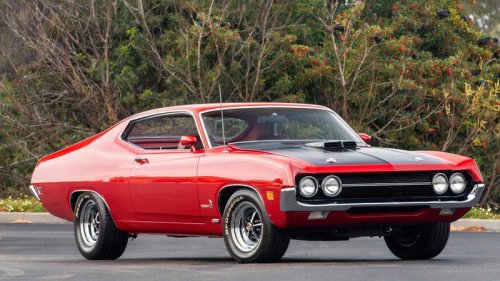
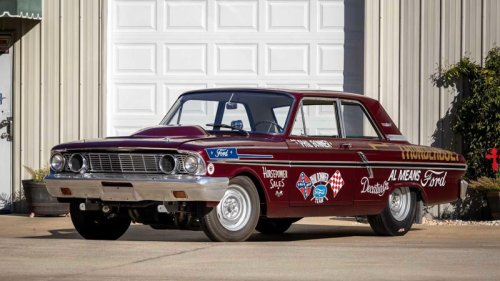
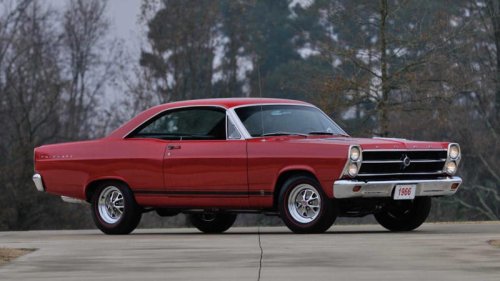
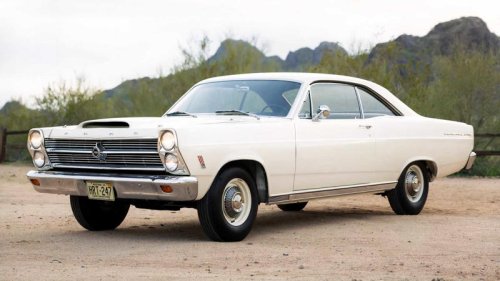
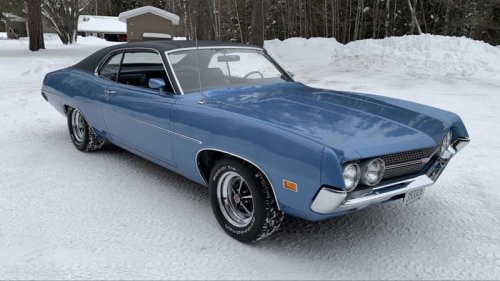
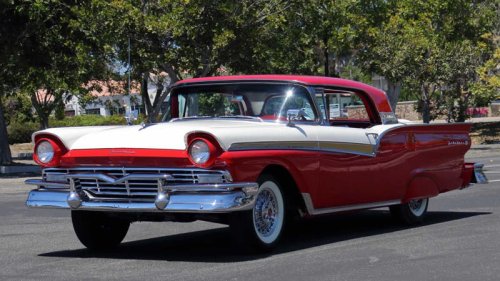
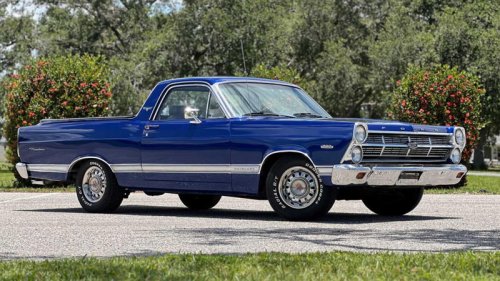
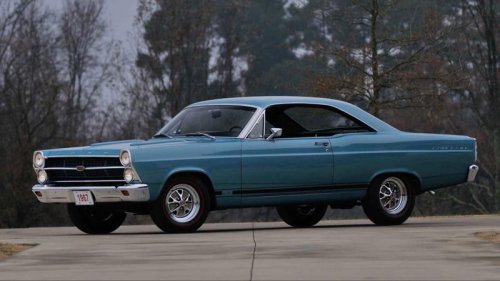



















Ford has been in business for 120 years and in that time has sold more than 300 million vehicles, which is to say they have a pretty high profile in the automotive industry as well as name-recognition with the public. Some of the most iconic nameplates have come from Ford, like the Mustang or Bronco, and their F-Series trucks are the best-selling in history. It's known globally for its rides and its Blue Oval logo, which makes it weird to point out that they actually made a muscle car that virtually nobody remembers.While Ford has always been an innovative company that made popular models, they had their fair share of flops as well. The disastrous launch of the Edsel, the explode-on-impact Pinto, and the uninspiring Aspire are just a few that come to mind. The thing about those cars that flopped is that people still remember them, though not fondly, but Ford's forgotten muscle car really is lost to time. While the ugly and unsafe vehicles from Ford's discard bin bombed for a reason, their mystery muscle was completely badass and should be among the Golden Age elite. Ford’s Soft Approach To The Classic Muscle Car Era Mecum The Ford Mustang, introduced in 1964½, wasn't a muscle car, but it did contribute to the free spirit of the Golden Age as a fun, sporty ride that appealed to young buyers. The 'Stang did come with some seriously mediocre engine options and a playful design, but that would change later in the decade.In 1967, the Mustang was redesigned with a much angrier fastback SportRoof version that would get wider, longer, and more aggressive by 1969. Also, during this period, Ford unleashed the big-block engines that made the Mach 1 and Boss 429 true muscle cars. The Mustang was a huge success from the git-go, so there was no urgency to tap into the muscle car segment, but eventually became necessary to compete for the youth market. The Tornino’s Late Entry Mecum Ford officially got in on the muscle car craze launched in 1964 by the Pontiac GTO, with the 1968 Torino. It was, however, a fairly dated design, as the second-gen Dodge Charger and Chevy Chevelle had already established era-defining Coke bottle body styles.In 1970, the Torino finally got up to speed with its styling, which was one year before the end of the classic era, but better late than never. The Torino Cobra equipped with a 429 was as killer-looking and performing as anything on the streets in 1970, with verified 13-second ETs. Still, it doesn't get as much love as Judge or 'Cuda, which can be chalked up to it's late entry into the muscle car game and the fact that it was hard to crawl out of the Mustang's shadow. Ford Thunderbolt Factory Drag Car Mecum Auctions Ford got into the muscle car mania late, except it didn't because of the 1964 Thunderbolt. The car with the coolest name ever was a factory drag offering with a 425-horsepower dual-quad 427 cubic-inch V8, that was realistically 540+ ponies. This limited edition only produced 100 units and was good for some 12-second passes and was based on the fourth-generation Fairlane.The car was intended for and distributed to NHRA racers. It doesn't exactly count as a muscle car since it wasn't available to normies for street use. Ford really missed the boat on this one. Had they offered a 427 Fairlane to the general public in '64, people might not have even remembered the much slower GTO. Tragically Slept-On Fifth-Gen Ford Fairlane Mecum In 1966, Ford unleashed the fifth-generation of the Fairlane which, in two-door hardtop form, was much cooler-looking than the first-gen Charger and as good as or better on the streets than the GM A-body cars. The '66 Fairlane 500 GT with a 320 hp, 427 lb-ft of torque 390ci V8 was a solid low-14s car which matched or beat the Pontiac GTO, Chevy Chevelle SS, and Olds 442.Ford cars are used to selling in the hundreds of thousands per year, but this awesome, overlooked muscle car only averaged 28,500 unit over its short two-year run. By comparison, the Chevell SS sold 135,000 during the same time period, so this really is a criminally slept-on classic, both back then and today. 1966 Fairlane R-Code Bring A Trailer Making the relative anonymity of the fifth-gen Fairalne even more perplexing is that Ford actually gave it a factory drag car edition to raise its profile. The '66 Fairlane R-Code was a street-legal 12-second car with a seriously underrated 425 hp, 480 lb-ft of torque 427ci "Side Oiler" V8.This was a car that could have competed with Hemi-equipped Mopars, but it was an extremely limited edition (just 57 units) that was geared to professional racers. Had Ford made this a regular production vehicle, the Fairlane wouldn't be such a forgotten classic, and Mopar would have had a legit rival during the classic age, while the GM muscle cars would be the afterthoughts. Fairlane Rocks All the Way to 1970 Bring a Trailer Not many remember the fifth-gen Fairlane, but probably even fewer realize that it hit a sixth and seventh-generation as a muscle car that went all the way until the 1970 model year. In 1968, Ford birthed the Torino, which was its first real muscle car, but it was sheet metal and performance-wise, identical to the Fairlane.The Torino would grab all the glory as a NASCAR ass-kicker and is a collector favorite today, while most people are shocked to learn the Fairlane was still in production in the late-'60/early-'70s. A 1970 Fairlane could be ordered with a 375-hp Ram Air 429 Cobra Jet V8 that could run in the mid-13s, the same as a Torino Corba, but it doesn't get nearly the recognition as a street assassin. From Boat To GOAT: A Fairlane History Lesson Mecum While the Fairlane may not be on everyone's mind as a classic muscle car, the nameplate is one of Ford's most famous and revered. Introduced in 1955, the Fairlane was Ford's answer to the shoebox Chevy Belair and a near-luxury status symbol. This was such a gorgeous ride that it got top billing in the 1990 action/comedy The Adventures of Ford Fairlane, where it unfortunately was blown up, but chewed up the scenery before its demise.It continued as an upscale full-size land yacht until 1960, when Ford shrunk it down to intermediate size. While not quite as fancy, the Fairlane finally got some mind-blowing power with both the '64 Thunderbolt and the '66 R-Code. It really was a boat-to-GOAT journey. With a Side Order of Huevos Ranchero Mecum Another thing most people forgot or never even knew in the first place about the fifth-gen Fairlane is that it included the Ford Ranchero. The coupé utility, which is a fancy way of saying "car/truck" had been around in various sizes and shapes since 1957, but in 1966 was built on the Fairlane intermediate platform and was every bit as a forgotten Golden Age muscle car.The same 320-hp 390 that was available in the Fairlane 500 GT could be ordered in a Ranchero. Being a little lighter, the '66-'67 Ranchero was actually a couple ticks faster in the quarter-mile and, with a little bit of tuning, could run in the 13s. This was one of, if not the first sleeper rides that looked innocent enough, but could blow some doors off. Best Deal In American Muscle Mecum Killer muscle cars from the Golden Age, especially ones with modest production numbers, are usually six-figure collector rides and can stretch into the millions, but a fifth-gen Ford Fairlane is an absolute steal. For a '66 Fairlane 500 XL GT with a 390ci V8, Hagerty sets the value at $16,400 for a fixer-upper and just $55,300 for a Councours condition showpiece. J.D. Power, which sets their values on real-world sales, tells us this car has an average retail price of only $29,600, with a high of $42,900. These prices are about one-tenth of what it would cost to pick up a same-year Chevelle SS or Hemi Charger and the Fairlane is definitely in the same class.The average auction price for a fifth-gen non-R-Code Fairlane muscle car is $28,267, with a high of $41,800 for a cherry 390 convertible. The ultra-rare R-Codes go for nearly $300k which, given their rarity and awesomeness, is still a bargain, while they are practically giving away the regular 500 GTs. That completely restored 51,000-mile aqua '67 GT pictured above was bid up to $46,000 at a Mecum auction, but failed to hit the reserve and didn't sell. If that's what someone was willing to spend, that's what the car is worth and that's a great deal no matter how you look at it. Shop around, you won't find a better bargain on some serious classic muscle like this.Sources: Hagerty, J.D. Power, Mecum