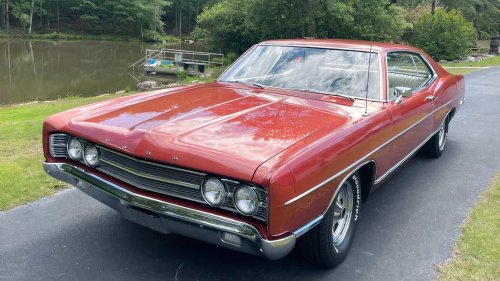
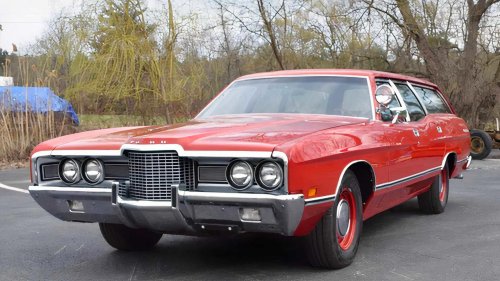
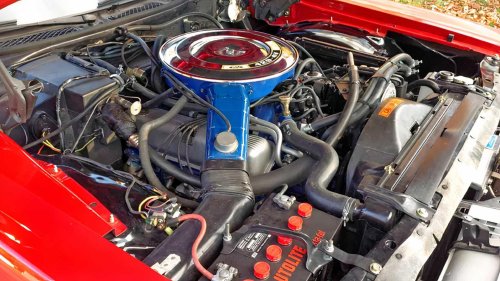
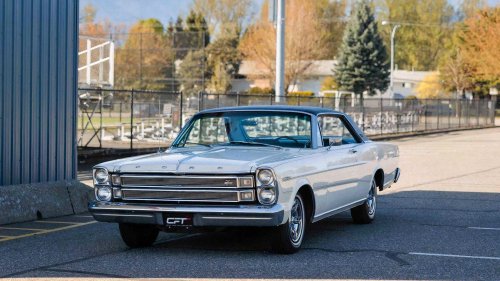
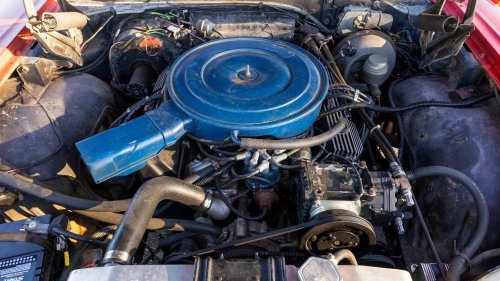
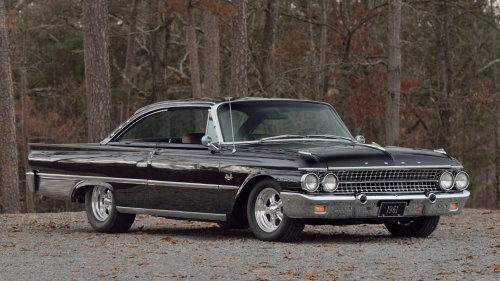
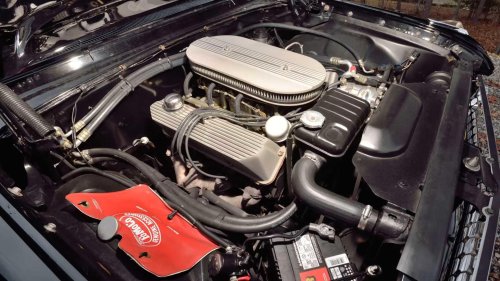
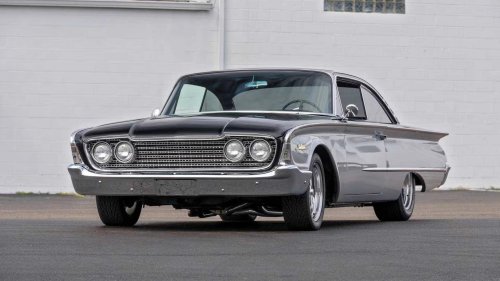
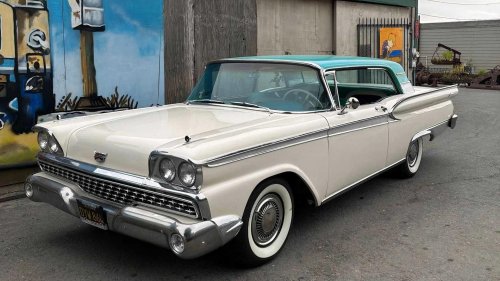
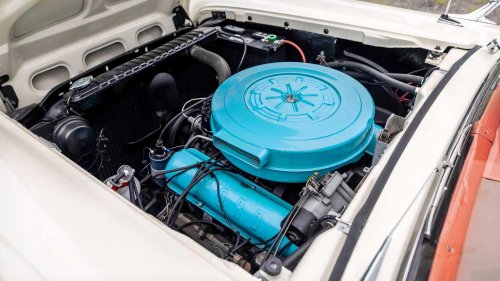



















Jump LinksAll Ford Galaxie Models – Body Styles by YearEngine Options and PerformanceFourth Generation Ford Galaxie Production YearsFourth Generation Ford Galaxie Prices and Value Over the YearsEngine Options and PerformanceThird Generation Ford Galaxie Production YearsThird Generation Ford Galaxie Prices and Value Over the YearsEngine Options and PerformanceSecond Generation Ford Galaxie Production YearsSecond Generation Ford Galaxie Special Trims/Editions/ModelsSecond Generation Ford Galaxie Prices and Value Over the YearsEngine Options and PerformanceFirst Generation Ford Galaxie Production YearsFirst Generation Ford Galaxie Prices and Value Over the YearsEveryone loves to crown the Mustang as the best and most influential Ford muscle car from the '60s, but was it really? Those who are familiar with the Ford Galaxie's rich history would beg to differ. The Galaxie helped the Blue Oval dominate not just the streets but also the NASCAR track, despite its full-size configuration. The Galaxie is a popular collector car among muscle car enthusiasts seeking a combination of classic style and powerful V8 engine options. We're happy to talk you through all the key details of every generation. Information About Every Ford Galaxie Generation 1969 Ford GalaxieIn the late '50s, Ford needed to spice up its full-size range in order to keep up with the growing competition from rivals such as the Chevrolet Impala and Plymouth Fury. Ford introduced the Galaxie as the new top trim of its full-size range, replacing the Fairlane 500. As hinted by the name, the Galaxie debuted at the height of the Space Race and was named to evoke the era's fascination with space domination.While the Galaxie started as a high-trim full-size trim package, it soon evolved into the foundation of the marque's full-size range with multiple body styles and trims that helped Ford capture a larger share of the market. On top of that, the Galaxie helped bridge the gap between 1950s Y-block V8 tradition with Ford's FE big-block V8 architecture, signaling a shift toward higher power output, reliability, and racing relevance.The Galaxie had an unusually wide range of body styles, including two- and four-door sedans, station wagons, pillarless hardtops, convertibles, fastback versions like the Starliner, and more. It also had numerous trims like the Galaxie XL and Galaxie 500, ensuring different buyer needs could be met.From 1960 to 1964, the Galaxie was a central weapon in Ford's NASCAR strategy thanks to its potent FE engines, including the 406, 427 Low Riser and Side Oiler variants, among others. Powered by these engines, Ford proved it could embarrass its rivals both on the road and track. In 1964, the vehicle's model name was slightly changed to "Galaxie 500".From 1965 to 1968, the Galaxie evolved into a mature full-size flagship car offering refined performance. From 1969, market shifts and regulatory changes reshaped the Galaxie's mission, and by the mid-70s, the Galaxie had transitioned from a muscle car icon to a durable full-size workhorse. In 1974, Ford pulled the plug on the Galaxie nameplate, leaving the LTD as Ford's flagship full-size model. All Ford Galaxie Models – Body Styles by Year The Galaxie had a long list of body styles to choose from. Fourth Generation Ford Galaxie (1969-1974) 1971 Ford GalaxieThe fourth-generation Galaxie debuted in 1969 with many notable changes over its predecessor. For one, the fourth-gen Galaxie rode on a new platform and had a larger, more rounded body design that looked completely different from the sharper slab-sided Galaxies of the early to mid 60s era. It was offered primarily as a two or four-door sedan or hardtop, but convertibles were also available in the early model years before being moved to the LTS line in 1972. Trim levels included Base, Country Sedan, and XL.Under the hood, Ford ditched the potent 427 and 428 engines from the third-generation variant, leaving them available in just the police package versions alone. However, Ford wanted to maintain the Galaxie's reputation for offering performance, so they introduced a 429 cubic-inch "Thunderjet" V8 making more power than the previous 428. However, power figures dropped from 1972 onwards thanks to fuel emissions restrictions and changes in horsepower rating practices.Here are some of the notable changes that happened to the fourth-gen Galaxie:1969: Full redesign and the introduction of the 358-series 429 cubic-inch V8. 1970: FE engines phased out as emission restrictions and lower compression reshaped output and drivability. 1971: The Galaxie's identity revolves around Police and fleet use, with performance figures dropping in standard versions. 1972: Convertible model moved to the LTD line as Galaxie transitions into more of a workhorse than a performance icon. 1973: The 1973 Galaxie had a heavier, bulkier appearance despite being marginally shorter than previous versions. A new "pillared hardtop" with a thin "B" post and frameless door glass replaced the four-door sedans with metal frames. 1974: Final year for the Galaxie. Engine Options and Performance Via BaT Though the popular FE 427 and 428 V8 engines from the third-generation Galaxie were discontinued, the fourth-gen variant maintained the Galaxie's reputation for offering performance. Engine options included inline-sixes that prioritized fuel economy and durability and big-block V8s such as the 390 and the top-of-the-range 429. Unfortunately, as the early '70s progressed, emission regulations led to lower compression ratios and reduced power output across the Galaxie lineup. Fourth Generation Ford Galaxie Production Years 1969-1974 Ford Galaxie 500 Base1970-1974 Ford Galaxie 500 Country Sedan1969-1970 Ford Galaxie 500 XL Fourth Generation Ford Galaxie Prices and Value Over the Years The fourth-generation Ford Galaxie is the least popular amongst collectors, but it's still an excellent classic car for muscle car fans, especially if you get the early model years before power figures started dropping. According to Classic.com, it the fourth generation Galaxies sell for an average price of roughly $22,000, making it one of the most attainable platforms in the classic car market. Third Generation Ford Galaxie (1965-1968) 1966 Ford GalaxieThe third-generation Ford Galaxie debuted in 1965 with an all-new design that Ford hoped would help it edge out the stiff competition in the muscle car world at the time. Unlike the early '60s Galaxie that had a boxy design, the third-generation version had a cleaner, more aerodynamic design featuring vertically stacked headlights, smooth side panels, and a formal yet modern appearance that matched mid-60s American tastes.Like its predecessor, the third-generation Galaxie had a wide range of body styles, including sedans, hardtops, convertibles, and station wagons. Ford reduced the number of trim levels, and now buyers could choose between Base, Country Squire, XL, LTD, and the 7-Litre. The 7-Litre was a 1966-only trim while the LTD became a separate model after 1967.In the engine department, buyers could opt for highly efficient engines like the 240 cubic-inch six-cylinder and 289 V8 or choose powerful FE V8 engines, with the best pick being the 425-horsepowr 427 "Side-Oiler" V8.Some of the yearly changes the third-generation Galaxie had included:1966: Galaxie had a new horizontally split grille and a slight Coke Bottle design. 1967: The Galaxie had slight styling modifications that made it appear less boxy than the previous models. The 7-Litre no longer carried the Galaxie name. 1968: Front fascia redesign featuring a new grille with horizontally arranged headlights. The base V8 engine grew from 289 to 302 cubic inches. Engine Options and Performance Via BaT The third-generation Galaxie had something for everyone as far as engine options were concerned. Buyers who valued fuel efficiency were fully covered thanks to a six-cylinder engine and a small-block V8. Those who valued brute power and performance had various FE V8 engines to choose from ranging from a 352 cubic-inch V8 with 250 horsepower on tap to the top-of-the-range 427 "Side-Oiler" V8 dishing out 425 horepower. The 427 engine was homologated for NASCAR racing and was sold in limited numbers. Third Generation Ford Galaxie Production Years 1965-1968 Ford Galaxie 500 Base1965-1967 Ford Galaxie 500 Country Squire1965-1968 Ford Galaxie 500 XL1965-1967 Ford Galaxie 500 LTD1966 Ford Galaxie 500 7-Litre Third Generation Ford Galaxie Prices and Value Over the Years The third-generation Ford Galaxie checks all the boxes muscle car collectors look for, with a superb combination of proper muscle car design, power, and historical significance. 1965 and 1966 models fetch the highest prices, with some models equipped with the 425-horsepower Side-Oiler V8 commanding six-figure price tags. According to Classic.com, it does still retain an attainable average price of roughly $25,000. Second Generation Ford Galaxie (1960-1964) 1961 Ford Galaxie Starliner - 1The second generation marked a key point in the Ford Galaxie's story as it evolved from a high trim level in Ford's full-size lineup into the backbone of the marque's full-size lineup. The second-generation Galaxie debuted in 1960 with a complete redesign that moved away from the heavy chrome and massive fins of the late '50s, adopting cleaner, more streamlined styling. Some of the key design features included a wider, lower stance, flatter sides, restrained ornamentation, an "A" that now swept backward, and "half-moon" taillight lenses instead of Ford's traditional pie-plate round taillights.Two years into the second-generation Galaxie's run, the Galaxie became so popular that it replaced the Fairlane as Ford's primary full-size model. Every full-size Ford now carried the Galaxie name, while the Fairlane was moved to the intermediate line.The Galaxie family had tons of options for gearheads in trim levels and body styles. Body styles included two and four-door sedans, hardtops, convertibles, and station wagons. Trim levels included Base, 500, 500 Club Victoria, 500 Country Squire, 500 Sunliner, 500 XL, 500 XL Sunliner, Country Sedan, Starliner, and Town Victoria. From 1964 onwards, Ford renamed the car to "Galaxie 500".Under the hood, the second-generation Galaxie evolved into a performance car with the introduction of a 300-horsepower engine in 1961, the introduction of a 405-horsepower 406 V8 in 1962, and the introduction of the performance-oriented 425-horsepower 427 V8 in 1963.Here are some of the yearly changes the second-generation Galaxie had:1960: The second-generation Galaxie debuted with a new, sleeker design. Ford introduced the Starliner two-door hardtop featuring a thin, sloping roof pillar with star emblems and a large, curved rear window. 1961: Ford revised the Galaxie's bodywork, with tail fins almost eliminated. Performance improved with the introduction of the 390 cubic-inch FE V8. 1962: Ford applied the Galaxie name across its full-size lineup, replacing the Fairlane. A 406 cubic-inch V8 was introduced. 1963: Ford introduced a fastback roof on some Galaxie models to improve aerodynamics for NASCAR racing. A new 427 cubic-inch FE V8 was introduced and homologated for NASCAR racing, replacing the 406. 1964: Minor interior trim alterations. Engine Options and Performance Mecum The second generation was the first Galaxie with real muscle car credentials, as performance was starting to be a key selling point. The 1961 Galaxie kicked things off with a new 390 cubic-inch version of the Ford FE series V8 engine offering 300 ponies. Things got a bit more interesting in 1962 when Ford introduced a new 406 V8 making up to 405 horespower. A year later, the second-generation Galaxie reached its performance peak when a new 427 FE V8 replaced the 406. The 427 engine was homologated for NASCAR racing and produced a whopping 425 horsepower, making the second-generation Galaxie a beast on the road and track. Second Generation Ford Galaxie Production Years 1960-1964 Ford Galaxie Base1961 Ford Galaxie Club Victoria1960-1961 Ford Galaxie Starliner1960-1961 Ford Galaxie Sunliner1961 Ford Galaxie Town Victoria1962-1963 Ford Galaxie 5001963-1964 Ford Galaxie 500 XL1962 Ford Galaxie 500 XL Club Victoria1962-1963 Ford Galaxie 500 Club Victoria1962 Ford Galaxie 500 Town Victoria1962 Ford Galaxie 500 XL Sunliner1963-1964 Ford Galaxie 500 Country Squire1963 Ford Galaxie Country Sedan1962-1963 Ford Galaxie 500 Sunliner1963 Ford Galaxie 500 XL Sunliner1964 Ford Galaxie 500 Lightweight Second Generation Ford Galaxie Special Trims/Editions/Models The second-generation Galaxie didn't have a special edition model, but there were two special trims that stood out:MecumStarliner (1960-1961): A new body style that debuted in 1960 featuring a pillarless, hardtop bodyshell with a large, curving rear observation window. Lightweight (1964): Since the Galaxie was too heavy for drag racing, Ford produced a limited run of "Lightweight" Galaxies with fiberglass and aluminum parts to save weight. Despite having the 427 V8 and tons of weight-saving measures, these Lightweight Galaxies were still no match for the 1963 Chevy Impala Z-11. Second Generation Ford Galaxie Prices and Value Over the Years The second-generation Ford Galaxie is a valuable collector muscle car today, especially if you get the later model years with the 427 cubic-inch V8. The crown jewel is the rare 1964 Ford Galaxie 500 Lightweight, which has a Hagerty valuation of $244,000 in good condition. As far as Ford Galaxie average values go, Classic.com shows the second generation models typically sell for around $43,000. First Generation Ford Galaxie (1959) Via BaTIn 1959, Ford introduced the Galaxie to the world, but instead of a standalone model, the Galaxie became the top trim in Ford's full-size lineup, replacing the Fairlane 500. The Galaxie debuted at the height of the Space Race and its name signified the era's fascination with space exploration.The 1959 Galaxie looked right at home next to other ostentatious late '50s American cars thanks to its elegant design featuring wide proportions, bold chrome and stainless steel detailing, and dramatic tailfins. Body styles were extensive and included the same sedans and hardtops as the Fairlane 500. However, the Sunliner and Skyliner convertibles were moved from the Fairlane 500 to the Galaxie. The Skyliner retractable hardtop was particularly impressive as it featured an advanced power-operated steel roof that folded into the trunk at the press of a button.Since the first-gen Galaxie shared its platform and engines with other full-size Fords, engine options ranged from inline-sixes to powerful V8s, ensuring different needs were covered. Engine Options and Performance Via BaT The first-generation Galaxie used the same engines as other full-size Ford models. The base engine was a 223 cubic-inch inline-six offering only 145 horsepower, but buyers could upgrade to a 352 cubic-inch FE Series V8 making 300 horsepower. First Generation Ford Galaxie Production Years 1959 Ford Galaxie Base1959 Ford Galaxie Club Victoria1959 Ford Galaxie Country Squire1959 Ford Galaxie Skyliner1959 Ford Galaxie Sunliner1959 Ford Galaxie Town Victoria First Generation Ford Galaxie Prices and Value Over the Years While the first-generation Galaxie had an elegant design with all the bells and whistles of 1950s American luxury cars, its emphasis was more on smooth power delivery than downright power and NASCAR dominance. As such, the most valuable versions are the Skyliner and Sunliner convertibles. An average price of about $33,000 is shown on Classic.com for first-generation Ford Galaxies. Summary: Which Galaxie Generations Matter Most? Collectors generally skip right over first and fourth-generation Ford Galaxie models, making them excellent points of entry into the collector car market for many. In terms of historical value, it’s hard to decide between the second and third generations when picking the most important. The second-generation Galaxie birthed the standalone model and introduced performance to the platform. In 1963, it secured 23wins in NASCAR and the manufacturer’s title. The third generation then took things to the next level with horsepower-wars-level performance, while retaining comfort and luxuries other customers demanded. Regardless, you simply can’t lose with whatever Ford Galaxie you end up with.