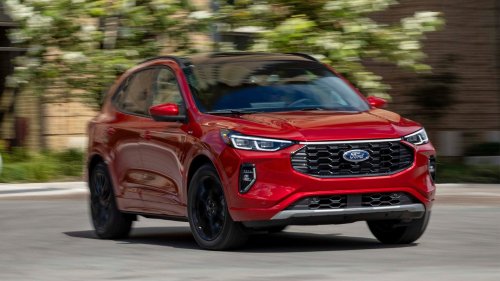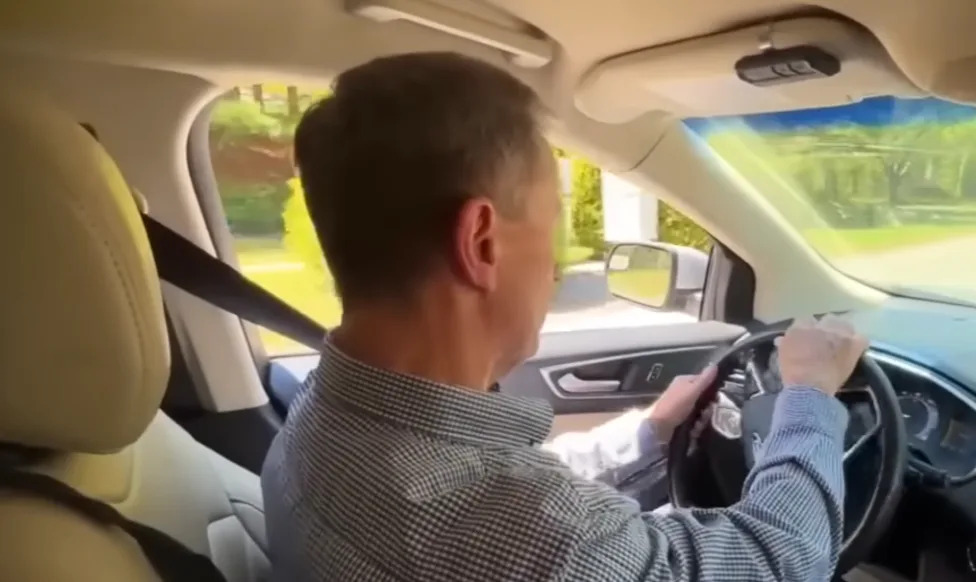



















Image Credit: WCVB Channel 5 Boston / YouTube.A Massachusetts man shelled out nearly $1,900 to fix a brake issue on his Ford Edge that the automaker had already flagged as a safety defect, and Ford's response was essentially: hang on to that receipt. The situation highlights a rarely discussed gap in how auto recalls work in practice, and it's the kind of thing that turns loyal customers into former customers.Paul Lonergan discovered brake fluid pooling in his driveway this spring, traced it to a ruptured rear brake hose on his 2017 Ford Edge, and had the repair done to the tune of $1,854. The problem wasn't some mystery failure. It was the exact defect Ford had already disclosed to federal regulators in a recall filing the previous August, covering roughly 499,000 Ford Edge and Lincoln MKX vehicles from the 2015 to 2018 model years. Lonergan reasonably assumed the recall would mean Ford would cover the bill. That assumption turned out to be premature.When he brought the issue to his dealership, the response was blunt: the recall was on file, but the remedy had not yet been finalized, so Ford was not authorizing payment. Parts weren't available, the fix wasn't ready, and until it was, Lonergan was on his own. His options were either to pay out of pocket and drive the car, or leave it sitting unusable in his driveway for an indefinite stretch of time while Ford sorted out its supply chain.AdvertisementAdvertisement"I don't have $1,800 to loan to a billion-dollar corporation," Lonergan told WCVB. Ford's position is that he can submit his receipts for reimbursement consideration once the official remedy is finally launched, which is now expected sometime in the fall, more than a year after the recall was first announced. Whether that reimbursement will actually materialize, and exactly when, remains an open question.What the Recall Actually CoversFord filed recall 25V544 with the National Highway Traffic Safety Administration in August 2025, identifying a potential failure in the rear brake jounce hoses on 2015 to 2018 Ford Edge and 2016 to 2018 Lincoln MKX vehicles. The hoses, which were supplied by a Mexican manufacturer and phased out of production in December 2017, can rupture prematurely and trigger a progressive brake fluid leak.Drivers may notice increased pedal travel and longer stopping distances before the red brake warning light kicks on, if it kicks on at all before braking performance degrades.Ford told the NHTSA it expected the repair remedy to be available by April 2026, but that timeline has now slipped to September 2026. In the meantime, owners received interim notification letters last fall alerting them to the issue, with a follow-up letter containing actual repair instructions promised once parts are in hand.AdvertisementAdvertisementFord estimates that roughly 1% of the nearly 500,000 affected vehicles will actually experience the defect, though the company acknowledges 64 warranty claims and 16 customer complaints tied to the issue as of mid-2025.Ford Took Years to Get HereThe paper trail on this recall goes back further than most owners realize. NHTSA first contacted Ford about rear brake hose failures on Edge vehicles in March 2021. At that point, Ford looked at a relatively low occurrence rate and decided the situation did not represent an unreasonable safety risk, closing its internal investigation.NHTSA came back again in July 2024 with a larger batch of complaints, prompting Ford to reopen the review. Ford closed it again in September 2024, again concluding the risk was manageable given that the dual-circuit braking system would still allow the vehicle to stop using two of its four brakes even in the event of fluid loss.NHTSA wasn't satisfied. It opened a formal Preliminary Evaluation in October 2024 and spent the following months pressing Ford with additional technical analysis. By July 2025, after another face-to-face meeting with federal investigators, Ford's internal review committee reopened the investigation and, within weeks, approved the recall.AdvertisementAdvertisementIn other words, Ford spent roughly four years and multiple rounds of prodding from federal regulators before reaching the conclusion that half a million vehicles needed a safety fix. Lonergan's car was leaking brake fluid in the middle of that process.What Owners Should Know About Recall ReimbursementFederal law does require automakers to reimburse owners who paid to fix a defect that was later made the subject of a safety recall, provided the repair was done before the owner notification letter was mailed. Ford's general reimbursement plan, on file with the NHTSA, covers exactly this scenario.The practical wrinkle in Lonergan's case is timing: he paid for the repair after the recall was announced but before the remedy was finalized, which puts his situation in a gray area that neither Ford nor NHTSA has cleanly addressed on the record.Ford Edge and MKX owners who believe their vehicles may be affected can check their VIN at NHTSA's recall database or call Ford directly at 1-866-436-7332. Those who have already paid for rear brake hose repairs should hold onto every receipt and document every conversation with the dealership.AdvertisementAdvertisementFord's own website acknowledges that reimbursement eligibility exists for owner-paid repairs tied to a recall, and directs owners to bring documentation to any authorized Ford dealer. Whether that process will move smoothly for Lonergan and others in similar circumstances remains to be seen.He has already made his own verdict clear: "This will be the last one I drive."If you want more stories like this, follow Guessing Headlights on Yahoo so you don’t miss what’s coming next.