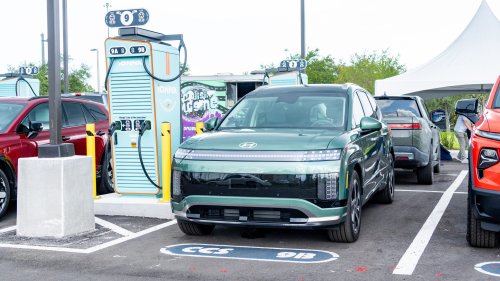
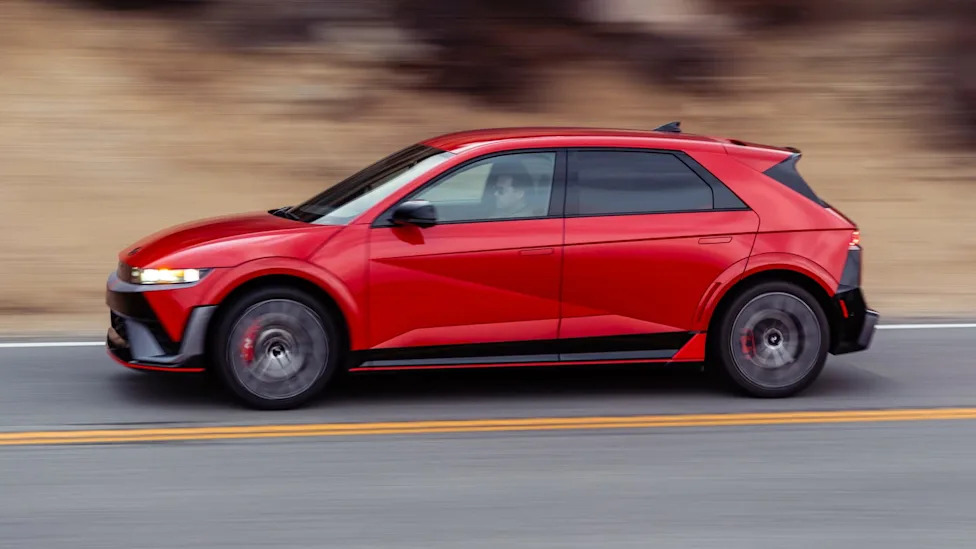
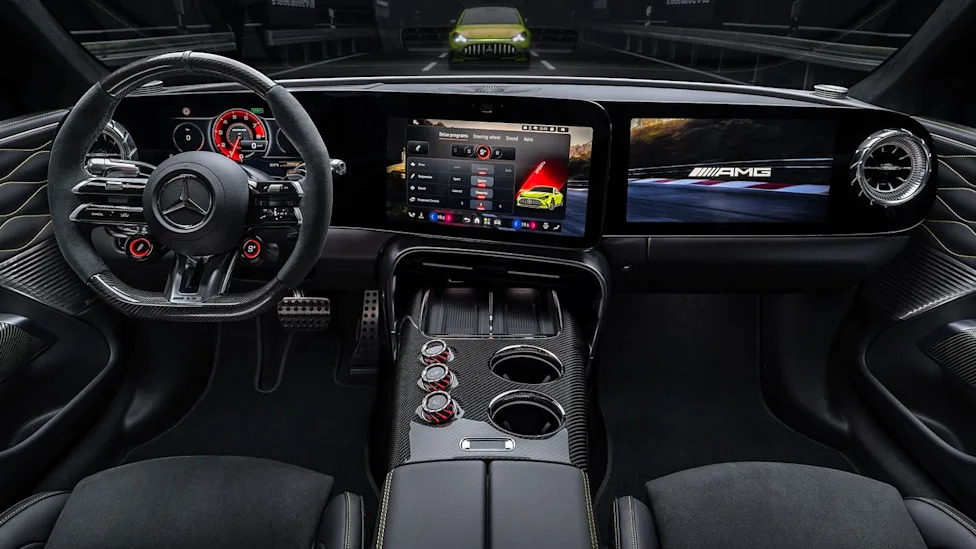




















Can Fake V-8 Sounds Make EVs Fun?Ryan Lugo - MotorTrendElectric motors have given performance cars a shot of adrenaline while also erasing all the powertrain character that makes a 911 so different from a Ferrari or an M3 or a Corvette. It's a problem for automakers that have built an identity around an exhaust note for decades. How do you distance a Porsche from a Hyundai when both cars have the same silent, instantaneous, torque-rich power delivery?Several automakers think the answer is to use an EV's onboard computing power to imitate the sound and feel of a gas engine. We got our first glimpse of this in the 2025 Hyundai Ioniq 5 N. When e-Shift is switched on, the Hyundai's two electric motors and single-speed transmissions are remapped with the power delivery curve of the Hyundai Elantra N's 2.0-liter turbocharged inline-four working through an eight-speed dual-clutch automatic. The torque momentarily cuts and surges as you paddle through the artificial gears, and if you flatten the throttle while cruising in "eighth," there's a hesitation like a turbocharged engine building revs and boost before the motors unleash full torque.Why Fake Shifts Actually WorkSports car purists might find this idea as nauseating as a burger made from pea protein, avocado oil, and methylcellulose mashed into a brown-gray patty. But trust us, you shouldn't knock it until you try it. In 2025, we gave the Ioniq 5 N's powertrain a MotorTrend Best Tech award in large part because "shifting" an EV is so dang fun. Other automakers have taken notice, too. The 2026 Lexus RZ550e F Sport and the 2027 Porsche Taycan can both simulate eight-speed automatics. Up next, the electric 2027 Mercedes-AMG GT 4-Door will, in its AMGFORCE Sport+ mode, mimic the feel and speed of the AMG's nine-speed wet-clutch automatic doing its thing.MotorTrend - MotorTrendAs good as the Ioniq 5 N's fake shifting is, Hyundai came up short when it tried to find a substitute for a million tiny explosions tickling your eardrums. All of the N's three selectable sound profiles (kinda-sorta evoking a race car, a fighter jet, and a sci-fi spaceship) have a lo-fi arcade-game quality to them. Dodge engineers similarly missed the mark when creating a sonic signature for the Charger Daytona by sampling Stellantis's historical collection, including the 1963 Chrysler Turbine Car.The Sound Is Getting More ConvincingRemember how everyone used to complain that BMW was piping the engine note into the cabin through the speakers? These days it's pretty much impossible to tell which notes come from the gas-fueled pipe organ under the hood and which are playing through speakers. Give it some time, and EVs will likely land in a similar spot. You'll know they're faking the sounds but won't be able to hear exactly where and how. Mercedes' electric GT will pull from 1,600 sound files to mix a soundtrack modeled after the company's 4.0-liter twin-turbo V-8. (Not using the thundering 6.2-liter naturally aspirated V-8 was a missed opportunity.)AdvertisementAdvertisementThe next step is to take the idea further and replicate an engine's vibrations. AMG will be the first to market on that front, with seat shakers in the GT that reproduce the loping idle of a cross-plane-crank V-8. Hyundai R&D boss Manfred Harrer has said his engineers are working on a similar idea.Mercedes BenzFor now, automakers have largely stayed true to their own pasts, though that probably won't last forever. We assume it's only a matter of time before some automaker lets you download the exhaust note of Formula 1 engines from every era. Lexus hasn't sold a vehicle with a manual transmission in the U.S. since 2012, but there's an electric prototype running around Japan with three pedals and a six-speed stick. It's all simulated, of course, but the shifter clicks through the gears with short, tight throws, there's "engine braking" when you lift the accelerator in a low gear, and you can even stall the car.Gimmick or the New Normal?Is this the future of EVs or just a fad to help ease the transition away from internal combustion engines? Notably, none of the major EV native brands such as Tesla, Lucid, or Rivian offers any of this internal combustion fakery. Maybe Ferrari has the answer with an idea that's more authentic to EV tech. Instead of aping a 9,500-rpm V-12, the Luce amplifies mechanical noises from the motor that wouldn't otherwise make it into the cabin. We won't dare to predict which approach will win in the long term, but we have a difficult time imagining a future where performance cars don't have some kind of soundtrack to heighten the thrills of their acceleration.