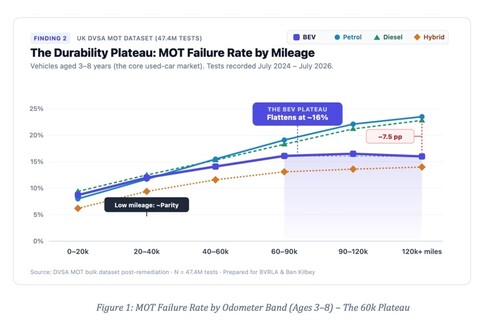
Lily Lavoie · 21 days ago@lilylavoie270High-Mileage EVs May Be More Durable Than Gas Cars Liked by+54 othersPost commentRelated PostsEVs just beat gas and diesel in Europe, leaving the US as the biggest holdoutOlivia Lewis · 9 days agoTrump Administration Is Working Hard To Make Cars Less Efficient During Historic High Gas Prices They Caused 30 · Lauren Hill · 1 months agoThis High-Mileage NSX Was Flood-Damaged 'Junk' — Still Sold For Serious Money At Auction 98 · Lucas Lavoie · 1 months agoDual-EV household fills ICE rental car for first time, says gas prices 'hits different'Abigail Fortin · 10 days agoHigh Gas Prices Have Made Americans Fall In Love With Hybrids 40 · Gabriel Turner · 1 months agoThe Gas Dodge Charger Just Outsold the Daytona EV Nearly 15 to 1Adam Scott · 10 days agoAugust Gas Prices Are On Track To Set An All-Time High 99 · Mason Poirier · 1 months agoHow To Make Your High-Mileage Cummins Engine Last Even Longer 76 · Charlotte Harris · 2 months agoEV Charging Doesn’t Need to Be as Fast as Gas, Ionna CEO SaysGrace Lee · 12 days agoHigh Gas Prices Be Damned, Trump Just Bought 250 Cadillac Escalades 69 · Nicole Brown · 2 months agoShould You Use Thicker Oil In A High-Mileage Engine? 45 · Annabelle Campbell · 4 months agoEPA Built Its Smog Rule Around EVs That Aren’t Coming. Now It Wants Two More Years for Gas CarsHenry Turner · 12 days agoSick of High Gas Prices? These Apps Will Show You the Cheapest Nearby Stations 83 · Nathan Campbell · 3 months ago12 useful tips to maintain a high-mileage car 70 · Owen Tremblay · 4 months agoDrivers Are Switching To Regular Gas As Premium Prices Remain High, Manufacturer Recommendations Be Damned 55 · Aiden Wilson · 3 months agoMechanics keep finding transmission failures in high-mileage luxury crossovers 74 · Kayla Brown · 4 months agoBMW built the same car for gas and electric. The EV is $4,400 cheaper. 12 · Alexander King · 14 days agoToyota points to high gas prices as sales in China plunge 30% 52 · Nathan Nelson · 3 months agoThe truth about high-mileage engines most drivers only learn too late 71 · Ella Moreau · 5 months agoUsed EVs With 100,000 Miles Failed Inspections Less Often Than Gas Cars 15 · Gabriel White · 15 days ago




 +54 others