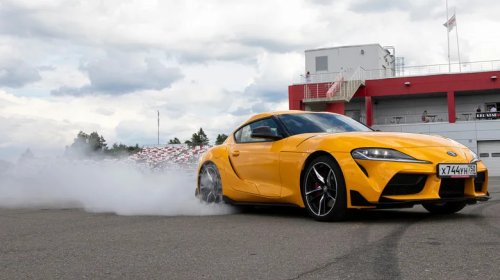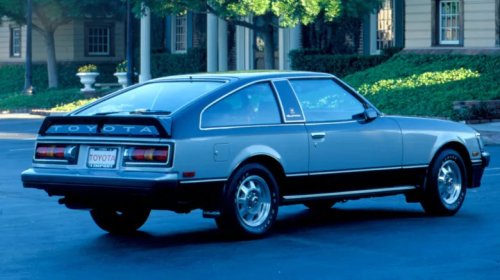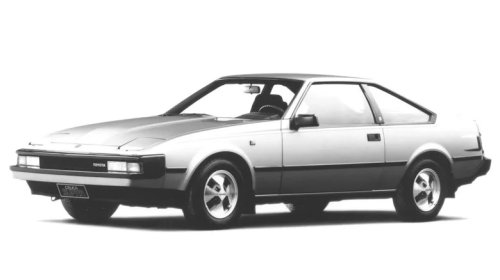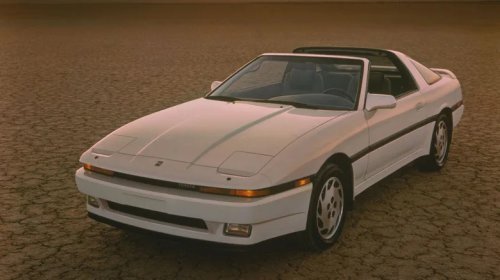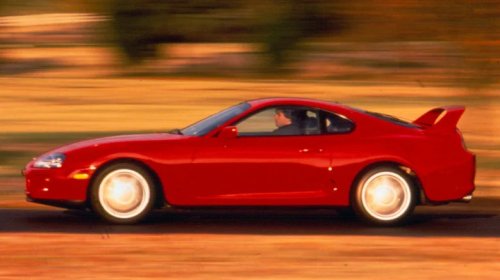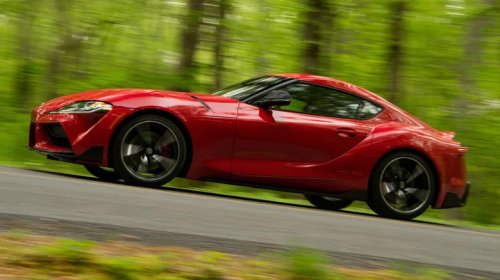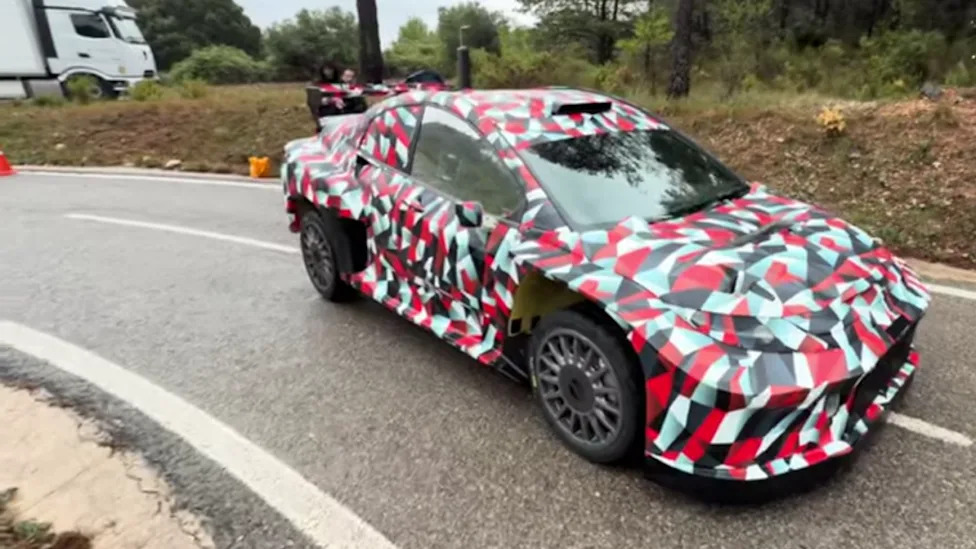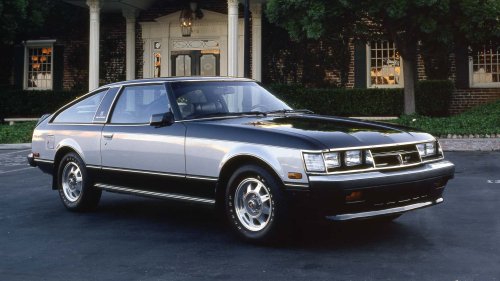
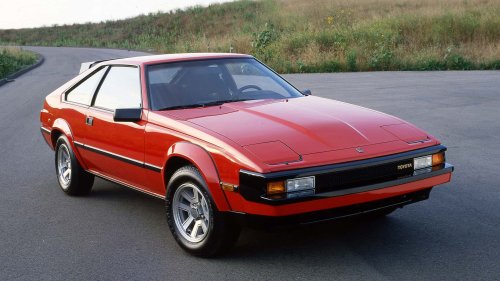
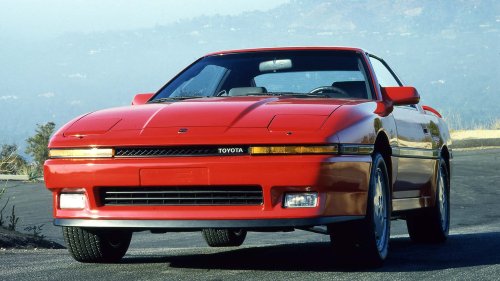
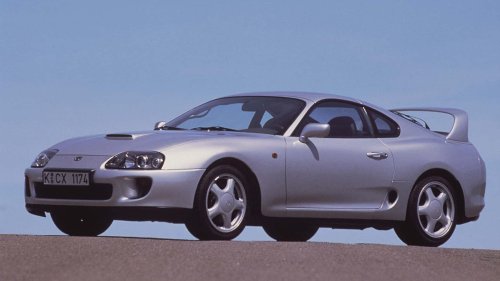
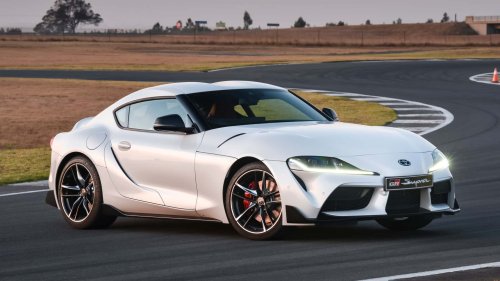
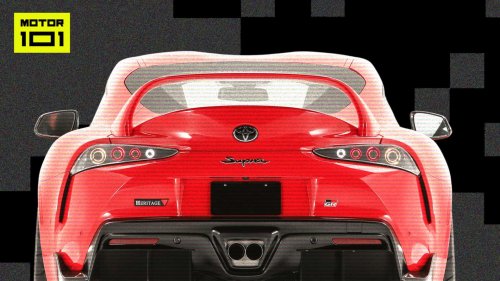



















Among the JDM performance giants that spawned in the late 1900s (that is indeed what the kids are calling that era, I’m told), the Toyota Supra was always one of the more divisive examples, even discounting the BMW discourse that still dogs that new one. Front-engined, rear-drive, and long accused of being a bit heavier than its later reputation would suggest, it didn’t have the motorsport dominance of the Skyline GT-R, the mid-engined Senna aura of the NSX, the rotary quirk of the RX-7, nor the scrappy rally energy of the Evo or WRX STi. It was its own thing, for better and worse, and for a lot of its history was very much overlooked… until, of course, it very much wasn’t. In this latest installment of Motor101, we take a look at every generation of the Toyota Supra, what they were like, and what each represented in this car's journey from $10,000, hunchbacked, GT spin-off to the gamer/meme-coded, half-German "10-second" icon it is today. Jump To: A40 | A60 | A70 | A80 | A90 | What's Next? Celica Supra A40: 1979-1981 Toyota Celica Supra A40 Like Better Call Saul or The Simpsons (look it up), the Toyota Supra started as a spin-off of something else before eventually growing into a legend in and of itself. Originally known as the Toyota Celica Supra (or Celica XX in Japan), this was basically a longer, liftback, straight-six version of the Celica, introduced to compete with cars like the Datsun Z. Introduced for 1979 and only on sale for three model years, the Mk1 Celica Supra was powered by a 2.6-liter engine (a smaller 2.0-liter was also available in Japan), but this grew to 2.8 liters for the final 1981 model. That final iteration also introduced an optional Sports Performance Package involving more aggressive suspension and styling, but for most of its life, the first-gen Supra was very much a “personal luxury” coupe, and that showed in the styling: long, breadvan-like, and vaguely regal. Originally known as the Toyota Celica Supra (or Celica XX in Japan), this was basically a longer, liftback, straight-six version of the Celica, introduced to compete with cars like the Datsun Z. Period reviews confirm it from behind the wheel, with Car and Driver reporting a wallowy, Detroit-inspired ride, serious understeer, and that “you’re better off cruising in the Supra, instead of trying to make life into one huge gymkhana." I’d also like to take the opportunity to highlight a line in that review pointing this car out as "a TEN-GRAND Toyota" with the same incredulity we all had with "FIFTY-GRAND Hyundais," like, 15 years ago. In any case, the OG Supra was definitely a cruiser first, sports car second, but C/D concluded that “subsequent editions could go either direction,” foreshadowing a transition to sports car-dom that would begin almost immediately but arguably wouldn’t fully complete until decades later. Cellica Supra A60: 1982-1986 Toyota Celica Supra A60 Ergo, the second-generation Celica Supra dropped for 1982 with a tauter, more muscle car-esque shape and, par for the ‘80s, a turbo engine. Other extremely ‘80s things included pop-up headlights and a leaner, more chiseled design that sort of makes it look like a budget De Tomaso Pantera. It was more sporting as a driving machine, too, with independent suspension all around, designed with input from Lotus. It was also the first Supra to go racing. British touring car driver Win Percy (yes, that’s his name) drove one for the 1983 and 1984 seasons, scoring an overall win at Brands Hatch and finishing third in his class championship during the latter. The second-generation Celica Supra dropped for 1982 with a tauter, more muscle car-esque shape and, par for the ‘80s, a turbo engine. On the street, this more athletic nature didn’t go unnoticed with C/D declaring it "a whopping big leap" and "the first sports/GT car from Toyota that know [sic] its way down the road." It was still a grown-up grand tourer that evoked comparisons to the old E-Type Jaguar, but it gripped and steered well, and the engine was smooth and eager. Today, the A60 Celica Supra does not live rent-free in car culture’s collective head, as some of its contemporaries or its eventual successor do. But back in the day, it meaningfully moved its lineage forward from “slightly flabby 280Z imitator” to “solid driving Toyota coupe.” It may not have been revolutionary or heroic, but it is foundational to the Supra’s journey. Supra A70: 1986-1993 Toyota Supra A70 A key moment of said journey is finally dropping the Celica name, which finally happened with the third-gen Supra. At this stage, Toyota had decided to branch the Celica off as the front-wheel-drive coupe most knew it as in the later years. Spanning from 1986 to 1993, the A70 Supra took the A60’s boxy, long-hooded design and smoothed out the edges a little. Powerplants remained straight-six-only, growing to 3.0 liters outside of Japan. But within the Japanese market, Toyota brought out a new engine in 1990: a 2.5-liter twin-turbo called the 1JZ-GTE, the first in a family of motors that’d become synonymous with the Supra as a whole. The Mk3 was also weirdly innovative, debuting something called Toyota Electronically Modulated Suspension (TEMS) that let the shocks adjust between three stiffness settings—basically an early version of the adjustable dampers ubiquitous today. A key moment of said journey is finally dropping the Celica name, which finally happened with the third-gen Supra. According to C/D, this car firmly belonged in "the big leagues" and was deceptively speedy in Turbo form, able to "clip apexes with the best of them." The model peaked with the 270-horsepower 3.0GT Turbo A, a homologation special that Toyota claims to have been the fastest Japanese car at the time. As good as it was, the A70 Supra still very much lives in the shadow of what would come next. But its relative lowkey-ness is exactly what makes it accessible to its fans, who mostly consist of JDM enthusiasts looking for Mk4-like tuning potential without the hype tax. Supra A80: 1994-2002 Toyota Supra A80 For those who can indeed afford it, though, this is the one. It’s the car most people still picture when the word "Supra" is uttered. It’s the one enthusiasts wish were still affordable so they can build one that makes 1,500 horsepower without blinking. It’s the only real answer to the big question of, “Is that a Supra?!” It’s the Mk4. The A80. The Toyota Supra. Powered by the legendarily stout and tunable 2JZ 3.0-liter straight-six while rocking a flowing, borderline bulbous design that harked back to the 2000GT, the fourth-gen Supra first dropped for the 1994 model year in the U.S. (Japan got it in ‘93.) This era is now widely recognized as the golden age of Japanese performance, with the A80 Supra sitting alongside machines like the FD Mazda RX-7, the original Honda NSX, and Nissan’s Skyline GT-R on Japan’s automotive Mount Rushmore—all making “276” hp, of course, per the country’s gentleman’s agreement. (European Toyota literature now admits it made 326 hp.) For those who can indeed afford it, though, this is the one. It’s the car most people still picture when the word "Supra" is uttered. Lighter and lower than the previous gen, C/D praised the A80’s strong straight-line performance—zero to 60 mph was dealt with in just 4.6 seconds—"granite tombstone" high-speed stability, and a manual shifter that was “almost as slick and speedy as that in a Miata.” However, like Walter White or Bryan Cranston himself, the Mk4 Supra made its biggest splash relatively late in life. Car-obsessed gamers already knew it from Gran Turismo, but widespread cultural recognition did not come until a little movie called The Fast and the Furious dropped in 2001, and the words “2JZ, no shit” became canon. Painted bright orange and driven in the movie’s climax by the late Paul Walker, the Supra was the hero car in which JDM culture as a whole entered the automotive mainstream. Today, the A80 Toyota Supra is automotive royalty for enthusiasts under a certain age. Between Brian O’Connor positively smoking that finance bro’s Ferrari 355 up PCH, "Smokey" Nagata getting arrested after going nearly 200 mph on a public road in the U.K. in an RB26-swapped example, and blasting through career races in a Castrol Tom’s JGTC race car on your PlayStation 2, everybody knows the Supra and what it’s capable of. On auction sites like Bring a Trailer, the floor for twin-turbo A80s is about $50,000 now, while clean, low-mileage examples can easily trade for over $100,000 and beyond. "TEN-GRAND Toyota?" Yeah, we wish. Supra A90: 2020-2026 Toyota Supra A90 The Supra went quiet for much of the 2000s, but rumblings of its return started near the end of that decade. The 2010s were a long, excruciating drip-feed of rumors, trademark filings, spy shots, and camouflaged teasers, but at last, the production-ready Mk5 Supra was unveiled at the 2019 Detroit Auto Show. Inspired by the wild FT-1 concept from 2014, the new A90 was styled very much like a modern-day tribute to the A80 with wide-flowing fenders and vaguely similar fascias on both ends. Controversy followed, however, when you looked underneath the skin. Presumably spurred on by the success of the Subaru joint venture that was the revived 86, the A90—officially known as the GR Supra, as in Gazoo Racing—is, in most material ways, a BMW underneath. Inspired by the wild FT-1 concept from 2014, the new A90 was styled very much like a modern-day tribute to the A80 with wide-flowing fenders and vaguely similar fascias on both ends. The chassis is said to be co-developed, the skin-deep aesthetic is very much a Toyota creation, and Japanese engineers did do final tuning on the car to make it feel distinct from its Z4 twin. But there’s little getting around the fact that it literally smells like a BMW inside, it uses BMW switchgear, the infotainment system is just reskinned iDrive, and the 3.0-liter turbocharged straight-six under the hood is BMW’s B58, making 382 horsepower—or 335 if you bought a first-year car because of… reasons. As if that wasn’t divisive enough, the Supra could be had with an entry-level four-cylinder for the very first time: BMW’s B48 2.0-liter. Oh, and it also took until the 2023 model year for Toyota to finally offer a manual transmission. The good news, though, is that by most objective measures and opinions, the GR Supra is a very good sports car, with Motor1 editor-in-chief Jeff Perez calling it "stupidly quick" and "a hell of a good time" in manual form. Dropping pretty much any pretense of cushy, long-legged grand touring, the Supra finally evolved into the rowdy sports car its fanboys always secretly hoped it could be. All it took was 40 years and a partnership with Germany to make it happen. What’s Next? After seven years of level-headed professional praise countered by BMW-snark comments online, GR Supra production is ending in March 2026. Don’t fret—the Mk6 Supra Rumor Industrial Complex is already running, with a Japanese publication alleging the next one will be a mid-engined hybrid four-cylinder making 500 hp. Before that does or doesn’t happen, though, Toyota is making 300 pumped-up Final Edition A90s for Europe and Japan with a bunch of carbon aero bits, KW suspension, an Akrapovic exhaust, Brembo brakes, Recaro seats, Michelin Pilot Sport Cup 2 tires, and 429 hp. Not a bad spot to land for a car that started out life as an elongated, slightly floaty Celica. Toyota Supra FAQs Is the Toyota Supra fast? Yes—very. The latest Supra (A90/A91 generation) with the turbocharged inline-6 engine can go from 0–60 mph in about 3.9 seconds, making it a serious performance car in its class. Does the Toyota Supra have a BMW engine? Yes. The current Supra was co-developed with BMW, and it uses BMW-sourced engines (notably the B58 inline-6). This is one of the most talked-about aspects of the car. Is the Toyota Supra available with a manual transmission? Yes—recent models offer a 6-speed manual transmission option, though earlier versions (2019–2022) were automatic-only. How much does the Toyota Supra cost? Pricing varies by trim and year, but new models typically start in the mid-$40,000 range and can exceed $60,000 for higher trims. How does the new Supra compare to the old MK4 Supra? The classic MK4 Supra (1990s) is legendary for its 2JZ engine and tuning potential. The new Supra focuses more on modern performance, handling, and technology rather than raw tunability—but it’s still very capable. We want your opinion! What would you like to see on Motor1.com? Take our 3 minute survey. - The Motor1.com Team