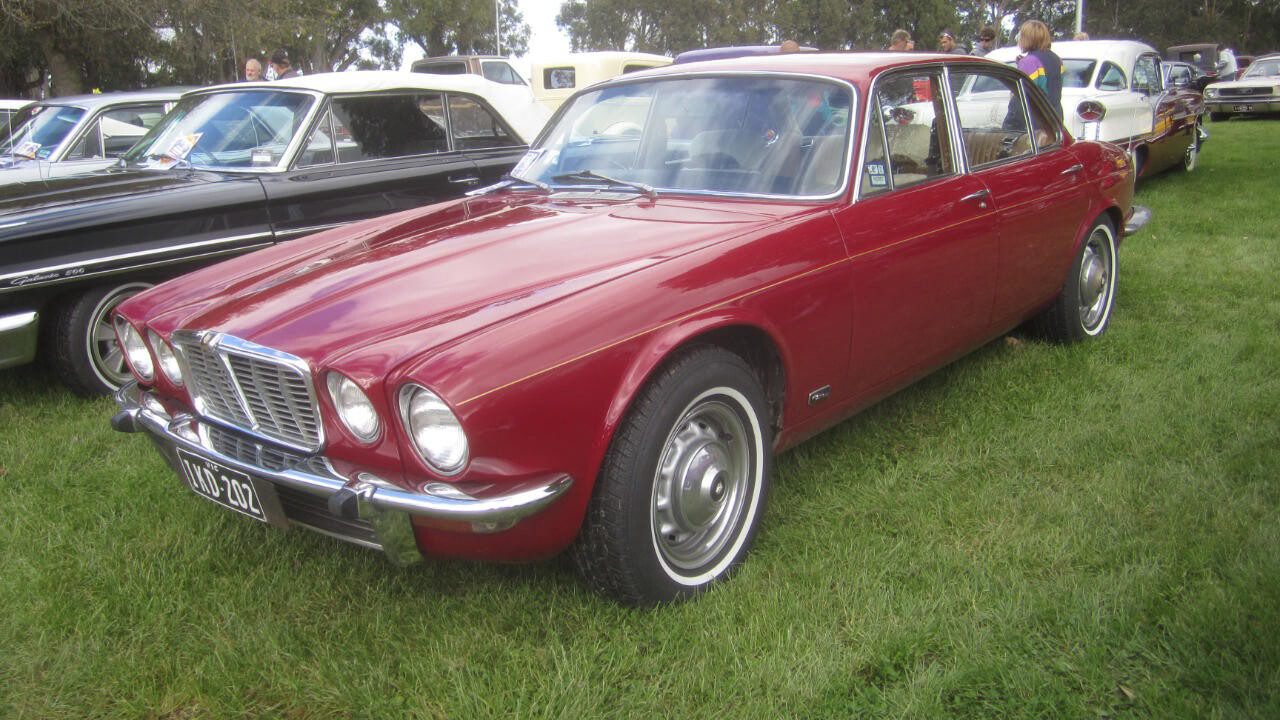
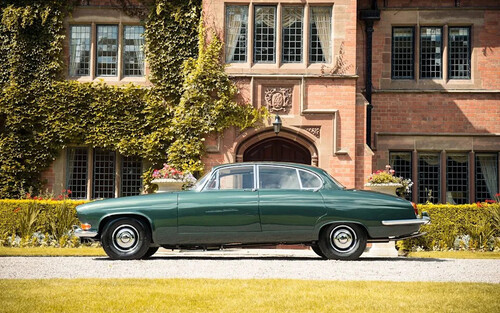
Even now the 1973 Jaguar XJ6 defines a certain kind of luxuryThe 1973 Jaguar XJ6 arrived at a moment when luxury cars were expected to be stiff, formal and a little aloof, yet it offered something different: a sedan that mixed quiet comfort with genuine speed and a sense of British nobility. Half a century later, that combination still defines what many enthusiasts imagine when they think of a truly special four-door. The car’s blend of engineering ambition, restrained styling and old-world craftsmanship continues to shape how drivers talk about luxury, even in an era of touchscreens and electric drivetrains. To understand why, it helps to look closely at what the 1973 XJ6 actually was, how it drove and how it has survived in the collector world. The details reveal a car that did more than carry passengers in comfort; it reset expectations for how a luxury sedan should feel from behind the wheel. The car that united luxury, speed and “nobility” Enthusiasts still describe the Jaguar XJ6 Series 1 as a British Sedan that Unites Luxury, Speed and Nobility. In owners’ groups, the 1973 model is often held up as a sweet spot, late enough to benefit from early refinements yet still part of the original Series 1 design that launched in 1968 and carried through the early 1970s. One community post calls the 1973 Jaguar XJ6 Series 1 “a British Sedan that Unites Luxury, Speed and Nobility” and treats that description as more than marketing language, a shorthand for the way the car manages to feel both stately and urgent on the road, with the word Jaguar used as a kind of seal of character as much as a brand name. That same discussion underlines how the Series 1 concept, referred to simply as Series, framed the XJ6 as a car that could cross continents at high speed without tiring its occupants, something that was not a given for British sedans of the period. Contemporary guides back up that impression with hard data. A detailed 1973 Jaguar Xj6 notes that Specifications for classic cars are compiled carefully, even if period data can vary, and lays out the key ingredients: a long, low four-door body, independent suspension at all four corners and an inline six-cylinder engine that gave the car its name. The catalog’s emphasis on Specifications for ride comfort, mechanical refinement and interior features mirrors the way Jaguar itself sold the car at the time, as a machine that could match larger luxury rivals on comfort while out-handling them on a twisting road. Series 1 elegance at the turning point By 1973, the XJ6 was nearing the end of its original Series 1 run. A buyers’ guide that covers Jaguar XJ6 Series 1, 2 and 3 notes that The Series 2 arrived in 1973, with a raised front bumper and a modified grille that changed the car’s face. That same guide explains that The Series change was driven partly by safety regulations and packaging needs, which forced Jaguar to alter the clean, low front end that had helped make the car famous. Enthusiasts who prefer the earlier look often point to 1973 as a dividing line, the year when the Series 1 shape shared showroom space with the first Series 2 cars and when buyers could still choose the purer original design. Video reviewers have picked up on that distinction. In one widely circulated clip, a presenter compares the Series 2 interior to earlier Jaguars and remarks that it looks more like the interior of a MK2 or a Mark 10, tying the later cabin to older Jaguar sedans rather than the modernist feel of the first XJ6. The same review, which focuses on why the Jaguar XJ6 Series 2 is considered by some to be the WORST Version Of The BEST, notes that it had always been the plan when Jagu moved from Series 1 to Series 2 to rationalize the range, yet the result left some purists cold. That critique, captured in the Mark 10 interior comparison, indirectly flatters the 1973 Series 1 car by highlighting what was lost when the styling and detailing changed. A second segment from the same reviewer returns to this point. The presenter again mentions the interior of a MK2 and a Mark 10 and how the more classic Jaguar cues in later cars contrast with the cleaner, more contemporary feeling of the first XJ6. This time, the commentary stresses that Jagu had always aimed for a unified flagship line, yet the Series 1 cars still feel like the boldest expression of that idea. For enthusiasts trying to decide between versions, that argument, preserved in the Jaguar Series 2, helps explain why 1973 Series 1 examples are so coveted. Inside the cabin: discreet comfort and real craftsmanship Part of the 1973 XJ6’s enduring appeal lies in its interior, which combines traditional materials with thoughtful details. A period brochure preserved in an Auto Catalog Archive highlights Interior courtesy and map reading lights, an Electrically heated rear window and a BODY description that emphasizes a Four-door all-steel shell with Integral body/frame construction. Those features read like a checklist of what luxury meant in the early 1970s: not screens and massaging seats, but small touches that made long journeys easier, from better visibility in bad weather to lighting that allowed passengers to read without disturbing the driver. The same document shows how Jaguar used wood and leather to create a sense of occasion, yet kept the dashboard relatively low and uncluttered compared with some rivals. That balance between classic craftsmanship and modern ergonomics is one reason why the Series 1 cabin still feels special. Owners often remark that closing an XJ6 door produces a solid, satisfying sound that speaks to the Integral construction, while the thin pillars and large glass area keep the car from feeling claustrophobic despite its plush trimmings. The 4.2 engine and the way the car moves Under the long bonnet, the 1973 XJ6 relied on the familiar Jaguar XK inline six, most commonly in 4.2 liter form. Enthusiast discussions describe Its 1973 Jaguar XJ6 S1 4.2 blend of performance, comfort, and style as a key reason the model became one of Jaguar’s most important sedans. One post that directly compares the XJ6 with a contemporary German rival argues that Its 1973 Jaguar XJ6 S1 4.2 combination of strong torque, supple suspension and elegant styling helped define expectations for big 6-cylinder sporty luxury sedans and still appeals to enthusiasts today. The fact that the exact figure 4.2 is so often repeated in these conversations shows how closely the engine size is tied to the car’s identity. Period road impressions describe the XJ6 as quick for its size, with smooth power delivery and a willingness to rev that set it apart from some American V8 luxury sedans of the time. The independent rear suspension, borrowed in concept from earlier Jaguars but refined for the XJ, gave the car excellent ride comfort without the floaty, disconnected feeling that plagued many rivals. That suspension layout, combined with power-assisted steering and disc brakes all around, allowed the XJ6 to feel agile on narrow British roads while remaining composed at motorway speeds. Luxury at a lower price Part of the 1973 XJ6’s significance lies in how it redefined value. A detailed auction listing for a 1973 Jaguar XJ6 notes that it is also known for combining luxury, performance, and outstanding ride comfort at a much lower price than its direct competitors. The listing explains that this reputation persisted right up to the introduction of the restyled Series II, which shifted the visual identity but not the core formula. By offering a car that could match or exceed the comfort and speed of more expensive German and American sedans while undercutting them on price, Jaguar turned the luxury saloon market on its head and attracted buyers who might otherwise have chosen something more conservative. That positioning still affects how collectors see the car. A valuation guide that tracks classic Jaguars points out that Daimler Double Six models were built alongside the Jaguars, with bespoke interior treatments and vinyl roofs, and that the very last V-12 was a Daimler Double Six. This context, preserved in the Jaguar valuation, shows that the XJ6 sat in a broader family of luxury sedans, some with more cylinders and more opulent trim. Yet the six-cylinder car is often seen as the purer driver’s choice, a sedan that delivered most of the experience without the complexity and thirst of the V-12. Design that still reads as “luxury” Visually, the 1973 XJ6 manages a trick that few sedans pull off: it looks both low and formal, with a long bonnet, a relatively short rear deck and a roofline that flows gently into the rear pillars. Enthusiast groups routinely share images of 1973 Jaguar XJ6 cars in bright colors, including a striking red example offered for £15995 in a dealer post that notes “£15995 Full details on our website” and tags Julian Russell and others. That advertisement, which describes the car as a vintage classic, underlines how the shape still turns heads even among people who did not grow up with it. Period brochures describe the BODY as Four-door all-steel with Integral construction, yet the effect in person is lighter than that description suggests. Slim chrome bumpers, delicate window surrounds and the quad-headlamp front end give the car a sense of precision rather than bulk. Later XJ6 generations, including the 1990 Jaguar XJ6 Vanden Plas that introduced rectangular headlights as a short run of distinction, retained the basic silhouette, which shows how strong the original design was. Even with those changes, commentators point out that the iconic outline of sporty luxury was already present in 1973 and has never really been bettered. “One of Britain’s finest saloons” and the best of the 1970s? Owners and commentators often argue about whether the Jaguar XJ6 was the best luxury saloon of the 1970s, but the phrasing is remarkably consistent. Multiple enthusiast posts ask Was the Jaguar XJ6 the best luxury saloon of the 1970s and answer that Many would argue yes. They emphasize that the car was Launched in 1968 and refined through the 1970s, with the 1973 model sitting in the middle of that evolution. One discussion, shared under the banner One of Britain’s finest saloons, frames a 1973 Jaguar XJ6 as a test case: an elegant cruiser that still invites spirited driving, raising the question of whether any rival from the period offers the same mix. Another group thread repeats the phrase Was the Jaguar XJ6 the best luxury saloon of the 1970s and again insists that Many would argue yes, pointing to the way the car combined comfort, handling and style. A third post in a community dedicated to Great Old Classic Cars uses the same wording and notes that the model was Launched in 1968 and then steadily improved. The consistency of that language across different groups suggests that the idea has solidified into a kind of consensus: among British sedans of the era, the XJ6 stands near the top, and the 1973 car benefits from that reputation. More from Fast Lane Only Unboxing the WWII Jeep in a Crate 15 rare Chevys collectors are quietly buying 10 underrated V8s still worth hunting down Police notice this before you even roll window down