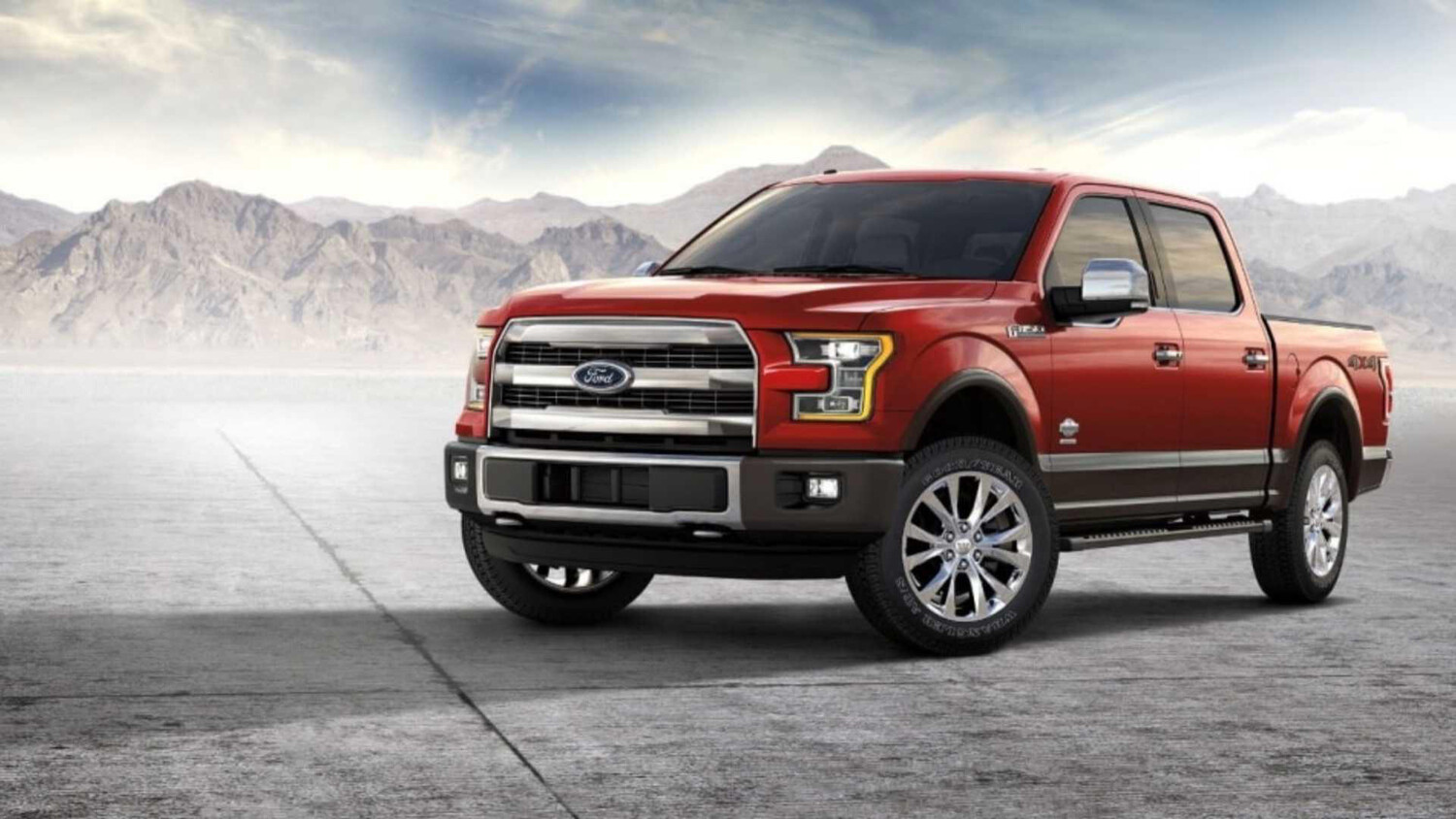
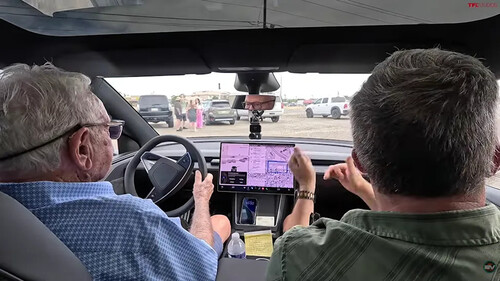
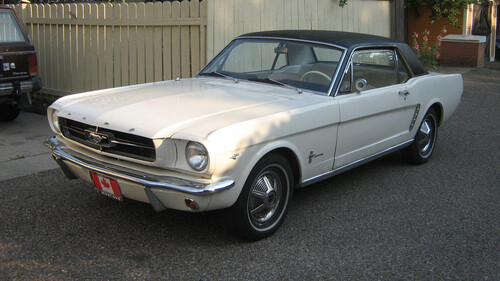
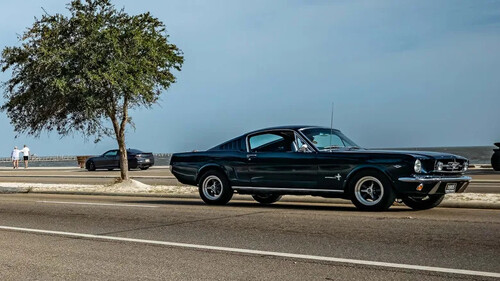
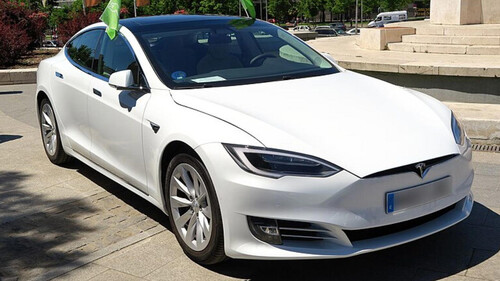
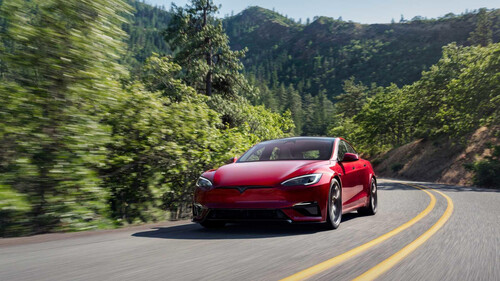
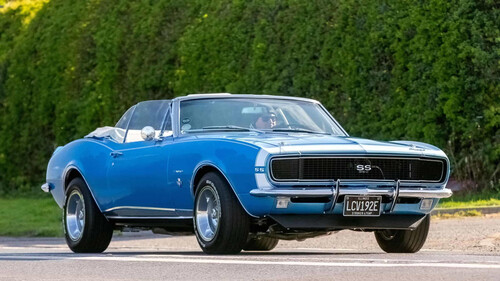
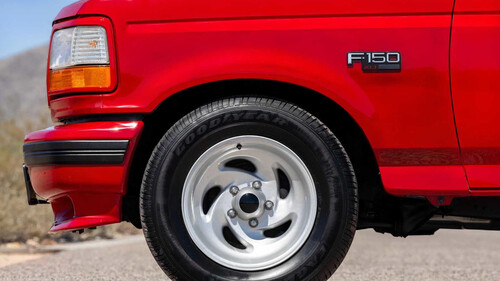
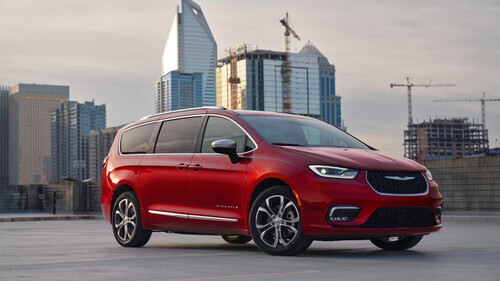
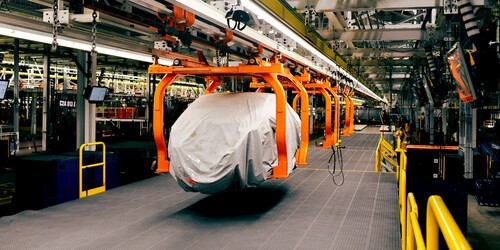
Maybe we are a little biased, but throughout the relatively short span of world automotive history, we think we have a lot to thank American brands for. While it was German engineer, Carl Benz, who created and patented what is believed to be the first working automobile (the Benz Patent-Motorwagen) in the late 1880s, it was Henry Ford who introduced the world to mass production techniques and changed the face of the auto industry, to which we owe a huge amount.Our homegrown brands are also responsible for bringing to the world some of the most revolutionary and most-loved models to ever exist, and while the 20th Century and the short way into the 21st Century has seen some intense competition from Asian and European marques, there are plenty of times that American brands have gone toe-to-toe with everyone else and come out on top. So, we are taking a look at some of the most important times when American auto brands beat the odds and won big.To give you the most up-to-date and accurate information possible, the data used to compile this article was sourced from various manufacturers and other authoritative sources, including U.S.A. Today, The New York Times, Classic.com, RM Sotheby's, and Bring A Trailer. Ford Mustang’s Meteoric Debut (1964) Bring A Trailer The day was April 17th, 1964, and the auto world changed forever. Ford rolled out the now legendary pony car, the Ford Mustang, at the New York World's Fair. The unveiling of the new Mustang instantly sparked 'Mustang Mania' around the States, with orders hitting 22,000 on the first day alone and over 400,000 in its first year; that is four times what Ford thought it would achieve. Since then, it has been the staple for countless gearheads, the star of many a Hollywood film, and a true legend of the road.1964 Ford Mustang in black parked on drivewayAs a clear step away from the other sporty coupes of the 1960s, under the eye of Lee Iacocca, the '64 Mustang hit the showrooms as a young driver's new plaything. It was stylish, comfortable, available with some meaty engines, and, most importantly, for young drivers, it was affordable. The Mustang effectively birthed a whole new class of car, the pony car, and redefined what a cool car should look like and be in the '60s, sparking other brands into action.Without the rise of the Mustang, we wouldn't have other muscular models from the likes of Chevrolet with the Camaro, and Dodge with the Charger and Coronet, so we have a lot to thank it for. We have seen some of the best Ford Mustangs of all time screaming around the track, taking center stage with movie stars behind the wheel, and causing a cultural earthquake ever since, becoming a hero of both the track and the street. Chrysler’s Comeback Under Lee Iacocca (Early 1980s) Bring A Trailer By 1979, Chrysler was up against the wall. Plagued by outdated cars, poor quality, poor fuel consumption stats, and record losses of over $1 billion, it really wasn't looking good for one of the most famous American marques. While other continents' brands were rolling out fuel-efficient models, Chrysler was left behind with gas-guzzlers, and, after being kicked again by the '73 oil crisis, meant that the 1970s were a hard time for the once prolific Chrysler. Thankfully for them, though, Lee Iacocca had just recently been fired by Ford, despite his many wins for them, and switched sides to save them.He didn't hang around getting things into action and secured a $1.5 billion federal loan, convincing Congress that saving Chrysler would mean saving thousands of American jobs, and it worked. In return, Chrysler restructured everything, slashed costs, and changed how its production line worked, and what they came up with in 1981 changed their fate forever: the K-Car platform.1981 Dodge Aries in yellow parked on streetIt was the Dodge Aries and Plymouth Reliant that helped to save Chrysler, and, thanks to them both being compact, front-wheel-drive sedans that prioritized fuel economy over top speeds and jaw-altering sprint times, it all worked out. Both share the K-Car platform, which saved money at the production level, and they immediately appealed to drivers looking for affordability and practicality, while comfort wasn't horrendous either, with optional air-con, power steering, optional bucket seats, standard-fit split bench seats, padded armrests, and available front seats.But Lee Iacocca didn't stop there, and, in 1983, helped to launch the minivan onto our market, which, even though it is nearly dead on our market now, gave us all car-like handling combined with van-like space. Again, it was another huge win for Chrysler (and definitely for Lee Iacocca), and helped Chrysler pay off its loans seven years early, saving the company from what looked like inevitable failure. Ford GT40’s Le Mans Upset (1966) Ford Motor Company Archives We all love an underdog story, and though Ford can't be seen as an underdog today, back in 1966, in the world of racing, they were. Especially up against European marques like Porsche, Alpine, Scuderia Filipinetti, Austin-Healey, and most importantly here, Ferrari. Not only had Ferrari won the 24 Hours of Le Mans in the six previous years to '66, but Ferrari had also backed out of a deal to sell to Ford in '63, so Henry Ford II wanted to get his own back and show the world that an American brand could be a big player on the world motorsport stage.1966 Ford GT40 Mark II in green and red parked in studioMillions of dollars were poured into the project, and Ford teamed up with British manufacturer Lola Cars and legendary car builder Carroll Shelby to create something that could take the game to Ferrari. What they came up with was the Ford GT40. A low-slung, V8-toting machine built for speed and endurance, and after years of painful trials and errors - failed engines, crashes, and DNFs, Ford found the winning formula in '66 with the GT40 Mk II and the 427 cubic-inch big-block V8 that motivated it.Spitting out 485 horsepower and built on a lightweight construction (1,800 to 2,300 pounds), the GT40 Mk II's build and track-focused intent didn't just mean it won the 24 Hours of Le Mans in 1966, but dominated it, with the GT40 placing 1-2-3, with Ferrari placing 8th under four Porsche 906es. Not only did the Ford and the GT40 break Ferrari's winning streak, but they shifted the balance of the motorsport world and proved that American engineering could compete at the top levels of grueling and prestigious endurance racing. GM’s Post–2008 Bailout Rebound Cadillac As often happens across all industries, even the biggest players aren't immune to uncertainty, and in 2008, General Motors was on the brink. GM filed for bankruptcy in 2009, so the government stepped in with around $50 billion in emergency aid, effectively nationalizing the company to avoid its collapse and the loss of thousands of jobs. After just 40 days as the "The New GM", they emerged after shedding legacy costs, removing floundering brands like Pontiac, Saturn, and Hummer, and sorting out labor contracts.Black 2010 Cadillac CT-S VTheir comeback wasn't just about cutting the fat, though, and GM came back to build smarter. They doubled down on fewer but better vehicles like the Chevy Cruze and Chevy Sonic, which both marked a big step-up for GM in small car quality, fuel economy, and comfort, while Cadillac released the ATS, a lightweight, rear-wheel-drive sedan designed to take on the BMW 3 Series - and it did.By 2010, GM was profitable again, and we have since seen some of their best models in the shape of the new Corvettes, the 2017 Chevrolet Camaro, the Buick Regal, and the GMC Sierra 1500. Without the bailout, we wouldn't have some of the most-loved models from across the segments on our roads anymore, but it was more than just a rebound for GM, but a huge modern overhaul of one of the oldest American auto institutions. Jeep’s Civilian Reinvention (1945–Today) Mecum There are not many SUVs worldwide that can compete with what Jeep has stood for in the past and what it continues to roll out today. From being present in most American theaters of World War II to hitting the back trails with your buddies, Jeep has been there and done it, all starting as a military workhorse and growing into a true legend. After World War II ended, Willys-Overland faced a big question: what to do with the rugged little military vehicle it had helped to create - the Willy MB.What Jeep did was turn it into a civilian workhorse, and in 1945, they released the CJ-2A (Civilian Jeep), a near-carbon copy of the wartime model, but equipped with a tailgate, side-mounted spare tire, and a more everyday-friendly 6V electrical system. In the subsequent decades, the CJ Series evolved, becoming more comfortable and versatile while still keeping hold of its "go anywhere" attitude.1946 Willys Overland CJ-2A in green parkedIn '87, the CJ line gave way to the Wrangler (YJ), and the game was changed even more. The YJ is one of the biggest milestones in automotive history and features a wider track, lower center of gravity, and an optional auto box, marking a turn in attitude from pure utility to a vehicle that can be used for grocery shopping as well as tearing up the mud. Today, models like the Wrangler Rubicon, Grand Cherokee, and Gladiator represent decades of refinement to the once-rugged-only war hero without losing the iconic Jeep toughness.Whether it is to pull something to the lake, sprinting through the desert, eating dirt for breakfast, or cruising in luxury, there is now a Jeep model for all lifestyles, and it all started as a much-needed vehicle in one of the darkest times of the 20th Century. Jeep's reinvention is something that will always be a standout in American auto history. Tesla’s EV Revolution (2008–Present) Bring-a-Trailer We know that EVs and Tesla are not for everyone, but there is no denying what the brand has done for the auto world. In 2008, Tesla Motors launched its first production model: the Roadster. This sleek electric sports car is built on a lightweight Lotus Elise chassis, and it wasn't just fast (0-60 MPH in under four seconds), it was proof of a concept: EVs didn't just have to be slow, boring, or short-ranged. Boasting a real-world range of over 200 miles, the original Tesla Roadster shattered what the EV naysayers had expected and created what can only be described as a seismic shift in the auto industry.Front three-quarters shot of a blue 2010 Tesla RoadsterWhen 2012 came around, it was the Tesla Model S that truly revolutionized the EV landscape, though. This luxurious electric sedan, when released, gave you a 250-mile range, cutting-edge software, and a massive touchscreen interface, and stunned both drivers and everyone in the industry. It won numerous "Car of the Year" awards and showed everyone that Tesla was not just in the game to build niche cars, but world-class ones.When Tesla then released the more affordable Model 3 in 2017, it took things even further and pushed the EV marque into the world of mass-market consumption and became one of the most sold EVs ever, beating EV stalwarts like the Nissan Leaf. Cars and SUVs aside, though, Tesla has also helped to push things we take for granted today, like over-the-air updates, Autopilot, and a global supercharger network, setting a new standard for techy mobility and transforming the idea of EVs as a fringe novelty into an everyday mode of transport. Dodge Viper’s Bold Entrance (1992) Bring A Trailer In an era when airbags and fuel economy were softening sports cars, Dodge did us all a huge favor and blew the doors off with the production of the Viper RT/10 in '92; a raw, unapologetic V10 monster that was about brute force over refinement. Born in the backroom of a Chrysler skunkworks team, the Viper was designed to be a modern-day Shelby Cobra: minimal electronics, brutal power, and a back-to-basics feel. It is safe to say that they achieved that.Under its vicious-looking hood, an 8.0-liter V10, co-developed with Lamborghini (which was, at the time, owned by Chrysler), kicks out 400 horsepower and intense torque, while the lack of ABS, traction control, exterior door handles, airbags, or side windows make it a pure driver’s car with simplicity and on-roads thrills as the order of the day.A red 1992 Dodge Viper With impressive top speeds and sub-4.5-second dash times, it reestablished Dodge as a performance brand to watch in the 1990s, and though we no longer have any new Dodge Vipers gracing our streets, we can claim the Viper as a heck of an American beast that reignited American muscle in a modern package.Its wild looks, thundering exhaust note, and uncompromising design ensured that it was going to be a legend from day one. Today, that legendary legacy is still apparent, as it will still cost you, on average, $89,846 to get your hands on a model from across the five generations (1992-2017). Ford F-150’s Aluminum Leap (2015) Ford The creation of the Ford F-150 can be counted as a huge win for American brands alone; it is a real institution in the American auto world; the F-Series is still the most-sold truck in the U.S.A., and it is built to tackle everything from farm work to overlanding. But what has made the F-150 even more legendary is the huge gamble that Ford staked on it in 2015 by replacing the traditional steel body with a military-grade aluminum body.Because the gamble paid off, it doesn't sound too risky today, but when Ford chose to change quite a key part of a very integral model in their lineup, it did cause a bit of a stir, but Ford wasn't just chasing headlines with their bold move; they were responding to fuel economy standards and our demand for better performance and efficiency without losing what makes an F-150 an F-150: its work rate and toughness.Red 2017 Ford F-150 3.5L V-6 EcoBoost 4x4 parkedThe switch in material shaved nearly 700 pounds off the weight of the F-150, giving it a huge advantage in fuel economy, handling, and even payload and towing capacity. And while questions were initially asked if the new aluminum body could take the hits the older generations could, Ford answered those questions quite conclusively when they put an aluminum-bodied prototype through some brutal testing, including the Baja 100 off-road race, which it finished.That, combined with the powerful and torquey yet relatively frugal EcoBoost V6s, which can outstrip some thirstier V8s, made the F-150 a lot more accessible for more of us for everyday use, but still as useful, and proved that the body gamble paid off in a big way. The 2015 F-150 was the first standard-duty pickup to utilize an aluminum body and won the North American Truck of the Year the same year with what looked like a risky move, changing, once again, the truck market forever. Corvette’s Mid-Engine Revolution (C8, 2020) Chevrolet Since its introduction seven decades ago, the Chevrolet Corvette has always been a masterclass in style, speed, American design, and impressive engines. They are one of those American cars that will never go out of style and will always turn a head on the street, regardless of what model or generation, and while we have seen some of the best Corvettes boast a front-mid-engine layout, in 2020, Chevy switched things up and placed the mill in the middle. It wasn't just about a layout change dream that some Chevrolet engineers had been chasing since the '60s, but a total reinvention of one of the most iconic American sports cars.2025 Chevrolet Corvette E-Ray Front Three Quarter 2 TopSpeedStarting in 2020, Chevy placed the naturally aspirated 6.2-liter LT2 V8 in the C8 behind the driver and ahead of the rear axle; it is good for 495 horsepower and 0-60 MPH times in just 2.9 seconds and rivals what much more expensive European supercars can muster, and thanks to the new placement of the engine, makes the Corvette even more intense and responsive.Considering all previous Corvettes boast a front-mid-engine layout (which sees the engine in front of you but still behind the front axle), changing the recipe could have been a failure for Corvette fans, but it worked unbelievably well and provides the C8 with a near-perfect 50:50 weight distribution, a lower moment of inertia, meaning that you get a more agile and responsive steering feel, and more weight from the axle pushed onto the rear wheels. Because the Corvette C8 is RWD, that means more traction at the rear and better sprint-start capability. Chrysler’s Minivan Invention (1983) Stellantis Media Though our SUV and pickup truck market has far overtaken the minivan market and has nearly driven it to extinction, people are still buying them, so they aren't quite dead yet. And, while they are seldom seen compared to yesteryear, the minivan was revolutionary in the 1980s. As mentioned, Lee Iacocca was instrumental in the change of fate for Chrysler, and part of that revolution was with the invention of the minivan, a new segment that is family-friendly, capable, spacious, easy to drive, and widely available.With the introduction of the Dodge Caravan and the Plymouth Voyager, both of which are built on the already-talked-about K-platform, Chrysler's new creation opened up a world of ease for so many American drivers in the shape of comfortable and spacious interiors, low-step-in heights, and a flat floor, making it perfect for families and people who needed something to ferry the family around in or didn't need a pickup truck.Minivan being inspected at Windsor PlantEarly models had easy sliding doors, perky inline-fours (that weren't terrible for drinking gas either), a compact size outside, loads of legroom and storage space on the inside, and tons of flexibility. Needless to say, they were a near-instant success with over 200,000 total models of the Plymouth Voyager and Dodge Caravan sold in their first production year.While there are a limited number of minivans still available to buy here in the U.S.A., there is no doubt that the creation of the minivan not only helped Chrysler climb out of their financial hole in the '80s, but also prompted other brands to add more user-friendly and versatile options to their lineups.