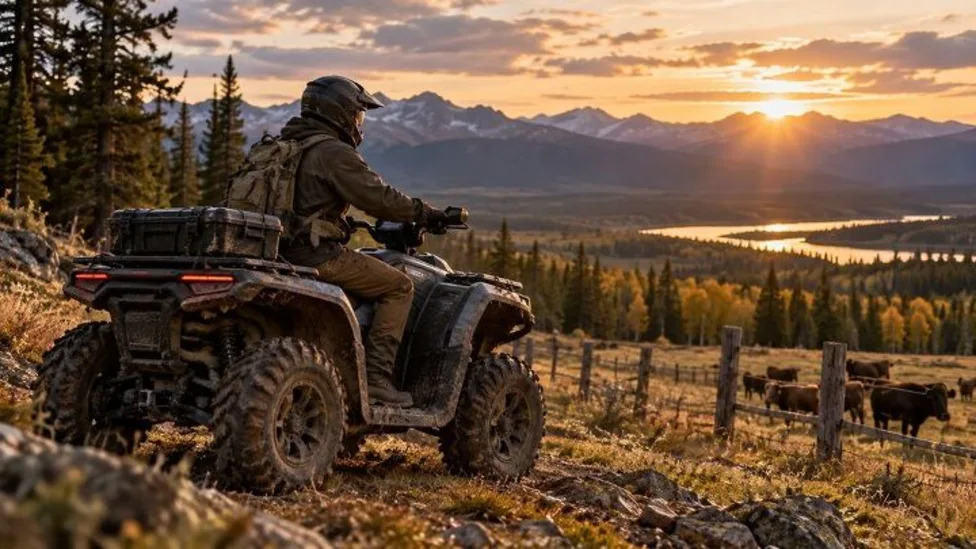
Electric ATVs: What Battery Power Means for Off-Road WorkATV.comATV.com StaffThu, September 10, 2026 at 11:59 PM UTCAdd us on Googleelectric atvs what battery power means for off road work, Eclectric ATVEclectric ATVFor decades, the all-terrain vehicle meant a gasoline engine, a pull start or a key, and the familiar drone of a small motor working through mud, sand, and rock. That picture is changing as battery-electric powertrains move into the segment, and the change matters most for the people who use these machines to get work done. An electric motor delivers strong torque the instant you touch the throttle, runs quietly, produces no local emissions, and carries fewer moving parts than a combustion engine. For a rancher checking fence, a forester on a quiet trail, or a hunter who does not want to announce his arrival, those traits translate into real advantages.The trade-offs are just as real. Battery capacity sets the limit on how far and how long you can work, adds weight, and raises the price, and charging in remote country is still a challenge. This guide walks through how these machines work, what they can actually do, and where they fit into a working operation.How an electric ATV worksAn electric ATV replaces the engine and fuel system with a battery-electric powertrain. The battery stores energy, and an electric motor converts that energy into the mechanical power that turns the wheels. Between them sits a chain of electronics that a gas machine does not have.AdvertisementAdvertisementThe flow runs from the battery pack through a battery management system, then through power electronics, into the motor, and out to the drivetrain and wheels. The battery management system monitors voltage, temperature, and state of charge, while the power electronics regulate how much energy reaches the motor. That electronic control is the key difference. Because software governs how torque is delivered, manufacturers can build in different riding modes and traction settings, and can manage power for specific terrain in ways a mechanical throttle cannot match.The hardware itself varies. The Hisun Sector E1, for example, uses a 48-volt, 30-horsepower AC induction drivetrain with a five-position transmission offering low, medium, high, neutral, and reverse. It carries a dry-cell battery, charges in six to ten hours on its onboard 1.2-kilowatt system, and estimates a range above 42 miles on a full pack.Why torque and quiet operation matter off-roadOff-road performance depends on far more than peak horsepower. Traction, torque delivery, suspension, ground clearance, weight distribution, and rider control all decide whether a machine gets through mud, over rocks, or up a slope. Electric motors change the equation on two of those fronts.The first is torque. An electric motor can produce high torque at very low speed, which is exactly what an ATV needs when it climbs steep ground, carries equipment, tows a load, or crawls across a difficult surface. There is no need to build engine speed or hunt for the right gear; the pulling power is there from a standstill.AdvertisementAdvertisementThe second is noise. Electric propulsion runs quietly, and that opens doors gas machines cannot. Outdoor tourism operators, wildlife managers, parks, and farms all benefit from lower noise. On a guided trail or in a conservation area, a quiet machine disturbs less and lets riders hear the country around them. For a hunter, the value is obvious.What battery capacity decidesBattery capacity is becoming the single most important number on an electric ATV, because it directly influences operating range, workload capability, vehicle weight, and how long charging takes. Different users weigh these against each other differently.A trail rider may want a lighter machine with just enough range for a day of riding. An agricultural or utility user needs higher capacity to get through longer work cycles and heavier tasks. Higher-capacity packs support those demanding jobs, but they add weight and cost, so manufacturers have to balance energy density, packaging, durability, charging time, and heat management in every design.The push toward larger packs matters most for utility work. Agriculture, forestry, land management, and remote operations all need dependable energy across a full shift, and as battery technology improves, higher-capacity configurations become practical for jobs that once required a gas powertrain. The Polaris RANGER XP Kinetic shows where the top of the utility segment sits, with a range of up to 80 miles and charging from a standard 120-volt outlet.Where electric ATVs earn their keepRecreation remains an important use, but the growth for electric models is in work. Their compact size, off-road capability, and electric propulsion suit jobs where a full-size vehicle would be too large or too inefficient.AdvertisementAdvertisementOn farms, electric ATVs handle field inspection, moving equipment, monitoring crops, managing livestock, and crossing uneven ground. Low-speed torque and a small footprint help on narrow paths and in tight fields. In forestry and land management, where terrain is remote and rough, a compact electric machine covers inspection, maintenance, and hauling while keeping noise down in sensitive areas.Adventure tourism is another fit, with quieter guided rides for resorts, parks, and trails where noise and emissions matter. And in emergency response, rescue, and remote infrastructure inspection, electric models add low-noise options for reaching places conventional vehicles struggle to access.What the machines can actually pull and haulThe utility case comes down to hard numbers, and the RANGER XP Kinetic is built to make the point. Polaris rates it at 140 lb-ft of torque, which the company calls "2-times more torque than any other utility side-by-side on the market," and pairs that with a towing capacity of 2,500 pounds. The same instant torque that helps on steep ground also delivers pulling power the moment you need it.At the lighter, lower-cost end, the market has spread across a range of capabilities. Greenworks announced a 60-volt electric UTV with a range of up to 20 miles, a top speed of 15 mph, the ability to carry up to 550 pounds on an electric dump bed, and a towing capacity of 500 pounds. The gap between that machine and the Kinetic shows how wide the segment already is, and why matching capacity to your actual workload matters more than chasing a headline figure.The maintenance and reliability pictureAn electric powertrain has fewer moving parts than a combustion engine, and that carries through to upkeep. Polaris frames the Kinetic as needing less scheduled maintenance than a comparable gas vehicle, which means more uptime for the work that pays. With fewer moving parts, there are fewer components that wear out and less routine servicing to keep up with.AdvertisementAdvertisementConnected features add another layer. Systems like Polaris RIDE COMMAND+ let owners remotely monitor battery life, estimated range, and maintenance status, and provide security alerts showing where the vehicle sits. For an operation running machines across a large property, that kind of remote insight helps keep equipment ready and accounted for.The honest limitsThe biggest constraint is charging in the places these machines work best. Urban areas and highways increasingly have charging stations, but rural and rugged terrain often lacks them, which makes long-distance off-roading harder and raises the risk of running out of power far from an outlet. National parks, deserts, and mountains are exactly the country where charging is thinnest.Cost and weight are the other honest limits. Higher-capacity batteries drive up both, though ongoing work in energy storage and battery recycling is bringing overall battery costs down over time.Next steps for a buyerStart by defining your workload honestly. Estimate the miles and hours you cover in a typical day, the loads you tow and haul, and the terrain you cross, then match those figures to a machine's rated range, capacity, and torque rather than to marketing claims, since real range varies with load, speed, weather, and maintenance. Map your charging plan next, because a machine you cannot recharge where you work is a machine that sits idle. Then weigh the lower maintenance and quiet operation against the higher purchase price, and decide whether the trade favors your operation.



















 +71 others