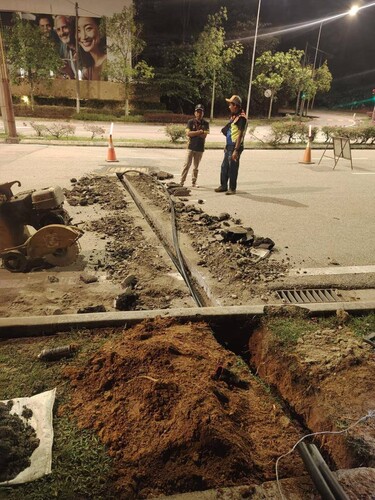
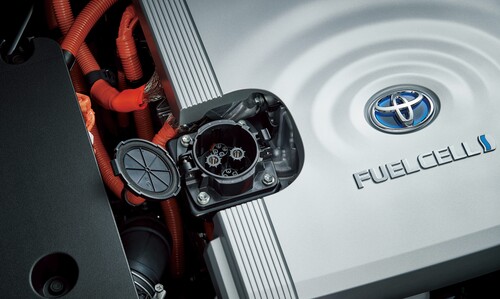
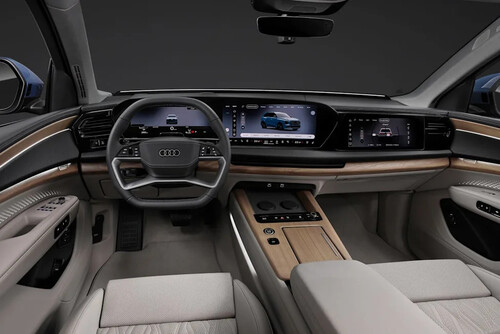
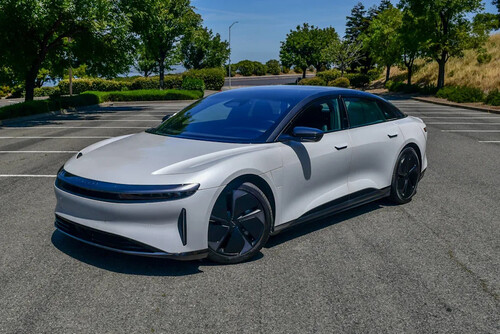
Autoblog and Yahoo may earn commission from links in this article.Whether EVs are truly a more environmentally-friendly form of travel is a common argument, and one where both sides can technically be in the right. While an EV itself may be more efficient thanks to its lack of emissions, the actual production of the vehicle itself is controversial at best. The environmental costs of not only manufacturing, but getting the materials needed to produce modern EVs can’t be understated. Do the ends justify the means, or are EVs little more than humanity’s empty gesture towards the environment?Photo by Bloomberg on Getty ImagesEV production isn’t cleanMuch like in the production of gas cars, gathering the resources to build not only the cars, but the batteries have environmental costs of their own. Most modern EVs use lithium-ion batteries, which require lithium, cobalt, nickel, and other materials to manufacture. The mining process is far from clean, often destroying animal habitats, producing toxic waste, and using vast amounts of water. Extracting lithium from mines located in dry regions often strains water supplies, while refining materials, such as nickel, can produce harmful emissions.Photo by Bloomberg Creative Photos on Getty ImagesThe controversies surrounding mineral mining are common. In 2020, the World Economic Forum called cobalt mining in the Democratic Republic of the Congo a “human rights failure.” A 2019 article from the Yale School of the Environment indicates that China, a hub for rare earth mineral mining, is struggling to deal with the cleanup of toxic sites left behind in mining regions.AdvertisementAdvertisement“The cleanup has been difficult, especially because there has been a long history of mining here,” Xu Cheng, director of the Longnan Rare Earths Bureau, said in an interview. “Some experts said that it will take 50 to 100 years before the environment can fully recover, so the cost born by the locals has been high.”Photo by VCG on Getty ImagesEVs are more energy efficientDespite the massive environmental impact generated by the production and manufacturing of EVs, they still come out ahead over the life of the vehicle. Currently, gas-powered vehicles waste up to 70% of their energy as heat. In EV drivetrains, that number can fall to as little as 10%. Over thousands upon thousands of miles, the efficiency gap closes. FordWhile battery life, longevity, and replacement cost are concerns for many consumers, they may be unfounded. According to a study by the National Laboratory of the Rockies, modern batteries likely have a lifespan of 12 to 15 years. On top of that, the price of minerals used in the production of the batteries has fallen dramatically in the past few years, so much so that the profits from selling the resources may not be enough to fix the damage caused by mining.The electricity source for charging EVs can be cause for concern as well. While power grids that rely on coal are far from clean, more and more grids are moving to cleaner sources. Natural gas, hydro, wind, and solar are quickly becoming the main source of power for grids as they decarbonize. As a result, EVs are becoming cleaner over time.Photo by KE ZHUANG on Getty ImagesWhile a gas vehicle never gets cleaner after it rolls off the production line, an EV does. The breakeven point tends to vary by location, but most studies conclude it’s somewhere around 20,000 miles, although it could be longer on electrical grids that use dirtier sources. AdvertisementAdvertisementNotably, EV batteries aren't necessarily trashed once they reach the end of their lifespan. Instead, some companies, like Redwood Materials, recycle the powerpacks to recover the lithium, nickel, cobalt, and other crucial elements. Many batteries also begin a second life as energy storage or as a way for utility companies to balance electrical loads.DENIS CHARLET/Getty ImagesIt’s no secret that EV fires tend to make headlines far more often than when a gas-powered car goes up in flames purely due to the difficulty of fighting the fire. While it seems like a safety concern, EVs may actually be much safer than both gas and hybrid vehicles. In collaboration with a United States insurer, a Swedish study found that for every 100,000 vehicles sold, there were just over 5,000 reported fires for gas and hybrid cars combined. EVs came in at just 25 vehicle fires. Do the ends justify the means?There’s absolutely no denying that EVs aren’t a “clean” form of transportation in the absolute sense. The mining and manufacturing impact on the environment can’t be understated and, frankly, should be discussed on a broader scale. To the point of reducing climate emissions, the answer is generally a solid affirmative, but on a broader scale of sustainability, it largely depends on where global EV adoption goes from here.TeslaSmall vehicles, which require less materials to produce, are the best answer to reduce greenhouse gas emissions over time. Power grids that use clean energy, such as solar, wind, and nuclear, will help further reduce the environmental impact of EVs. Naturally, reduced dependence on vehicles in general, whether that’s through public transit or walkable cities, is another crucial piece of the puzzle.AdvertisementAdvertisementIn my opinion, battery recycling is the most crucial part of the environmental impact equation. As companies continue building and improving systems to reclaim minerals, like lithium and cobalt, from used batteries, the need for mining could fall dramatically. Not only that, but supply chains themselves could become less damaging to the environment, and the battery production process could get cleaner as well.This story was originally published by Autoblog on May 22, 2026, where it first appeared in the Features section. Add Autoblog as a Preferred Source by clicking here.