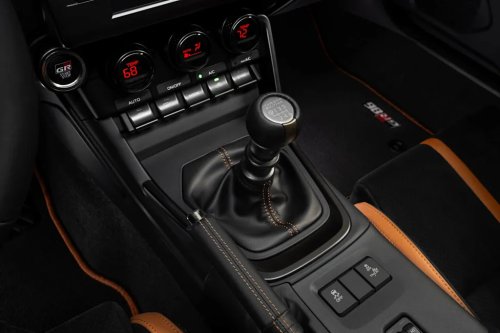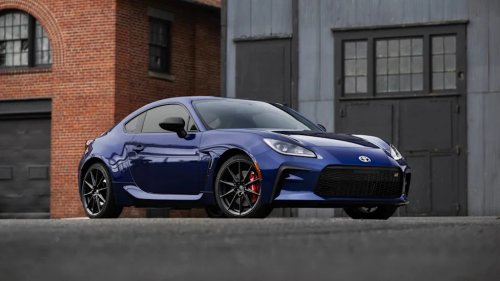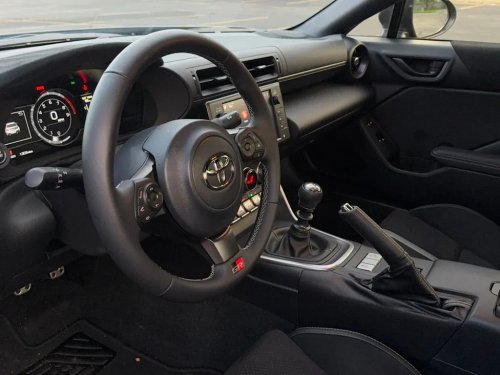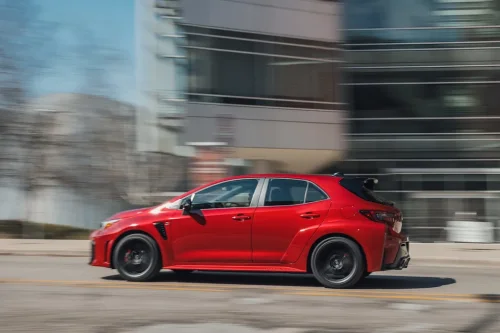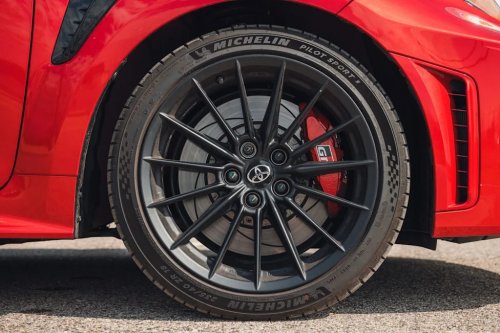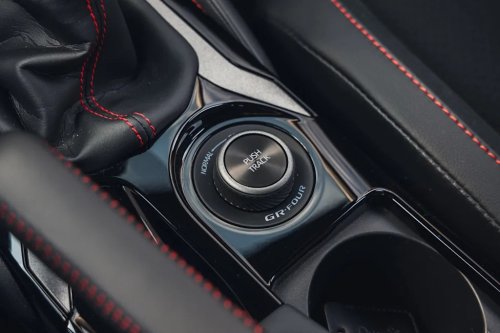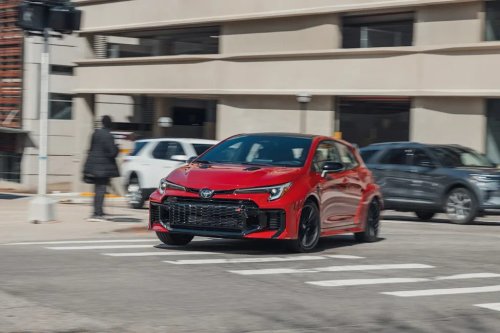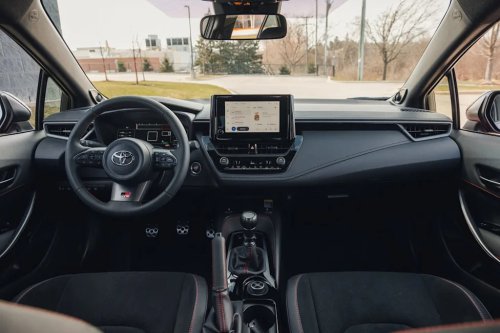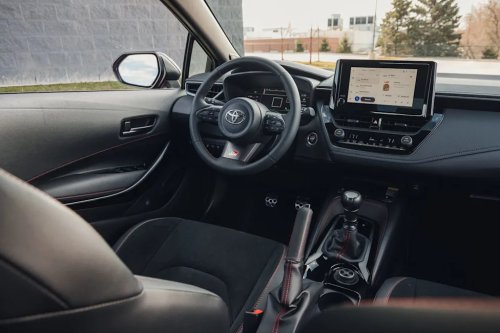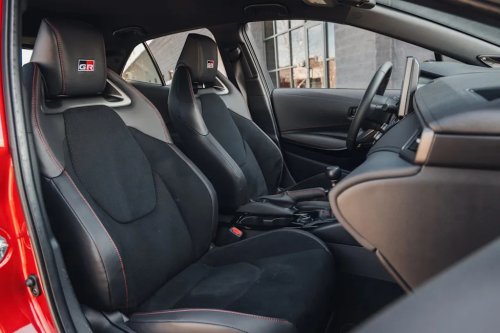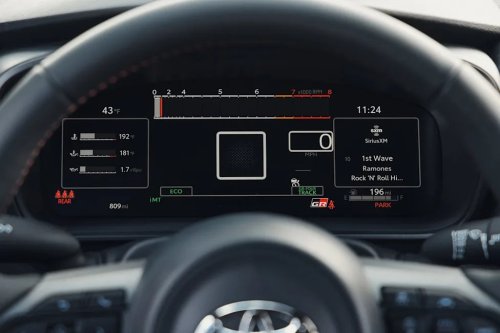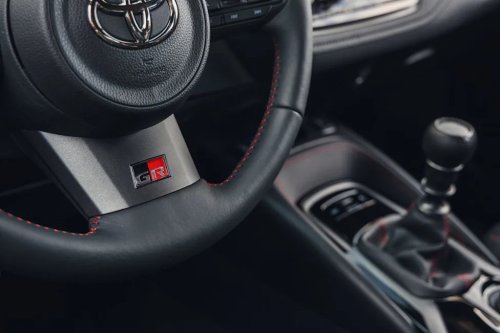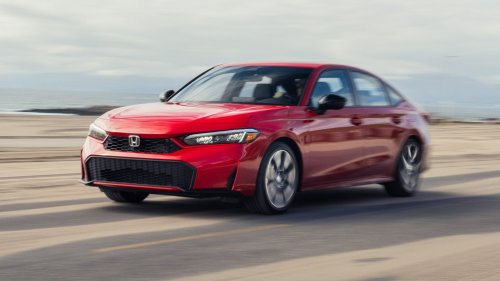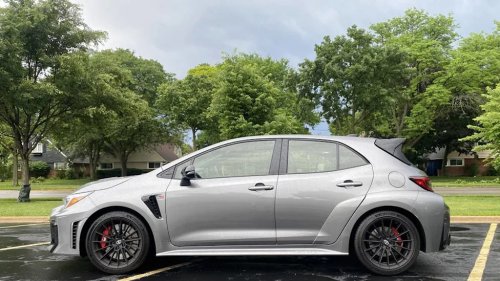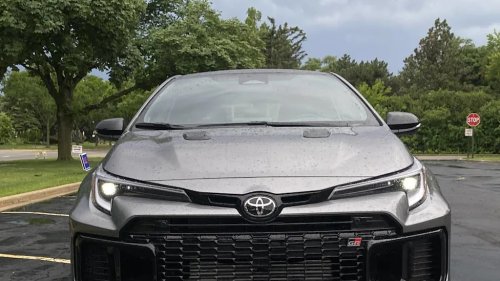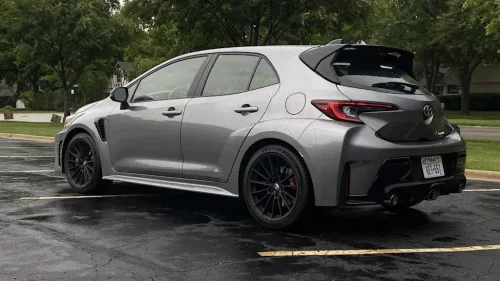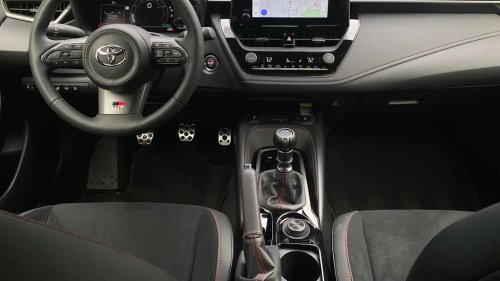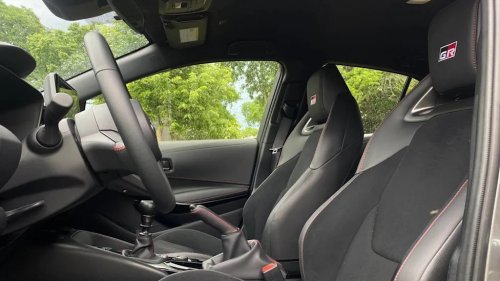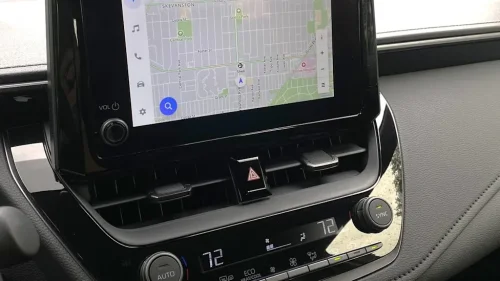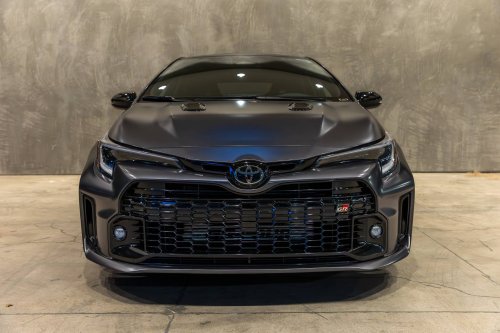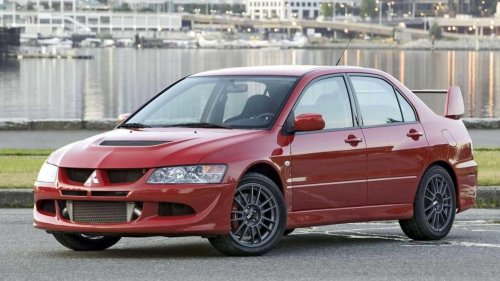
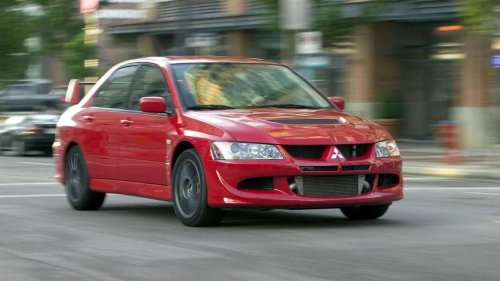
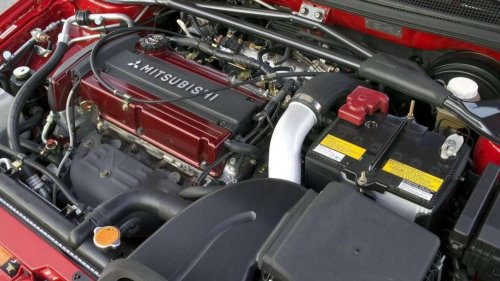
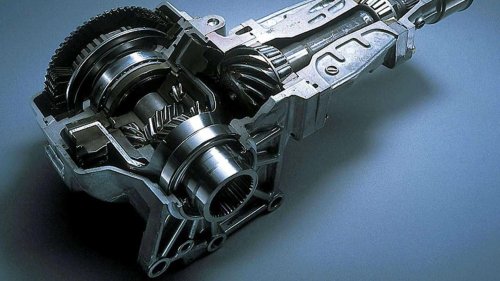
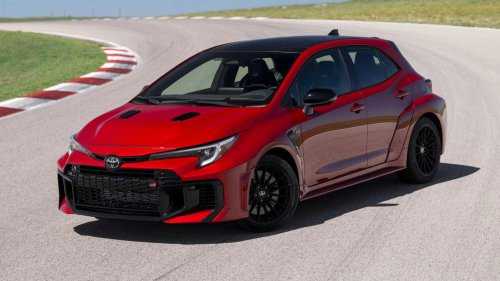



















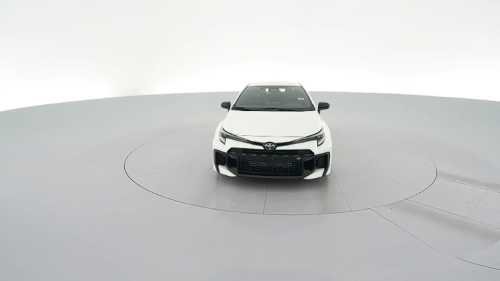
Jump LinksReal dyed-in-the-wool car enthusiasts don't have many places to turn these days if they're looking for some good old-fashioned fun. The era of seriously hot hatches and rally-bred road machines seems long gone, and that's why enthusiasts get very excited when the likes of the Toyota GR Corolla appear. After all, Toyota has kindly given them something compact, turbocharged, all-wheel drive, properly engineered, and with a manual stick to play with, too.While that machine may well be the answer to some of their prayers, it's not necessarily a bargain buy across the board. Toyota lists the 2026 GR Corolla starting at $40,120, and the Premium Plus trim is more than $46,000. So, perhaps the answer for those enthusiasts may actually be an older but still very relevant sedan from a different stable. This particular car is available in the roughly $25,000 to $35,000 range and could represent a very interesting classic-versus-new comparison. Old Rally Sedans Still Exist MitsubishiIt's easy to understand the exciting appeal of the GR Corolla. Toyota’s performance arm has taken the ordinary Corolla and turned it into something much more aggressive, with appropriately flared bodywork, a turbocharged 1.6-liter three-cylinder, the GR-Four all-wheel-drive system, and a choice of a six-speed manual or an eight-speed automatic. It delivers 300 horsepower and 295 pound-feet of torque, making it a serious performance machine by any normal compact-car standards.In many respects, the Corolla is a bit of a throwback to the days when rally-inspired hot hatches were very popular. Back then, Mitsubishi was selling Americans the Lancer Evolution VIII, which was very purposeful out on the road, if not especially luxurious, subtle, or polished.The Evo VIII had plenty of mechanical authority, with its turbocharged 2.0-liter four-cylinder engine, permanent all-wheel drive, manual gearbox, huge rear wing, and special stage-tuned chassis. It hasn't simply disappeared into the weeds, either, presenting a stark contrast today for those who want to look beyond the Corolla's shiny newness. Certainly, a car like the Lancer Evo VIII doesn't have a modern cabin, contemporary safety tech, or any kind of warranty anymore, but it does have a more direct connection to the rally replica era. The Evo VIII Is Where The Value Argument Starts To Bite Mitsubishi The most important thing to realize here is that a selectively chosen Evo VIII is still sitting in a usable buying window. Not every used Evo VIII is cheap, but some can still make the sums work while the GR Corolla slips into new car money that’s no longer light. One nationwide source suggests that Evo VIIIs rated "Fair" to "Good" fall between $17,700 and $36,400. Somewhere in the middle is the $30,000 Evo argument that would probably get you a driver-grade car rather than a collector-grade example.You're certainly not going to find a bargain if you come across a low-mileage, highly original Evo VIII MR or special variant, as those are in real enthusiast or collector territory. But on the other hand, modified cars are everywhere, and some are worth a lot less because of how their owners have treated them. So, a shrewd buyer should look closely at service history, compression numbers, rust-prone areas, tuning quality, and ownership records, and might still find a good Evo that sits well below the cost of a new GR Corolla today.The original price of the Evo makes the argument a little sharper, as it went on sale for $28,987 before options when it first appeared in 2003. That was quite a lot of money for something based on an economy sedan back then, but it did have all the expensive parts underneath, including the drivetrain, brakes, cooling, reinforced engine hardware, and an all-wheel-drive system. The 4G63T Is The Durability Anchor, Not Just A Tuner Legend Mitsubishi One of the biggest selling points of the Evo VIII is undoubtedly its 4G63T turbocharged and intercooled 2.0-liter engine, featuring forged connecting rods, forged aluminum pistons, and a rugged steel crankshaft. Mitsubishi improved the pistons and forged steel connecting rods over previous Evo models, and also introduced aerodynamic and engine-cooling changes.This engine is so strong that it might last forever and a day if handled carefully. However, the situation depends on how much the previous owners have looked after it. And if they introduced cheap boost controllers, neglected the timing belts, or embarked on bad tuning journeys, then problems may yet lie ahead. These and other issues (such as overheating or a tired clutch) could turn a value story into a repair bill quite quickly.Nevertheless, the basic engineering gives the Evo a clear advantage, and that should matter to any practical enthusiast. While that doesn't make every used example trustworthy, it should still represent a solid starting point for today's buyer. The Evo's AWD System Feels Like Good Hardware, Not A Drive Mode Mitsubishi Toyota has clearly put a lot of effort and knowledge into the GR Corolla's all-wheel-drive system. It offers selectable front-rear torque distribution modes, including 60:40, 50:50, and 30:70, while presenting serious hardware solutions like Torsen limited-slip diffs. Overall, the GR Corolla is very capable, and Toyota has taken full advantage of its modern engineering.By comparison, the Evo's appeal is different; it had a suspension and tire package aimed at grip rather than comfort, and could still get to 60 mph in a reported 5.4 seconds on its way to a red-line limited 155 mph.The Japanese-market Evo VIII also had Super AYC active yaw control, with the later MR trim adding an aluminum roof and Bilstein shock absorbers. And while the US market didn't get every piece of Japanese-market hardware (mainly due to cost and packaging), the US car was no slouch either, with all the essential ingredients that made the Evo name famous. The Smart Buy Is Not The Cleanest But The Most Honest One Toyota It's a lot simpler to choose a Toyota GR Corolla for your weekend driving fun. After all, you can simply judge it by its price, trim, color, options, or availability, while if you consider a used Evo, you may be stewing over a performance car with a past. So, the best way to look at an Evo is not necessarily to find the cheapest one or the vehicle with the lowest mileage, but instead to focus on honesty.An honest Evo VIII from this era should have documented maintenance, quality parts, sensible modifications (if any), and evidence of careful ownership. Be especially cautious about cars that have been heavily boosted or stripped of their original character in pursuit of short-term power.There's a good market reason to move thoughtfully rather than emotionally, as the 25-year import rule is now unlocking more and more Japanese performance cars from the late 1990s and early 2000s. Earlier JDM Evo generations may enter the broader American conversation and help expand the supply of rally-era alternatives, but don't forget that EPA rules add their own age-based considerations, so import buyers need to complete their paperwork correctly.The Mitsubishi Lancer Evo VIII doesn't make the Toyota GR Corolla look bad in any sense. In fact, in some ways, it makes Toyota's achievement easier to appreciate, especially as Toyota is still taking the time to turn out some small and serious performance cars for the enthusiast.However, the Evo makes the new Toyota harder to justify for those who really value engineering pedigree, analog controls, and long-term mechanical character. And at around $30,000 for the right driver-grade example, an Evo VIII could still be a brutally practical performance alternative that’s hiding in plain sight.