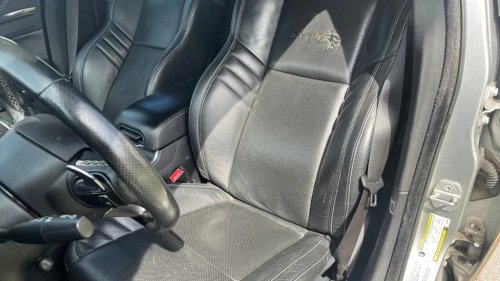
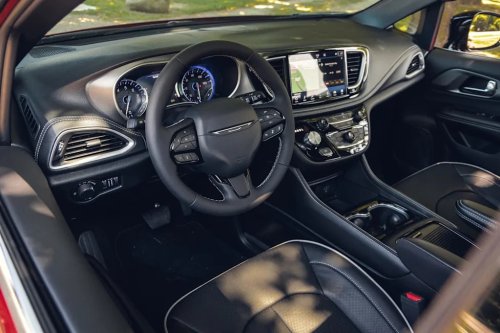
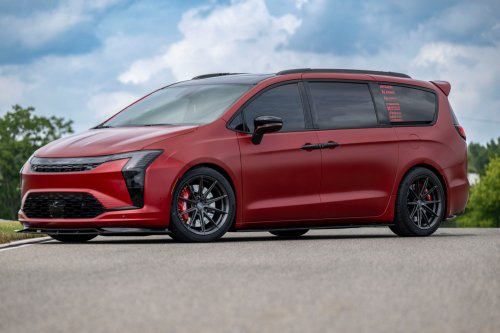
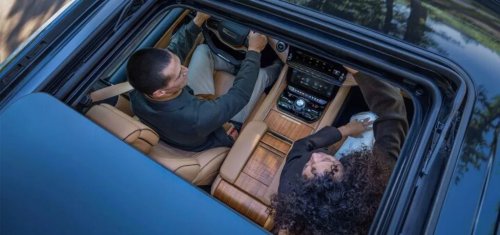
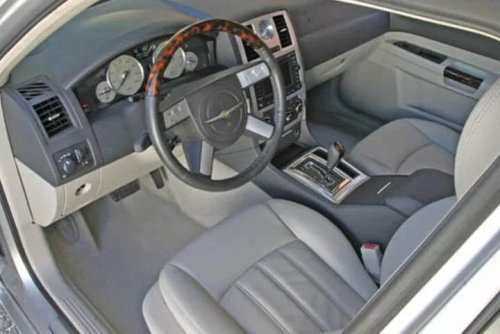
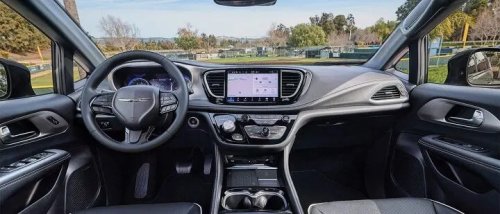
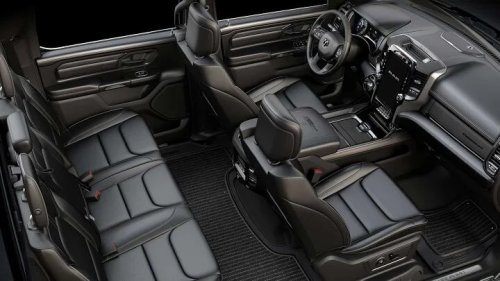
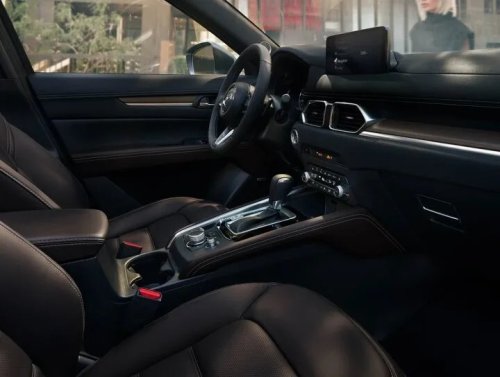
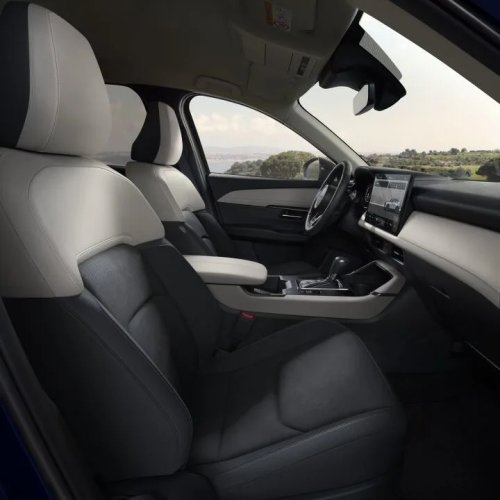
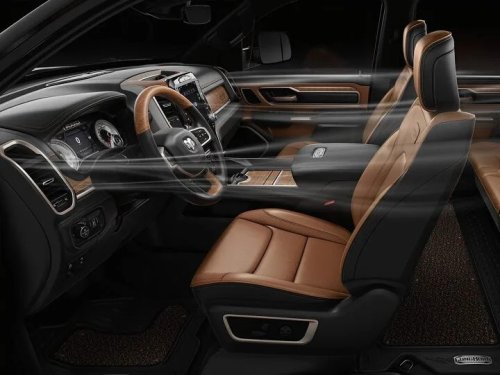
chrysler bent on nailing interiors for upcoming modelsChrysler has several new vehicles in development right now, including some affordable crossovers. While the automaker seems to have dropped the pretense of being a premium brand, something that arguably hasn't been true for decades, it still wants to offer vehicles that boast cabins that border on luxurious. There's allegedly a plan in place to ensure that happens.Stellantis' Chief Design Officer Ralph Gilles confessed that Chrysler had some bad interiors back in the day. While we don't know if he includes any of the projects he worked on personally, we're certainly not going to disagree with the man. Chrysler had some truly awful cabins, particularly during the 1990s when just about everyone in the industry was running with amorphous gray molds for their cheap plastic dashboards.Gilles was responsible for designing the Chrysler 300, which happened to win North American Car of the Year in 2005. While its interior (pictured below) certainly isn't fresh by modern standards, everything about the 300 is still light years better than something like the Chrysler Cirrus that came before. He's also been influential in terms of making sure Jeep and Ram received more upscale cabins, as the brands pivoted away from their utilitarian roots.chrysler bent on nailing interiors for upcoming modelsOne supposes that helped guarantee his current position at Stellantis following the 2021 merger between Fiat Chrysler Automobiles (FCA) and Groupe PSA.AdvertisementAdvertisementGilles' latest task is making sure those forthcoming Chrysler models aren't duds."It's an obsession with us, you know, fit and finish, European-like attention to detail," CarBuzz quoted Gilles as saying during a recent media roundtable."The French do phenomenal interiors," he continued, noting that Stellantis' roots have only grown deeper in Europe. "It takes a dedicated team like I talked about."chrysler bent on nailing interiors for upcoming modelsFrom CarBuzz:One of his first steps, during the DaimlerChrysler years, was hiring Mercedes-Benz designer Klaus Busse in 2005 as manager of interior design for Ram Trucks, before becoming head interior design for FiatChrysler. "I told him, your job is to make our interiors number one," Gilles recalls. "And he did."In 2007, about the same time Daimler and Chrysler were untangling their "merger of equals," Gilles created a dedicated interior design studio and began staffing it with people who didn't just want to draw exteriors."These people love interiors," he told CarBuzz and other media at the roundtable. "They're not here to be car designers," but interior designers instead. It's a different mentality and younger designers are specializing in various sectors within interiors, from color and trim to sustainable materials and ergonomics. Gilles says he wants to keep pushing all the Stellantis brands to improve interior design, quality, fit-and-finish, comfort, the user experience, etc. The design world has changed a lot during his career.AdvertisementAdvertisementGilles knew the emphasis on interiors was paying off when Wards Automotive created the Wards 10 Best Interiors competition in 2011, and the automaker earned two spots on that first list, for the Charger Rallye Plus and the Jeep Grand Cherokee Overland Summit for its "tranquility and elegance." Each time the team won a 10 Best Interiors trophy since then, it was cause for a celebration.Perhaps most heartening was Gilles' providing an anecdote stressing material quality. He stated that the second-generation Audi A4 that launched in 2002 had interior plastics that totally embarrassed the "water pistol grade interiors that we had.""Audi came out with the A4, and that turned me upside down. When I saw the Audi A4, that was it," he said.chrysler bent on nailing interiors for upcoming modelsThese are lessons that should stand the test of time for anyone who knows cars. You can hop inside an old luxury vehicle and still be impressed today. Heck, it doesn't even have to be a luxury vehicle. I don't personally have much love for automobiles from the 1950s. But their interiors are often loaded with durable materials and, like their exteriors, were clearly designed to leave a lasting impression. That's over half the battle right there. Luxury may be a term that has many differing meanings for many different people. But it's still a mixture of tangible components and personal perception.In many cases something being viewed as luxurious is wholly dependent upon whatever you're comparing it against. There's nothing inherently wrong with parts bin sharing and it's sometimes necessary to tamp down manufacturing costs or improve fleetwide reliability. However, when you notice that the vehicle you paid $250,000 to purchase is using the same switches, steering wheel, doorhandles, or headlamps as the $35,000 econobox your neighbor owns, you might begin to doubt its status as a legitimate luxury item.AdvertisementAdvertisementThe former FCA brands now owned by Stellantis should know this better than anyone. But this is a concept that applies to basically every brand that's ever existed.chrysler bent on nailing interiors for upcoming modelsFaux wood and vegan/synthetic leather are significantly cheaper for automakers to implement than the real thing, so that's what the industry ultimately ran with on mass market vehicles. Hand-stitched headliners might have been the norm in the early days of automotive manufacturing. But they were replaced after one-piece, non-woven headliners became available. The fact that they sagged a little sooner was trumped by their lower cost and ease of installation. They ultimately became the norm, rather than the exception.We've seen something similar take place in the modern era with touch controls and digital screens. Despite frequently being marketed by the industry as the new normal for luxury vehicles, the fact of the matter is that minimalist cabins that emphasize screens have simply become cheaper to manufacture than those with a lot of dedicated buttons and gauges.Despite overwhelming evidence that traditional vehicle controls are safer and more intuitive for drivers to interact with, the industry has been desperate to frame them as dated concepts. Screens and technology have been positioned as the new hallmarks of automotive luxury, with physical switchgear being slandered as antiquated. But a lot of drivers remain unconvinced and we've started to see that influencing the broader public sentiment.chrysler bent on nailing interiors for upcoming modelsThe Mazda CX-5 is probably the best recent example of this phenomenon. The previous generation of the crossover (pictured above) received relentless praise from reviewers and was the brand's best-selling model. There didn't seem to be much about the car that buyers didn't enjoy. It even helped validate Mazda trying to reposition itself as a luxury brand, with the smartly designed interiors being a contributing factor. Mazda was fielding relatively affordable vehicles that felt like premium cars.AdvertisementAdvertisementHowever, the company resigned the CX-5 for 2026 and pivoted heavily toward touch controls (below). The car still drives well and has an otherwise nice cabin. But we've seen sales decline as a result of the changes. Customers seem to be flocking to the CX-50, which still has buttons and knobs.chrysler bent on nailing interiors for upcoming modelsChrysler is going to need to think long and hard about its clientele and how the concept of affordability will be applied. Many customers are finding tech-focused cabins aren't all they're cracked up to be. We're not even discussing data harvesting or all the technological hurdles being added to modern vehicles. This applies strictly to vehicle controls and the look of the cabin. The general premise of "sustainable materials" has likewise grown more dubious. Automakers claiming that aspects of their cars are environmentally sound doesn't necessarily make it so and often just serves as a euphemism for not using traditional materials.We don't actually have a problem with that when the resulting product feels nicer or ends up being longer lasting. But telling someone their carpet is made out of recycled plastics isn't going to matter much when the entire car feels like it was built as cheaply as possible. There are bound to be a few people who are willing to overlook deficiencies in exchange for being told they're helping the planet. But the average driver isn't likely to care when they feel like they're being personally shorted.chrysler bent on nailing interiors for upcoming modelsErgonomics, material quality, overall comfort, and visual appeal matter far more to buyers. This is especially true as vehicles become more expensive relative to what the average household can realistically afford. Many of us are much more worried about paint quality and panel gaps than how much recycled plastic went into the seats.AdvertisementAdvertisementInsofar as interiors are concerned, most of the Chrysler legacy brands were doing fine even before Stellantis was formed. Uconnect has been one of the least offensive infotainment interfaces within the whole industry and we've seen interior designs from Jeep and Ram make major strides in recent years, often surpassing what's available from domestic rivals at similar price points.We've been worried for a while that Stellantis wasn't taking the American brands seriously and Chrysler seemed to be dead last on its list of priorities. However, there are signs that the automaker is starting to learn its lesson about American tastes and the company looks to be giving the American side of the business more attention. We're hoping Chrysler gets what it needs and Gilles' team can help deliver something special within whatever budgetary constraints have been outlined.chrysler bent on nailing interiors for upcoming models[Images: Stellantis; Mazda]Become a TTAC insider. Get the latest news, features, TTAC takes, and everything else that gets to the truth about cars first by subscribing to our newsletter.





















 +65 others