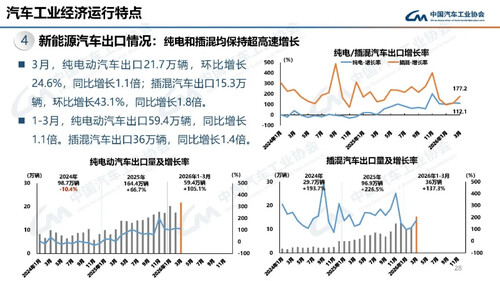
Kayla Scott · 6 months ago@kaylascott237China NEV Retail Sales Hit 495,000 in Mar, Penetration Rate Reaches 53.9% Liked by+21 othersPost commentRelated PostsGeely Unveils Next-Gen AI Charging Technology; NIO opens zero-carbon off-grid battery swap station; CPCA: Passenger-Car Retail Sales Down 22% YoY From Sept. 1–20 25 · Jacob Morgan · 21 days agoMay Auto Market Sees Mild Recovery, NEV Penetration Rate Expected to Climb to 62.5% 75 · Lily Lavoie · 4 months agoBYD hits 10,000 Flash Charging stations, targets 20,000 in 2026 with China’s oil giant Sinopec 34 · Matthew Martin · 1 months agoCPCA Forecasts July Auto Market Downturn, NEV Penetration Set for New Record; Changan × China Telecom, CATL × Dalian Deta Seal Cooperation 24 · Madeleine Harris · 2 months agoChina NEV Retail Sales Fall 11% in May 1–24, Penetration Reaches 62.5% 15 · Victoria Mitchell · 4 months agoHow Strong is 'Golden September'? September Passenger Car Retail Sales Expected at 1.69 Million Units 76 · Daniel Côté · 26 days agoChina NEV Penetration Rate Tops 60%, Export Share Breaches 50% in April 28 · Samuel Harris · 5 months agoTesla, Xiaomi Hit by China’s Largest Auto Recall Over Door Handle 72 · Jackson Wilson · 1 months agoCPCA Forecasts Seasonal Decline in July Auto Market, NEV Penetration Expected to Hit New High 63 · Matthew Rogers · 2 months agoNIO's William Li: Domestic New Energy Penetration Rate to Exceed 90% by 2030 89 · Hannah Moreau · 3 months agoChina's April Passenger Vehicle Retail Sales Projected to Reach 1.42 Million Units 61 · Charlotte Tremblay · 5 months agoPassenger Car Sales Declined Year-on-Year and Month-on-Month in First Two Weeks of April; NEV Penetration Rate Nears 60% 97 · Logan Rogers · 6 months agoChina's $13K Tiny EV Hit 1,000 Orders in Japan in Just Two Weeks 84 · Nicole Walker · 2 months agoChina Passenger Car Retail Sales Fall 23% in First Three Weeks of June, NEV Penetration Hits 63.8% 15 · Claire Girard · 3 months agoChina NEV Retail Sales Reach 1.387 Million Units in Dec 2025, Up 7% YoY 71 · Justin Young · 6 months agoChina’s July NEV Sales Hit 1.47 Million 26 · Camille Tremblay · 2 months agoChina NEV Retail Sales Fall 8% in June 1–14 as Penetration Nears 64% 22 · Connor Lavoie · 4 months agoChina NEV Retail Sales Hit 848,000 in March, Penetration Reaches 51.5% 21 · Benjamin Johnson · 6 months agoChina Passenger Vehicle Recalls Hit 252,100 Units in July 72 · Emma Brown · 2 months agoChina's Gnarly Sales Slide Just Hit The 10-Month Mark 48 · Sophie Morgan · 2 months ago




 +21 others