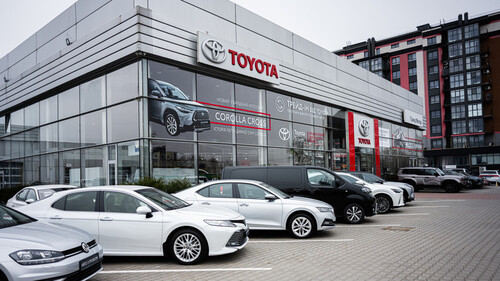
Adam Gagnon · 5 months ago@adamgagnon257Toyota’s EV sales jump 3,300% in Japan as subsidies hit BYD Liked by+41 othersPost commentRelated PostsToyota joins the extended-range EV race, but not as you'd expect 53 · Emma Clark · 1 months ago5 New Family Minivans Ranked From Best To Worst IIHS Safety RatingsMorgan Harris · 14 days agoThe Unstoppable Rise of Leapmotor — August’s China EV Sales Report (45% BEV Share) 53 · Jacob Bouchard · 1 months agoHyundai Tucson Resale Value: How Much Has The Compact SUV Depreciated?Zoë Hall · 14 days agoIs the "One Toyota" Era Coming in China? 84 · Jackson Leblanc · 1 months ago7 Cars With Lease Deals That Cost Less Than $300 Per MonthGabriel Côté · 14 days agoBYD 'leading' solid-state battery race with its first EV due in 2027 84 · Grace Lewis · 1 months agoGeorgia Wrongful-Death Suit Goes After the Dealer, the Installer and the Maker of a Six-Inch F-150 LiftCaleb Roy · 14 days agoFuel-to-Electric Switch Accelerates: The Cold and Heat of the August Auto Market 61 · Amelia Brown · 1 months agoThe GAC Aion V Looks Odd But Is Incredible Value | ReviewAudrey Nelson · 14 days agoBYD Yangwang U8: Chinas Luxury Off-Road SUV With 1,000 Horsepower Takes on a Brutal Obstacle Course 79 · Kaitlyn Scott · 1 months agoCar Prices Are Near $50,000, but Buyers Keep Returning to These BrandsParker Hill · 14 days agoTop 10 best-selling cars in China in August: BEV takes nine and half spots, gas cars disappear 67 · Annabelle Scott · 1 months agoAmerica’s Only True Crossover Convertible Was an Absolute FlopVictoria Bouchard · 14 days agoMusk Congratulates Tesla Australia — August EV Sales Update 67 · Parker Hall · 1 months agoToyota Almost Renamed the Corolla, Then One Engineer Rebuilt ItEvan Anderson · 14 days agoToyota to build new Lexus EV in China before Japan, breaking its long-standing pattern 17 · Adam Roy · 1 months ago7 Used Midsize Pickup Trucks You Can Get For Under $30KLeo Côté · 14 days agoEVs outsell petrol in Australia for the first time, led by China 32 · Camille Bouchard · 1 months agoToyota Recalls New RAV4 PHEVs Over a Problem Jeep Owners Know Too WellKaitlyn Smith · 14 days ago




 +41 others