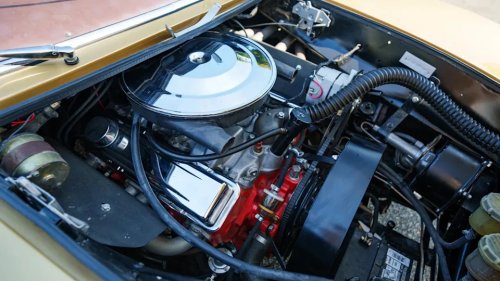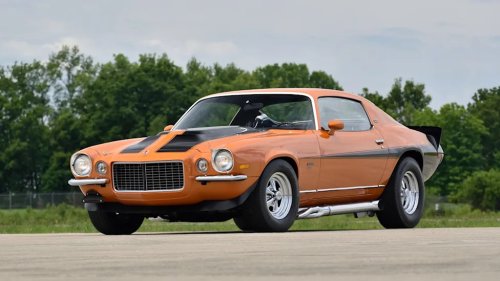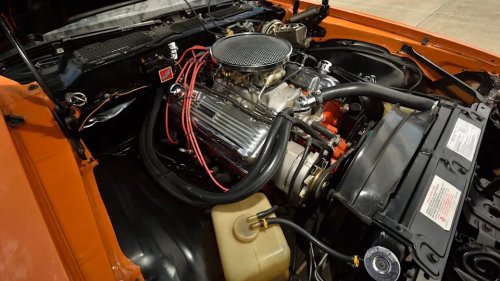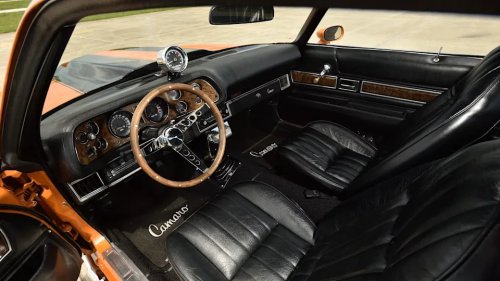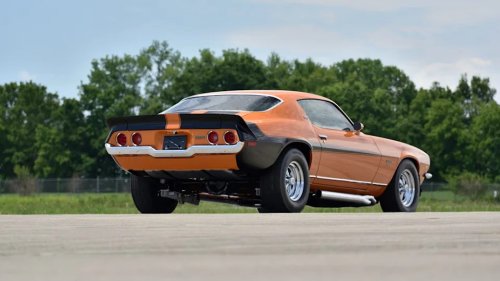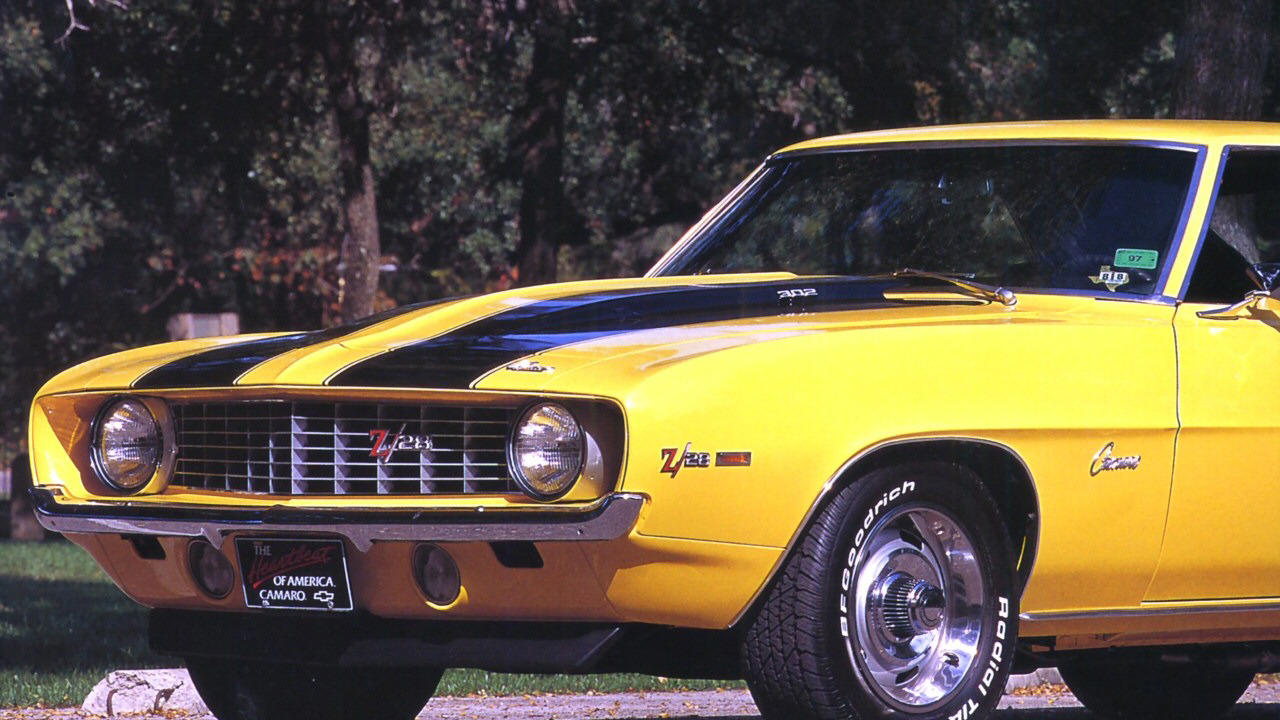



















Chevy’s 1969 Camaro Z/28 proved high-revving small-blocks could dominateThe 1969 Camaro Z/28 arrived as factory proof that a small, high-revving V8 could punch far above its displacement. In an era obsessed with cubic inches, Chevrolet’s Trans-Am homologation special showed how careful engineering and race-bred tuning let a 302 cubic inch small-block run with, and often outrun, much larger big-block rivals. That lesson still echoes in modern performance cars that rely on revs, airflow, and chassis balance rather than brute size alone. What happened Chevrolet created the Camaro Z/28 program to win in the SCCA Trans-American Championship, which capped engine displacement at 305 cubic inches for the series’ over-2.0-liter class. To exploit that rulebook, Chevrolet engineers combined a 4.00-inch bore 327 block with the shorter 3.00-inch stroke of a 283, producing a 302 cubic inch small-block that could spin freely to high rpm. Paired with the Z/28 package, that engine turned the 1969 Camaro into a street-legal version of Chevrolet’s road-racing weapon. The 302 was rated at 290 horsepower on paper, but that figure was intentionally conservative. Chevrolet listed the output at 290 horsepower at 5,800 rpm, even though the engine’s power peak arrived at a higher engine speed and actual output was significantly stronger in race trim. Period dyno tests and racing results pointed to a much healthier real number, helped by a high compression ratio, aggressive solid-lifter camshaft, and free-breathing intake and exhaust hardware. The factory rating kept insurance companies and regulators calmer while letting Chevrolet sell a track-capable car through regular showrooms. Key to the Z/28’s character was its willingness to rev. The short 3.00-inch stroke reduced piston speed at a given rpm, allowing the 302 to spin safely into the higher reaches of the tachometer. Combined with big-port cylinder heads and a performance cam profile, that trait encouraged drivers to keep the engine on the boil. The car rewarded that style with a hard-edged surge of power that built as the needle swept past what felt comfortable in most other muscle cars of the period. The Z/28 package bundled more than just the engine. Buyers received a close-ratio 4-speed manual gearbox, heavy-duty suspension, power front disc brakes, and a 12-bolt rear axle, all tuned for road-course duty rather than drag-strip launches alone. Optional cowl-induction hoods and rear spoilers added both visual drama and functional benefits at speed. The result was a cohesive package, a car that could be driven to work on Friday and then to a club race or autocross on Saturday without major changes. Chevrolet’s approach with the 302 fit a broader pattern inside its performance catalog. The company had a history of small displacement engines that delivered unexpectedly high output through careful design. That pattern would later include compact V8s and even turbocharged four-cylinders that punched well above their size, as seen in a range of smallest engines that produced serious power figures. The 1969 Z/28 stood near the beginning of that lineage as a proof-of-concept in the muscle car era. On track, the Z/28’s 302 became the heart of Chevrolet’s Trans-Am efforts. Race-prepped versions, tuned beyond showroom specification, contested championships against rivals from Ford, American Motors, and others. The Trans-Am series demanded cars that could corner, brake, and withstand sustained high-rpm abuse, making it an ideal test bed for the high-revving small-block concept. The Camaro platform, with its relatively compact dimensions and front-engine, rear-drive layout, provided a stable base for this experiment. For buyers, the 1969 model year offered the most refined and widely recognized version of the first-generation Z/28. The car wore a sharpened front fascia, bold stripes, and an optional cowl-induction hood that became visual shorthand for Chevrolet’s track-inspired performance. Production volumes remained modest compared with base Camaros, preserving some of the Z/28’s exclusivity while still giving Chevrolet enough units to satisfy racing homologation requirements. Why it matters The 1969 Camaro Z/28 mattered because it challenged the muscle car assumption that bigger was always better. At a time when showroom bragging rights often centered on 396, 427, or 440 cubic inch engines, Chevrolet proved that a smaller, carefully tuned V8 could deliver competitive real-world performance. The 302’s combination of high-rpm power and lighter weight changed how enthusiasts thought about speed, handling, and balance in American performance cars. Weight distribution was a major part of that equation. Big-block engines added significant mass over the front axle, which could blunt steering feel and encourage understeer when the road turned technical. The smaller 302 kept the Camaro’s nose lighter, improving turn-in and allowing the suspension to work more effectively. On a road course or winding back road, that difference translated into more confidence for the driver and faster lap times, even if straight-line acceleration might favor a larger engine in some situations. The Z/28 also highlighted the value of power density, the idea that output per cubic inch or per liter can matter as much as total displacement. By extracting strong horsepower from a relatively small package, Chevrolet showed that engineering finesse could match or exceed the gains from simply increasing engine size. That philosophy would later become central to modern performance engineering, where emissions rules and fuel economy targets pushed automakers toward smaller, more efficient engines that still delivered strong acceleration. In cultural terms, the 1969 Z/28 became a symbol of a more sophisticated kind of American performance. While many muscle cars of the era focused on quarter-mile times and straight-line bragging rights, the Z/28 was unapologetically a driver’s car. Its solid-lifter camshaft, high compression, and close-ratio gearbox made it less forgiving in traffic but deeply rewarding when driven hard. Owners who mastered its high-rpm personality discovered a car that felt alive at the limit, a trait that enthusiasts still seek in performance models decades later. The car’s racing pedigree amplified that image. Success in Trans-Am gave the Z/28 credibility that marketing alone could not manufacture. Fans who watched Camaros battle Mustangs and Javelins on track could then walk into a dealership and buy a machine that shared its basic engine architecture and chassis layout with the race cars. That direct line from competition to showroom helped cement the Z/28 as one of the most authentic performance badges in Chevrolet’s history. The influence of the 1969 Z/28 can also be seen in how automakers approach special editions and homologation models. The idea of building a road-legal car primarily to support racing has since produced legends across the industry, from European touring car specials to modern track-focused variants. Chevrolet’s decision to engineer the 302 and package it in a relatively accessible Camaro helped normalize the concept in the American market, making it easier for later projects to justify their existence. For collectors and historians, the 1969 Z/28 represents a high point in first-generation Camaro development. It combined mature styling, proven mechanicals, and a clear performance mission in a way that many later reinterpretations would try to recapture. Values on the collector market reflect that status, with original cars, especially those with documented racing or rare options, commanding strong interest. The car’s appeal lies not just in nostalgia but in the way it embodies a specific engineering philosophy that still resonates. Modern performance cars, including later Camaros, have repeatedly returned to the Z/28 template. Engineers continue to chase lighter front ends, sharper suspension tuning, and engines that love to rev. Even as forced induction and advanced electronics reshape powertrains, the idea that a relatively small engine can deliver thrilling performance through revs and airflow remains central. The 1969 Z/28 serves as an early American benchmark for that approach, a reminder that clever design can extract surprising speed from modest displacement. What to watch next The legacy of the 1969 Camaro Z/28 continues to influence how enthusiasts, engineers, and automakers think about performance. One area to watch is how modern small-displacement engines, both naturally aspirated and turbocharged, carry forward the high-revving spirit that defined the original 302. Current powertrains often rely on advanced materials, variable valve timing, and direct injection to achieve similar or greater power density, but the underlying goal is familiar: strong output from a compact, efficient package that keeps weight in check. As emissions regulations tighten and electrification spreads, the high-revving small-block philosophy may find new expression in hybrid and electric performance models. Engineers can pair smaller combustion engines with electric assistance, using electric torque to fill in low-rpm response while letting the gasoline engine operate in a more efficient, high-rpm window when needed. That strategy echoes the Z/28’s focus on using revs and smart tuning rather than sheer displacement to generate speed. Within the collector community, interest in accurate restorations and period-correct modifications of 1969 Z/28s is likely to remain strong. Owners face choices about whether to preserve cars in as-delivered condition or to lean into the racing heritage with suspension, brake, and engine upgrades that mirror period Trans-Am setups. Those decisions shape how future generations experience the car and understand its role in performance history. Automakers also continue to draw on the Z/28’s image when naming and positioning new performance variants. The use of heritage badges can be powerful, but it also raises expectations. Enthusiasts expect any car wearing a storied nameplate to reflect the original’s priorities, which in this case means track capability, responsive handling, and an engine that feels eager rather than merely powerful. Future models that borrow from the Z/28 playbook will be judged against the 1969 car’s clear sense of purpose. For engineers and fans alike, the broader lesson from the 1969 Camaro Z/28 is that performance is a system, not just a spec sheet. The car worked because its high-revving 302, close-ratio transmission, suspension tuning, and braking package were developed together around a racing mission. That integrated approach is increasingly relevant as modern vehicles juggle complex electronics, aerodynamics, and powertrain technologies. The Z/28 shows that when every component serves a coherent goal, even a relatively small engine can dominate its class. Looking ahead, the spirit of the 1969 Z/28 is likely to survive in cars that prioritize driver engagement and balance over raw numbers. Whether through lightweight construction, responsive naturally aspirated engines, or clever hybrid systems that keep weight low and feedback high, the next generation of performance machines can trace part of their DNA to Chevrolet’s decision to bet on a 302 cubic inch small-block. That bet paid off on the track and in the showroom, and its influence still shapes how performance is engineered and experienced today. More from Fast Lane Only Unboxing the WWII Jeep in a Crate 15 rare Chevys collectors are quietly buying 10 underrated V8s still worth hunting down Police notice this before you even roll window down