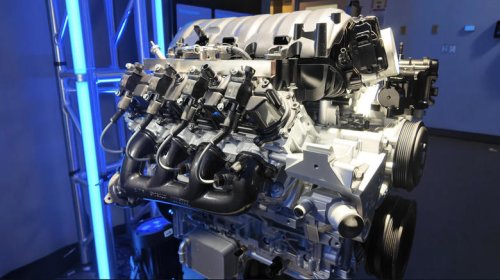
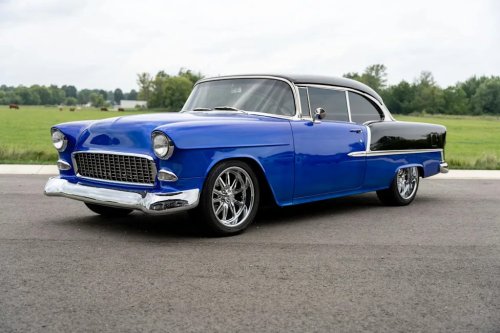
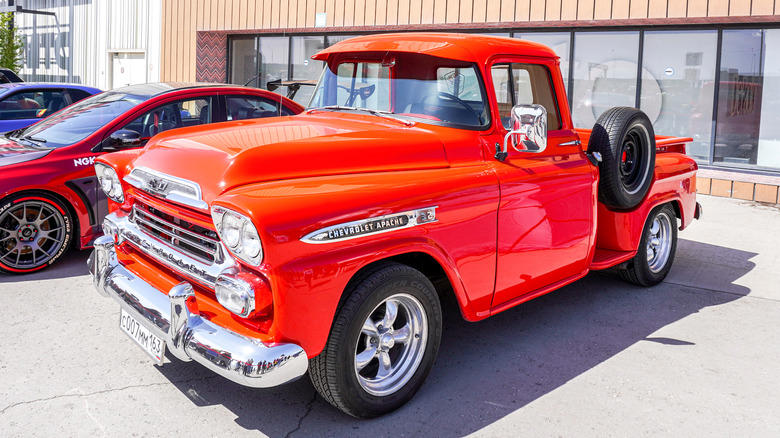
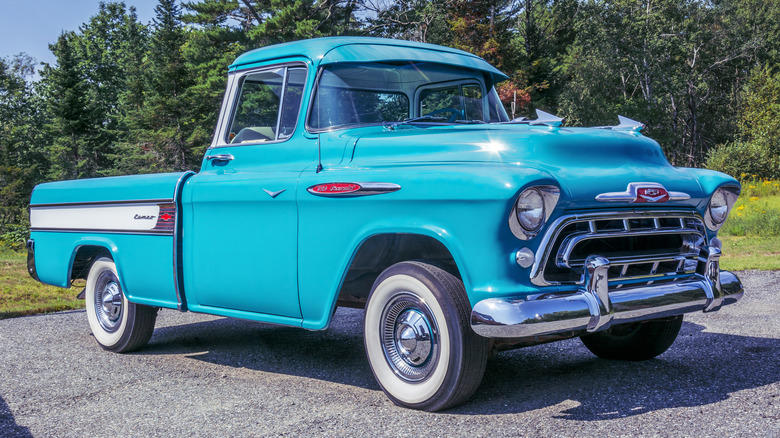
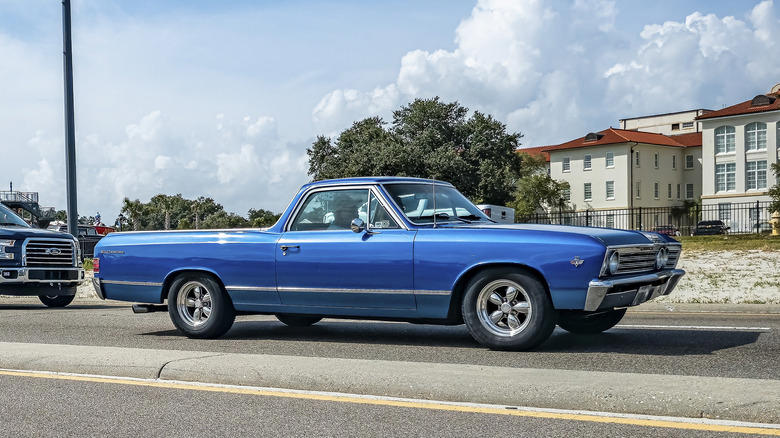
Chevrolet Task ForcePrior to the 1950s, Chevrolet came to the understanding that nobody owned a pickup truck for fun. If you weren't a farmer, a day laborer, a soldier, or some other form of physical worker, then there wasn't really any reason to drive a pickup truck, much less own one. That changed in 1955 with the release of the Chevy Task Force; a truck that could be everything it needed to be for both the strapping professional and the modern family.The Task Force was a revolutionary fusion of pickup truck and luxury vehicle, not skimping on either power or amenities. The Task Force had a few different power options available, but the most popular was Chevy's new Taskmaster V8 — a 265 cubic-inch engine boasting a healthy 145 horsepower and 238 pound-feet of torque. This was more than enough to handle most kinds of simple hauling jobs, whether in the bed of the truck or via a tow. In addition to muscle, though, the Task Force had nifty comfort features like the proprietary "Airmatic" seating. This technology allowed the driver and passenger to tailor the firmness of their seats via built-in air pumps, and a convenient safety step to aid the driver and passenger into the cab.Chevrolet Cameo CarrierWhile the Chevy Task Force was bringing the concept of pickup trucks closer to the average driver, the designers at General Motors were looking to give the vehicles a little extra iconic styling. One such designer was Chuck Jordan, the man who would one day go on to become GM's chief designer. When he was a fresh face at the company in the mid-1950s, Jordan wanted to create a vehicle that would make onlookers say "wow." It was this precise feeling that led to an offshoot of the Task Force, named the Cameo Carrier.Using a combination of steel and fiberglass, the Cameo Carrier featured a sleek forward profile that wouldn't look amiss on a pricey sports car, combined with a shiny fleetside bed. If you saw this vehicle backing out of a garage, you'd think it was an ordinary pickup, only to be jolted when the front half came into view. The inside of the cabin was also quite snazzy, featuring a wrap-around windscreen, two-toned paint, and even a carpeted floor. Drivers could even opt for an automatic transmission with the 265 V8 engine for that extra bit of sophistication.Chevrolet El CaminoBy the end of the 1950s, Chevy had proven fairly definitively that it had its finger on the pulse of pickup truck styling, but competition was still fierce from other automotive players like Ford. This may be why, in 1959, Chevy decided to invert its thinking a bit for a new innovation. Rather than trucks that were closer to cars, the brand attempted to make a car that was closer to a truck. Thus, the mysterious and iconic Chevrolet El Camino was born.The original experimental run of the El Camino only lasted one year from 1959 to 1960, but a few years later in 1964, the vehicle really hit its stride — starting a production run that would last for over 20 years. The most distinctive feature of the El Camino is, of course, its bed, swooping out from the back of a body that would normally belong on a traditional sedan. The first two generations of El Camino were marketed as utility vehicles, but with the third generation in 1968, it became more of a sports car, packing a powerful V8 engine. While the El Camino wasn't quite robust enough to pull the same kind of labor as a full pickup, the mere addition of a bed to a sedan-sized car gave it some extra utility. It was basically a hot rod that you could also use to help your friend move out of an apartment.



















 +38 others