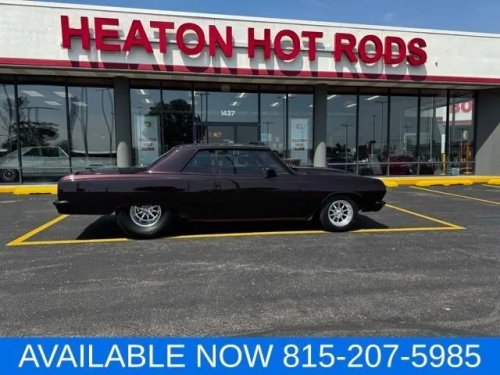
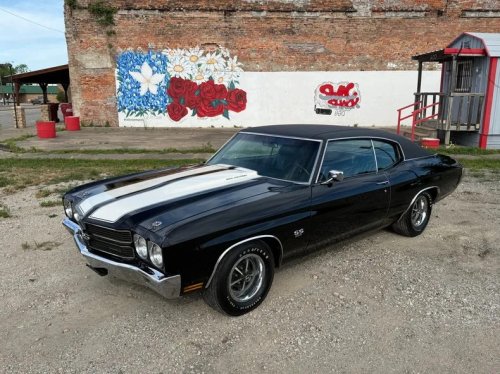
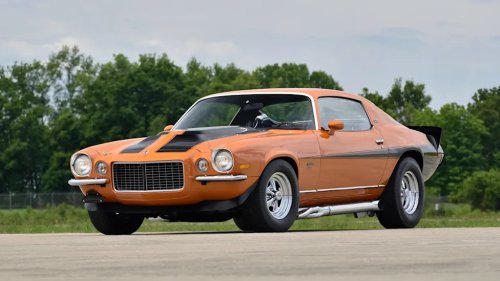
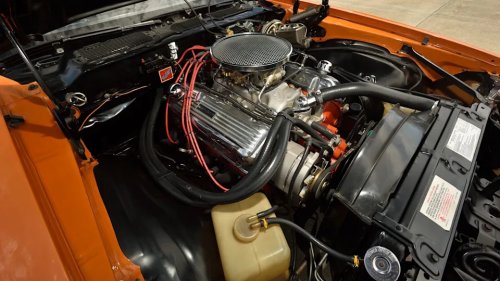
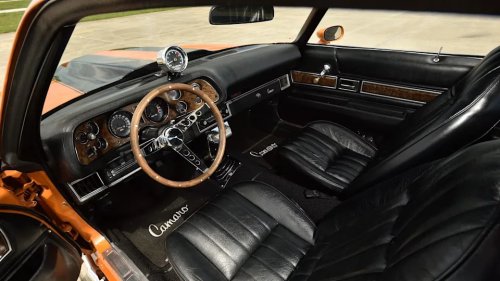
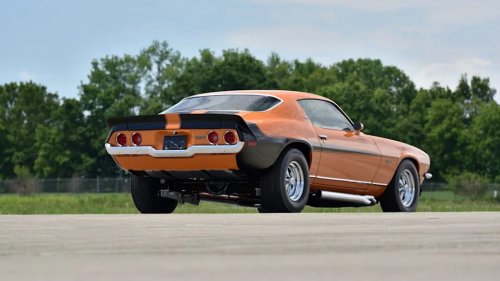
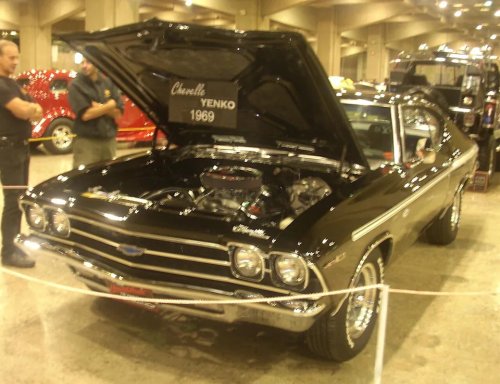
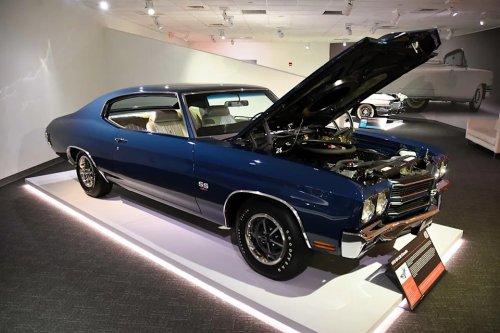
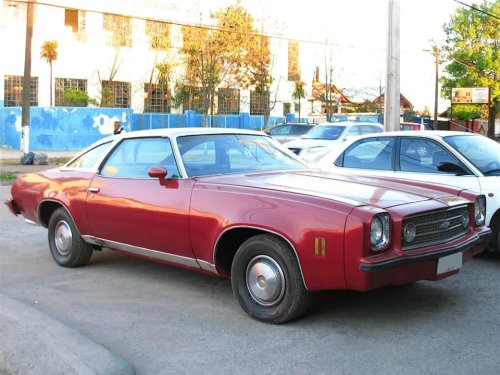
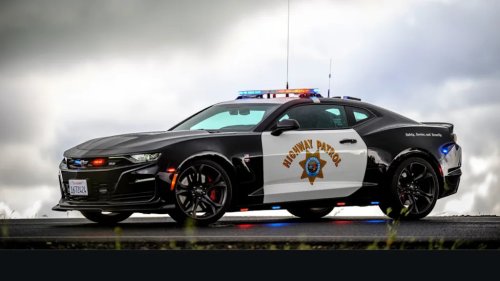
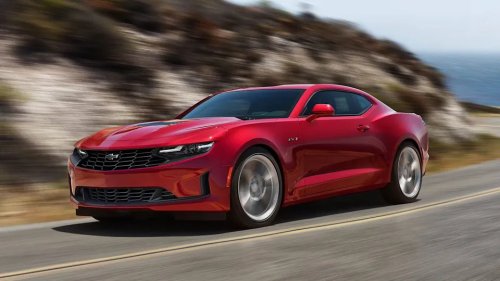
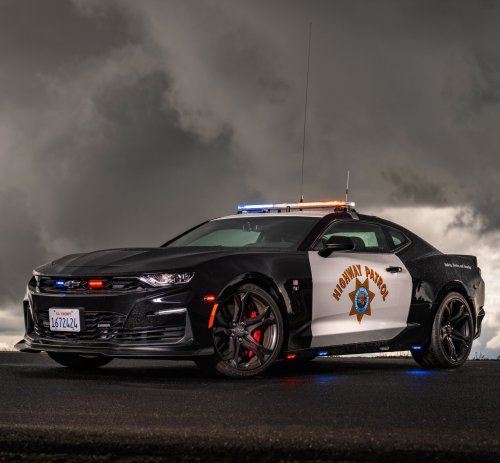
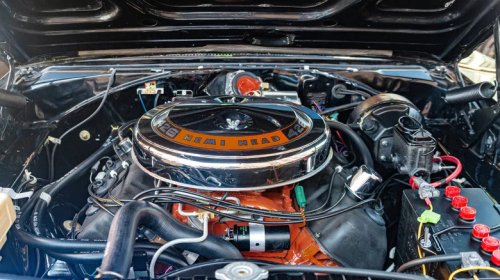
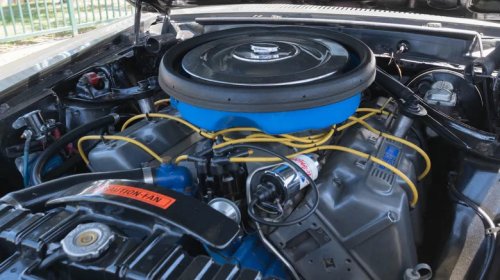
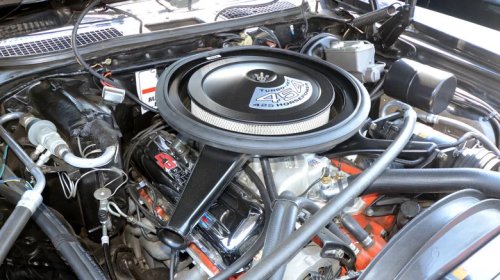
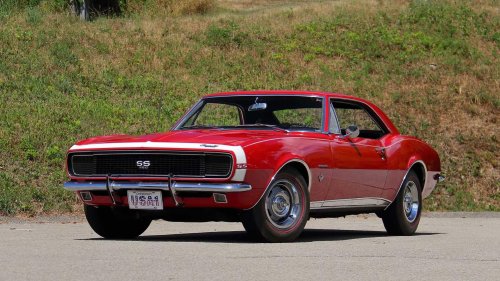
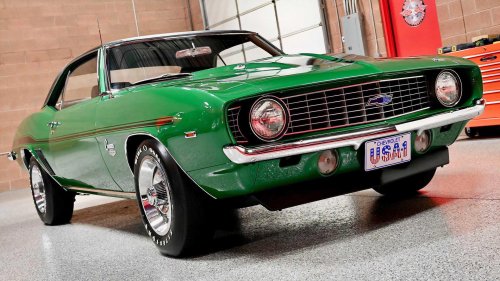
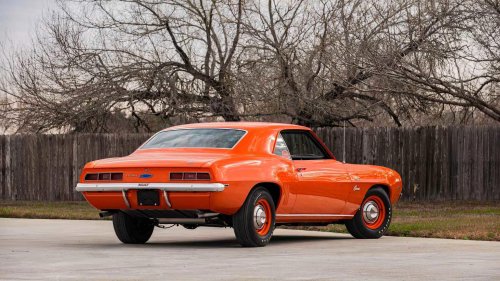
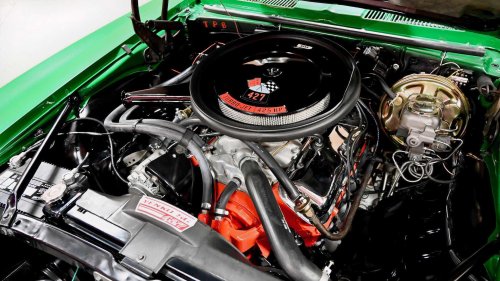
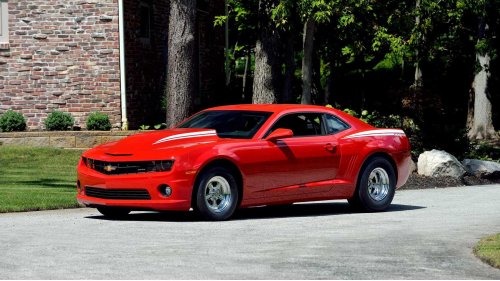
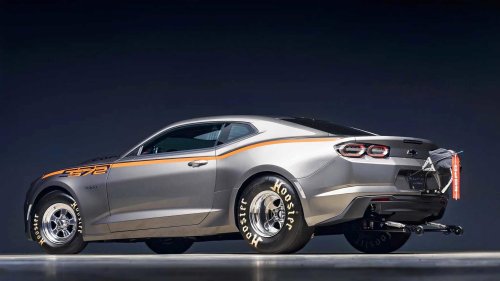
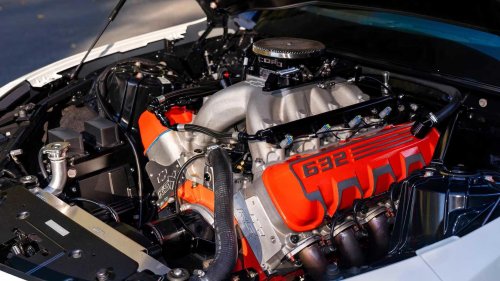
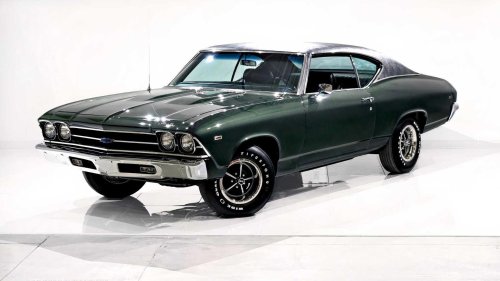
Mention the letters COPO to a Chevy fan, and they will probably start to lose it. This acronym is responsible for auction houses going into meltdown, collectors frantically opening their checkbooks, and some of the wildest muscle cars on the planet. But what does it actually mean? At the height of the '60s Golden Era for American sports cars, a perfect storm of manufacturer bans, a lust for racing, and ordering loopholes pushed two-door coupes to their limits in a way we are unlikely to ever see again. The characters who helped create them became legends, and the cars became six-figure unicorns. Even GM Was Trying To Control The Muscle Car Madness In The '60s MecumPontiac is credited with single-handedly inventing Muscle Cars in the early '60s. The story goes that one morning in 1963, Pontiac engineers Bill Collins, Russ Gee, and John DeLorean were having a brainstorming session and realized that a 389 V8 would easily fit in a 1964 LeMans coupe. The GTO was born and with it the term: muscle car. However, just as the muscle car golden era was taking off, GM itself imposed an odd ban that stopped V8s with displacements larger than 400 cubic inches from being fitted into the divisions' mid-sized cars. As the saying goes, necessity is the mother of invention, and a lot of people deemed an engine larger than 400 cubic inches very necessary. Chevy Dealers Were Getting Restless MecumIn 1966, you could go into a Dodge dealership and order a Charger fitted with a 426 Hemi. These 425-horsepower Hemi Chargers were breathing with dual 4-barrel carburetors, and featured uprated suspension and shocks and larger brakes. The quarter-mile could be covered in 15 seconds at 96 mph, says Hagerty. The factory Chevy Camaro SS came with a 6.5-liter (396 ci) V8, which was good for 375 horsepower. A desire by customers for more than 400 cubes in their Chevys was pushing dealers to get creative. And the answer came in the COPO system. How COPO Worked Bring a Trailer The Central Office Production Order (COPO) program had been created for fleet customers who needed unusual combinations for new cars. It wasn't supposed to be particularly exciting, more for taxis that needed heavy-duty components or special paint, or cop cars that needed something that wouldn't appear on a standard showroom model. But enterprising dealers quickly realized that this form, which wasn't advertised, and most buyers knew nothing about, could be used to create monsters. Don Yenko and Fred Gibb noticed that the system also allowed engines to be specced that weren't available through the standard means, and this could be a way to sidestep the ban on engines larger than 400 cubic inches. Legendary Dealers Took COPO And Ran Mecum 1969 ZL1 Chevy Camaro Fred Gibb, an Illinois car dealer, well-known racer, and Chevy tuner saw the potential in COPO. By using the system, he ordered Camaros with the iconic ZL-1 aluminum 427 engine that Chevrolet had developed for Can-Am racing in the 1960s. Aside from a mechanical fuel pump and wet sump oiling, and a few other details, this was a straight-up race engine in a street Camaro.Gibb ordered the required 50 cars needed to meet the American Hot Rod Association's rulebook requirement for drag racing, and the result was a car packing 430 horsepower. The quarter mile could be covered in the low 11-second range with light tuning. Just 69 were built in 1969, and because they were incredibly expensive (the ZL1 engine option alone cost over $4,000), reports suggest that Gibb negotiated with GM to return over three dozen, with some stolen and stripped while in shipping. Yenko Also Saw The Potential In The COPO System Bring a Trailer Another dealer, Don Yenko, used codes 9561 and 9737 Sports Car Conversion package. He created the legendary Yenko Camaro, which had similar power but used a different engine than the exotic ZL-1 unit. The cars were ordered in SS trim but would have the same L72 V8 available in the Corvette dropped in under the hood. The L72 big-block had an 11:1 compression ratio, a Holley 3910 four-barrel carburetor, aluminum intake, and free-flowing dual exhaust, and was rated at 450 horsepower. What COPO Means Today MecumIf Chevy wasn't really in on the COPO creations the first time around, it certainly wasn't going to miss out on the action the second time. When the muscle car renaissance began in the mid-2000s, what some call the second Golden Era, GM knew it was time to bring back the legendary COPO Camaro.At SEMA 2011, Chevrolet unveiled the second-generation COPO Camaro. Built on the retro-styled fifth-generation Camaro, and created to NHRA competition specifications, it came fitted with a full chrome moly tube roll cage, racing bucket seats, floor shifter, safety harnesses, and anything that wasn't strictly needed was binned in a bid to save weight. Three engine options were available, including a naturally aspirated 427 LS7 and two supercharged 327s (one with a 2.9-liter Whipple blower and another with a 4.0-liter) with horsepower ratings of 425, 500, and 550, respectively. In honor of the original COPOs, there were just 69 of the 2012 cars built. The COPO Camaro Returned Again Bring a Trailer If anyone at this point was thinking the COPO Camaro needed a few more cubic inches, Chevy had the answer in 2022. The sixth-generation Camaro also received the COPO treatment for the 2022 model year, and this thing was a colossus. Under the hood is a ginormous 572-cubic-inch (9.4-liter) big-block V8, which was a nod to the displacement wars of the '60s.This mill has a cast-iron block with four-bolt main caps, a forged steel crankshaft, aluminum heads, forged aluminum pistons, and forged steel connecting rods. For anyone who can live without the 572, Chevy also offered two LSX-based small block engines: a supercharged 350-cubic-inch V8 rated at 580 horsepower and a naturally aspirated 427-cubic-inch V8 with 470 hp. There were also other iterations of the COPO Camaro in the following years. Chevy Didn't Stop There MecumFor 2023, Chevy went one better than even the 9.4-liter unit. The COPO Camaro of that year came with a naturally aspirated 632-cubic-inch (10.35-liter) big block. It was the largest-displacement power plant ever offered in the car. Rated at 1,004 horsepower and channeled through an ATI three-speed automatic transmission, it was a fitting send-off for the Camaro, with production ending in 2023. COPO Cars Remain Rare And Desirable Bring a TrailerNaturally, with most COPO cars strictly limited to 69, they are incredibly sought after these days — with prices to match. A 1969 Chevrolet Camaro COPO will set you back $139,000 in good condition, says Hagerty's Valuation Tools. A slightly cheaper option is the COPO Chevelle, which could also be specially ordered from the factory with a big-block 427. A COPO Chevelle will cost $120,000.The newer COPO Camaros are more affordable, and have the potential to be future classics. A 2012 COPO Camaro with a 427 will cost $54,200, whereas a 2022 car will be around the $100,000 mark, according to listings on Bring a Trailer. A 2023 model with a 632 sold for $111,000 on Bring a Trailer. Ultimately, COPO may have started as a dealer workaround and an ordering loophole, but it has now become a firm part of Chevy's history.Sources: Hagerty.com; Hemmings.com



















 +42 others