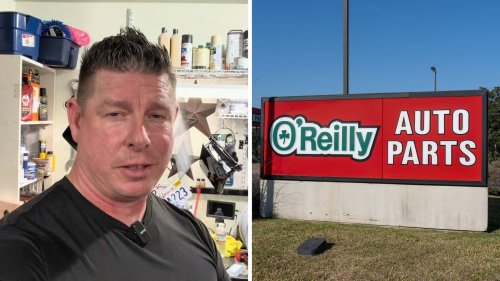
Ten years ago, the truck would’ve sold in a matter of days. Today, it can’t move at thousands below fair market value. The reason has less to do with price than with what modern truck buyers refuse to live without. A viral TikTok clip from New York salesman Justin Prinzback (@prinzofwheelz) takes us inside the cab of a 2023 Ford F-150 that’s repelling buyers despite a sticker that Prinzback claims is $5,000 below what it should be. Firmly in selling mode, he’s trying to downplay some of the truck’s cosmetic and creature comfort weak spots. "If I were to guess why this truck is still on the lot, I'd say there are three things that people expect out of an XLT that this one doesn't have: heated seats, a bigger touchscreen, and the center console that I know some people like," he said in the clip. "Those three things combined may have pushed some people away from purchasing it so far." At first glance, the truck appears to be a strong candidate. The 2023 Ford F-150 shown in the clip has low mileage, a clean body, and no visible signs of abuse, attributes that once would have made it an easy sell. But buyers shopping in today’s pickup market are far less forgiving when it comes to missing comfort and tech features, especially at the XLT trim level. Ford itself has steadily expanded standard and optional tech across the F-150 lineup in recent model years, reflecting buyer demand for more comfort-focused, daily-use features rather than purely work-oriented specs. You can see that evolution clearly by comparing Ford’s current XLT feature breakdown to earlier versions of the trim on Ford’s official model pages and order guides. Are New Trucks Crowding Out Used Models? Several commenters on the TikTok zeroed in on a bigger issue: competition from new trucks. Incentives on new pickups have returned in force, including cash rebates and subsidized financing that dramatically narrow the gap between new and used pricing. According to data from Kelley Blue Book, automakers have increased incentive spending as inventory levels normalized and sales growth cooled. That reality undercuts the value proposition of lightly used trucks, particularly those missing popular features. A buyer comparing a discounted used F-150 to a new model offering factory incentives, better financing terms, and full warranty coverage may see little reason to compromise. As one commenter put it bluntly, serious buyers will often choose new unless there’s a "really large gap" between prices. The phrase "below market" became a flashpoint in the comment section. In automotive retail, market value is often based on listing averages rather than actual transaction prices. Research shows asking prices can lag behind real-world buyer behavior, especially in fast-correcting segments like full-size pickups. If a vehicle sits unsold for months, buyers tend to see that as proof that the market has already spoken. Several commenters echoed that logic directly, arguing that a truck’s actual market value is whatever price finally gets it sold, not what pricing tools or nearby listings suggest. That skepticism reflects a broader erosion of trust following years of inflated pricing, markups, and opaque dealer fees during the post-pandemic supply crunch. Drivetrain and Perception Still Matter Beyond features, configuration plays a significant role in resale appeal. Commenters quickly speculated that the truck was two-wheel drive, a setup that remains a tough sell in many regions, regardless of climate or actual usage needs. While 2WD trucks can offer lower weight and better fuel economy, resale demand continues to favor four-wheel-drive models, especially in northern states and rural markets. Engine choice also factors in. While Ford’s turbocharged V-6 engines are widely regarded as capable and efficient, a portion of the truck-buying audience still prefers V-8s for perceived durability and towing confidence. Perception, not just performance data, continues to influence purchase decisions in this segment. The comment section functioned like an impromptu focus group, highlighting how buyer psychology has shifted after years of pricing volatility. Many viewers expressed outright hostility toward dealership pricing language, while others framed the situation as an overdue market correction. "If it’s not selling, sounds like it’s not ‘below market,’" said one. "Seems like the market price has adjusted." A second agreed, "Fair market value? Fair to who?" Industry analysts have noted a similar shift in sentiment. Cox Automotive’s recent outlook reports show increased price sensitivity among truck buyers and longer decision cycles, particularly as interest rates remain elevated and incentives fluctuate. Buyers are no longer rushing to secure inventory. They’re waiting, comparing, and pushing back. In the end, the truck’s problem isn’t any single flaw. A used pickup with missing comfort features is now competing with new trucks that offer better tech, more substantial incentives, and a more straightforward value proposition. The premium once attached to lightly used vehicles may have evaporated, especially for models that require compromise. As the used truck market continues to reset, more listings labeled "below market" may linger until prices align with what buyers are actually willing to pay. Motor1 reached out to Prinzbach via email and direct message. We’ll update this if he responds. We want your opinion! What would you like to see on Motor1.com? Take our 3 minute survey. - The Motor1.com Team




















 +34 others