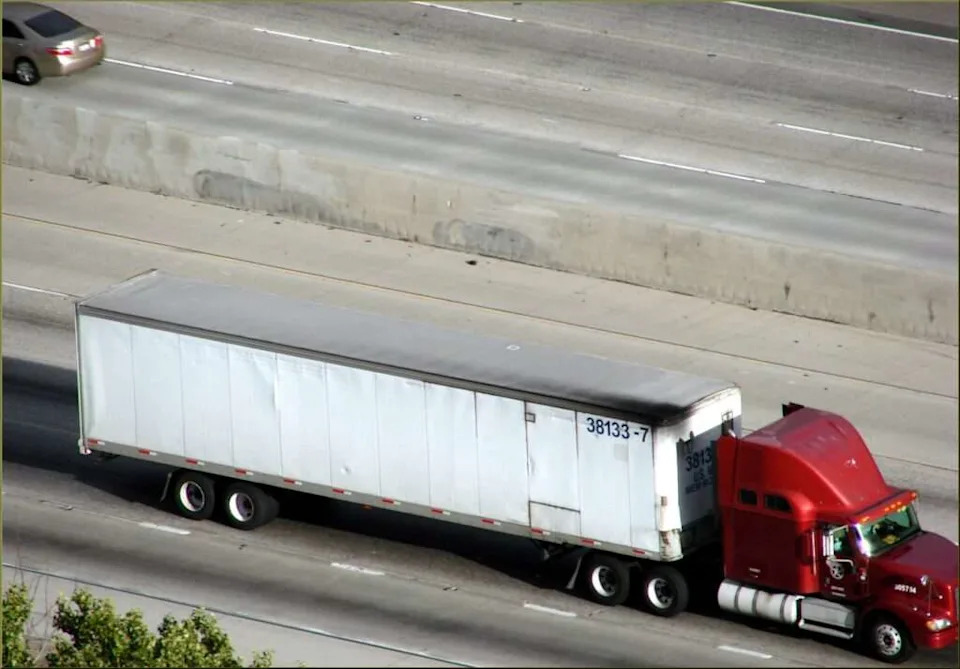


















California Opened the Door to Robot Semis. Most of the Homework Gets Done in Texas.The Auto WireEve NowellFri, September 25, 2026 at 1:30 AM UTCAdd us on GoogleFor more than a decade of autonomous-vehicle testing, California kept driverless big rigs out of its permit program. When the state finally relented this spring, it didn't hand the trucking industry a key. It handed over a mileage log, and most of the pages in that log can be filled out somewhere else.That detail is the real story behind the autonomous trucks now testing on California highways. On paper, the new heavy-duty rules are demanding: a developer needs at least a million autonomous miles before it can run a driverless commercial truck here. But up to 800,000 of those miles can be driven in other states. The result is a rulebook that rewards companies that have already done their learning in Texas and Arizona, and turns California into less of a proving ground than a final exam.What California actually approvedOn April 28, 2026, the state's Office of Administrative Law approved new DMV regulations that remove California's prohibition on testing and deploying automated vehicles with a gross vehicle weight rating above 10,001 pounds. The same package lets public agencies and universities run medium-duty automated transit vehicles up to 14,001 pounds and rewrites a long list of rules for robotaxis.AdvertisementAdvertisementHeavy-duty developers now climb a three-rung ladder: testing with a human safety driver, then driverless testing, then commercial deployment. The trucking specialists didn't wait long. Kodiak AI announced its California testing permit on Aug. 13, and as of Sept. 17 the DMV's roster of companies cleared to test with a driver included Aurora, Kodiak, PlusAI and Gatik alongside the robotaxi names readers already know, from Waymo to Zoox, whose own California status comes with strings attached.Every one of those truck permits still requires a human in the cab. Nobody is running an empty-cab semi on a California freeway yet. Under these rules, nobody will for a while.The million-mile mathHere is where the rulebook gets interesting. To graduate from drivered testing to driverless testing, a heavy-duty developer must log at least 500,000 autonomous miles under its drivered permit. To reach deployment, it needs another 500,000 autonomous miles under a driverless testing permit, plus a written safety case covering functional safety, the safety of the intended function, artificial-intelligence safety, cybersecurity and operational safety.Light-duty vehicles face a 50,000-mile bar per phase. The truck requirement is ten times higher, which is a sensible response to physics. A loaded tractor-trailer can weigh up to 80,000 pounds on the Interstate system, and a mistake at that mass is not a fender-bender.AdvertisementAdvertisementNow the fine print. In each phase, only 100,000 of the 500,000 miles must be driven inside the company's intended operating area in California. Up to 400,000 can come from other jurisdictions.Run the numbers and the headline figure shrinks. A company needs a million autonomous miles to deploy, but only 200,000 of them have to be Californian. The other 800,000 can be logged on Interstate 20 outside Dallas or across the Arizona desert on I-10.That isn't a loophole. It's the design.The DMV's final statement of reasons doesn't explain how the department arrived at those specific thresholds. The effect is plain anyway: California is letting most of the learning happen in states that allowed driverless freight sooner, then checking the work on its own roads. Texas, where Aurora and Kodiak built their driverless operations, has become California's unofficial test track.Interstate 10 in Redlands, the kind of freeway freight corridor California's rules are built around. Photo: inkknife_2000 / Wikimedia Commons, CC BY-SA 2.0Who the rules quietly favorA mileage requirement is a capital requirement wearing a safety vest. Nothing in the regulation says "incumbents only," but a million autonomous miles is a staggering operating bill for a startup with no revenue lanes. A company that already runs trucks for paying customers elsewhere can pile up out-of-state miles as a byproduct of doing business. A newcomer has to pay for every one of them.AdvertisementAdvertisementAurora is the clearest example of who benefits. The company said its trucks had logged nearly 440,000 driverless miles by the end of June across 10 Sun Belt routes. Today, at its investor day, it said it had passed 500,000 driverless miles and laid out a plan for more than 30,000 driverless trucks by 2030.Aurora's February letter to shareholders shows why the Golden State matters so much. The company wrote that including California would lift its estimated serviceable market to about 60 billion vehicle miles by 2028. Its expanded Sun Belt network, by comparison, covered a little over 3.6 billion. Right now, Aurora's 1,000-plus-mile driverless lane between Fort Worth and Phoenix stops short of the state line. California is the missing piece.The robot still has to pull into the scaleBuried in the regulations are details that show how literally California intends to treat these machines as trucks first and robots second. Autonomous heavy-duty vehicles must stop at California Highway Patrol weigh stations and meet every applicable state and federal commercial-vehicle requirement. A truck with nobody in it still has to exit the freeway, roll across the scale and wait to be waved through like everyone else.They also can't wander. The rules bar autonomous heavy trucks from local roads posted at 25 mph or less, unless that road is part of a direct route between hubs, distribution centers or fueling and charging stations. Translation: the business California is permitting is freeway freight between depots. A driverless 18-wheeler backing up to a neighborhood grocery store isn't part of the plan, and the final miles of most deliveries will stay human for the foreseeable future. Europe is making its own hub-to-hub bets, as Germany's first driverless truck showed this month.AdvertisementAdvertisementAnd when a driverless truck breaks a traffic law? Officers can issue a "Notice of AV Noncompliance" directly to the manufacturer. There's no license to put points on, so the company becomes the accountable party. Developers must also answer first responders within 30 seconds over a two-way link, give them access to a manual override, and pull their fleets out of emergency "do not enter" zones within two minutes of being told to.One number didn't scale with weight. The testing rules require every AV manufacturer to carry $5 million in insurance, a surety bond or proof of self-insurance, and the text sets no separate, higher figure for heavy-duty trucks. That's the same floor for a compact robotaxi and an 80,000-pound combination vehicle. Insurers will likely price that gap long before regulators revisit it.The fight isn't overOrganized labor has spent three years trying to keep a human in these cabs. Gov. Gavin Newsom vetoed AB 316 in September 2023, a bill that would have required a human safety operator aboard heavy-duty autonomous vehicles, arguing the DMV already had the authority to oversee the technology and to suspend or revoke permits. He vetoed a similar bill, AB 2286, the following year.Teamsters California sued the DMV in Alameda County Superior Court on Aug. 5. The union argues the department used a regulatory pathway meant for rules with less than $50 million in economic impact, underestimated job losses and skipped required economic analysis. It wants the heavy-duty rules repealed. For now, the rules stand and testing permits are being issued.AdvertisementAdvertisementThe union has a fair point about process. A change this large to an entire profession arrived through an agency rulemaking rather than a legislative vote. But the rules themselves aren't the free-for-all critics describe. A seven-figure mileage bar, mandatory scale stops and tickets addressed to the manufacturer are hardly a rubber stamp. Washington is wrestling with its own version of the who-checks-the-robot question, as the federal audit of Tesla's Cybercab self-certification shows.What to rememberFor drivers sharing I-5 or I-10 with these trucks, the near-term reality is modest: autonomous semis with a human in the seat, running freeway routes between depots. The empty cab is further off, and when it arrives, it will come first from companies that already racked up their miles somewhere else.That's the idea to hold onto. California measures readiness in miles, and it lets most of those miles be earned out of state. The state that held out longest against driverless big rigs wrote a rulebook that rewards whoever got a head start elsewhere.California didn't build a test track for robot trucks. It built a weigh station for trucks that learned to drive somewhere else.Would you feel differently about sharing the freeway with a driverless semi if most of its first million miles had been logged in California instead of Texas?The post California Opened the Door to Robot Semis. Most of the Homework Gets Done in Texas. appeared first on The Auto Wire.