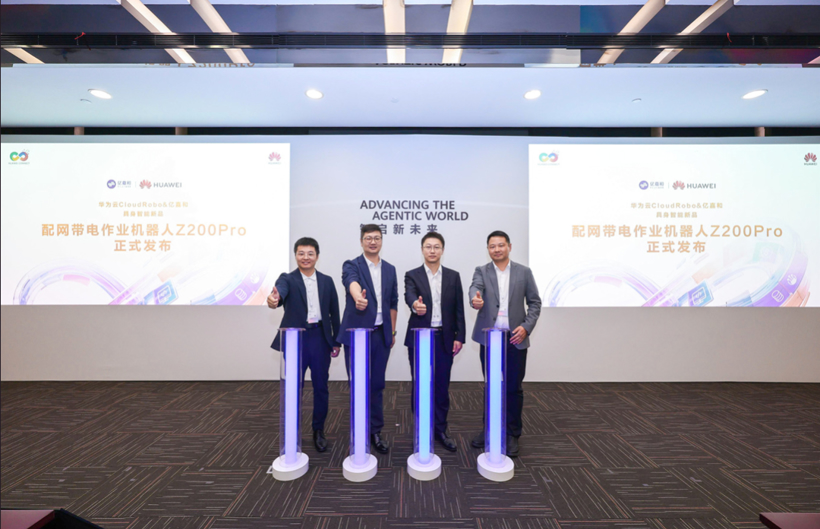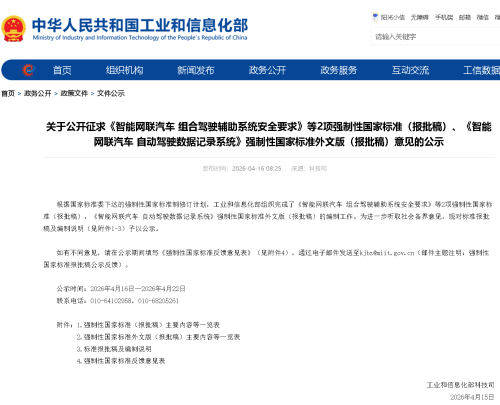
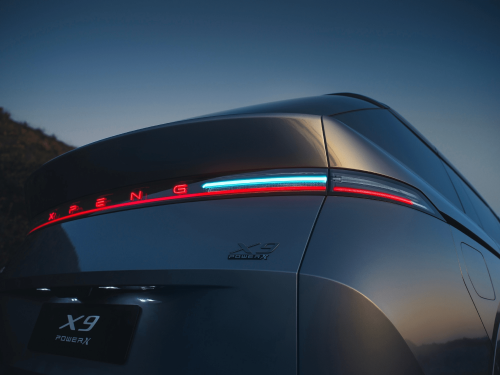
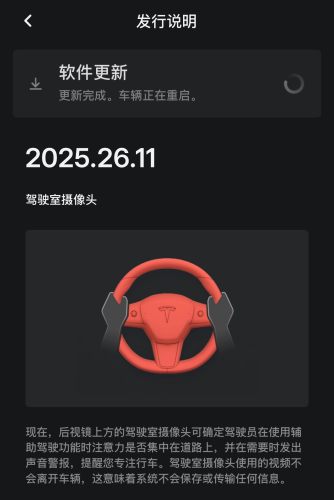
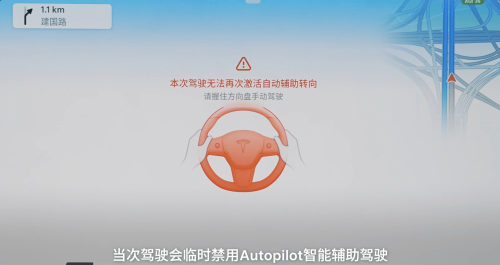



















On April 16, the mandatory national standard (draft for approval) titled “Intelligent and Connected Vehicles — Safety Requirements for Combined Driver Assistance Systems,” completed under the organization of the Ministry of Industry and Information Technology, officially entered the public comment period. The comment period runs from April 16 to 22, with a proposed implementation date of January 1, 2027. This is China’s first mandatory national standard for L2-level driver assistance systems. It was jointly drafted by leading companies including Huawei, Xiaomi, BYD, and Tesla, with the aim of filling the gap in industry safety baselines and regulating the rapidly growing intelligent driving market. Mandatory national standards such as safety requirements for L2 driver-assist systems The core logic of the standard is not complicated — the driver must be the main driving entity, and the system serves only as an assistant. To achieve this goal, the standard establishes rigid constraints from two perspectives: driver monitoring and system deactivation. In terms of driver monitoring, the standard explicitly requires vehicles to be equipped with a driver status monitoring system that employs a dual detection mechanism for hands and eyes. Specifically, hands off the steering wheel for 5 seconds will trigger a prompt; if not corrected within 10 seconds, the prompt escalates to a warning. Eyes off the road for 5 seconds will trigger a prompt to return attention; if attention is not regained, the warning level gradually escalates. Even stricter is the system deactivation mechanism. If the system performs a risk mitigation function due to driver disengagement, or if three escalated HOR (hands-off) or escalated EOR (eyes-off) events occur within any 30-minute period, the combined driver assistance system must be prohibited from being used for at least 30 minutes. In addition, the standard sets stringent product performance thresholds. For example, vehicles are required to identify a stationary obstacle and decelerate from a distance of 120 meters while traveling at 80 km/h. This test scenario directly tests the system’s sensing distance and response capability. At the same time, the standard establishes a multi-level evaluation methodology including field tests, road tests, and document reviews to comprehensively assess the system’s safety capabilities. Blue signal light for intelligent driving The standard clearly divides L2 combined driver assistance into three categories, defining different capability boundaries: Basic single-lane combined driver assistance system: Assists the driver in controlling the vehicle within a single lane only on highways and expressways, corresponding to common features such as Lane Centering Control (LCC) and Adaptive Cruise Control (ACC). Basic multi-lane combined driver assistance system: Supports lateral and longitudinal control after the driver initiates a lane change on highways and expressways, corresponding to automatic lane change with turn signal activation. Navigation combined driver assistance system: Can be used on some urban roads in addition to highways and expressways, corresponding to highway/urban Navigation on Autopilot (NOA) functions. The standard clearly emphasizes that combined driver assistance systems are not autonomous driving systems, and the driver is always the responsible party. The system can only be activated within its Operational Design Domain (ODD); once outside the ODD boundaries, it must automatically deactivate and prompt the driver to take over. Tesla FSD’s driver monitoring system As one of the joint drafters, Tesla has done considerable work in driver attention monitoring. As recently as February 2025, after Tesla’s FSD (Full Self-Driving) driver assistance system was launched in the Chinese market, the company provided detailed instructions on how to use FSD. The instructions noted that when FSD is enabled, the driver attention monitoring system is also activated, providing audible reminders to alert the driver to pay attention to road conditions. When the system detects driver inattention, a prompt appears at the top of the vehicle status section on the touchscreen. After repeated audible and visual warnings are ignored, Autopilot intelligent driver assistance will be temporarily disabled for that driving session. After five consecutive temporary disablements, the system will be disabled for one week. Under this system, many users have also reported online that the system issues warnings even when they are adjusting the climate control or checking the navigation, complaining that the system is too “sensitive.” Tesla FSD’s driver monitoring system Of course, the joint drafting has also sparked some industry discussions: Do the standard’s technical parameters favor existing mainstream solutions? Are the requirements for the pure-vision approach and the LiDAR approach equivalent? These questions will be examined by public feedback during the comment period.