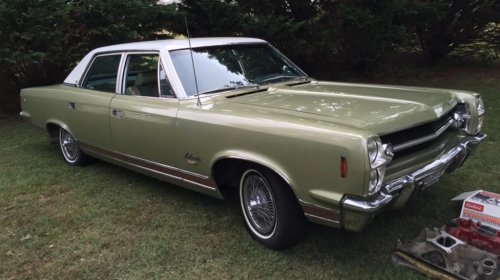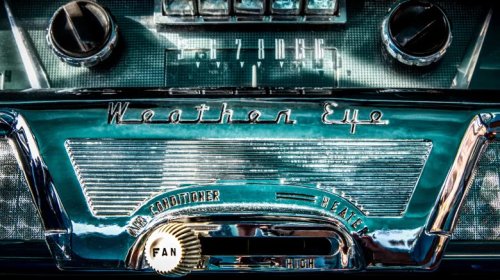
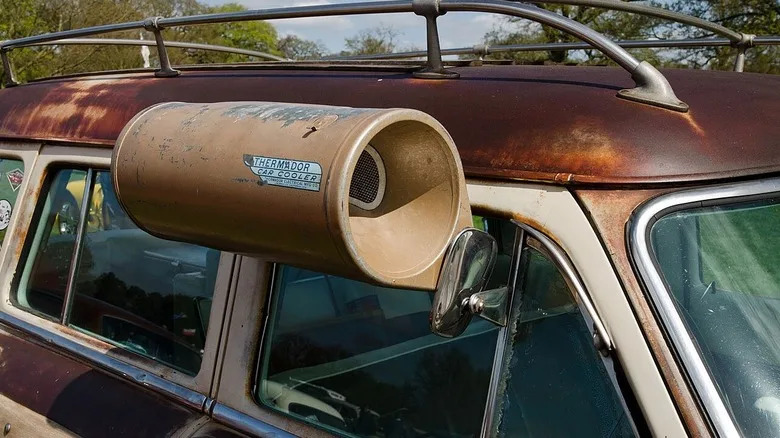
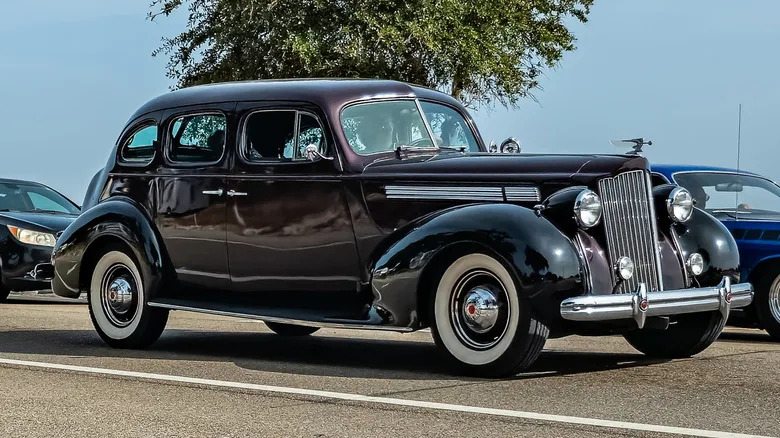



















The driver and passenger of a 1904 Cadillac holding an umbrella while driving in the rain - Max Mumby/indigo/Getty ImagesThe earliest motorcar drivers were probably more concerned with keeping warm than with staying cool, given that the first automobiles were open-air and had no enclosed bodies. The first Ford Model Ts, particularly the roadster and touring models, had no standard driver's door, and drivers of open-top vehicles would erect umbrellas for shade when the sun was shining brightly.Of course, people wore protective driving clothes in the early days of motoring. The apparel consisted of caps, duster coats, and goggles on warm days. Meanwhile, vintage motoring fashion included goatskin gloves and a leather storm coat during rainy weather. The dilemma began when Cadillac introduced the Osceola prototype in 1905. It was the first motorcar with an enclosed body, and almost all carmakers had adopted the "closed car" design by the 1920s.It was then that motorcar owners realized that car interiors get sizzling hot in the summer, and manufacturers responded with roll-down windows and vents under the dashboard that allowed outside air to cool the cabin. The problem was that those vents became entry points for dust, dirt, insects, and pollen, so there had to be a better way. In 1919, the Kool Kooshion auto seat covers debuted in the market. With half-inch springs to isolate the driver's back and bottom from the seat, the gap allowed air circulation to help evaporate the driver's sweat and bring a cooling effect while driving.AdvertisementAdvertisementRead more: 5 Iconic Poster Cars That Just Aren't That GoodFans and car coolersA 1954 Ford Country Squire Station Wagon with an air cooler in the right front window - Wikimedia Commons/SG2012Today, seat covers are simple upgrades that can make cheap cars feel more premium, but even the most innovative covers back then were not enough to cool an enclosed cabin. The Knapp Limo-Sedan Fan appeared in 1921. It did have a fancy name, but it's just a small, electrically-operated fan that drivers install in vintage cars. It didn't blow cool air, but it did make the cabin breezier. On the bright side, drivers still use fans in some vehicles today, and that primitive technology managed to survive the modern era, which couldn't be said of the "car cooler" that debuted around the 1930s.The car cooler is a missile-shaped metal box with a one-and-a-half-gallon reservoir and a water-saturated pad inside it. Wind enters the front of the unit and passes through the water pad. The air eventually cools via evaporation, and that cool air is routed inside the cabin. It sounds novel, but there are drawbacks. It does look cool sitting awkwardly above the car's window, and it can reduce the cabin temperature by 15 to 20 degrees Fahrenheit. However, it can only do so if the car is moving, and it doesn't work efficiently in humid weather. Oh, and the half-gallon water reservoir could need replenishment every three hours in extremely hot climates, so it's not the only one thirsting for water when traveling in the desert.General Motors and Packard led the wayA 1939 Packard 120 touring sedan at a local car show - Different_brian/Getty ImagesWillis Carrier is touted as the inventor of electric air-conditioning. In 1902, Carrier created a machine that controls air humidity, a precursor to the modern A/C system that does more than just cool the air. Almost two decades later, General Motors designed a vapor compression car air conditioning system using R12 refrigerant. But in 1939, Packard became the first automaker to debut a car with optional A/C. As you can imagine, it wasn't as efficient or neatly packaged as the ones we're used to today, and Packard discontinued the air-conditioning option from its cars by 1941.AdvertisementAdvertisementFor starters, the A/C system's evaporator and blower system were large enough to occupy half the trunk space. Yes, Packard's A/C was a trunk-mounted unit, and it was a $274 option (about $5,000 today) back then. It was also highly impractical to use. You'll have to remove the drive belt from the A/C compressor manually to turn it on or off. Moreover, there are no control settings, and users cannot adjust the air temperature.Pontiac and Nash were the first automakers to relocate the A/C system to the car's front in 1954. The system combines the A/C and heater in the dashboard. By 1964, Cadillac unveiled Comfort Control, the first car to have automatic climate control. And in 1969, the AMC Ambassador became the world's first to roll off the factory with standard A/C.Want more like this? Join the Jalopnik newsletter to get the latest auto news sent straight to your inbox, and add us as a preferred search source on Google.Read the original article on Jalopnik.