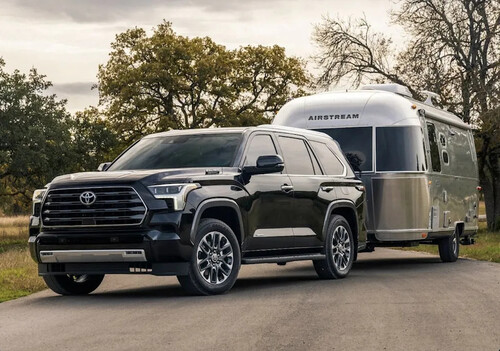
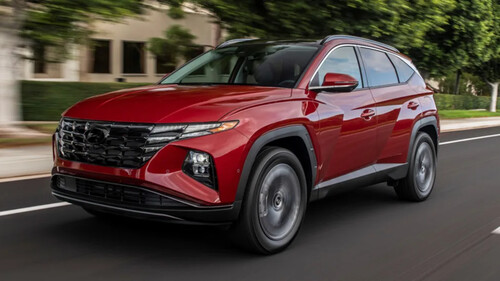
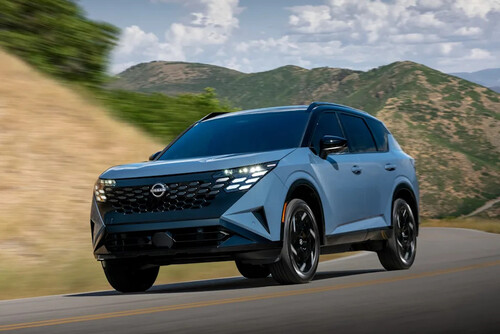
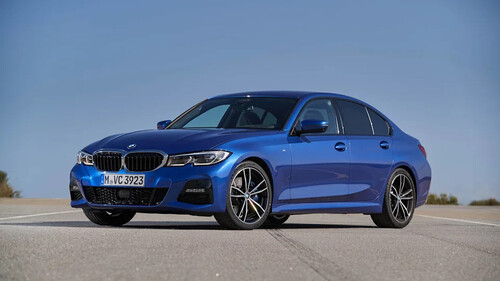
The industry seems to be in a bit of a tizzy. Many households are struggling to budget their finances at a time when automakers are asking them to consider making sizable expenditures on new models. Transaction prices are up, disposable incomes are down, and the industry seems to be in a state of flux. So what exactly are people actually considering buying these days?Surveys can provide us with invaluable data and YouGov recently produced exactly that in an effort to rank the best automotive brands for 2026.However, as someone who worked in the domain of market research for years, your author needs to issue a few disclaimers. While there are certainly exceptions, consumers typically aren't going to be the target audience for these types of studies. Companies that run market research are usually trying to sell themselves to businesses operating within a given industry. That likewise looks to be true of YouGov (which is not affiliated with the government, despite the name) in this instance. But the data points being provided still look objective and remain highly useful for our purposes.The outlet is attempting to acquire the information on generalized consumer sentiment with the end goal of determining which auto brands will perform the best through 2026. This is tied to its "BrandIndex" which is a mix of factors that all come together to establish various brand rankings. If you're curious about the specific survey metrics, you can check out the survey website.We'll likewise be diving into some of those ourselves here. But, before we explore which brands performed the best, it's worth rummaging through which factors were deemed the most relevant to would-be car buyers.According to YouGov, price was the number one factor when it came to deciding which automaker to consider. A whopping 75 percent of respondents named it as a core concern. This result is highly typical of consumer surveys. However, there is some nuance to that because we'll see later in this piece that many of the brands that people are interested in are not known for fielding a bunch of cheap models.Only 22 percent of individuals said they planned to spend more than $40,000 on their next vehicle. This is extremely interesting because that's still about $10,000 lower than the average transaction value of a brand new automobile. This clearly showcases how out of touch manufacturers have gotten in terms of matching MSRP to demand and seems to be underscored by the fact that the survey found that only 15 percent of Americans were even considering themselves as "in the market" for a vehicle.That's on the lower end of the spectrum, which typically ranges somewhere between 15-20 percent in a given year.The overwhelming majority of the country isn't even looking for a car right now. But those that did tended to want something affordable, with 18 percent saying they didn't want to spend more than $10,000 and 21 percent expecting to pay somewhere between $10,000 and $20,000. The remaining one-third of buyers anticipated spending anywhere from $20,000 to $40,000.Other meaningful factors for purchasers included performance, safety, fuel efficiency, size, and maintenance costs - all of which were mentioned by over half of survey respondents. Engine type, vehicle appearance, and insurance rates came into play almost as much as the other factors. But the first two things are highly subjective, making it tricky to identify how much they actually influenced brand preferences.In terms of what customers are looking for, crossovers and SUVs still reign supreme with a 43-percent share of the expected market for 2026. Sedans, which look to be making a modest comeback, landed 23 percent of potential buyers. Trucks saw just 15 percent, which is slightly lower than we would have expected. Every other body style ended up at 4 percent or less.Interest in new and used vehicles was split right down the middle, with 66 percent of buyers stipulating that they wanted a gasoline-powered vehicle. Hybrids did receive a meaningful 21 percent share, however, leaving purely electric vehicles with 9 percent of the market. Diesels were at 4 percent, which isn't surprising due to the fact that there are presently so few passenger models for sale these days.Most drivers who were researching vehicles tended to lean toward online reviews. Consumer reports was also rated rather highly, along with personal recommendations and websites featuring comparative specifications between models. But there were many other avenues for them to take and the assumption is that individuals that were serious about purchasing used an array of sources.Interestingly, advertisements didn't appear to be something most customers felt were influencing their decision. But there may be a degree of wishful thinking taking place here. While nobody wants to feel like marketing works on them, most customers gravitated toward automakers boasting a high level of public awareness and a relatively good reputation.Brand preference was heavily biased toward Japanese automakers, regardless of which generation was being asked. Toyota and Honda consistently occupied first and second place. Nissan also made the top ten, however, it peaked in sixth place with Generation X. For the domestic nameplates, Chevrolet and Ford usually landed in sixth place or higher - with Chevy typically outperforming Blue Oval.The big exception came with Gen Z, which was the only group that preferred Ford to Chevrolet. Younger drivers had Chevy in tenth place and were likewise the only group that snubbed Subaru. Gen Z consistently ranked luxury vehicles more highly than older drivers. The demographic ranked BMW, Mercedes-Benz, and Lexus within the top five.While other groups also put those nameplates within their top ten, they all prioritized mainstream brands for the top five slots. This included Subaru, indicating that the brand may have missed a step when it comes with enticing younger drivers. We also see this luxury bias to a limited degree with Millennials. However, the trend was more pronounced with Gen Z which placed Audi higher and was the only group to include Porsche within its top ten.In terms of gender, there wasn't much difference. The study showcases a lot of the same names we saw in the generational study. But there were a few unique data points. For example, Jeep just barely managed to make it into the top ten brands for women whereas men went with Audi. Any other differences were so slight that it's probably best to chalk them up to margin of error.For example, the study indicated that men had a preference toward Ford while women liked Chevrolet a tad more. However, the scores were only a few points away from each other. The real takeaway is just how highly regarded Toyota was with both genders. It commanded a significant lead over Honda, which likewise tended to be rated much more highly than all remaining brands.But the big question here is whether or not these feelings were the result of tangible, recent experiences or simply a good reputation earned years earlier. The study would suggest that it was all of the above, as both companies garnered some of the highest "most-improved, year-on-year" index scores.AdvertisementAdvertisementThis was said to be a combination of "Impression, Value, Quality, Reputation, Satisfaction, and Recommend metrics." Other brands that made the top five included Kia, Ram, and Polestar - the latter of which was more than a little surprising.In terms of what these people were actually considering buying, the big winners were the same brands that we saw in the brand preference portion of the study. Toyota won, with 44 percent of respondents saying it was a brand under consideration. Honda was next (30.8 percent) and was followed by Ford (30.1 percent), Chevrolet (28.1 percent), with Nissan (21 percent) in fifth place.However, the luxury nameplates were largely absent here (save for Lexus and BMW) with Subaru, Kia and Jeep also making a surprise appearance. We suppose Stellantis can thank the ladies for the latter data point. Still, even the brands that did manage to make it into the top ten failed to garner more than 18 percent of drivers to seriously consider heading over to the dealership to make a purchase.In terms of how much consumer perception had improved between years, we again see a lot of the same names. The one big exception here was Mazda. As a smaller automaker, Mazda lacks production volume and the marketing punch of other brands. However, the automaker saw a meaningful increase in both consumer satisfaction and the likelihood of someone considering purchasing one of their vehicles.Mazda very nearly made it into the top ten for both consumer satisfaction and buyer consideration. But fell short of making it into the top ten of either. Still, if it maintains its current trajectory, that could change in a couple of years.While we think this kind of data is always good to have, it's difficult to say how useful it is to consumers. As mentioned before, kinds of surveys are frequently marketed toward automakers, with the express purpose of leveraging that information to find ways of raising their score and getting out ahead of any changing consumer trends. Some outlets have even been criticized for selling good scores to their clients. However, YouGov has a much better reputation than other companies considered by many to be less objective.Despite your author routinely calling out these kinds of studies as highly suspect, most of what we've seen here matches with my own anecdotal research. I'm inclined to believe the results, including some of the obvious conflict between what drivers claim they want and the kinds of vehicles they actually purchase. The Gen Z component of the study illustrates this perfectly. They were the group most prone toward showing an interest in luxury nameplates, while also being the group that was the least likely to actually be in the market for a new automobile.The lesson here is that we sometimes need to read between the lines of any given study. But we're likewise curious about your thoughts on the above standings. Is this representative of your reality or does it seem totally off base? Feel free to throw in your two cents on the matter below.[Images: Keegan Divant/Shutterstock; Kenishirotie/Shutterstock; Jonathan Weiss.Shutterstock; Toyota; Honda; Mazda; Dolores M. Harvey/Shutterstock]