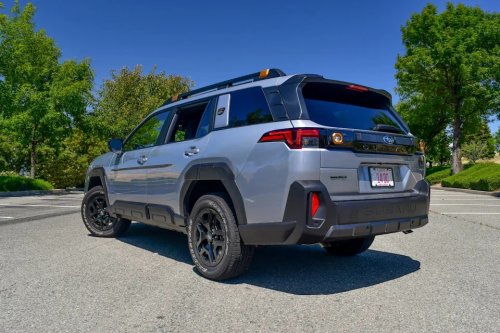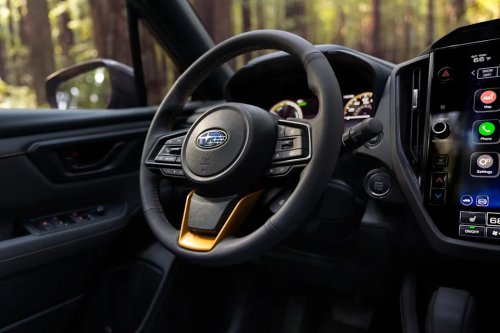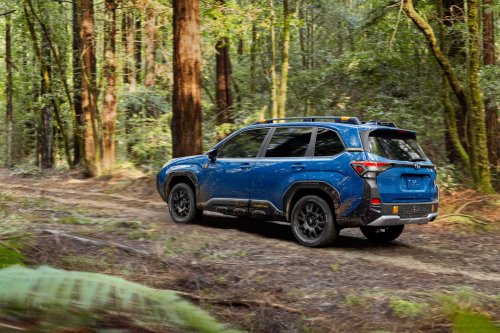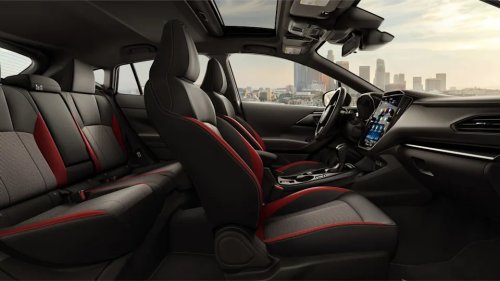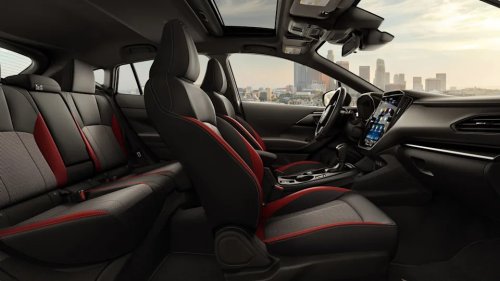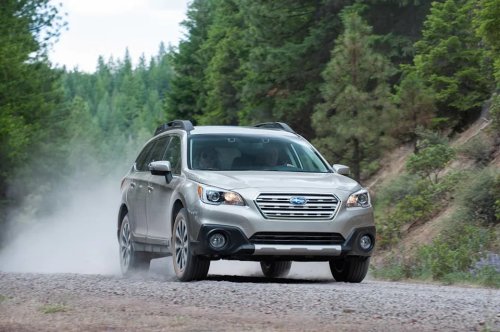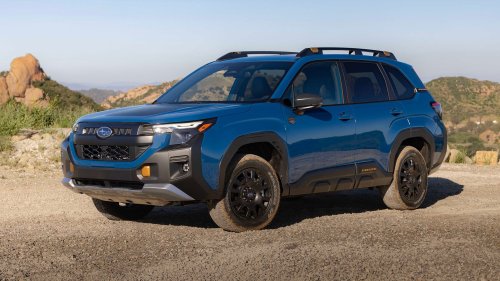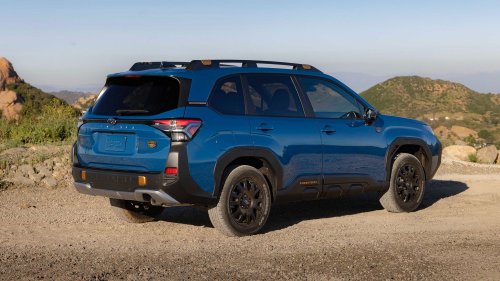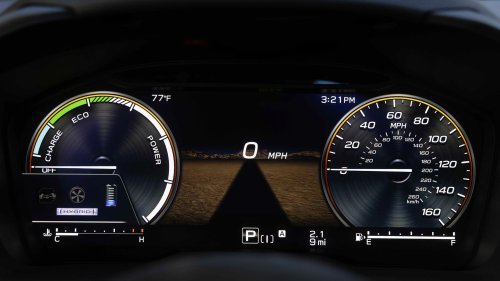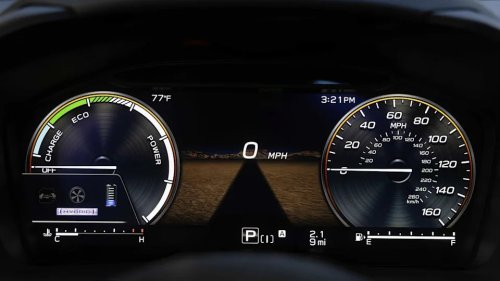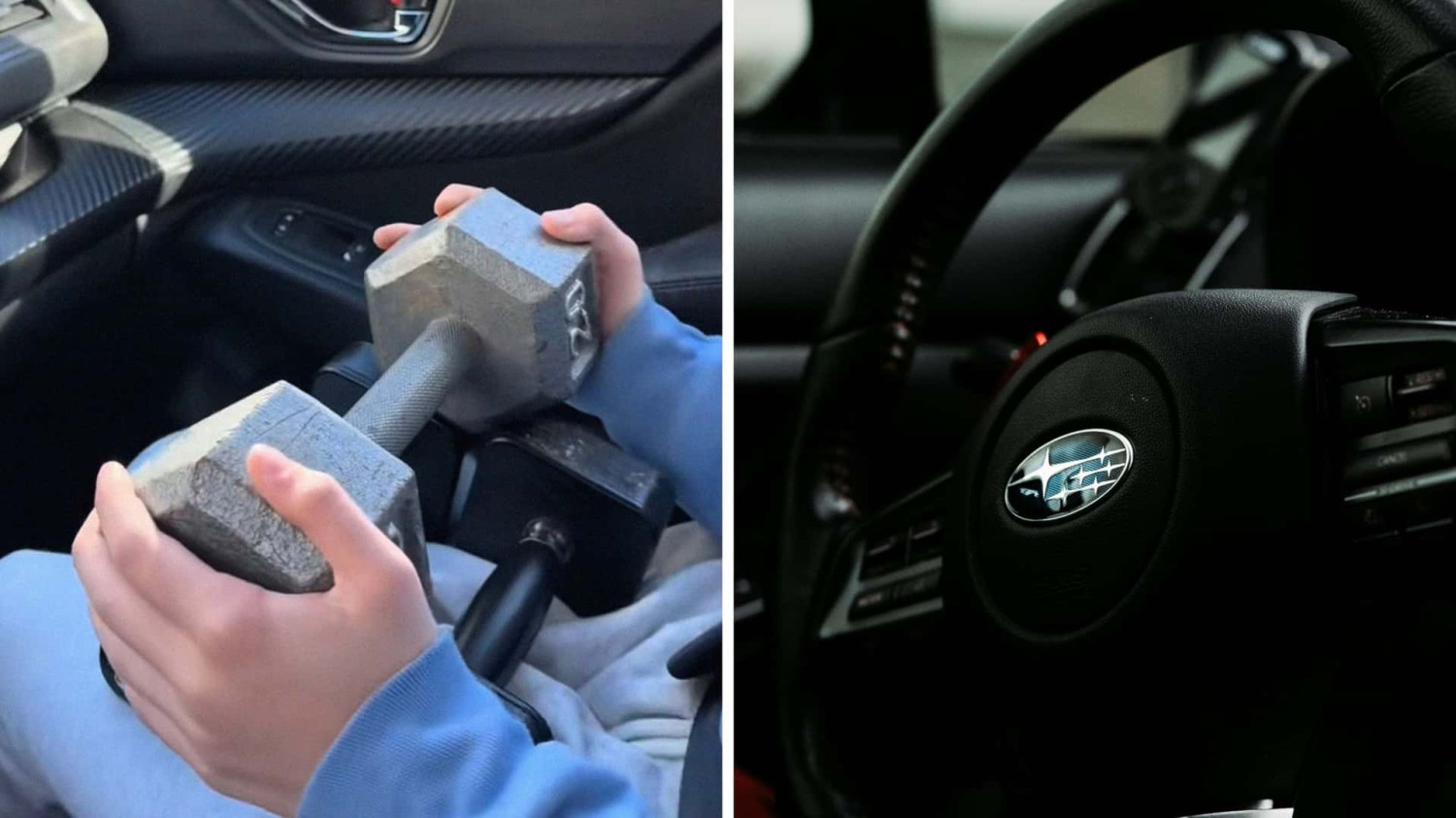



















Most drivers have learned the same modern-car lesson the hard way: put a purse, a backpack, or a grocery bag on the passenger seat and the car will immediately start yelling at you to buckle it in. So when a mother discovered her 2025 Subaru wouldn’t activate the passenger airbag for her 13-year-old daughter, even after stacking substantially more weight on the seat with her, it raised an uncomfortable question about what these systems are actually sensing. The viral clip from TikTokker Kristen Bennett (@kristenanddave) raises legitimate concerns about the safety of her Subaru Forester, as her instrument panel indicates the passenger airbag isn’t engaged even when her daughter is sitting in the seat. Adding dozens of pounds of free weights eventually solves the problem. But in a follow-up video, the problem recurs despite the two bags of 100 pounds of animal feed being in the seat. “We have a 95-pound child sitting in the seat… We're gonna add weight. Dealership says it should go on at 80 pounds,” she said in a clip that’s been viewed more than 237,000 times. As the clip spread, the response was swift and polarized. Many commenters said their own vehicles trigger seatbelt warnings for items as light as a purse, a backpack, or a gallon of milk. Others insisted the system was working as designed, arguing that children shouldn’t be in the front seat in the first place. That tension reflects a common misunderstanding about modern vehicle safety systems. Seatbelt reminders and passenger airbag activation are governed by different logic than many drivers assume. A vehicle can detect that something is occupying a seat and still decide that deploying an airbag would be unsafe. How Passenger Airbag Sensors Actually Work Modern vehicles rely on what automakers typically call an Occupant Detection System, or ODS. Rather than using a simple scale, these systems estimate occupant status through a combination of load sensors built into the seat structure, pressure distribution, seat position, and calibration data established at the factory or during service. The goal is not merely to detect weight, but to classify whether the occupant meets criteria deemed safe for airbag deployment. According to the National Highway Traffic Safety Administration (NHTSA), advanced airbag systems are designed to suppress deployment when a passenger is too small, improperly seated, or otherwise at elevated risk of injury from the airbag itself. This explains why seatbelt alarms often feel overly sensitive while airbag systems appear conservative by comparison. A warning chime is meant to prompt driver attention. An airbag, by contrast, deploys with explosive force and can cause serious injury if triggered under the wrong conditions. In Bennett’s second video, she attempts to address a common explanation offered by viewers, that her daughter’s weight may be partially supported by her legs on the floor, reducing the load sensed by the seat. To remove that variable, she places two 50-pound bags of animal feed directly on the passenger seat and buckles the seatbelt. The vehicle responds by activating the seatbelt warning, indicating that it recognizes an occupied seat. However, the passenger airbag indicator remains off. That behavior suggests the system is detecting presence but declining to classify the load as an occupant. Automotive engineers and service technicians have long noted that ODS systems can become miscalibrated, particularly if the seat has been removed, serviced, or subjected to unusual loading. Subaru service documentation, like that of other manufacturers, allows for zero-point recalibration procedures intended to reset the system’s baseline when the seat is empty. The Age and Weight Debate Misses the Point Much of the comment section focused on whether a 13-year-old should be sitting in the front seat at all. Safety organizations, including the American Academy of Pediatrics and the Centers for Disease Control and Prevention, generally recommend that children under 13 ride in the back seat whenever possible. However, laws governing front-seat use vary by state and often rely on age and height rather than weight alone. More importantly, the video’s core issue is about whether a modern safety system behaves consistently and predictably when a passenger occupies the seat. As several commenters noted, many adults, particularly women, fall well below the weight thresholds being cited online. A system that fails to activate reliably under those conditions raises questions that extend beyond a single family. For drivers who encounter similar behavior, experts recommend starting with the vehicle’s owner’s manual, which outlines how the passenger airbag system is designed to function and what conditions may prevent activation. If behavior appears inconsistent, a dealership inspection is the next step, with specific attention paid to ODS calibration rather than simply clearing fault codes. NHTSA advises consumers to report suspected safety defects through its online complaint system, which helps regulators identify broader patterns that may warrant investigation or recall. In Bennett’s case, she has said the dealership acknowledged the issue and attempted a reset, though she reports the problem now appears intermittently rather than consistently resolved. As vehicles increasingly rely on automated systems to make safety decisions on a driver’s behalf, moments like this reveal a growing gap between what cars do and what drivers expect them to do. Motor1 reached out to Bennett via email and direct message. We’ll update this if she responds. We want your opinion! What would you like to see on Motor1.com? Take our 3 minute survey. - The Motor1.com Team