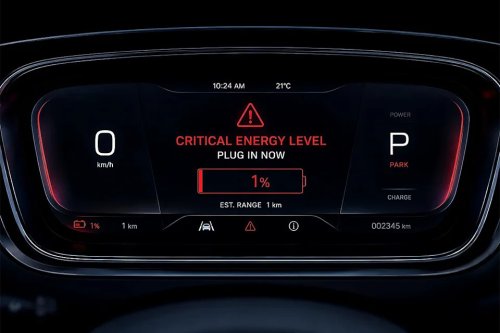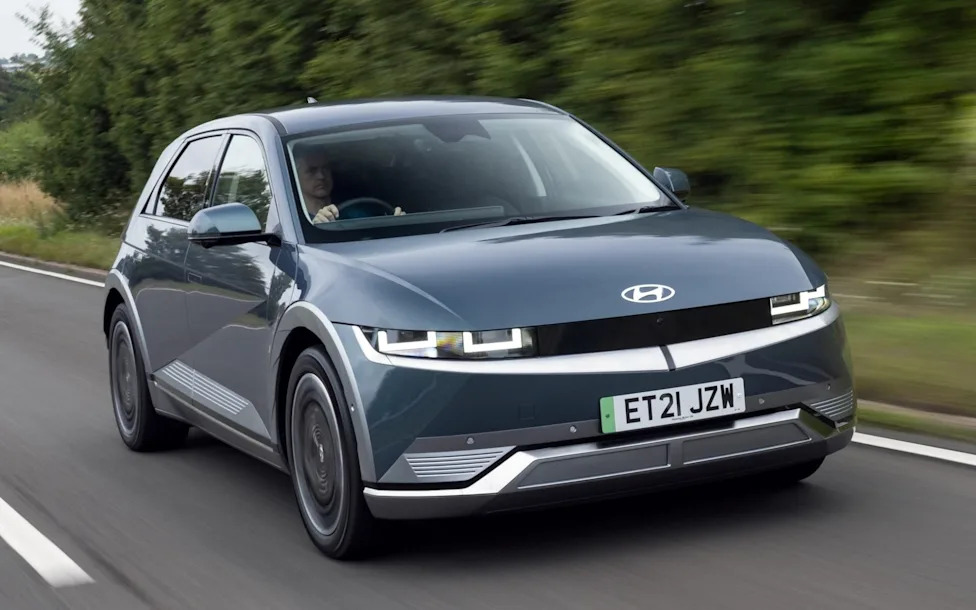
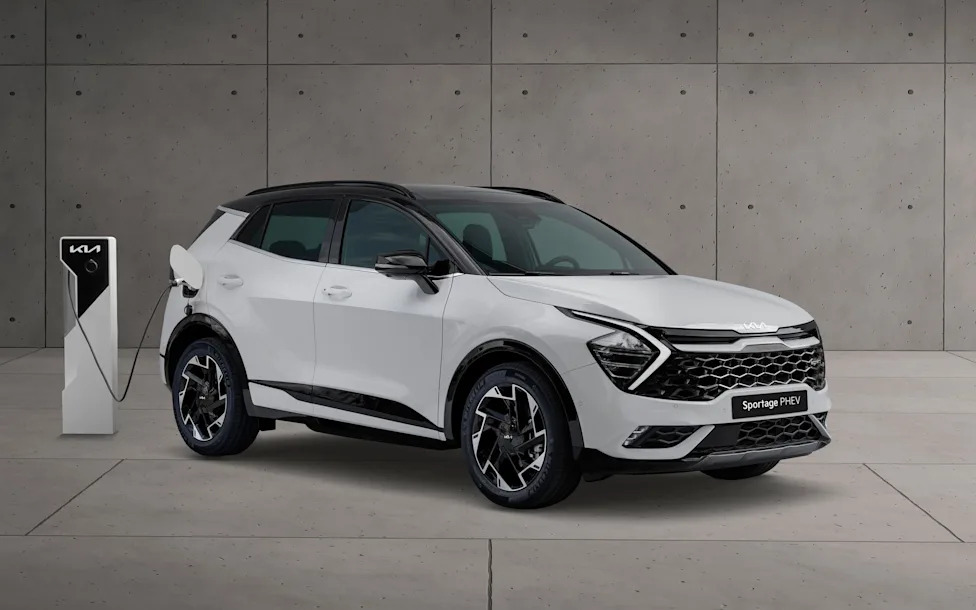



















The Hyundai Ioniq 5 is a fast-charging electric car, but one Telegraph reader is concerned about his battery lifeDear Alex,My 2021 Hyundai Ioniq 5 73kWh is the best car I've owned but its high-voltage battery failed at 18,000 miles so Hyundai replaced it under warranty. However, my first charge to 100 per cent resulted in an available mileage of 220 miles – with the original battery, the indicated range was 320 miles.I accused Hyundai of putting in a much smaller battery, but it denied that and said that the car would eventually recover its previous maximum. What do you think?– MTDear MT,As the fellow owner of an Ioniq 5 73kWh I share your enthusiasm for the car, but your suspicion of being deceived by Hyundai on battery capacity is unfounded.AdvertisementAdvertisementFor one thing, all of the control units in your car are set up for the larger battery, along with the infotainment software, battery management system and so on. Were Hyundai to install the smaller 58kWh battery in your car, the control units wouldn't communicate properly; the dashboard would light up with errors and you'd be going nowhere. The car might not even come to life.So why does your car now show fewer miles of range than before? The official Worldwide Harmonised Light Vehicles Test Procedure (WLTP) range of the Ioniq 5 73kWh is 298 miles. Experience shows us that electric vehicles (EVs) never achieve their official range figures, usually getting 70 to 80 per cent of the claimed total in the real world – in this case, between 210 and 240 miles.Why did it previously indicate a range of 320 miles? That's down to the way the Ioniq 5 calculates its range estimate. Much like a petrol car, it bases this on your recent driving habits. If most of your use has been in urban driving – as would seem likely given your low mileage – your car will have adjusted to this.Remember, urban driving is good for battery electric cars, as stop-start traffic means lots of regenerative braking, which significantly boosts the range. On that basis, the car's predicted range was probably much higher, as it assumed that distance would be covered in the conditions it had hitherto experienced.AdvertisementAdvertisementWhen the system was reset after the battery change, however, the car would have had no recent driving history on which to base its calculations, so would have started with a neutral range estimate. 220 miles – almost slap-bang in the middle of the real-world range figures I mentioned earlier – seems about right to me.In other words, I suspect it's not that your car will now do fewer miles than it did before; it's that the range estimate needs to readjust to your driving style.Another reader is deliberating whether or not to fully charge his Kia Sportage plug-in hybridDear Alex,Should I charge my plug-in hybrid to 100 per cent? Electric car owners are advised to avoid letting the battery charge drop below 20 per cent and to only occasionally charge to 100 per cent, otherwise not exceeding 80 per centDoes the same advice apply to the smaller battery of my Kia Sportage plug-in hybrid (PHEV)?AdvertisementAdvertisementEverything I read about PHEVs is that the advantage over a regular hybrid is to charge at home and use the electric power as much as possible. If I can't use my battery's full capacity to do so, that seems a waste. Also, is it best to top up the battery when I can, or could this also do harm?– NHDear NH,The same principles apply to any battery (including phones, laptops and other devices): repeated full drain and full charge cycles will cause greater degradation than maintaining a range of about 20 to 80 per cent.In a full battery electric vehicle (BEV) this is significant because losing a large percentage of the capacity results in a significant loss of functionality. Let's say you lose 10 per cent of the range from a car that can do 300 miles; that's a 30-mile drop-off, a significant difference.AdvertisementAdvertisementThat's why the advice is to charge a BEV to 80 per cent most of the time and to only use the full capacity before a long journey. Doing so will help the battery to degrade less quickly.In a PHEV, the same is true. However, because the PHEV's battery capacity is so much smaller, degradation has a far less significant effect. For example, a PHEV with 30 miles of battery range would only lose three miles of range with the same 10 per cent degradation. That's a figure you're unlikely to notice unless you use the full range of your PHEV on a regular basis.That's one reason why keeping the battery in good fettle is considered less of an issue in a PHEV compared with a BEV. The other, of course, is that you aren't reliant on the battery to provide motive power; even if the battery has lost some capacity, the petrol engine in your Sportage will still power you through the extra couple of miles you've lost. You will use a tiny bit more fuel, but you'll never be stranded (unless you run out of petrol, of course).In summary, your battery will degrade more rapidly if you consistently charge it to 100 per cent. But in a PHEV such as yours, that's far less of a concern than in a BEV. Top it up when you can and enjoy the benefits.AdvertisementAdvertisementTry full access to The Telegraph free today. Unlock their award-winning website and essential news app, plus useful tools and expert guides for your money, health and holidays.