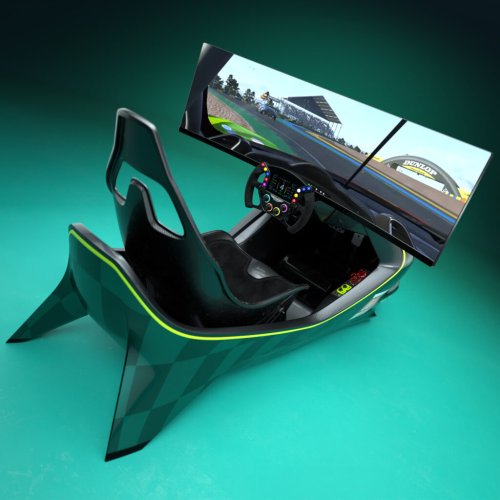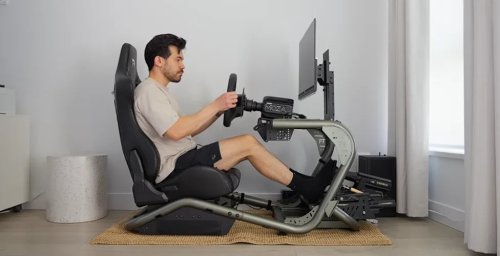
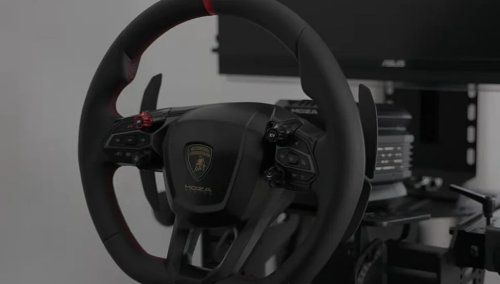
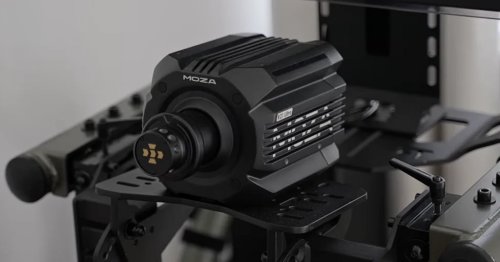
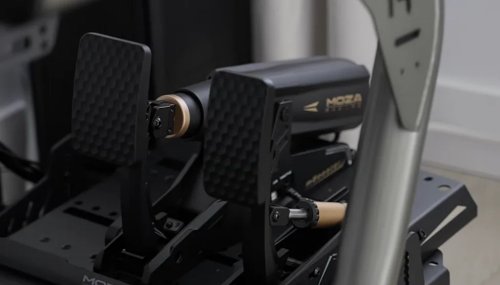
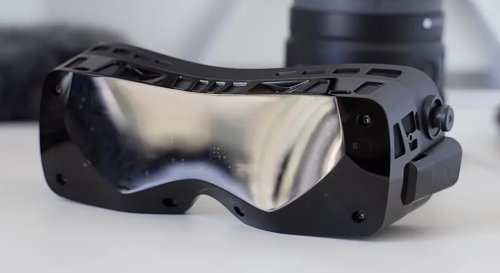
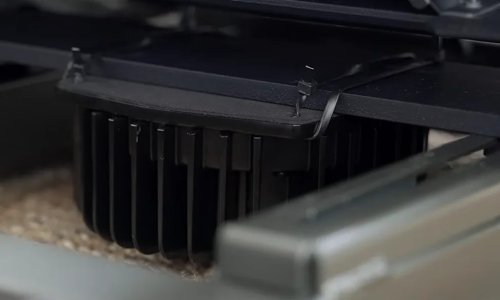



















"Can an illusion be good enough to replace the real thing?" That is the exact question architect and space-conscious designer Daniel Titchener asked himself when exploring virtual motorsport. For many automotive enthusiasts, the hurdle isn't a lack of passion; it's the realization that "what I'm chasing isn't the car itself, but the feeling of driving one." Sim racing offers a brilliant out, promising a true "performance car experience without the need for a performance car garage and a performance car price tag."However, the design challenge becomes intensely complicated when trying to map a high-end simulator into a premium, minimalist interior layout. Titchener needed a rig that was "compact enough to fit in my already tiny studio, which also needs to function as our home spare bedroom," while demanding an aesthetic that "doesn't make me feel like I'm sharing it with a bad mock-up of Darth Vader's flight simulator."The result is a highly tailored, visually striking $6,082 CAD (~$4,395 USD) setup that treats simulation as a deliberate piece of spatial architecture.A Roll-Cage Aesthetic with a Heavy FootprintTo establish a clean visual baseline, the build completely avoids traditional extruded aluminum profiles. Instead, it relies on the tubular steel Trak Racer TR8 Pro chassis ($899 CAD) paired with the Trak Racer Recliner ($319 CAD). Titchener notes that the "tubular steel design favors an aesthetic that echoes the design of roll cages that you'd typically find inside of a real race car," which allows the grey finish to "lean towards looking like a piece of furniture rather than a piece of arcade equipment."But choosing furniture aesthetics over modular aluminum comes with clear architectural compromises. Titchener warns that "this thing is heavy at fifty-one kilos just for the frame alone," making it nearly 50% heavier than rival frames while significantly limiting seating position changes. Quality control was also a notable blemish, with the frame arriving "pretty beat up, with multiple scratches and dings on what appears to be very thin paint."High-Torque Headroom and Spatial DisruptionsTo accurately simulate tyre load, the rig is driven by the heavy-duty MOZA R21 Ultra direct-drive wheelbase ($969 CAD) spinning a MOZA Revuelto steering wheel ($549 CAD)—a stunning "full replica of a wheel straight out of a Lamborghini Revuelto."Delivering up to 21 Newton-meters of torque, the wheelbase packs a punch, Titchener compares to "the comparative force of a full carry-on suitcase hanging off your outstretched hands." While road cars rarely push past 7 Nm, this massive structural headroom is vital because it "provides the granularity and the bandwidth for everything that's going on below you," letting you feel the exact moment the rubber begins to break traction.The most aggressive mechanical investment, however, is the MOZA mBooster Active Pedal Set ($1,399 CAD). Diverging from traditional load-cell rubber elastomers, these motorized pedals "take things to the next level in actually being able to push back, pulse, and vibrate with programmable resistance." Drivers can physically feel the ABS pulsing under lockup and engine vibrations buzzing through their feet.AdvertisementAdvertisementYet, this cutting-edge hardware caused a major spatial crisis. Titchener "massively underestimated just how much length this would add to my rig," forcing him to completely redesign his studio and swap his desk location just to clear the physical footprint.Erasing the Screen with Mind-Bending VRFor a truly compact room, triple-monitor setups are a spatial nightmare. Titchener bypassed monitors entirely by splurging on the ultra-premium Bigscreen Beyond 2e VR headset ($1,729 CAD). Weighing a microscopic 107 grams, it houses dual micro-OLED screens pushing over 13.1 million pixels. Reflecting on the evolution of virtual reality, Titchener notes that back in 2018, VR "felt like having a GameBoy Color strapped to each eyeball," whereas the current tech makes individual pixels completely indistinguishable.Because the system tracks your actual hands and coordinates perfectly with the physical wheel, "our clever brains assume the in-game hands and feet as our own." The physical immersion is rounded out by an incredibly cost-effective addition: Douk Audio BS-1 Bass Shakers ($170 CAD) and a Douk/Nobsound Mini Amp ($48 CAD) zip-tied directly to the frame to translate road textures and engine rumbles right up your spine.When everything fires together, the result is uncanny. "Strap on a VR headset with the right setup and it's shocking just how easy it is to forget that this isn't virtual reality at all," Titchener explains. The sensory illusion is so absolute that "when going over crests you can quite literally feel it in your stomach, as when the car lifts, the vibration subsides and the wheel goes light, and somehow when you land, your gut goes with it."AdvertisementAdvertisementFor those looking to preserve their room's interior design while chasing absolute mechanical immersion, an architecturally minded VR build isn't a mere toy—it's a highly compelling, beautifully integrated gateway to the track.