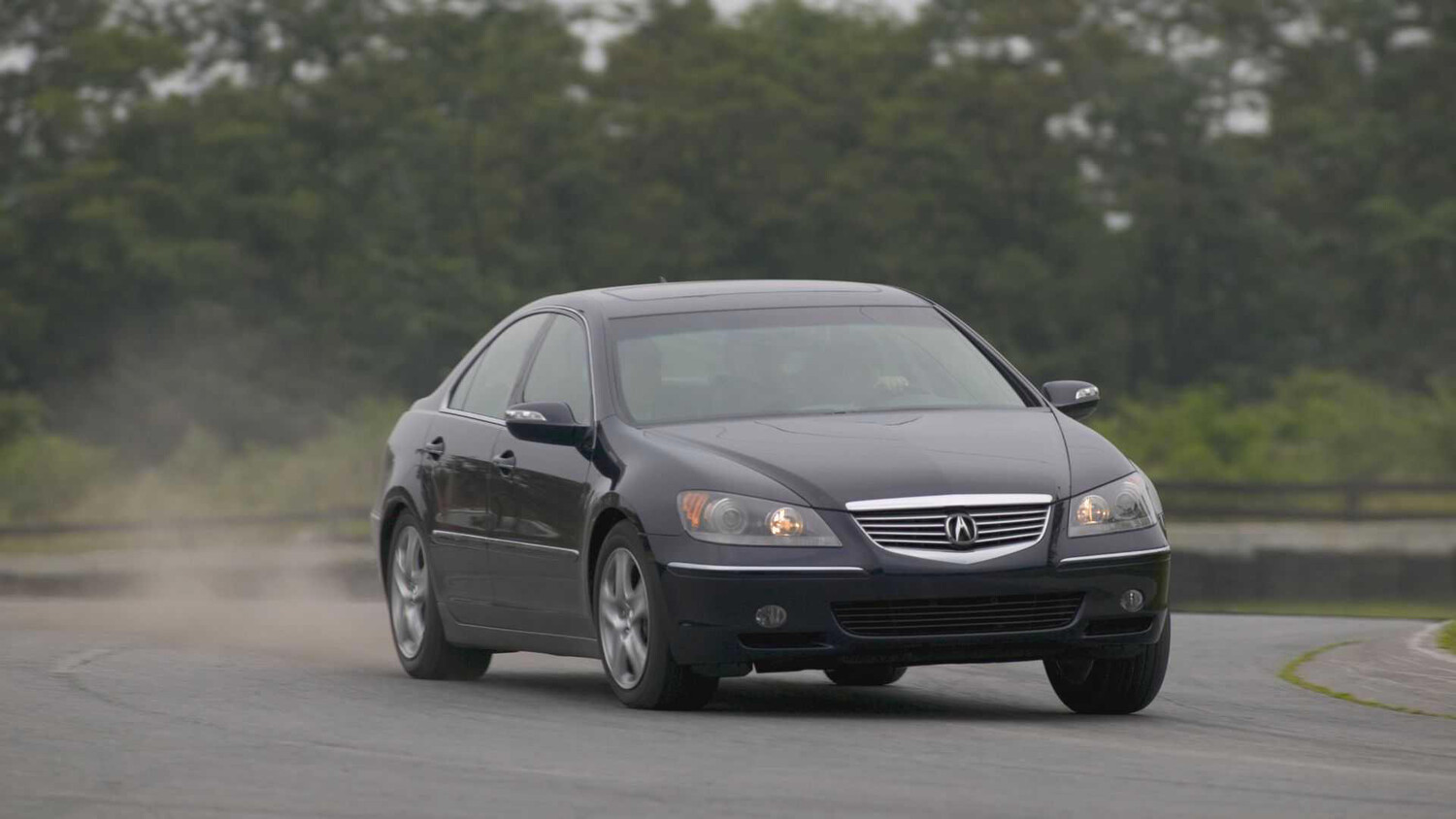
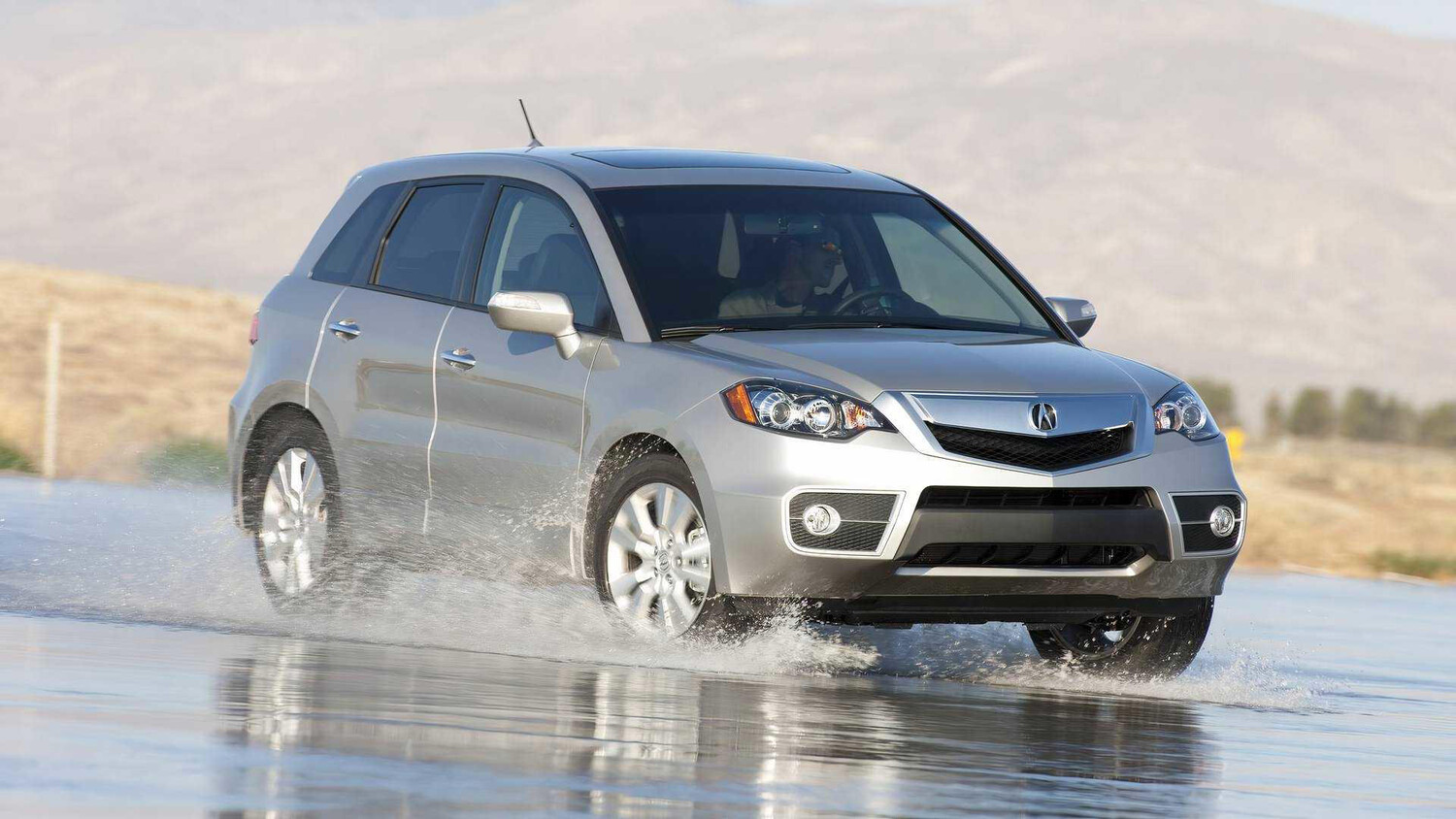
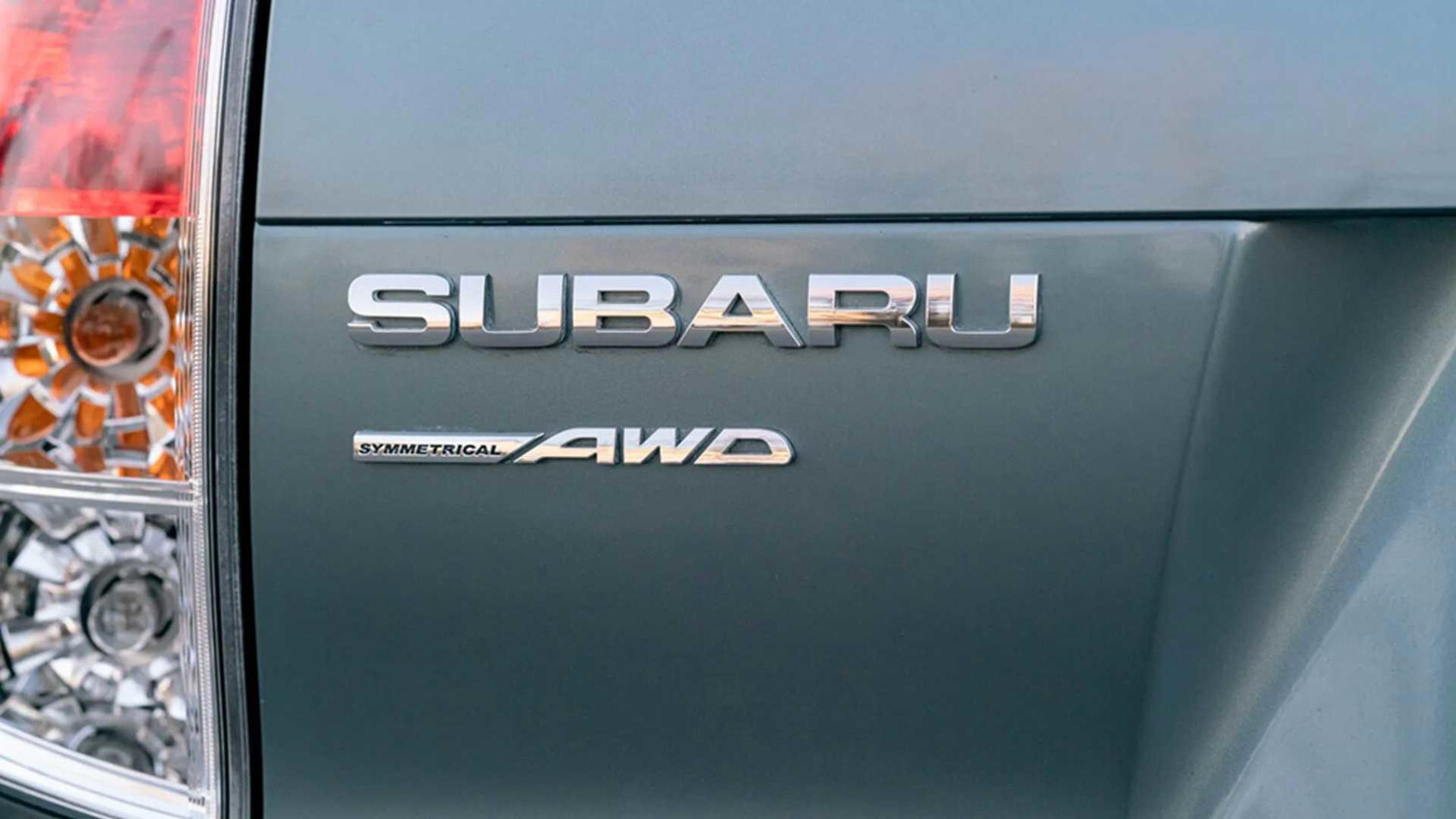
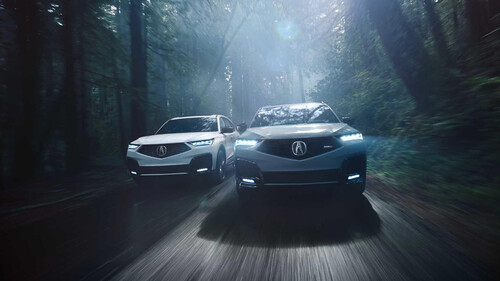
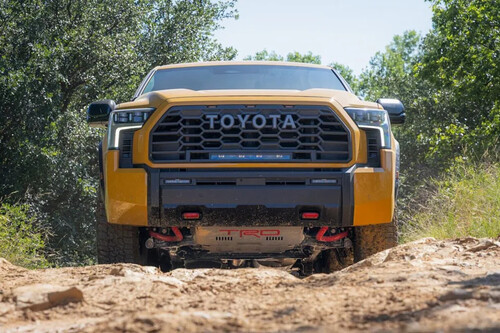
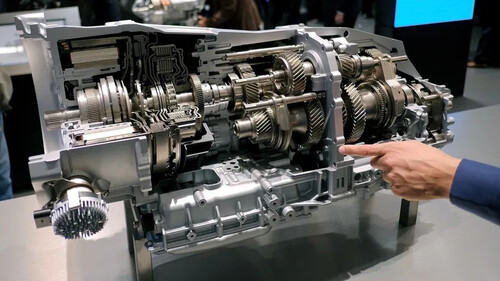
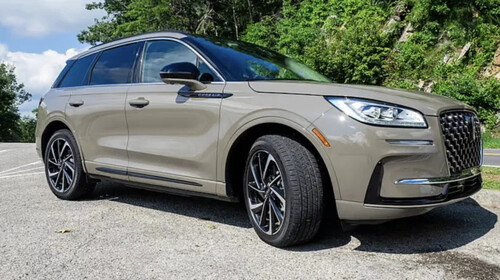
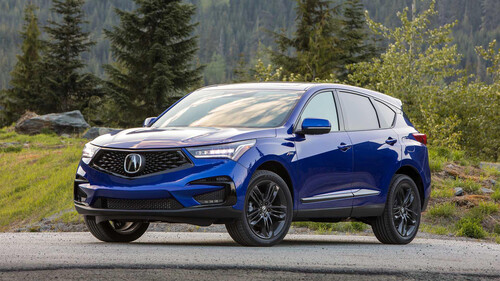
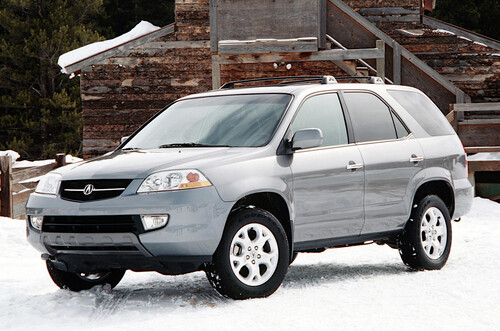
Jump LinksSH-AWD Meaning And DebutBreaking Down A LegendWhat Made It So Special?BMW xDriveAudi quattroMerceds-Benz 4MATICSubaru Symmetrical AWDToyota AWD-i/DTV-AWDAll But The CheapestDefinitely A Game Changer, But CostlyIt's pretty fair to say that being able to option AWD on a vehicle is no longer a huge differentiator between makes and models - virtually every premium brand offers an AWD system these days. However, two decades ago, the landscape was a little different and few manufacturers were leaning into AWD technology for better performance, but Acura was when it introduced SH-AWD. This is included on all its SUVs, including the MDX, RDX, and ADX - only the Integra sedan misses out.SH-AWD wasn't just Acura's answer to the traction question, it was the technology that forced other manufacturers to sit up, pay attention, and learn what 'torque vectoring' is. When it was announced to the world back in 2004, 'torque vectoring' was but a racing term, technology the likes of which hadn't been seen on a road car to this degree.While many consider Audi's quattro to be the progenitor of modern performance AWD systems, the introduction of Acura's version of this 22 years ago arguably laid the foundation for most modern-day AWD systems, and has now become a signature throughout Acura's model lineup.CarBuzz has sourced all specifications and statistics directly from Acura and the other manufacturers mentioned herein, all of whom have been noted at the foot of this article. What Is SH-AWD? SH-AWD Meaning And Debut 2005RL_7050-sourceAcura's SH-AWD stands for Super Handling All-Wheel Drive and was first seen on the 2005 Acura RL. It was the world's first AWD system able to apply active torque vectoring to enhance handling agility as well as all-weather stability. Two earlier Honda/Acura technologies paved the way for SH-AWD system, namely the 1997 Honda Prelude Type SH's Active Torque Transfer System (ATTS) and the 2001 Acura MDX's Variable Torque Management System (VTM-4), both technologies ultimately evolving and combining to become SH-AWD.What the "Super Handling" part actually means: Much like other AWD systems, SH-AWD distributes its engine power to all four of the vehicle's wheels for increased traction. That's just about where the similarities between it and conventional AWD end - the Super Handling part adds in torque vectoring between the left and right rear wheels, thus adjusting the torque sent to each wheel depending on the prevailing conditions. Now in its fourth generation, SH All-wheel Drive has become a more compact system, but has also become more capable, with reaction times having improved by 30% and torque capacity by 40%, enough to handle the Type S's 355 hp turbocharged V6. How Does SH-AWD Work? Breaking Down A Legend 2022 MDX Advance IDS 78 Core mechanism: Acura's AWD system is able to send 70% of the engine's torque to the rear wheels and then actively distribute as much as 100% of that to either of the rear wheels. A front-mounted torque transfer unit sends that power to the rear wheels, as opposed to a traditional center differential that one might find in more conventional setups. The overdriving principle: The key differentiator in Acura's AWD system is how, by overdriving the rear wheels relative to the front, it can then send more power to one of the rear wheels than the other. In cornering situations, torque is variably increased by up to 5% by means of a third planetary gear set and clutch pack (Acura calls this an Acceleration Device) and thus spinning the outside rear wheel faster than it would naturally rotate in the same situation without the system. 2011 Acura MDX Torque vectoring in practice: Up to 160 lb-ft of torque can be sent to the outside rear wheel during cornering in an attempt to rotate the vehicle around its center and thus reduce understeer. Via an electromagnetic clutch-actuated rear differential, up to 100% of the available rear axle power can then be directed to either of the rear wheels. Proactive, not reactive: SH-AWD proactively redistributes power before a slip event occurs and traction has been lost, continuously directing engine power to match driver input, weight distribution and available traction in order to do this. Torque split during operation: During straight-line cruising, up to 90% of power is fed to the front wheels for efficiency. Under hard acceleration, SH-AWD is then able to transfer up to 45% of the torque to the rear for increased traction and then 70% under hard cornering, all of which can then be sent to the outside wheel. SH-AWD vs Conventional AWD Systems What Made It So Special? 2010-2012 Acura RDX Front Angle ViewMost AWD systems found in other vehicles are only capable of transferring power to wheels that already have traction. SH-AWD's ability to alter torque delivery at all times, as opposed to instances where slip occurs is the ace up its sleeve, courtesy of its special electromagnetic clutch for the rear wheels. This proactive approach allows for more confident progress to be made on changing road surfaces, along with more precise cornering, too. In addition, handling in dry-weather conditions is impressive, with SH-AWD able to generate more turning force by accelerating the outside rear wheel during cornering, thus distributing cornering forces more evenly between the front and rear wheels and increasing overall cornering traction whether the road be wet or dry.Subaru's Symmetrical AWD system, for example, relies on brake-based torque vectoring which, while effective, is not as sophisticated as systems that make use of overdriving individual wheels to achieve the same result. In essence, braking force is applied in order to shift power between wheels as opposed to the mechanical approach of SH-AWD. SH-AWD vs The Competition BMW xDrive 2025 BMW X3 xDriveBMW's xDrive system is the most similar to SH-AWD in terms of its net result on a vehicle's handling, but only with DPC (Dynamic Performance Control) optioned. The system makes use of an electronically actuated clutch-pack differential with a default 40:60 rear-biased torque split that can send up to 100% of the torque to either the front or rear axle. The optional DPC then adds a clutch pack and planetary gears to overdrive a wheel or axle, thus allowing for torque vectoring. This isn't standard, however, and is only available on M Performance models and select X variants.BMW's M xDrive takes things even further in M3/M4 Competition models, as well as the M5 and M8, by offering the driver the option to select between 2WD and 4WD Sport modes. These allow deliberate rear slip before the front axle intervenes. They're also the preserve of six-figure performance vehicles, making Acura's SH-AWD all the more impressive at its models' price point. Audi quattro 2014 Audi S8 Interior Quattro Badge on Carbon FiberArguably one of the world's most famous automotive systems, the Torsen-based quattro system defaults to a 50:50 split on most versions, while the performance-oriented T3 Torsen offers an asymmetric 40:60 rear-biased split on S and RS models. Up to 80–100% of the available torque can be sent to a single axle in adverse conditions and should the Audi Sport Differential be optioned, torque vectoring is available by means of electrohydraulic clutches and additional gear stages, but again, this isn't standard. Merceds-Benz 4MATIC 1991 Mercedes-Benz 300TE 4MATIC rearAs standard, Mercedes-Benz's 4MATIC system maintains a 45:55 front-to-rear toque split and uses 4ETS (Four-Wheel Electronic Traction System) in conjunction with ABS to apply brake pulses to wheels losing traction as opposed to directing torque by mechanical means. AMG 4MATIC+ is able to vary torque from 100% rearward to a 50:50 front-rear split, and certain AMG models with drift mode are able to fully disengage the front axle. Subaru Symmetrical AWD 2010 Subaru Forester Engine rear badge shotThe Symmetrical AWD system in Subarus equipped with CVTs defaults to a 60:40 split via Active Torque Split AWD, whereas the manual-equipped Subarus make use of a viscous coupling with a 50:50 split. WRX performance models make use of a 45:55 Variable Torque Distribution System. The biggest limitation here, however, is that all of the above is achieved by means of torque-vectoring through braking as opposed to mechanical overdrive. The downside of this is increased wear of brake pads and rotors and the potential for brake fade under very aggressive driving. Toyota AWD-i/DTV-AWD 2025 Toyota RAV4 TRD Off-RoadPerhaps the most intriguing system here, Toyota's AWD-i uses a dedicated rear electric motor to power the rear axle and thus eliminating the driveshaft entirely. The motor remains in a ready state and is activated during acceleration, cornering and in low-traction conditions. Torque distribution ranges from 100% front to a 50:50 front:rear split. Due to the rear differential being open, active torque vectoring between the rear wheels is not possible.A system more similar to Acura's SH-AWD is Toyota's DTV-AWD (Dynamic Torque Vectoring AWD), which is able to transfer up to 50% of the available torque to the rear wheels and then to either rear wheel by way of two clutches on the rear axle. This system is also able to disconnect the rear propeller shaft when not in use for increased efficiency. However, the focus here is more toward off-road traction, as opposed to on-road performance/improved dynamics. Which Acura Models Have SH-AWD? All But The Cheapest 2026 Acura MDX - front fasciaAcross all trim levels of the 2026 Acura RDX, SH-AWD is standard. The range starts at $45,100 and tops out at $54,850 for an RDX A-Spec Advance package.2026 Acura MDX models feature SH-AWD as standard on A-Spec and Type S models, and it is available as a cost option on the base trim. Similarly, the new ADX can also be optioned with AWD, though it starts out with FWD at a cost of $35,000. Is SH-AWD Worth It? Definitely A Game Changer, But Costly 2019 Acura RDX AdvanceSH-AWD stands apart from its rivals by combining genuine performance-oriented torque management with strong all-weather traction. Improved stability, control and responsiveness are all bonuses, especially when one considers the engineering on offer for what is a relatively modest premium ($2,000–$5,000 depending on the model) when compared to rivals such as BMW (xDrive) and Audi (quattro).Perhaps the only caveat here is that urban commuters might find the premium difficult to justify on account of the torque vectoring benefit requiring active cornering under power to be noticed.Sources: Acura, Toyota, Subaru, BMW, Mercedes-Benz, Audi