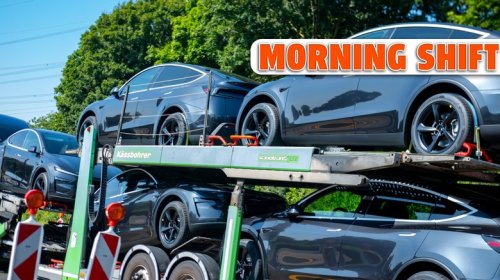
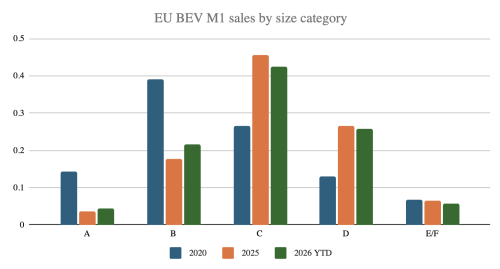
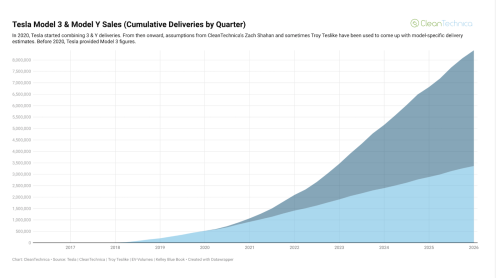
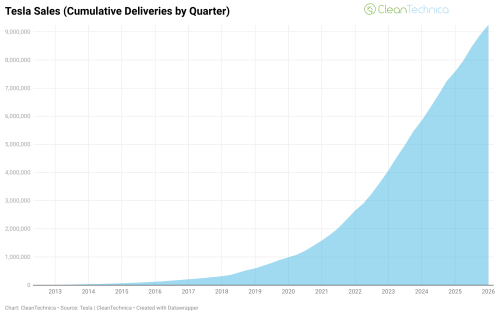
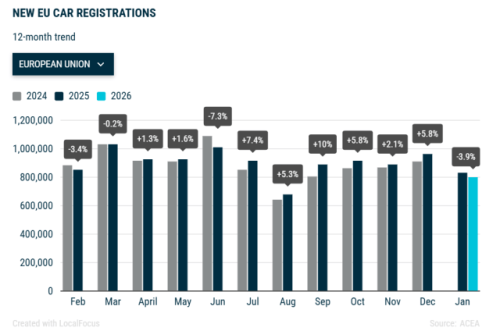
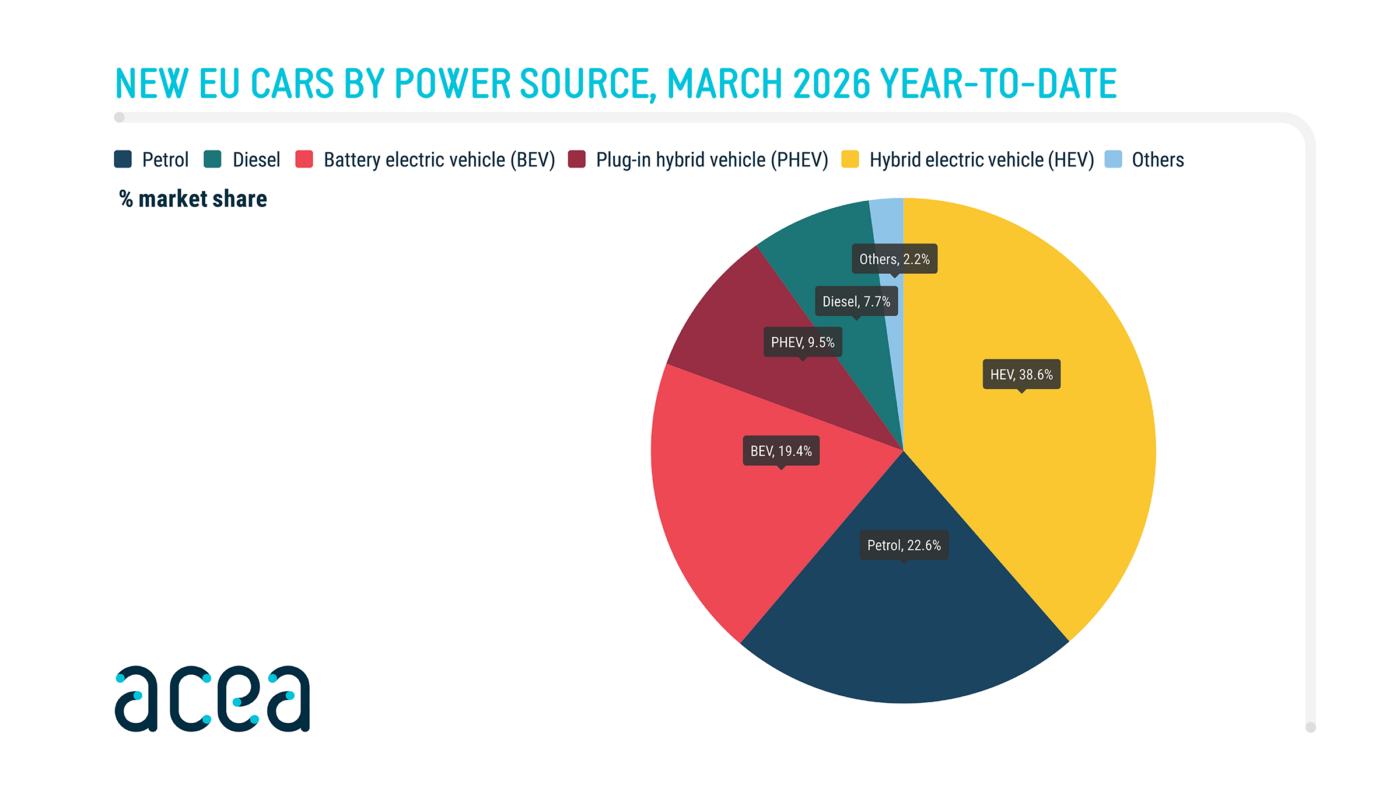
Image: TeslaIn the first quarter of 2026, 546,937 new battery-electric passenger cars were registered in the EU—a 32.5 per cent increase compared to the same period in 2025. Battery-electric vehicles accounted for 19.4 per cent of all new passenger car registrations in the EU from January to March. This growth was significantly influenced by a 48.9 per cent surge in March, as the increases in January and February were relatively modest.March also proved to be an exceptionally strong month for the automotive industry across all drivetrain types in the EU. Compared to the previous year, 12.5 per cent more new cars were registered, reversing a 3.9 per cent decline in January and a marginal 1.4 per cent increase in February, as reported by ACEA. The strong March performance ensured that the first quarter closed with a four per cent overall growth in registrations.With a 48.9 per cent increase, battery-electric cars were the fastest-growing drivetrain type in the EU. Notably, ACEA’s March press release no longer includes the cautious phrasing seen in recent months—such as the electric market still having ‘potential for growth’ or the need to accelerate electrification further for a successful transformation.All electrified drivetrains saw gains: plug-in hybrids, for example, rose by 28.2 per cent to 105,414 units. In contrast, pure internal combustion engines declined—petrol cars by 9.4 per cent and diesel by 12.3 per cent. The most popular drivetrain in Europe in March remained hybrids, with 444,835 new registrations, marking a 20.1 per cent year-on-year increase. Image: ACEAA familiar caveat applies: ACEA does not break down HEVs further by their degree of electrification. This figure includes full hybrids, mild hybrids, and 48-volt hybrids. Consequently, this category also encompasses vehicles that, for example, use a small electric motor solely for start-stop assistance or turbocharger support but cannot drive even a metre on electric power alone. For customers, these vehicles feel like conventional combustion engines, even though they are officially classified as hybrids. Thus, the decline in combustion engine registrations is partly shifted to hybrids without delivering significant climate benefits.However, battery-electric car registrations within the EU remain unevenly distributed—just the four largest markets account for over 60 per cent of new electric cars. Among these, Italy (+65.7 per cent), France (+50.4 per cent), and Germany (+41.3 per cent) saw significant growth in the first quarter, with Germany leading in absolute numbers at 159,630 new BEVs.Belgium, which had previously benefited strongly from tax incentives for electric cars, recorded a 2.3 per cent decline compared to the previous year. In the first quarter, only three EU countries saw declines: Belgium, the Netherlands (-23.3 per cent), and Luxembourg (-9.4 per cent). All other markets experienced double-digit growth, with Croatia achieving a remarkable 282.4 per cent increase (albeit from a low base of 204 BEVs in Q1 2025).In its manufacturer statistics, ACEA traditionally does not differentiate by drivetrain type. Therefore, conclusions can only be drawn for Tesla as a pure BEV manufacturer, as all other carmakers also offer hybrids and/or plug-in hybrids. In March, Tesla doubled its sales across the EU, achieving a 101.9 per cent increase to 36,868 new registrations (compared to 18,256 units the previous year). As previously reported, Tesla also delivered strong results in Germany in March. For the first quarter as a whole, growth was ‘only’ 59.6 per cent due to comparatively weaker performances in January and February, with 57,792 new Teslas registered. This growth was likely driven primarily by the more affordable Model Y variants (formerly Model Y Standard).acea.auto (PDF)



















 +60 others