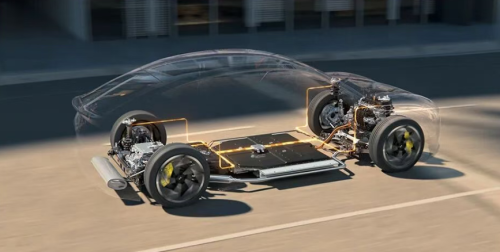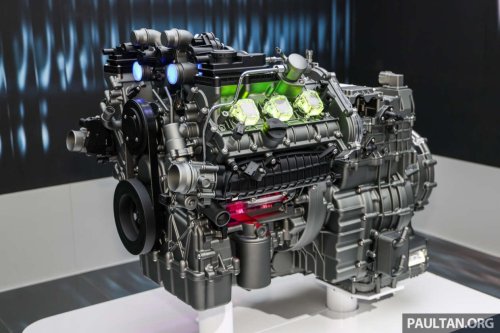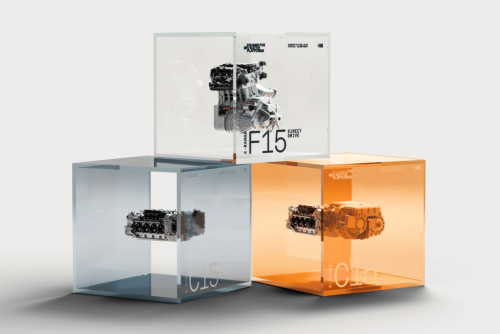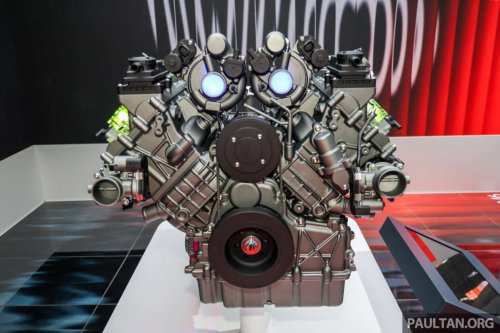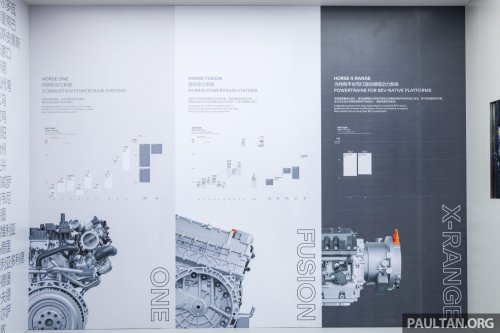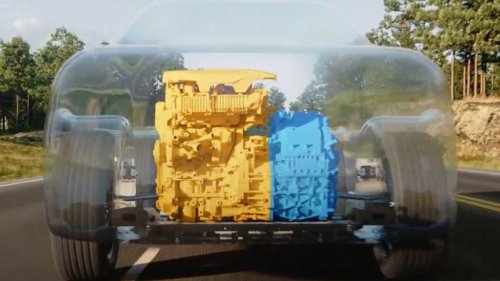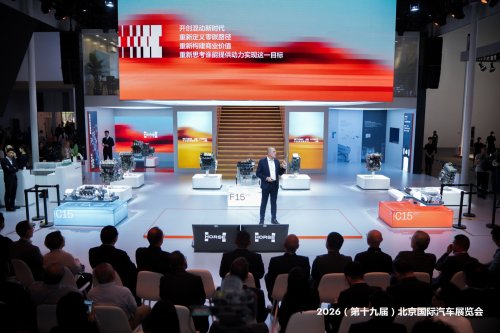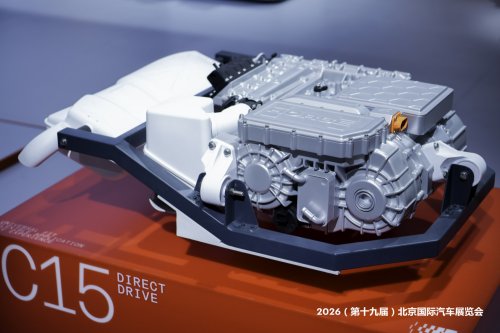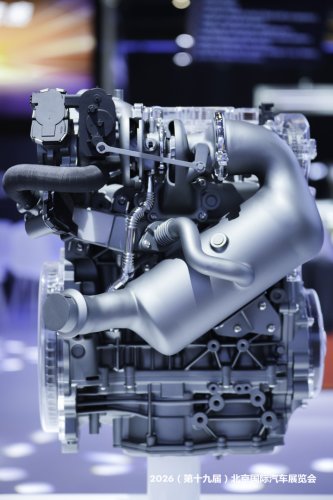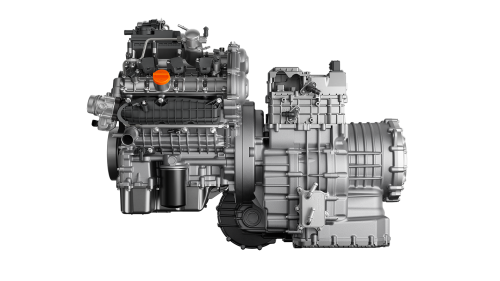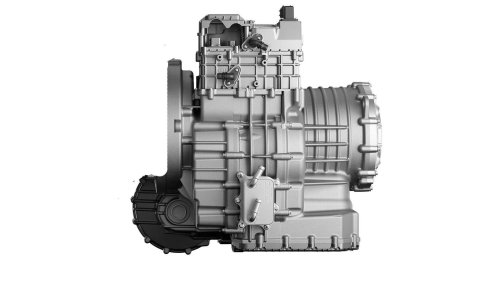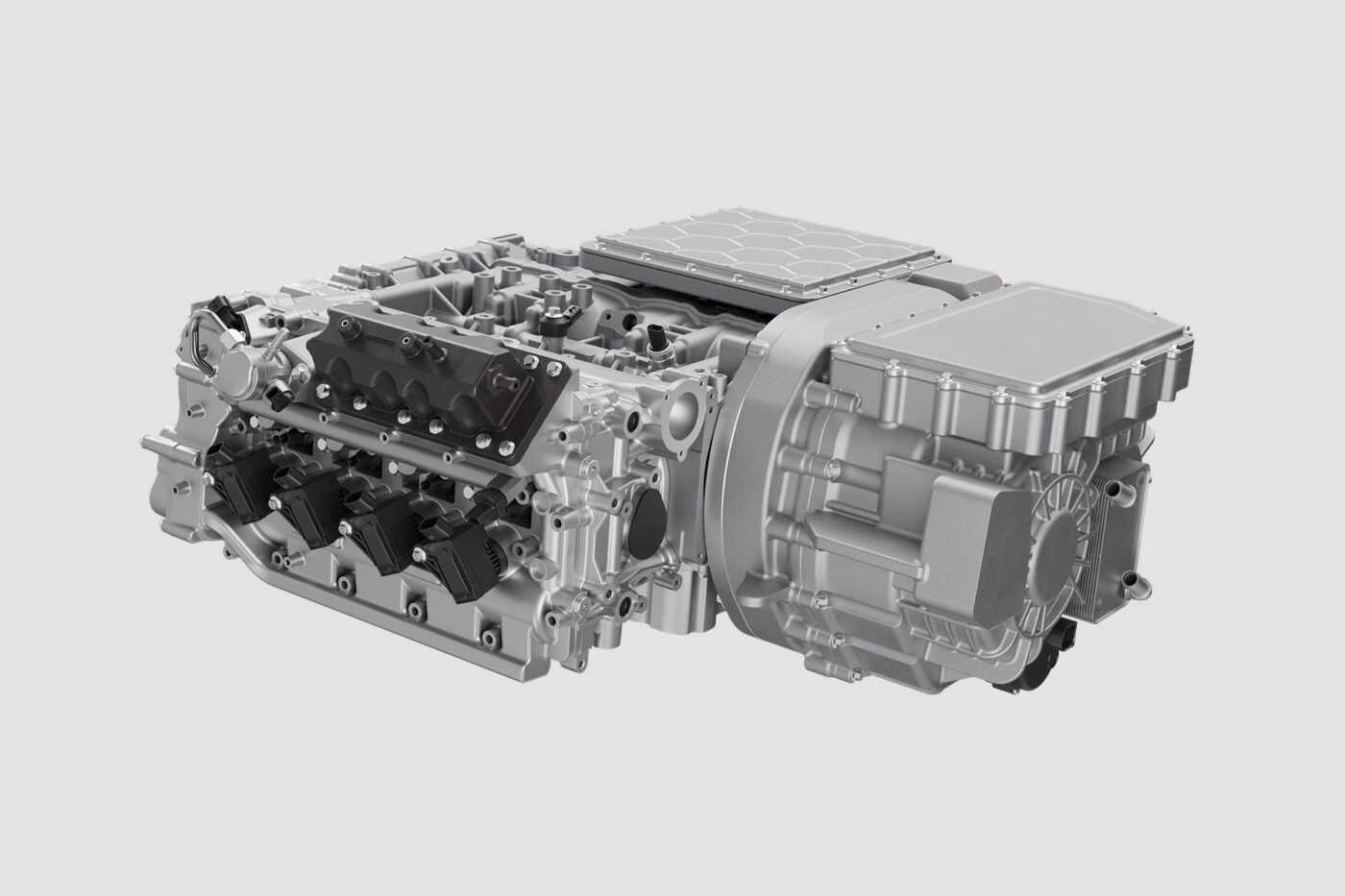



















Image: Horse PowertrainThe new X-Range C15 Direct Drive, unveiled at Auto China 2026 in Beijing, represents the next evolution of the C15, which Horse Powertrain presented last autumn at IAA Mobility in Munich. The IAA innovation was designed solely to enable the retrofitting of a range-extender powertrain to BEV platforms. The X-Range C15 Direct Drive, however, goes several steps further by enabling full hybrids (HEV) and plug-in hybrids (PHEV) on platforms originally developed exclusively for battery-electric drives.The difference in application is significant: while the C15 presented in 2025 was conceived as an EREV unit, with its 1.5-litre four-cylinder engine serving only as a generator to charge the battery, the 2026 Direct Drive version allows the petrol engine to directly power the wheels – a feature not possible in the first iteration.Another distinction lies in flexibility: the C15 as a pure range extender can be installed horizontally or vertically, offering manufacturers maximum flexibility for placement at either the front or rear axle. The Direct Drive version from Horse Powertrain’s X-Range modular system, however, is less flexible in this regard, as it is designed to replace the rear electric drive unit of a BEV platform. This means that in an HEV or PHEV equipped with this unit, the petrol engine would drive the rear axle.The ‘all-in-one’ unit integrates the four-cylinder engine, a transmission, power electronics, and two electric motors. Vehicles equipped solely with the X-Range C15 Direct Drive are thus rear-wheel drive, but all-wheel drive can be achieved by adding an electric motor to the front axle. “The package location on the rear axle also enables compact integration of the exhaust and after treatment systems at the rear of the car, maximizing floor space for batteries or the passenger compartment,” the company states.In addition to the four-cylinder engine and hybrid transmission, the housing also contains two electric motors. These motors are arranged in a P1+P3 configuration: one at the end of the internal combustion engine’s crankshaft and the second on the transmission’s output shaft. “The P1 motor primarily acts as a generator in both serial and parallel modes. As a generator it can output 70kW for the X-Range C15 Direct Drive’s naturally aspirated variant, and 110kW for the turbocharged variant,” Horse Powertrain explains. “The P3 motor is intended to provide electric traction to the vehicle – either independently from the engine in serial mode, or together with the engine in parallel mode operation. By the direct connection between the engine and the wheel enabled in parallel mode, the total system efficiency is improved over alternative range-extended or pure serial mode hybrid solutions.”The naturally aspirated and turbocharged versions refer to the two variants of the internal combustion engine. For vehicles in the B- and C-segments, a naturally aspirated version of the four-cylinder engine with up to 70 kW is planned, while larger D-segment vehicles will feature a turbocharged petrol engine with up to 120 kW. In addition to the C15 Direct Drive, the X-Range family includes the aforementioned C15 for EREV powertrains at the rear axle and the F15, which can be installed at the front axle.“The X-Range family of powertrains is about reflecting today’s market realities, allowing automakers to pivot from BEVs to hybrids and range extenders on a single platform, quickly and at scale,” says Matias Giannini, CEO of Horse Powertrain. “The X-Range C15 Direct Drive is an all-in-one powertrain that allows BEV platforms to be converted to hybrid, plug-in hybrid, and electric vehicles with minimal redesign and tooling changes. This drastically reduces time to market, amortises investments in BEVs, and meets the diverse mobility needs of today’s global market.”cision.com