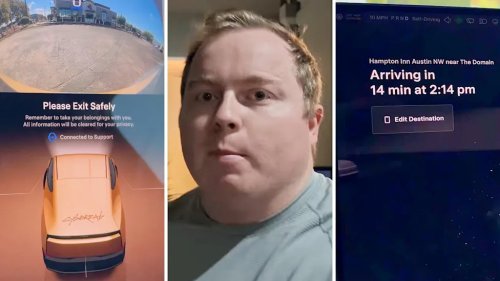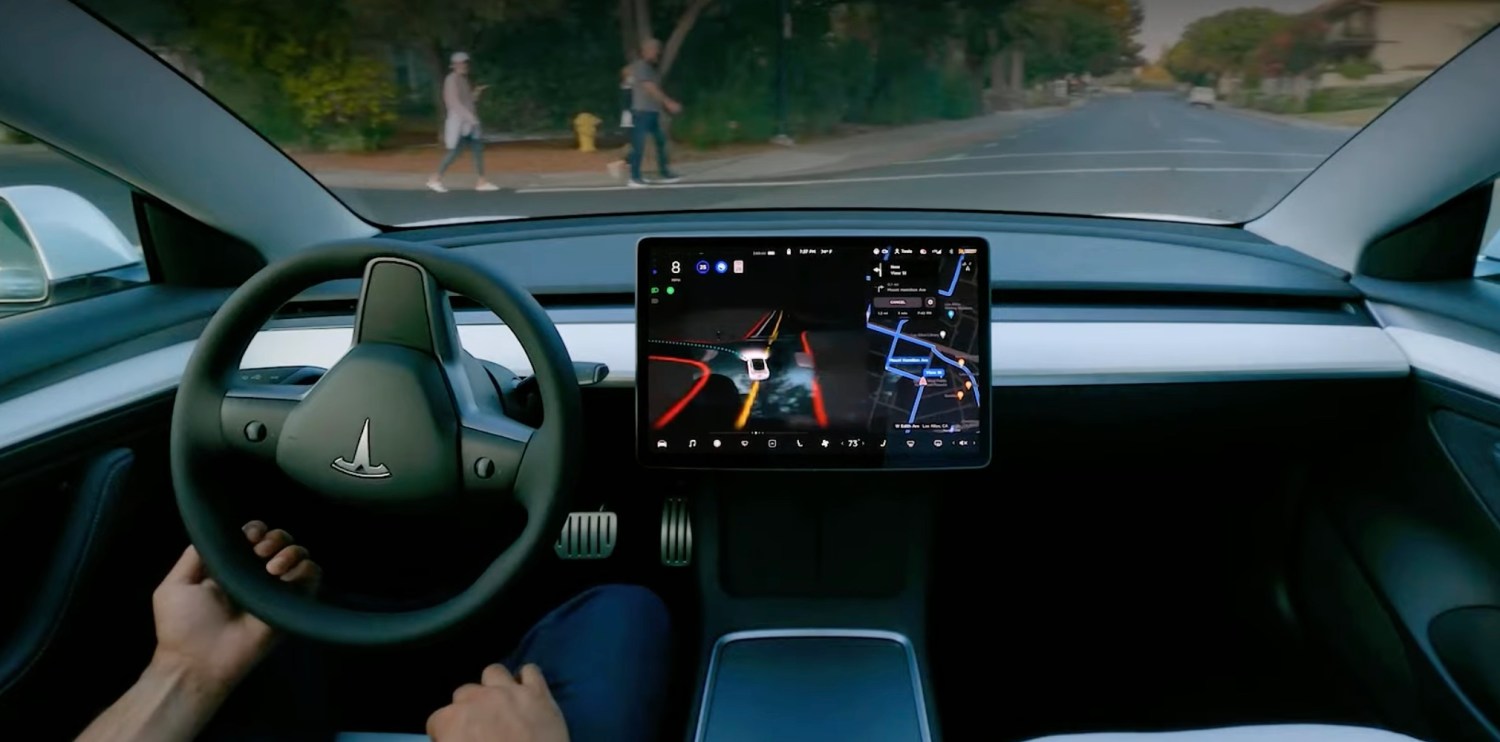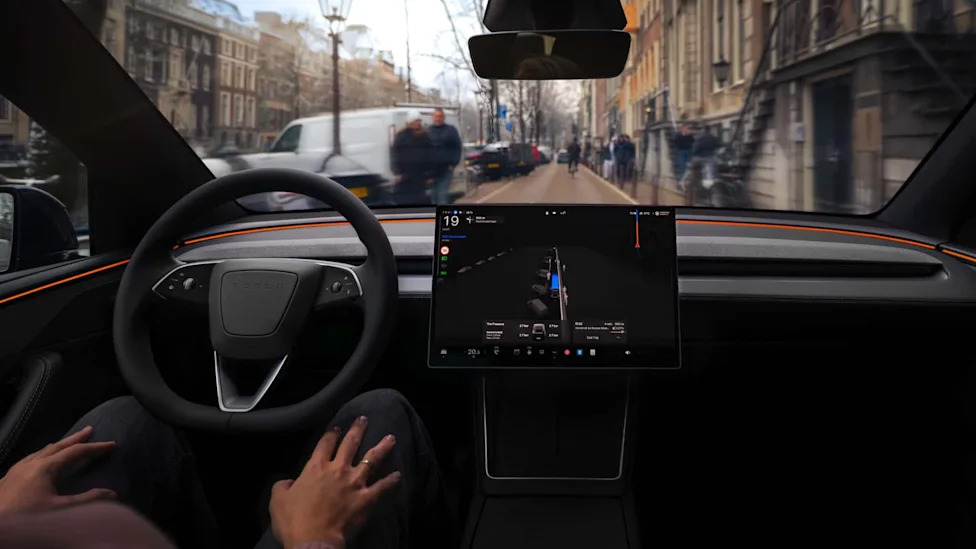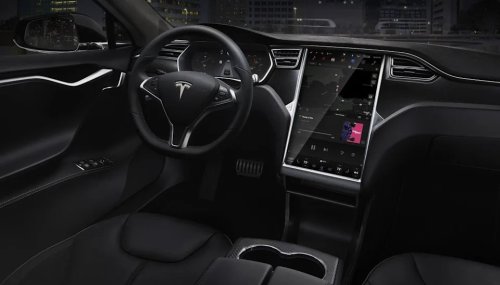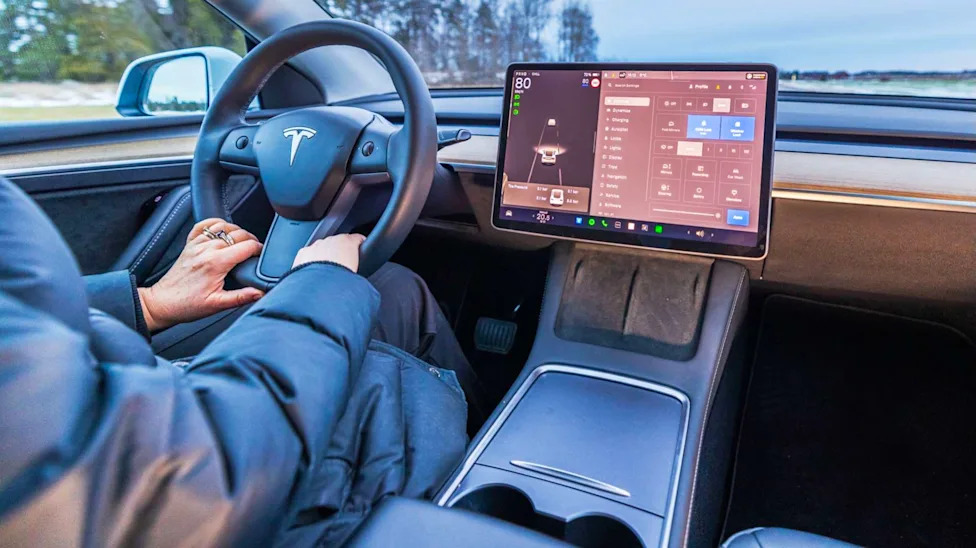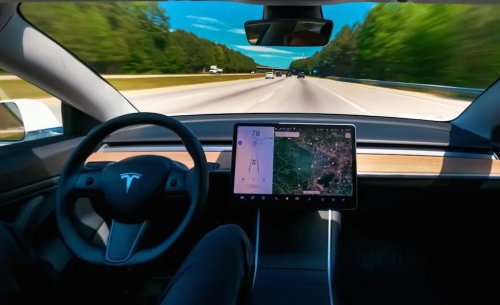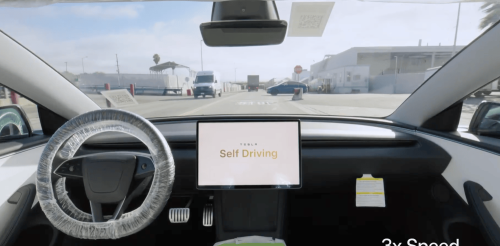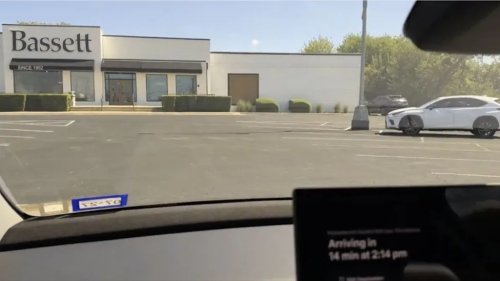












A TikTok video currently making the rounds shows a Tesla navigating a bend on Full Self-Driving while the actual driver sits hands-free, feet up, doing absolutely nothing. That part isn't unusual. What makes the clip remarkable is what's taped in front of the cabin camera: a folded paper cutout of the driver's own face, propped at just the right angle to convince the monitoring system that an attentive human being is behind the wheel.The video, opens with the driver's sandals discarded on the floor and a Puma-socked foot resting lazily near the center console. The touchscreen shows FSD ticking along at around 41 mph. On the right half of the display, the cabin camera feed shows what appears to be a perfectly alert, bearded man in green scrubs – seatbelt on, eyes forward. Pan up to the rearview mirror area and the illusion collapses: a 3D paper cutout of the driver's face is taped directly in front of the lens, angled to present a convincing silhouette from the camera's perspective. The system never raises an alert.I'm lost for words with this one. It's a really dumb thing to do yet I'm finding myself impressed at the dude's level of commitment.😂pic.twitter.com/qq5wmfuUad— Gavin Shoebridge (@KiwiEV) July 18, 2026Why Tesla's Camera Is Easier to Beat Than It Should BeTesla's cabin camera, positioned above the rearview mirror, became the primary driver-attention tool starting with FSD v12.4 in 2024, per Electrek. Before that, the system leaned on steering-wheel torque sensors – which drivers had already figured out how to defeat using weighted rings. NHTSA even sent a cease-and-desist to one product called the "Autopilot Buddy" over that exact issue, though knockoffs kept appearing. The camera was supposed to be the smarter, harder-to-fool solution.AdvertisementAdvertisementTesla's cabin-facing camera relies on a conventional RGB sensor rather than the infrared depth-mapping system Apple employs in Face ID, making the hardware itself the root of the vulnerability, according to Electrek. That means it reads color and shape rather than mapping a three-dimensional surface – which is precisely why a flat paper cutout works at all. One commenter noted: "And this is why Ford and GM use infrared cameras … they work at night … they aren't easily defeated by a 2D image like this. You need like a dummy or something sitting in the driver's seat, which is way more effort."The paper trick isn't even a new exploit. A Reddit post from 2022 on r/RealTesla flagged the same vulnerability with the headline, "Tesla attention awareness feature easily defeated by printed image." What's changed since then is the scale and creativity of the workarounds.In China, where Tesla rolled out FSD supervision on May 21 of this year, some owners have moved on to celebrity figurine heads – one Model 3 owner reportedly used a Dwayne Johnson likeness and drove for 30 minutes without a single warning alert, one hand occupied with sunflower seeds and the other filming the whole thing. More sophisticated versions involve lenticular prints that appear to blink, or small screens looping video of someone's face. These products reportedly sell for $10 to $50 on e-commerce platforms and are marketed, somewhat optimistically, as dashboard decorations.Tesla's documentation leaves no room for interpretation on the matter. According to the company, "Full Self-Driving (Supervised) requires a fully attentive driver and will display a series of escalating warnings requiring driver response," with drivers expected to "remain attentive and be ready to take over at all times while Full Self-Driving (Supervised) is engaged." It also warns that circumventing attention monitoring violates FSD's terms of use and can result in the feature being permanently disabled. Whether a paper face taped to a headliner constitutes a violation Tesla can actually detect is, at this point, an open question.Tesla's Fix Is Coming, But Isn't Here YetCode strings discovered inside Tesla mobile app version 4.58.5 suggest the company is developing facial authentication before FSD can be enabled, per Not a Tesla App. Entries flagged in the code include `fsdIdentityCheckFailedMessage` and `showFsdIdentityCheckFailedDialog`, pointing toward a system that cross-references the face in front of the camera against a stored driver profile. Separately, software update 2026.8.6 appears to include groundwork for estimating driver age through facial analysis. No release date has been confirmed, and a full rollout would require a firmware update on top of the app changes.AdvertisementAdvertisementIn the meantime, the regulatory pressure is mounting. NHTSA has upgraded its FSD investigation to an engineering analysis covering 3.2 million vehicles, per Electrek, after identifying 80 reported traffic violations including running red lights and crossing into oncoming lanes. U.S. senators have already asked the agency to scrutinize Tesla's FSD safety data. Tesla's legal defense in crash investigations has generally rested on the argument that a human driver is always supervising the system. That case becomes much more difficult to defend when a paper cutout costing around one dollar can undermine it.Tesla's FSD v14.3.3 actually reduced how frequently the system prompts drivers to confirm attentiveness, a change the company backs with claims of improved eye-gaze tracking and better low-light performance. Whether those improvements extend to detecting that the person staring back at the camera is made of cardstock remains unclear. Tesla has not publicly addressed the exploit or indicated when, exactly, the authentication update goes live. Until it does, the cabin camera is essentially on the honor system. And as anyone who's seen this video knows, the honor system has a paper-thin track record.