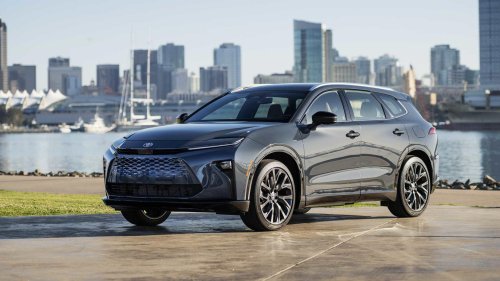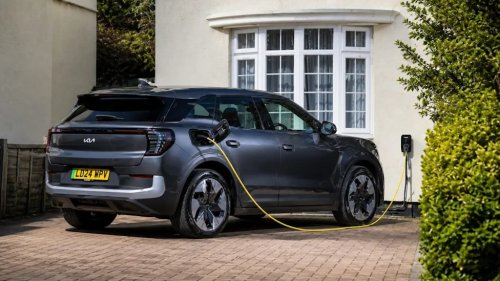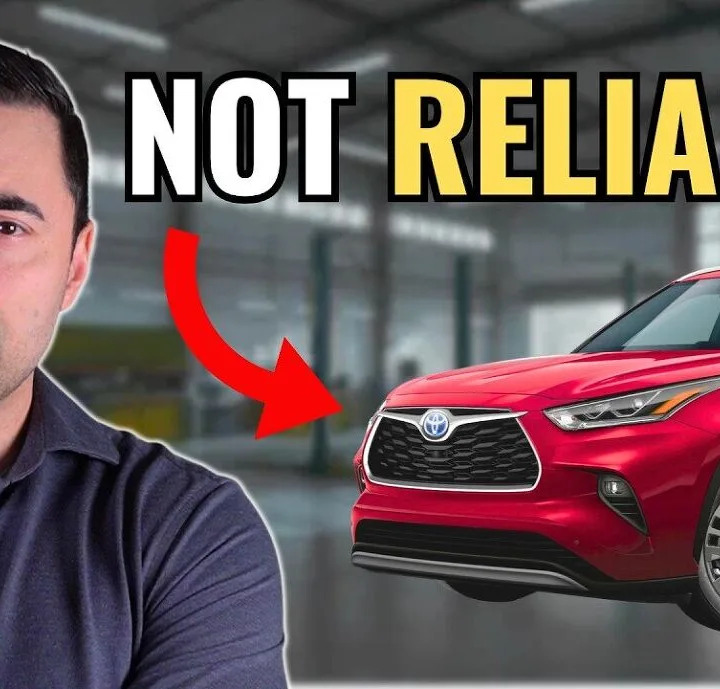



















5 Cars That SHOULD Be Reliable, But Really Aren'tAutoGuide.comCar Help Corner | AutoGuide CreatorThu, September 17, 2026 at 9:39 PM UTCAdd us on Google5 cars that should be reliable but really aren tThese 5 cars are surprisingly unreliable.This video shares 5 popular new cars that you should avoid buying because they are very unreliable and have constant repair problems. This list of the most unreliable cars includes the Toyota Tundra, Mazda CX-90, any Honda 1.5L turbo, Toyota Highlander 8-speed transmission problems, Toyota 12v battery problems, and Subaru 12v battery problems.If you want to avoid massive engine problems and reliability issues, watch this video.Japanese automakers like Toyota, Honda, Mazda, and Subaru continue to produce some of the most reliable vehicles on the market. However, the push for lower emissions, tighter clearances, and complex fuel-saving technology has created a few concerning "cracks in the armor".AdvertisementAdvertisementHere is a breakdown of the surprising reliability issues currently facing several popular Japanese vehicles.1. Toyota Tundra: V6 Engine FailuresFor decades, the Toyota Tundra built an ironclad reputation on its naturally aspirated 5.7L V8-an engine capable of running well past 300,000 miles with basic care.When Toyota redesigned the Tundra, it replaced the V8 with a 3.4L twin-turbocharged V6. Soon after launch, owners began reporting severe knocking noises, rough operation, engine stalls, and complete engine seizures.The Root Cause: Toyota attributes the issue to manufacturing debris (machining swarf) left inside the engine block. While older V8 engines had looser manufacturing tolerances that could absorb minor debris, the tight clearances of the modern twin-turbo V6 mean metal shavings quickly circulate through the oiling system, destroying the main bearings.The Solution: A full engine replacement is required. Toyota has recalled hundreds of thousands of non-hybrid Tundras to replace affected short blocks.2. Toyota 8-Speed Automatic: Shifting Issues & Rough OperationToyota's Direct Shift 8-speed automatic transmission is utilized across a vast portion of its fleet, including the Camry, RAV4, Tacoma, Highlander, and several Lexus models.AdvertisementAdvertisementWhile it generally does not suffer total mechanical failure, owners-particularly those with 2017+ Toyota Highlanders-frequently complain of severe drivability issues:Clunky, harsh downshifts at low speeds.Hesitation when accelerating from a complete stop.Low-speed vibrations or shudders reminiscent of driving over rumble strips.Recommendation: Much of this behavior stems from aggressive software programming aimed at maximizing fuel economy, alongside Toyota's claims of "lifetime" transmission fluid. Changing transmission fluid at reasonable intervals helps prevent long-term wear. Buyers seeking a smoother experience should opt for Toyota's hybrid models, which utilize a virtually bulletproof electronic Continuously Variable Transmission (eCVT) with a planetary gear set.3. Toyota bZ4X & Subaru Solterra: 12-Volt Battery DrainElectric vehicles rely on a standard 12-volt battery under the hood to power onboard computers, lights, and door locks.Co-developed on a shared platform, both the Toyota bZ4X and Subaru Solterra suffer from persistent parasitic 12V battery drain.The Symptoms: Owners report their vehicles going completely dead after sitting parked for just a few days, frequently requiring jump-starts or premature battery replacements.The Suspect: The issue is widely linked to the vehicle's Data Communication Module (DCM), which wakes up repeatedly while the car is turned off to sync telemetry data with cloud services.4. Honda 1.5L Turbo: Head Gasket FailuresIntroduced in 2016, Honda's 1.5L Earth Dreams turbocharged 4-cylinder engine powers non-hybrid configurations of the Civic, CR-V, Accord, and Acura Integra.AdvertisementAdvertisementThe Problem: This engine experiences an above-average rate of premature head gasket failure, typically occurring after the 60,000-mile (100,000 km) mark.The Cause: A combination of concentrated turbocharger heat and a slotted cylinder block design allows thermal expansion gaps to form. Over time, coolant seeps past the head gasket into the combustion chambers.Repair Cost: Out-of-warranty repairs generally cost upwards of $5,000.5. Mazda CX-70 & CX-90: Early-Model Growing PainsMazda earned a top-tier reputation for long-term reliability by refining simple, naturally aspirated SkyActiv powertrains paired with standard 6-speed automatics. However, stepping into the competitive 3-row luxury segment with the all-new CX-70 and CX-90 resulted in notable early production stumbles.First- and second-year production models (2024–2025) presented an unusual list of complaints for the brand:Harsh, jerky low-speed engagement from the new in-house 8-speed multi-plate clutch automatic.Persistent brake squeal and premature pad/rotor wear.Steering gear stiffness and front suspension squeaks.Hybrid system faults and battery discharge warnings on Plug-In Hybrid (PHEV) variants.The Common ThreadEvery issue listed shares a similar origin: replacing simple, proven mechanical components with smaller-displacement turbocharged engines, multi-speed transmissions, or complex mild-hybrid architectures to meet aggressive fuel-economy standards.AdvertisementAdvertisementWhile Japanese brands remain the overall benchmark for vehicle reliability, brand reputation alone does not guarantee a trouble-free vehicle. Buyers should research specific engine and transmission combinations, avoid the first model year of a complete redesign, and maintain proper service schedules regardless of "lifetime fluid" claims.Become an AutoGuide insider. Get the latest from the automotive world first by subscribing to our newsletterhere.