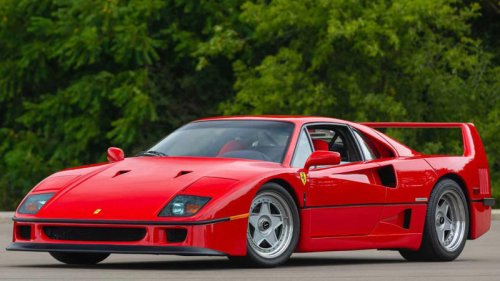
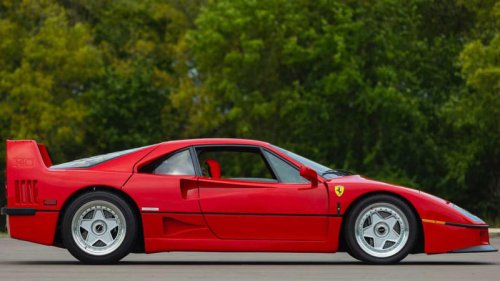
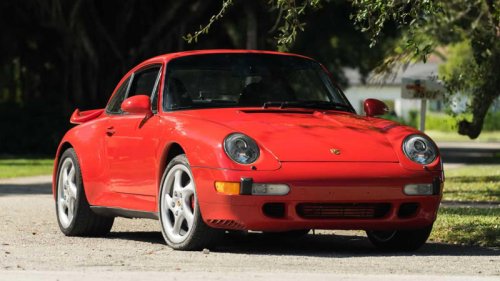
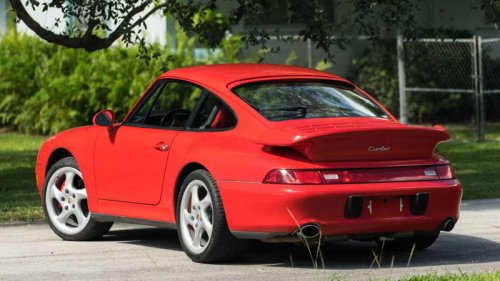
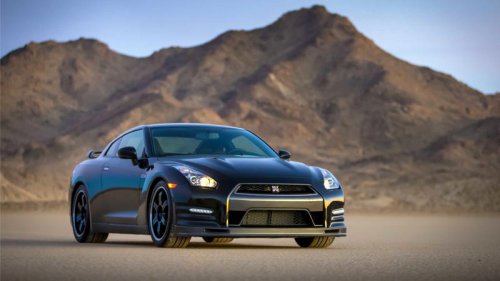
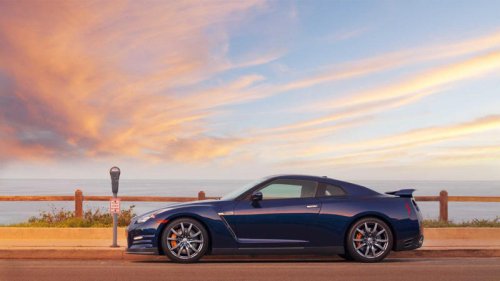
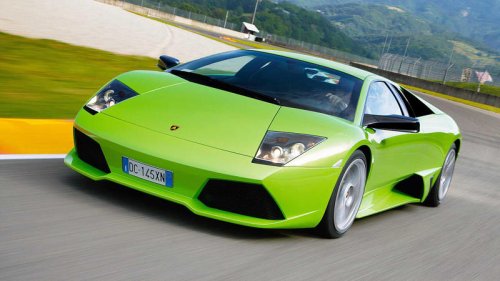
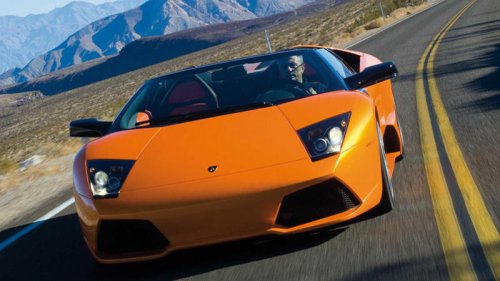
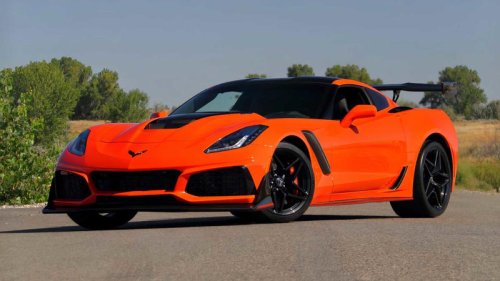
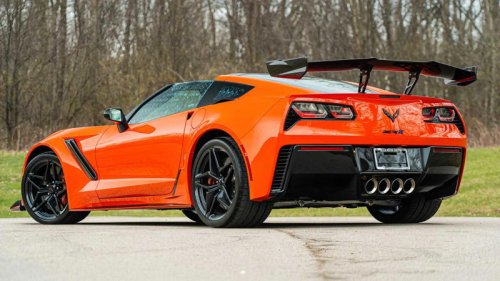















The auto industry moves at an incredibly rapid pace. Cars and technologies that seem cutting-edge today can become obsolete, restricted, or commercially unviable surprisingly quickly, and as a result, icons are disappearing faster than we can count them.Every few decades, the automotive landscape shifts so violently that it leaves a handful of cars standing as the 'last of their kind.' These aren't just discontinued models; they are the final sentinels of an era and represent the definitive full stops at the end of long, glorious chapters. Ferrari F40 Last Ferrari Approved By Enzo Ferrari, Last Analog Supercar Via: Mecum AuctionsThe Ferrari F40 debuted in 1987, when the supercar industry was seeing major shifts. While rivals like the Porsche 959 were already using computers to manage various systems and 'help' drivers, the F40 prioritized mechanical purity over electronic intervention and famously lacked driving aids like ABS, traction control, electronic stability control, and power steering, even though it was the first production car to break 200 mph. Drivers needed skill and restraint to get the most out of its explosive twin-turbo V8, which is one of the reasons why Ferrari purists hold it in high regard.Via: Mecum Auctions The F40 was also the last Ferrari personally commissioned and approved by Enzo Ferrari before his passing in 1988, which adds to its allure. The automotive world shifted toward computer-controlled systems in the '90s, and the models that followed, such as the Ferrari F50, began introducing electronic dampers and more sophisticated management systems, marking the end of the purely analog era. Porsche 911 (993) Last Air-Cooled Porsche 911 Via Mecum AuctionsWhile the Porsche 911 is still one of the most coveted sports cars today with a plethora of iterations that gearheads adore, some purists will look you in the eye and tell you that the last "real" 911 was built in 1998 when the 993 generation bowed out. This is the kind of statement that induces eye-rolls, but if you hear them out, you start to see their point.Via Mecum AuctionsThe main reason why the 993 has an end-of-an-era status is that it was the last 911 to use an air-cooled engine before the 996 generation adopted water-cooled setups. For many purists, the air-cooled engine defines the soul of a 911 due to its distinct mechanical sound, raw power delivery, and lack of complex water pumps or radiators. The 993 was also the last 911 to be largely hand-assembled at the Zuffenhausen factory before the succeeding 996 generation introduced mass-production techniques, and it's also considered to be the pinnacle of the 911's design, especially when compared to the 996 with its fried egg headlights. Nissan GT-R R35 Last Chapter Of The Old-School GT-R Nissan USA.The final R35 GT-R rolled out of Nissan's production facilities last year, marking the end of a chapter that dates back to the late '60s, when the Skyline 2000GT-R burst onto the scene. While the R35 dropped the "Skyline" name, it stuck to the same winning formula that earned its predecessors worldwide fame and adoration: it blended supercar-killing performance, motorsport dominance, cutting-edge engineering that often felt ahead of its time, and incredible tuning potential.Nissan USAIn an industry where cars usually refresh every 6 to 8 years, the R35 GT-R remained on sale for nearly two decades with the same basic chassis and engine. Unfortunately, a mix of tightening regulations, the age of the platform, and changing market realities forced Nissan to pull the plug, and the R35 is likely to be remembered as the final generation to be powered solely by a hand-built twin-turbo V6 (the VR38DETT) without hybrid assistance. The GT-R's future is as uncertain as Nissan's next chapter, but even if new iterations like the rumored R36 generation will be built, many industry observers expect some form of electrification, whether hybrid or fully electric. Lamborghini Murciélago Last Lamborghini To Use A Derivative Of The Original Bizzarrini V12, Last Manual V12 Lamborghini LamborghiniMany car guys have long argued that Lamborghini lost some of its old-school edge after Audi took control in 1998 and often claim the Diablo was the last real Raging Bull, but the Murciélago has an equally strong claim to this discussion. While the Murciélago was greenlit and developed under Audi's stewardship, it deserves to be on this list more than the Diablo for various reasons.LamborghiniFor one, the Murciélago was the last Lamborghini to use a direct descendant of the Bizzarrini V12 that powered Lamborghini's first production car in the 1960s, the 350GT. On top of that, the Murciélago was the last Lamborghini to pair a naturally aspirated V12 with a six-speed manual, a gated one for that matter. Interestingly, since the E-gear automated manual was considered to be a more advanced and desirable option, stick shift Murcielagos are extremely rare and typically cost a lot more than the E-gear-equipped versions. Chevrolet Corvette C7 Last Front-Engined Corvette MecumThe Corvette needs no introduction, as it has been a permanent fixture in the auto industry since 1953. For the first 66 years of its life, or first seven generations, the Corvette stuck with a front-engine layout primarily due to tradition, lower production costs, and continuous refinement that kept it competitive. However, Chevrolet ultimately switched to a mid-engine layout to unlock a higher ceiling for performance and handling, allowing engineers to run wild.Bring A TrailerWhile some were skeptical when the mid-engine C8 debuted in 2020, it has turned out to be a smash hit as it advanced the Corvette from a bang-for-buck sports car to a true, world-class, supercar that rivals European exotics at a fraction of the price. The layout provides better weight distribution, traction, and handling, which has allowed Chevy engineers to push the limits of performance with versions like the new 1,250-hp ZR1X