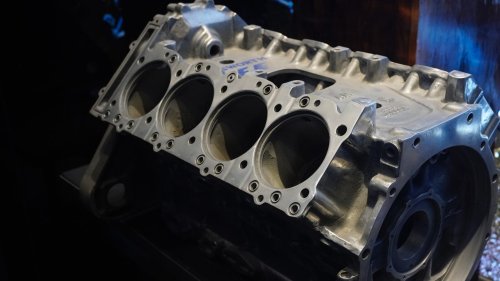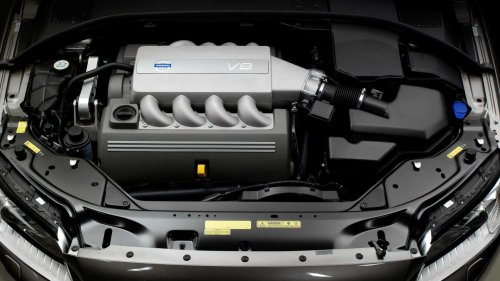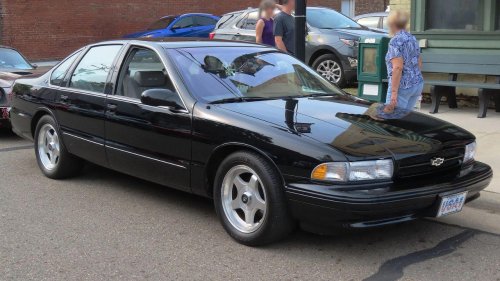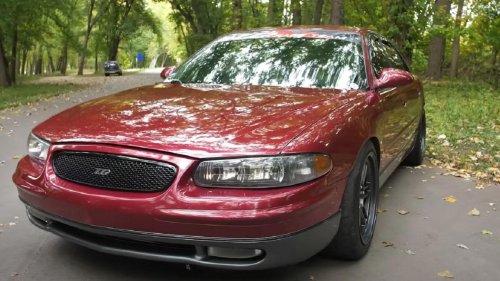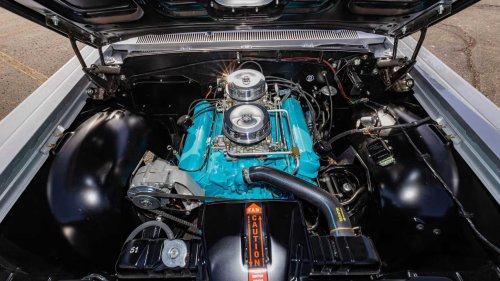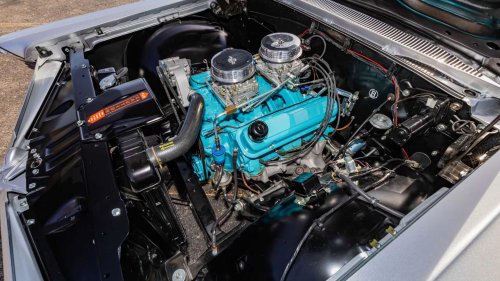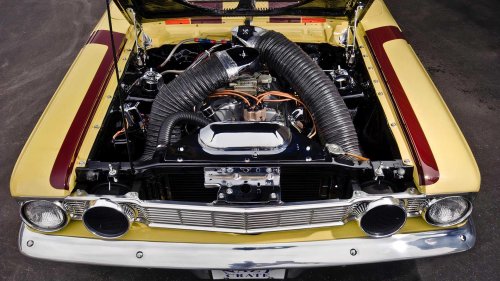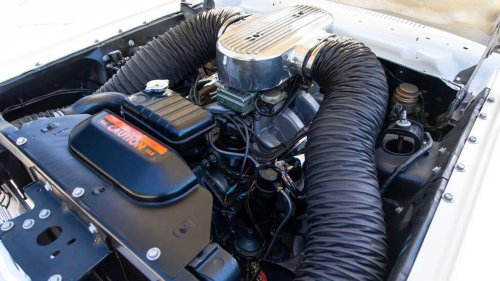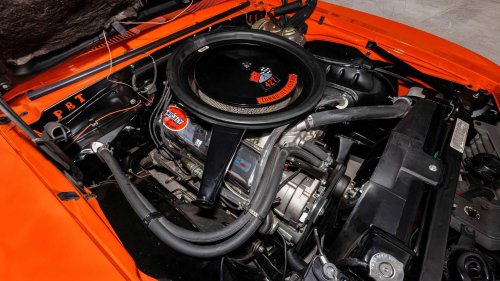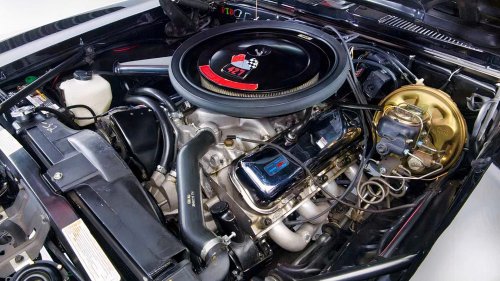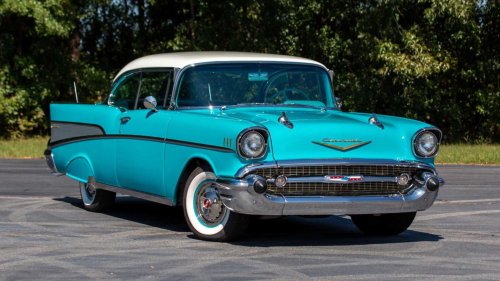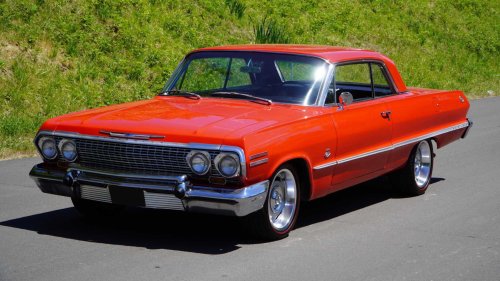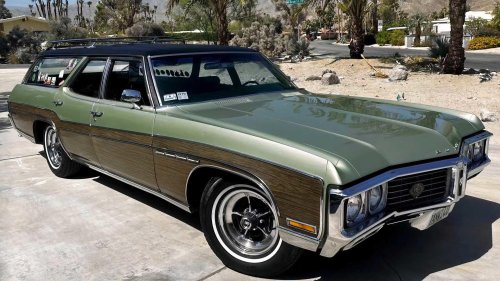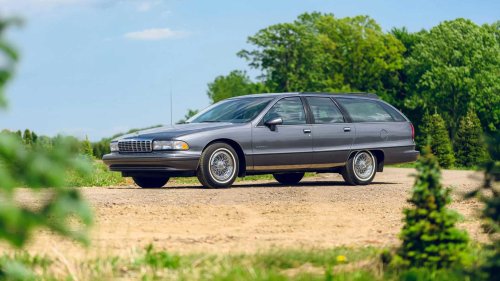
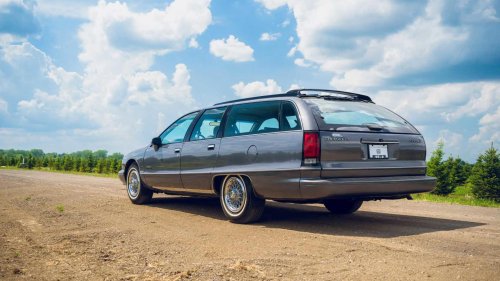
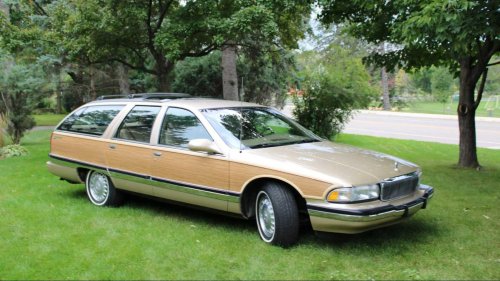
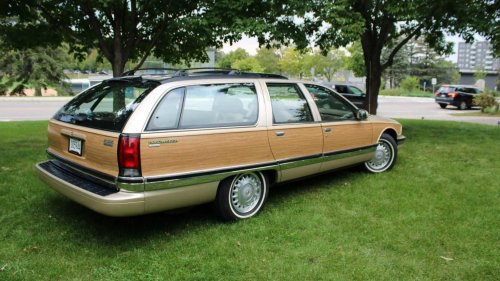
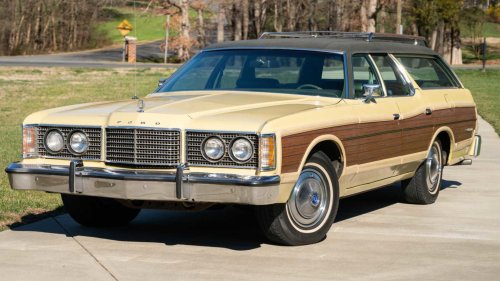
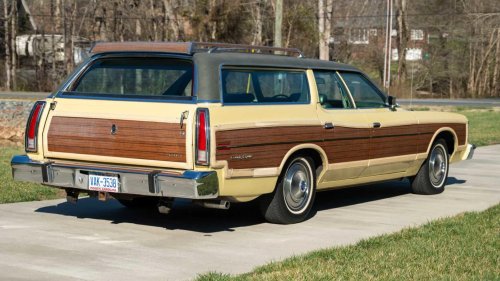
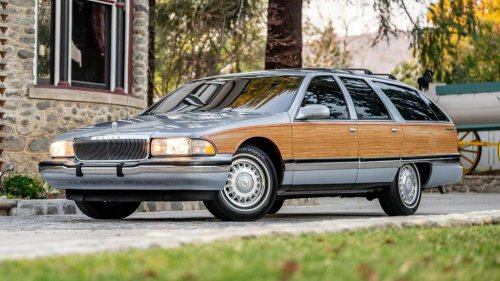
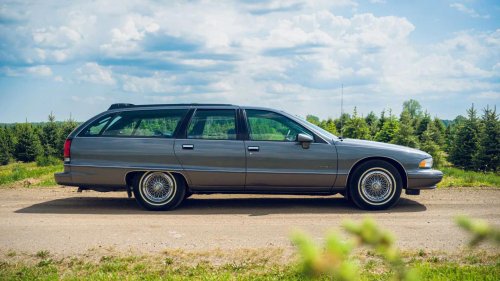


















The V8 engine may be an endangered species today, but for several decades these eight-cylinder powerplants were a symbol of American motoring. Large, noisy, and powerful, they embodied the idea of road-trip freedom, powering anything from sports cars to family haulers.The V8-powered wagon was formerly a common way to get around America from the 1950s through roughly the 1980s, with a few stragglers lasting until the 1990s. If you’re looking to add a piece of American automotive history to your garage, you might consider buying a classic wagon with a V8 on board. Here, we are taking a closer look at three nearly forgotten models that fit the bill and can give you an amazing classic-car ownership experience. These three V8-powered wagons may not be the most famous or flashy, but they are on the way to becoming collectibles, and this might be just the right time to snap one up. Chevrolet Caprice Bring a TrailerWe start with the Chevrolet Caprice. The nameplate was originally used for an option package on the Impala in the early 1960s, but it became a separate model in 1966. Although the Chevy Caprice name was used for a total of six generations globally, we’re focusing on the first four generations, the ones sold in the US.The Caprice was a large, quintessentially American mid-century car with a squared-off silhouette that only softened in the fourth generation. Over the course of its life, the model was available in a very wide variety of two-door and four-door body styles: not just wagon, but also hardtop, coupe, sedan, and convertible.The powertrain lineup was similarly varied. The first and second generation exclusively offered V8 options, while the third added an inline-six, two V6s, and even a diesel V8 into the mix. The fourth generation offered a smaller lineup of just three V8 engines, with a more efficient V6 exclusively available for vehicles used as taxis.Bring a Trailer This version of the Caprice, the last to be sold in the States, was quite different visually from the previous three. It placed greater emphasis on aerodynamics, as car design had evolved and efficiency became a higher priority. This generation had a sister model in GM’s portfolio: the Buick Roadmaster, a car that brought back a nameplate from the 1950s when it was introduced in 1991.Today, most examples of the Chevrolet Caprice can be found between $5,000 and $30,000, depending on factors such as age, mileage, and maintenance history.Driving either the Roadmaster or Caprice is like stepping back in time, where body-on-frame cars rode on soft suspensions with V8 power at their disposal. They couldn't handle a corner or stop without a ton of front-end dive, but few cars from the 90s captured the essence of classic American motoring like the Caprice and Roadmaster did.- Matt Nelson, CarBuzz Buick Roadmaster Bring A TrailerThe next car in our trio is a sister model to the Chevrolet Caprice: the Buick Roadmaster. The Roadmaster name had been used for a variety of models and generations throughout the 20th century. Buick brought it back in 1991 after a long hiatus, and it was for a model that shared a platform and several components with the fourth-gen Caprice.As was the case with the Caprice itself, by this point the Roadmaster had seen its previously harsh lines softened considerably, and its body shape made more aerodynamic, in keeping with changing car design trends. Both the Roadmaster and the Caprice were not just available as a wagon, but also as a sedan. At the time of its release, the Roadmaster was the largest car in the Buick family.Bring A Trailer Despite being on the market for just six years, this Roadmaster had three different engines over its production run, all of them V8s. The first was a 5.0-liter unit which produced 170 hp. The initial version of a 5.7-liter V8 increased the output to 180 hp. In 1994, the third and last engine arrived: also 5.7 liters in size, it produced a considerably higher output of 260 hp. The only transmission available throughout was a four-speed automatic. Today, prices for the ‘90s Roadmaster range from around $7,000 to $20,000.The Roadmaster/Caprice were very much a classic American car experience. Very floaty to drive, big suspension bounce, lots of body roll. They were the last big GM body-on-frame cars, but despite being in the 1990s, they felt much older. My family had an old 1960 Cadillac convertible, huge car, and honestly, the Caprice/Roadmaster didn't feel much different. [...] Really an old-fashioned American cruiser experience in a "modern classic" body.- Christopher Smith, CarBuzz Ford Country Squire Bring A TrailerOur last car is the Ford Country Squire, a model that, unlike the other two, was produced exclusively as a wagon. The Country Squire had a very long production run, having first been introduced in 1950 and remaining on the market until 1991.The Country Squire was characterized by its distinct woodgrain trim on the sides, which remained throughout the model’s entire production run. However, only the first generation (produced between 1950 and 1951) could be classified as a true “Woodie”, as it was the only one with genuine wood panels. All subsequent models had steel bodies that replicated the look of woodgrain.The Country Squire initially only offered two engines: a 3.7-liter inline-six and a 3.9-liter V8. The engine lineup grew and evolved over the decades, although for the model’s first six generations, one characteristic remained constant: there were both inline-six and V8 options on offer. The fourth-gen model, produced between 1957 and 1959, even offered a supercharged V8 engine.Bring A Trailer Things changed slightly when the Country Squire’s seventh generation arrived in 1969. This time, there was no inline-six on offer, but rather an engine lineup consisting entirely of V8s. This continued to be the case for the model’s eighth and last generation, produced between 1979 and 1991, which offered two versions of Ford’s Windsor V8 (in 4.9 and 5.8 liters).The Country Squire’s design varied greatly over the years, going from a rounded, blob-like silhouette in the early 50s, to a more squared-off one in later generations. There is something in the lineup for every kind of vintage car enthusiast, whether you’re looking for an old-timey look or a mid-century modern one. As the model has been on the market for so long, the price range is quite wide: most examples of the Country Squire can be found with price tags between $10,000 and $40,000. What Makes These Models Future Collectibles? Bring A Trailer The Chevrolet Caprice, Buick Roadmaster, and Ford Country Squire are hidden gems that represent a bygone era of American motoring. While some mid-century American cars, such as the Chevrolet Bel Air or the Cadillac DeVille, have gained notoriety to the point of becoming household names, these cars have stayed slightly further from the spotlight, but still embody all the characteristics that made the post-war “land yachts” so beloved among enthusiasts.Bring a Trailer The core characteristics that defined these models are also in danger of going extinct. The wagon body style is a prime example. Once the default vehicle of choice for busy families, the wagon has gradually disappeared from American roads, replaced by alternatives like the minivan and the SUV/crossover.It’s not impossible to buy a new wagon today, but the current crop looks very different. The squared-off, boxy wagon style seen in our three models is a hallmark of the mid-century period, and, due to factors such as aerodynamics and fuel efficiency, it has now been abandoned in favor of curvier lines.The V8 engine layout is another element that automakers are rapidly moving away from. Once the symbol of American motoring – large, powerful, noisy – it has been all but killed off by increasingly strict emissions regulations, downsizing, and electrification. Adding one of these cars to your collection would hurt your fuel bill, but it would certainly add some style to your garage.Sources: Chevrolet, Buick, Ford, Bring a Trailer