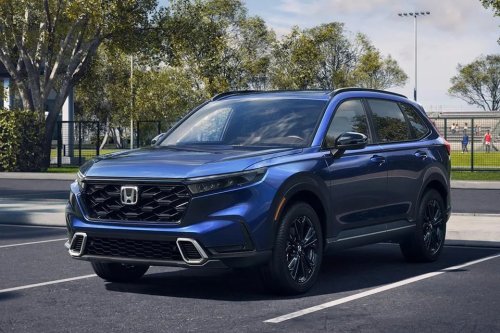
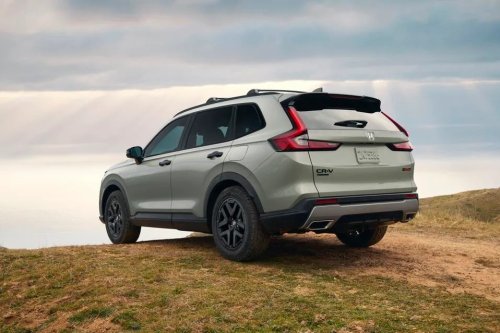
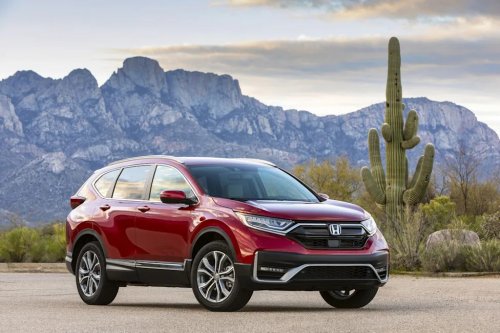
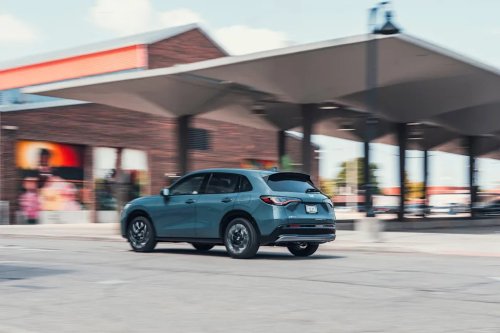
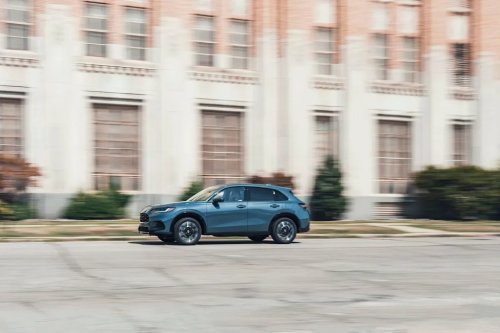
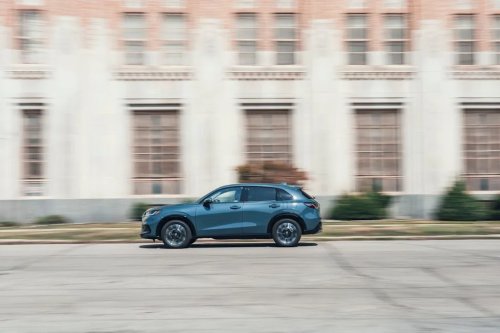
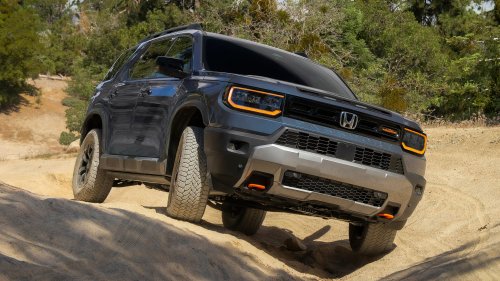
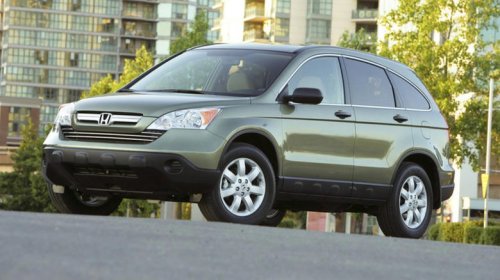
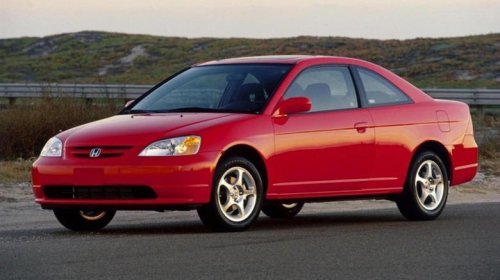
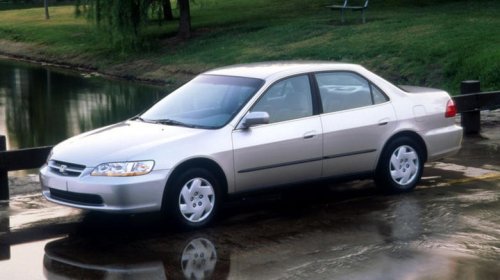
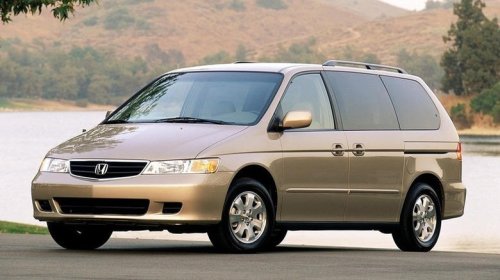
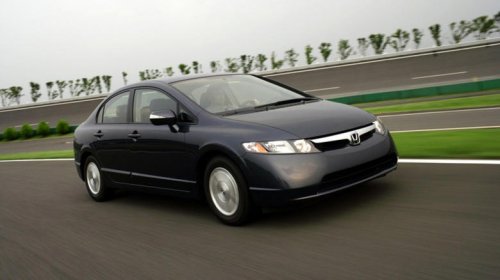
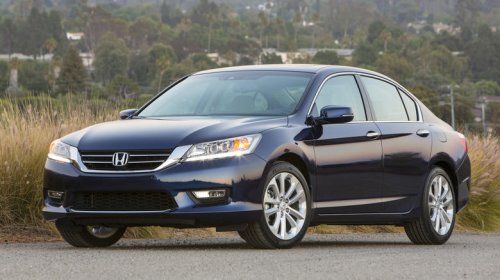
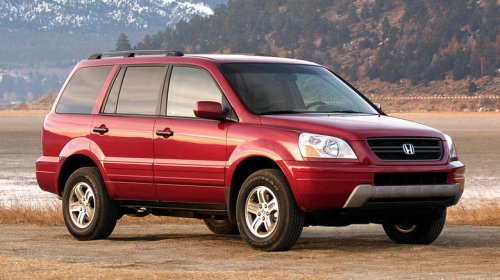
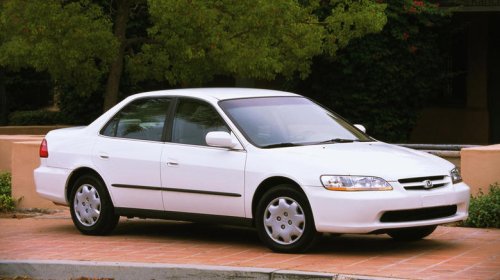
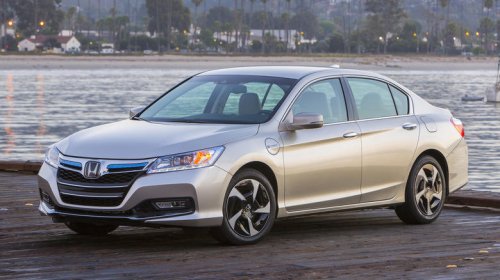
2008 Honda CR-VThe third-generation CR-V crossover was a big commercial success, sporting the practicality, economy, and sensibility that buyers expected from a Honda. It combined the higher ride height of an SUV with the comfort of a passenger car, helping to push crossovers ever further into the mainstream while providing a healthy boost to its maker's bottom line. However, in recent years the 2008 model year CR-V has been plagued with multiple recalls and numerous complaints, somewhat tainting its reputation as an unbridled success for Honda.According to the NHTSA, 11 recalls have been issued for the 2008 CR-V, nine of which concern its airbags. The dates of these recalls stretch from February 2016 through June 2019, with each concern originating from the defective Takata airbags fitted to a small number of CR-Vs. The Takata recall, it should be noted, was extremely broad in scale, affecting many of Honda's most popular models alongside several other leading manufacturers.However, what lands the 2008 CR-V on this list is that it also suffers from two model-specific failure points, as well as consumer complaints. In particular, corrosion seems to be a recurring issue, with one corrosion-related recall issued in 2023 and a high number of drivers reporting corrosion of the rear subframe. The automatic locking doors are also a very common point of failure, with hundreds of owners reporting doors locking or unlocking on their own, often while the car was driving.2001 Honda CivicWith over 30 million examples sold since it first hit dealerships in 1973, the Civic is Honda's best-selling model to date. A big part of its appeal has always been its affordability and reliability, but there are a few less dependable Civic model years that are worth avoiding. The 2001 model year is one of the most frequently complained about, with over 1,100 complaints made to the NHTSA as of this writing. Many of those center around the car's airbags — the 2001 Civic was another model affected by the major Takata recall that eventually bankrupted the parts manufacturer.However, the 2001 Civic also suffers a higher than average number of reports of powertrain problems, with transmission failure a particularly common failure point. A high number of owners have alleged transmission failure at high speed, with minimal or no warning given before the failure took place. To date, Honda has not issued a recall related to the transmission, and the NHTSA is not actively looking into the issue.1998 Honda AccordThe 1998 Honda Accord has been subject to 19 recalls to date, although the majority of those concern minor issues with missing reflectors in a small number of models. However, several more serious recalls have also been issued. The most recent was in 2020 when Honda recalled nearly 1.5 million cars sold between 1996 and 2000 over concerns with potentially faulty airbag inflators. Two much earlier recalls, dating back to 2002 and 2003, center around a defective ignition switch. A large number of recent owner complaints lodged with the NHTSA also mention the ignition switch, with some reports alleging the car's engine shut off while on the road.Reports are varied — some allege the engine cut out at lower speeds or while stationary, while some report driving at freeway speeds when the problem occurred. Given that Honda already issued a recall for the car's ignition, it may be that some of these issues stem from previous owners not taking their cars in for repairs as instructed by the manufacturer. Alternatively, it's possible that many other 1998 Accords also suffered from defective ignitions but weren't included in the initial recall. Either way, used buyers should give the model year a miss.2002 Honda OdysseyBefore SUVs became the default option for buyers looking for practical family haulers, minivans like the Honda Odyssey fulfilled that role. While the Odyssey was, for the most part, a reliable car, the 2002 model year proved not to live up to that reputation. It has received almost 1,000 NHTSA owners' complaints to date, over 600 of which concern the powertrain. Many of those complaints cite issues with the transmission, from persistent gear slipping to total failure at speed.A recall was issued in 2004 for the Odyssey's transmission, with several other Honda and Acura models also affected by the same fault. According to Honda, a buildup of heat during certain conditions can cause damage to gear teeth or result in gear breakage in severe cases. Many owner complaints regarding the transmission were reported at least 10 years after the recall was issued, so it's difficult to ascertain exactly why the high reported failure rates persist. In some cases, it may be down to previous owners not taking the car in for repair as per the manufacturer's request. Whatever the cause, it's best to avoid the model year if possible — although it's worth noting that the 2001 and 2003 Odyssey also suffer from similarly high levels of complaints.2006 Honda Civic HybridUnlike some of the other cars here, the 2006 Honda Civic Hybrid doesn't have one Achilles heel that brings its overall reliability crashing down. Rather, it seems like the model year simply has a higher number of quality issues overall than most other Honda models. It's been subject to a total of 17 recalls, with over 1,400 complaints lodged with the NHTSA at the time of writing. Seven of those recalls concern faulty Takata airbags, but others range from a defective integrated motor assist system to a faulty rear wheel speed sensor. The latter issue affected 260,000 Civics built between 2006 and 2007.Common problems cited by owners include a failing sun visor which can fall in front of the driver and obstruct their vision, issues with the rear suspension, and various engine and cooling issues. Alongside the 2006 model year, the 2007 model year Civic Hybrid is also a poor performer, receiving a similarly high number of owner complaints.2013 Honda AccordIn what is yet another example of fresh redesigns being more trouble-prone than the following model years, the Accord was redesigned for 2013 and saw a subsequent spike in owner complaints. As of this writing, over 1,300 complaints have been logged with the NHTSA, with multiple weak spots reported. Owners commonly complain of partial loss of power steering while on the road, with the problem sometimes returning even after repair work has been carried out. Various electrical issues are also frequently reported, with ABS and traction control lights flashing followed by one or both systems malfunctioning.The power steering issue has been previously investigated multiple times by the NHTSA, but each time, the investigation has been closed due to a lack of evidence of any widespread problem or defect. However, a number of other concerns have resulted in recalls being issued.The most recent recall is a potential fuel pump defect that affects a wide range of Honda models, including the 2013 Accord. Three other, more specific, recalls have also been issued for the model, including a 2020 recall concerning a driveshaft defect. Cars sold or registered across 23 different states are potentially affected, with a faulty lubricant potentially causing the driveshaft to prematurely corrode or even snap entirely.2003 Honda PilotThe 2003 Honda Pilot has been subject to 14 recalls to date, nine of which concerned issues with the car's airbags. These airbag recalls were issued over a period of half a decade between 2014 and 2019, with most related to the infamous Takata recall that affected millions of cars built by many manufacturers. In addition to those recalls, a small number of examples of the 2003 Pilot were also recalled for a potential improperly installed passenger airbag.Among the owner complaints logged with the NHTSA, defective airbags are unsurprisingly one of the most common areas for concern. Hundreds of other owners also report issues with the SUV's powertrain and electrical systems. Unusually for a poor performing model, there seems to be no one glaring flaw causing the majority of these other complaints, although transmission issues of various kinds are commonly reported.Although the 2003 model year has the highest number of complaints out of the first generation model years, it's not the poorest performer across all Pilot generations. That unfortunate title instead goes to the 2016 Pilot, which has almost twice as many complaints as the 2003 model.2000 Honda AccordIt's unusual for a car to still be subject to new recalls a full two decades after it rolled off the production line. Unfortunately for owners, that's exactly what happened with the 2000 Honda Accord, with the most recent of its 21 recalls being issued in 2020. In fairness, that recall concerned defective airbags and was issued for a wide range of models from the era. Still, the difficulty of tracing the owners of every affected car after such a long time period means that there may well still be plenty of examples of the car driving around without the required remedial work carried out.Over 400 owner complaints on the NHTSA's database concern the airbag faults, with the second most popular area of complaint being the car's electrical systems. A significant proportion of electrical complaints revolve around issues with the ignition, which was in itself subject to a separate recall in 2005. It's not clear whether the affected cars were not taken in for the necessary recall work, whether the replacement component also failed, or whether some affected cars were not included in the original recall notices. Either way, buyers looking for a hassle-free used Accord should probably look towards other model years.2014 Honda Accord Plug-In HybridThe only plug-in hybrid model that Honda offers in its 2025 American-market lineup is the hydrogen-powered CR-V e:FCEV, but it has previously offered gasoline plug-in hybrid versions of some of its popular models. One of the earliest was the 2014 Honda Accord Plug-In Hybrid, which offered 13 miles of all-electric range and a recharge time of around three hours on a 120V outlet. That range is a small one by today's standards, but at the time the car was an innovative offering and was an appealing choice for drivers looking to cut their fuel bill.Unfortunately, as a used pick, it's far less appealing today. As of this writing, owners have reported over 900 complaints to the NHTSA, although many of these complaints do not directly relate to its hybrid powertrain. Instead, they concern issues like a faulty ABS module — an issue that also affects non-hybrid Accords of the same model year — and sticky or heavy steering. The non-PHEV 2014 Accord Hybrid also suffers from a similarly high level of owner complaints, as does the gas-powered 2014 Accord.



















 +11 others