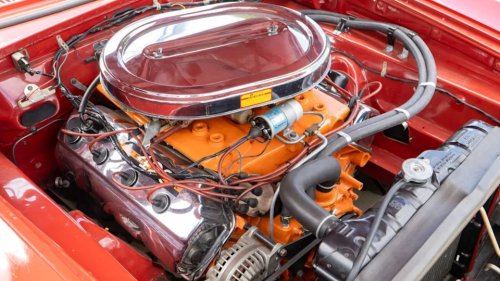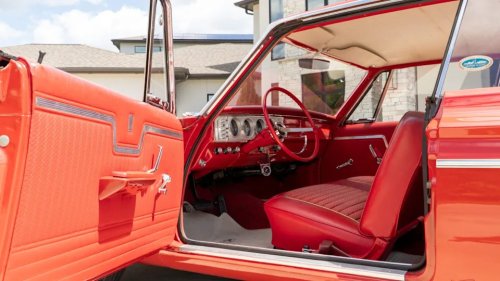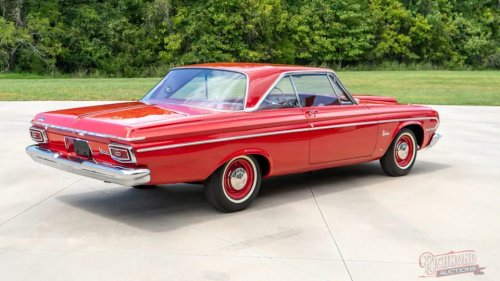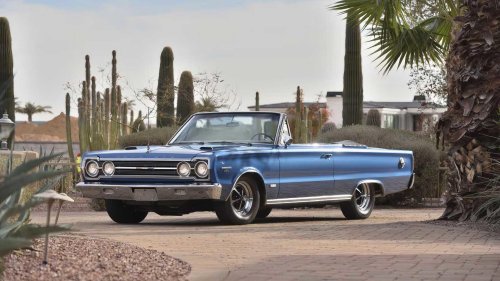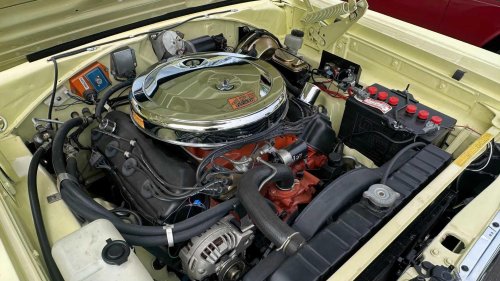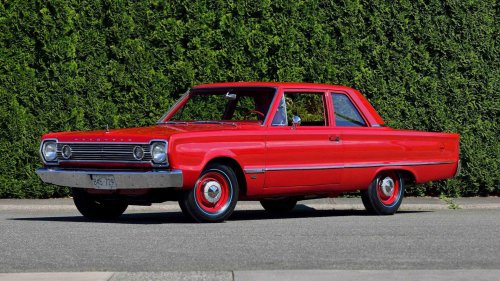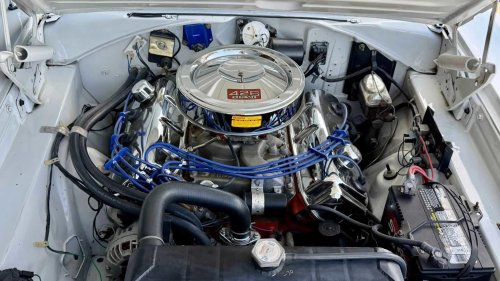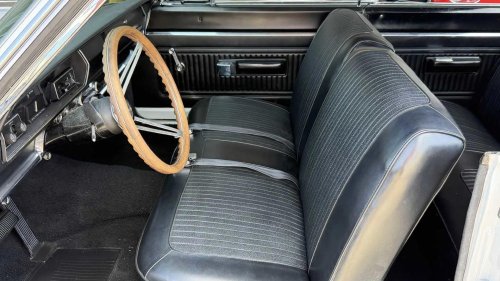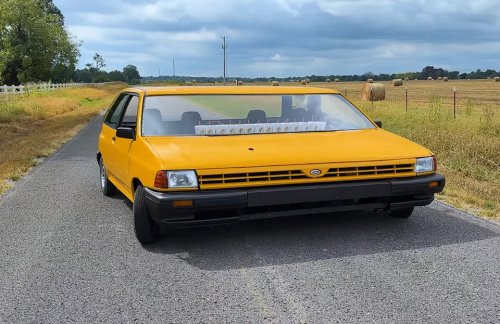



















1963 Ford Falcon and 1963 Plymouth Valiant looked similar but aged very differentlyParked side by side in period photos, a 1963 Ford Falcon and a 1963 Plymouth Valiant could pass for cousins. Both were tidy American compacts with clean lines, modest chrome and a promise of low-cost, no-drama transportation. Six decades later, they occupy very different places in the classic-car world, from survival rates and parts support to the way enthusiasts talk about them. The Falcon has become a staple of entry-level collecting, while the Valiant is remembered as a mechanical workhorse that too often dissolved around its own drivetrain. Styling similarities hid deep differences in engineering choices, rust protection and corporate follow-through, and those choices shaped how each car has aged on real roads and in the current collector market. Twins in the showroom, rivals on the spec sheet Ford Motors launched the Falcon at the dawn of the 1960s compact boom, and the Chrysler Corporation answered with the Valiant in the same model year. Both were conceived as economy cars, sized and priced to lure buyers who wanted Detroit familiarity without full-size bulk. Period enthusiasts still describe how Both compacts targeted the same budget-conscious driver and fought for the same driveway space. By 1963 the formula had matured. The Falcon line included sedans, wagons and stylish trims such as the Ford Falcon Futura Sport, while Plymouth offered the Valiant in base configurations and in dressier versions like the Plymouth Valiant Signet. A later enthusiast post highlights how the 1963 Ford Falcon Futura Sport and 1963 Plymouth Valiant Signet were positioned as the stylish top-tier trims of their respective compact lines, a reminder that these were not just frugal appliances but aspirational cars for young families and first-time buyers. That comparison survives today in a widely shared image of the pair, where the Ford Falcon Futura sit nose to nose in period-correct glamour. On paper, each car offered similar virtues: compact exterior dimensions, simple six-cylinder power and a promise of easy ownership. Yet even enthusiasts who love both cars concede that their reputations diverged almost from the start. In a discussion comparing mid-sixties basic transportation, one owner flatly calls The Valiant the most durable of the compact trio on offer, while another reminds readers that the Valiant was originally going to be called the Falcon until Ford secured the name for its own compact. That anecdote, preserved in a Valiant versus Falcon debate, hints at how closely the two cars were linked in the public imagination. Mechanical character: indestructible slant six versus flexible Falcon Mechanically, the 1963 Ford Falcon and 1963 Plymouth Valiant reflected different engineering philosophies. The Falcon relied on straightforward inline-sixes and, in some trims, small V8 options. The Valiant built its identity around Chrysler’s famous slant six, an engine canted to one side that allowed a lower hood line and gained a reputation as nearly unkillable. Enthusiasts still praise that slant six in reverent tones. In one group discussion about early 1960s compacts, a poster notes that The Valiant was the first car to have an alternator as standard equipment and that the slant 6 was almost indestructible and could go 200k miles without complaint. That comment, preserved in a thread about how early 1960s car companies were moving toward more modern electrical systems, shows how The Valiant quietly pushed technology forward while maintaining a blue-collar image. Falcon owners, by contrast, often talk about flexibility. A later enthusiast poll that jumps to 1965 but reflects the same family of cars asks which is better, a Plymouth Valiant or a Ford Falcon, and quickly turns into an engine-swap fantasy. One commenter imagines a Valiant with a warm 351 Cleveland and a 4-speed, and a Falcon that could just as easily host that same V8. Another suggests that a 273 in the Valiant would make Either one a happy choice. Those exact figures, 351 and 273, appear in the discussion and show how easily both platforms accept more power, even if the Valiant and Falcon were born as economy cars. The Falcon’s chassis and engine bay became a playground for hot-rodders, especially once Ford’s small-block V8s entered the picture. The Valiant’s slant six, on the other hand, earned more praise for longevity than for outright performance. Owners routinely report that the engine outlasted the body, a pattern that would matter greatly for how many survivors remain today. Rust, survival and the tyranny of sheet metal The biggest factor separating the long-term fortunes of the Falcon and Valiant is not styling or horsepower. It is rust. A detailed look at 1963 to 1966 Plymouth Valiant models explains that, Unfortunately, many Valiants rusted into oblivion long before the drivetrains gave out. While there is no denying that body trim and mechanical parts could be sourced from dealers or local stores, the structure itself often surrendered to corrosion in harsh climates. That blunt verdict on how Valiants rusted explains why so many slant six engines survived in junkyards long after their host cars were scrapped. Owners echo the same theme in more casual settings. On a classic car forum, one commenter advising a prospective buyer of a Plymouth notes that Valiants are prone to rust more than GM or Ford cars of the same era, but still calls it a Good choice for a first classic if the structure checks out. That judgment appears in a thread titled A plymouth valiant as a first car. What are your thoughts, where several posters weigh the charm of the car against the realities of rust repair and limited body-panel availability. Their comments on how Valiants and Ford age differently on the underside align with more formal reporting about corrosion. The Falcon, by contrast, did not acquire the same reputation for terminal rust, even if no 1960s American car was immune. Survivors are common enough that entire catalogs now cater to owners who want to keep them on the road. One parts supplier, for instance, lists Navigation Links that lead to broad categories for the 1963 Ford Falcon, including Lubricants, Liquids and Adhesives with 477 part entries and an Engine section with 5,492 items that cover everything from air and fuel delivery to ignition. That scale of support, visible in the Falcon parts catalog, signals a large and active fleet of cars that still need components. Another major retailer breaks down 1963 Ford Falcon Parts into detailed subcategories, from Additives and Cooling System Additives to Controllers, Fan Assembly and Repair Parts. In the cooling section alone, the listing shows 171 items under Fan Assembly and 63 under Fan Components, a level of granularity that only exists when demand justifies the inventory. The presence of such specialized Additives and Fan for a single model year underscores how thoroughly the Falcon has been adopted by the restoration market. There are suppliers for Valiant parts as well, and dedicated owners who keep them in service. Yet the balance of rusted shells versus restorable cars has tilted heavily against Plymouth’s compact. One long-time owner describing what it is like to unearth a 1963 Plymouth Valiant in a garage stresses that a lot depends on the environment it was stored in and how long it sat. A sixty two year old car has spent sixty two years subject to moisture, temperature swings and neglect, and the Valiant’s known corrosion hot spots can turn a romantic barn-find story into a structural nightmare. That experience, recounted in a discussion about how to keep a long-sleeping Valiant running, is captured in a first-hand ownership story. Sales trajectories and period perception Contemporary sales figures show that the Falcon’s early momentum began to soften by 1963, even as the car remained a showroom staple. A period comparison of the 1964 Plymouth Valiant, Ford Falcon and Mercury Comet notes that when sales from the first seven months of 1962 are compared with the same period in 1963, Falcon sales slipped by 7 percent while its corporate cousin Comet faced its own challenges. That data, highlighted in a vintage Falcon sales comparison, suggests that Ford’s compact was already under pressure from internal and external rivals. Even so, the Falcon name carried weight. It was familiar, easy to pronounce and heavily advertised, which helped embed it in American car culture. The Valiant, while respected, never quite achieved the same level of mainstream recognition. The earlier anecdote that the Valiant was originally going to be called the Falcon, before Ford claimed the name, hints at how branding decisions can ripple through decades. In that sense, the Falcon’s later success in the collector market is not just about sheet metal and engines, but also about the power of a name that buyers remember. Enthusiast debates keep revisiting this history. In one mid-sixties transportation thread, participants again insist that The Valiant was the most durable compact of its era, yet several still say they would buy a Falcon first. The discussion, preserved in a basic transportation poll, captures the tension between objective durability and subjective desire. The Valiant’s slant six and alternator innovation win points for engineering, but the Falcon’s styling, parts availability and association with later Ford icons like the Mustang give it an edge in nostalgia. Collector values: numbers that tell the story Current valuation data puts hard numbers on how differently the 1963 Ford Falcon and 1963 Plymouth Valiant have aged in the marketplace. For the Falcon, one widely used valuation tool lists a 1963 Ford Falcon Base with Past sales at $18,000 for a 1962 Ford Falcon Base in North America, with that same $18,000 figure appearing in a recent sale recorded by Mecum Auctions. That benchmark, recorded under the Ford Falcon Base entry, shows that solid driver-quality Falcons can command five-figure prices. Digging deeper into condition levels, another entry for the 1963 Ford Falcon for sale lists a 2dr Sedan with a 6-cyl. 144cid engine rated at 85 hp and a 1bbl carburetor, with a #3 Condition value of $8,300. A similar 2dr Sedan with an 8-cyl. 260cid engine rated at 164 hp and a 2bbl carburetor is also tracked at that same #3 Condition level. These figures, set out under the Ford Falcon for listing, suggest that mid-grade Falcons with presentable cosmetics and sound mechanics occupy a sweet spot for budget-minded collectors. On the Plymouth side, the numbers look different. A valuation guide for the 1963 Plymouth Valiant Signet records a 1963 Plymouth Valiant Coupe in Past sales at $8,800 and a 1964 Plymouth Valiant Signet at the same $8,800 in North America, with both transactions tied to a Barrett-Jackson event in Jan. The fact that the Plymouth Valiant Coupe and Plymouth Valiant Signet share that $8,800 figure shows that even the higher-trim cars generally trade for less than comparable Falcons. Market listings reinforce the gap. A dedicated 1963 Plymouth Valiant Market page shows a Project car with 61k mi in Christiansburg, VA, USA offered at $3,900, with the same $3,900 figure appearing again in an Updated entry for the same vehicle at Duncan Imports. Those details, laid out under the Project listing, give a sense of how affordable driver-grade or restorable Valiants remain. Individual dealers sometimes ask more for especially clean examples. A video walkaround from Southern Motors Michigan features a 1963 Plymouth Valiant priced at $31,900. The dealer, describing Southern Motors Michigan as the region’s leading muscle and classic car seller since 1978, presents the car as a carefully restored showcase. Still, the fact that such a listing stands out enough to be shared widely underscores how unusual it is to see a Valiant priced near the upper tier of the compact-car market. That premium example is documented in a Southern Motors Michigan presentation. The Falcon’s broader parts ecosystem also feeds into value. A separate catalog of 1963 Ford Falcon parts from Classic Industries lists everything from exterior trim to interior soft goods, giving restorers confidence that they can complete a car without hunting for obscure pieces. That depth of Falcon parts support helps sustain higher transaction prices because buyers know they are not purchasing an orphan. Enthusiast culture and the stories that survive Beyond hard numbers, the way enthusiasts talk about these two cars reveals how each has settled into the classic-car psyche. Falcon owners often share stories of first cars, backyard engine swaps and cross-country drives. The model’s connection to Ford’s broader performance narrative, especially its role as a mechanical cousin to the early Mustang, gives it cultural gravity that extends beyond its original economy-car mission. Valiant stories, by contrast, frequently revolve around survival and surprise. Owners delight in telling how the slant six fires up after years of neglect, or how the alternator and basic wiring keep functioning long after other components have failed. In the early 1960s discussion that praises The Valiant for its alternator and slant 6 durability, the tone is one of respect for a car that quietly kept working while flashier models aged less gracefully. That same thread, accessible through the early 1960s group, hints at why mechanics and practical drivers still speak fondly of the car even if they do not chase it at auctions. Online communities also shape how new generations encounter these cars. The Reddit thread about a Plymouth Valiant as a first car shows younger enthusiasts weighing charm against practicality and comparing the Valiant to Ford products of the same era. The discussion unfolds under the rules laid out in the Reddit user agreement and content policy, which govern how What Reddit allows in such exchanges. Those boundaries, set in documents like the Reddit content policy, ensure that debates about rust, reliability and value remain focused on the cars rather than personal attacks. Accessibility tools and platform policies also influence who gets to participate in these conversations. Support pages that explain how Reddit handles Accessibility and user assistance, such as the section on how Discovered What Reddit provides for users with different needs, help broaden the audience for classic-car content. That framework is described in guidance like the Reddit accessibility section, which indirectly supports the preservation of knowledge about cars like the Falcon and Valiant. Why two similar cars aged so differently Viewed from a distance, the 1963 Ford Falcon and 1963 Plymouth Valiant might seem like interchangeable artifacts of the compact-car era. Both were born as practical, low-cost transportation, both offered modest power and both could be ordered with bright trim and bucket seats for buyers who wanted a touch of flair. Yet their paths over the past sixty years highlight how small differences in engineering, branding and corporate support can compound over time. More from Fast Lane Only Unboxing the WWII Jeep in a Crate 15 rare Chevys collectors are quietly buying 10 underrated V8s still worth hunting down Police notice this before you even roll window down