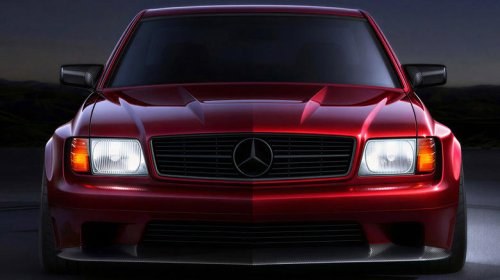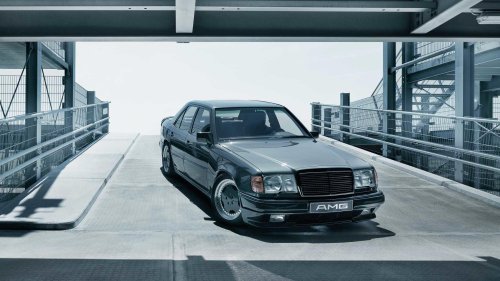
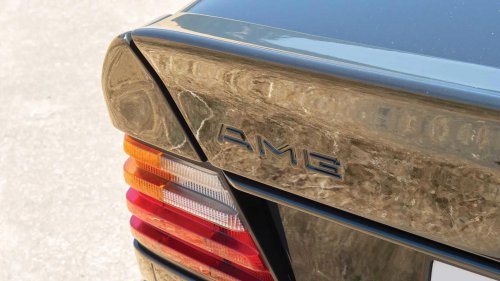
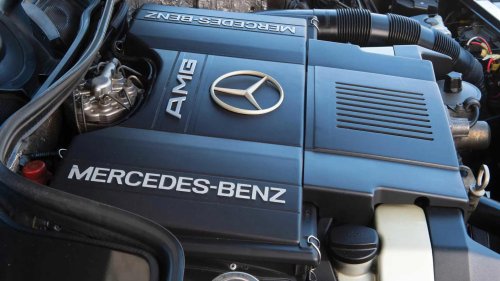
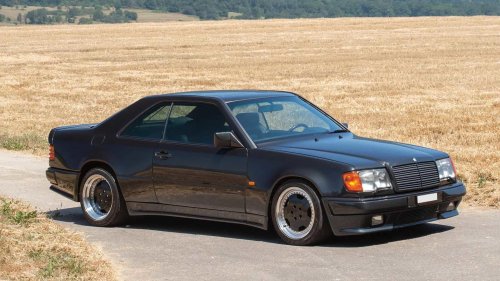
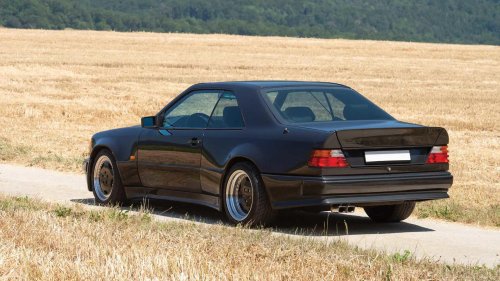
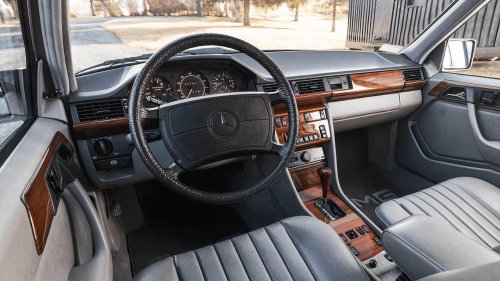
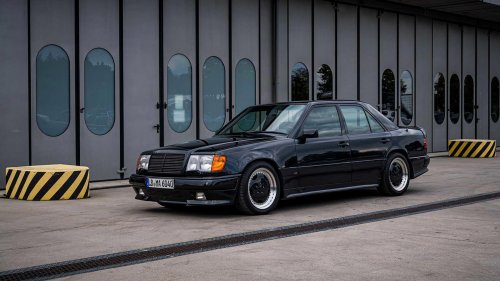
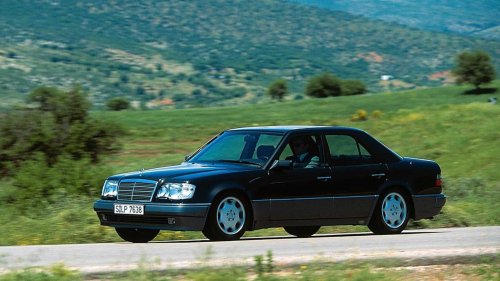
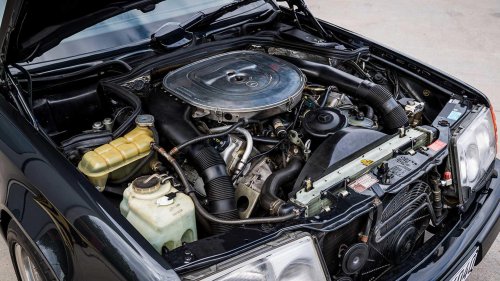
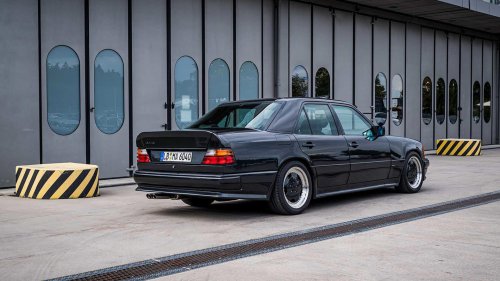



















The AMG Hammer is one of those cars that has acquired mythical status among automotive enthusiasts. Rare to the point where most gearheads are unlikely ever to see one in person, it was pivotal in kickstarting the relationship between Mercedes-Benz and AMG, which has led to the high-performance models we know and love today.A variant of an existing Mercedes with a host of upgrades and a boost in the looks department, the AMG Hammer helped the automotive world realize there was an appetite for sporty, performance-oriented sedan models. The model is now a highly prized collectible due to its rarity. Here are 10 of the most interesting facts about it you need to know. A Complex Upgrade Process: How A Mercedes Became A Hammer Mercedes-Benz The AMG Hammer was based on the Mercedes midsize vehicle platform known as the W124. These offerings later evolved into the E-Class lineup. Although collectively known as the W124, the model range included several body styles with their own designations, such as C124 for the coupes.AMG thoroughly overhauled W124 vehicles during the Hammer upgrade process. The work included the engine swap and widebody kit, as well as a limited-slip differential, an upgraded suspension, and a new exhaust. The interior also gained a more high-end feel, and a set of competition-ready Pirelli tires completed the picture. The Hammer's Place In AMG And Mercedes' Long Shared History Tom Wood courtesy of RM Sotheby's The Hammer is one of the earliest Mercedes cars to be worked on by AMG. At the time, however, AMG and Mercedes were fully separate companies. As a result, many examples of the Hammer lack a Mercedes badge entirely, instead simply bearing the AMG name.AMG was created by two former Mercedes engineers around two decades earlier, in the late 1960s. While tuning engines was originally its main focus, the firm soon began modifying Mercedes cars, offering upgrade packages, and building unique high-performance creations, including the Hammer.After over two decades, AMG began collaborating with Mercedes full-time in the early 1990s. A few years later, in 1999, Mercedes’ then-parent company DaimlerChrysler acquired 51% of AMG, officially bringing the firm into the Mercedes family. The remaining shares were acquired in 2005, making AMG entirely Mercedes-owned. AMG became widely known for producing high-performance versions of Mercedes models, and gradually evolved into the iconic brand we know today. A Selection Of Three Engines Tom Wood courtesy of RM Sotheby'sAMG offered the Hammer with a selection of three V8 engines: in 5.0-, 5.6-, and 6.0-liter displacements. Exact power output figures are unclear; however, the 5.0-liter engine produced approximately 350 hp. The 5.6-liter made between 355 and 380 hp, and the 6.0-liter was the most powerful in the bunch with an output between 375 and 385 hp.The 6.0-liter engine was also the rarest, with only 12 units receiving one. Hammers with this engine are among the most sought-after among car enthusiasts today, fetching prices of up to $800,000. The Hammer's Body Style Variants: Sedan, Coupe, and Wagon Tom Wood courtesy of RM Sotheby's The four-door sedan was by far the most common body style for the Hammer. However, it was not the only body available. AMG also built a few Hammers in two-door coupe form, and made a very small number (thought to be as few as two units) with a wagon body.There was also a considerable difference between the original body shape of the W124 and that of the Hammer. As part of the modification process, AMG installed a widebody kit on most examples of the Hammer, which gave it a more aggressive-looking stance and contributed to its iconic look. Performance That Rivaled Supercars Tom Wood courtesy of RM Sotheby's The Hammer distinguished itself for its performance, which outpaced several other cars available on the market at the time. It was created in response to another very fast sedan, the early prototype version of the BMW M5. This pre-production model used the engine from the M1 sports car, which was later used in the European production version (while the American model got a detuned version).The Hammer’s 0-60 time was around five seconds, firmly into supercar territory in this era. Its acceleration between 60 mph and 120 mph beat legendary models such as the Ferrari Testarossa and the Lamborghini Countach.The exact top speed of the Hammer is unclear, and likely varied slightly based on which engine was installed. However, AMG described it as “north of 190 mph”, and the car’s speedometer went up to 199 mph. An Interior That Screams 80s Luxury Broad Arrow Auctions The Hammer’s interior was spruced up as part of the upgrade process that transformed an ordinary W124. The seats were upholstered in leather, padded for extra comfort, and highly adjustable. Real wood accents were dotted across the cabin.The style of the interior, just as that of the rest of the car, is overwhelmingly of its time, which has contributed to its status as a period style icon. Despite being a performance car, Hammer owners could still feel like they were driving a luxury sedan. It Helped Pave The Way For Other High-Performance Sedans Mercedes-Benz The AMG Hammer has earned its place in automotive history for many reasons. One is its status as a true trailblazer that helped bring an entire automotive category to life.In the years before the Hammer, luxury sedans were not widely associated with performance; along with wagons, they were primarily thought of as sensible family cars. The realm of performance largely consisted of sporty, sleek coupes, which did not prioritize practicality alongside speed.The Hammer was among the models that spurred automakers (such as BMW and Audi) to create their own performance-oriented sedans. The sports sedan enjoyed a heyday that lasted a couple of decades before beginning to decline as customer preferences shifted away from sedans towards SUVs and crossovers. It Had A Porsche-Built Sibling Mercedes-Benz The Hammer was not the only high-performance version of the W124. There was also another famous and rare (but nowhere near as rare as the Hammer) model in that club, built with help from none other than Porsche: the 500E/E500. Sold between 1990 and 1995, it was created with assistance from Porsche’s engineering team, who also solved the complex challenge of fitting a large 5.0-liter V8 into the W124 chassis.Each car was built by hand over the course of an 18-day process, which saw the vehicle going back and forth between the two companies’ facilities. Initially known as the 500E, the car underwent a mid-cycle facelift that saw its name being changed to E500. A total of 10,479 units were built over the course of the five-year production run. Today, this sleeper sedan is also much loved among the car enthusiast community. The Mystery Of The Hammer's Production Figures Mercedes-Benz Although the Hammer had a very limited production run, that does not mean we have an exact record of how many units were produced. That particular number is actually quite fuzzy due to less-than-precise record-keeping at the time and confusion about the level of modification in some cars.Several versions of the Hammer package were available, ranging from mechanical upgrades only to a full performance and aesthetic overhaul. As a result, there is some uncertainty about which cars were counted as full-blown Hammers. The total number is estimated to be between 30 and 50. What we know with greater certainty is that 12 cars were fitted with the top-spec 6.0-liter engine. The Hammer Today: Auctions, Collectors, Original Vs. Modified Mercedes-Benz The AMG Hammer is an extremely rare model, and only a handful of examples of it have popped up at auctions in recent years. One was sold in the UK in 2019 for approximately the equivalent of $365,000 in today’s money. Another reached even greater heights in 200, selling for the equivalent of roughly $867,000.Since the Hammer was offered with many different modification packages and engines, no two cars are the same, which contributes to their exclusivity and drives up prices at auction. Some Hammers have undergone further modifications over the past four decades, and a few replicas have been built as well, so having a keen eye is crucial when looking for an original.Sources: Mercedes-Benz