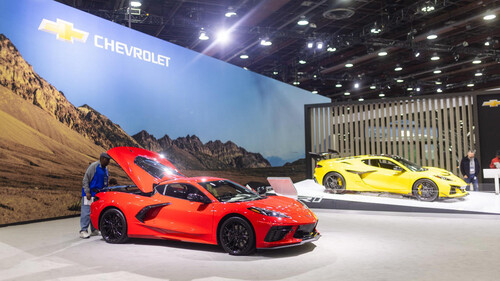
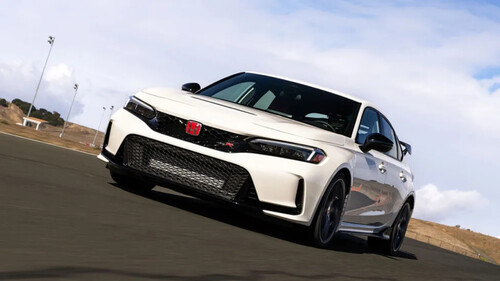
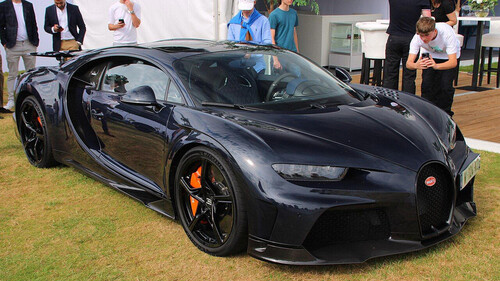
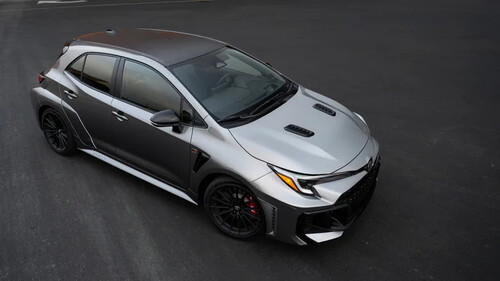
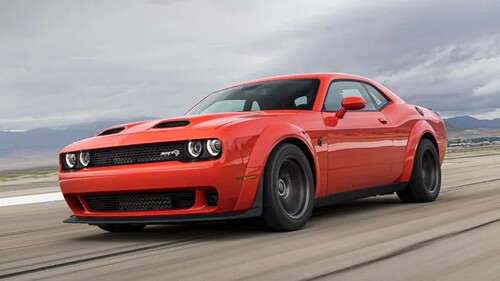
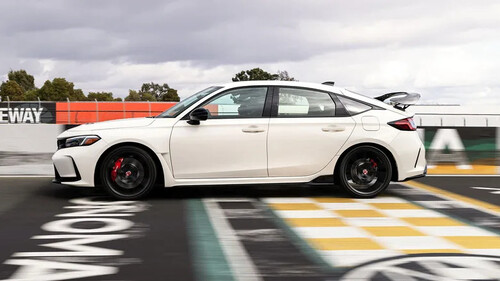
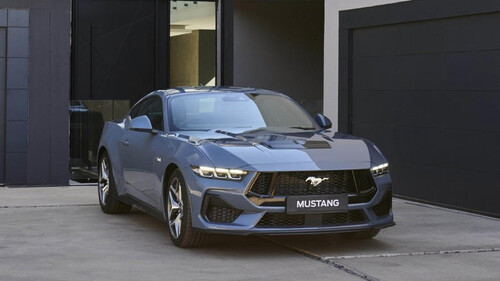
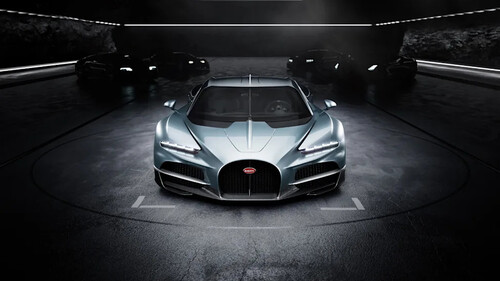
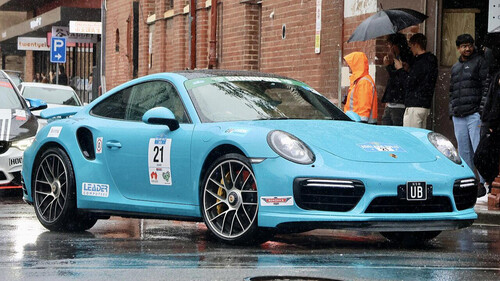
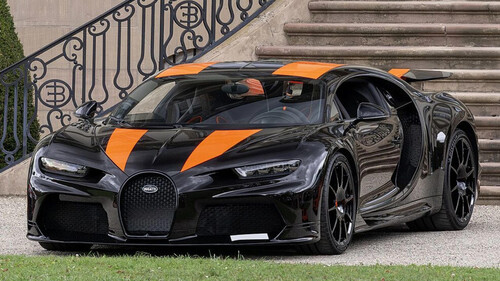
Autoblog and Yahoo may earn commission from links in this article.The same two numbers, zero and sixty, now describe a $40,000 hatchback and a $4 million hypercar with equal ease. The same figure gets searched for a Prius and for a Bugatti, cars a hundred times apart in price. It is the one performance number every driver reads instantly, whatever the budget. What it costs, though, has split at both ends. Acceleration that humiliated supercars a decade ago is now a commuter-car feature. At the top, seven-figure machines have quietly stopped getting quicker to 60 mph at all. What follows maps what a 0-60 mph time actually costs in 2026, cheapest to most expensive.What Counts As A Good 0-60 MPH Time In 2026The benchmark has moved. A decade ago, anything under six seconds felt quick and a five-second car sat in sports-car territory. The bar is lower now, all the way down the price ladder. Under five seconds is ordinary, the stuff of hatchbacks and family sedans. Under four seconds, once the preserve of exotics, is a $55,000 electric sedan. Under two seconds belongs to a short list of hypercars and, now, one Corvette. Quarter-mile times have fallen in lockstep. So a good 0-60 mph time is not a fixed number anymore. It depends entirely on what you paid, and the rest of this piece maps exactly that.The Cheapest Way Into The Five-Second ClubStart at roughly the price of a loaded family crossover. The Toyota GR Corolla, a 300-horsepower three-cylinder hot hatch, opens at $40,120. Toyota estimates the run to 60 mph at right around five seconds flat. The 2026 car carries over mechanically and has not been separately instrumented yet, so that estimate is the figure to use.ToyotaView the 2 images of this gallery on the original articleAdvertisementAdvertisementThe Ford Mustang GT, at $46,800 with its 486-horsepower V8, is quicker still, dipping into the low four-second range with the ten-speed automatic. The Honda Civic Type R asks slightly more, $47,395, makes 315 horsepower through the front wheels, and runs close to five seconds. Neither Ford nor Honda publishes an official 0-60 mph figure for these cars, which is worth stating rather than papering over. Note the order: the Type R is the most expensive of the three and the slowest of them, a premium paid for its chassis and its badge rather than its straight-line speed.For roughly $40,000 to $47,000, all three land in the low-four to five-second bracket. Twenty years ago that bracket belonged to the Porsche 911.How EVs Reset The MathThe bottom of the 0-60 mph chart did not erode gradually. Electric drivetrains collapsed it, because instant torque and all-wheel traction are cheap to package and forgiving to launch. The Tesla Model 3 Performance is the clearest example. At $54,990 it returns a Tesla-claimed 2.9 seconds to 60 mph, a figure measured with the customary one-foot rollout. Independent testing lands at about 3.0 seconds. Either way, this is a sub-three-second car that charges in a home garage.Read that against history. A flat three-second 0-60 mph defined the Ferrari and Lamborghini flagships of the 2000s. It now belongs to a four-door sedan that costs less than the average new full-size pickup once optioned. The Tesla Plaid and its enormous search volume sit at the loud end of this shift, but the quieter and more important development is the $55,000 three-second car.AdvertisementAdvertisementOne caution on the comparison. EV makers quote times with rollout subtracted, which flatters the number by two to three tenths against figures measured without it. Keep that asterisk in mind as the prices climb.TeslaThe Corvette ZR1X Hit 1.68 Seconds For $207,100The 2026 Chevrolet Corvette ZR1X pairs a 1,064-horsepower twin-turbo V8 with a front electric motor, 1,250 horsepower in total, sent through electrified all-wheel drive. On a stock tune, pump gas, and street-legal Michelin tires, GM recorded a 1.68-second 0-60 mph and an 8.67-second quarter mile at the drag strip. The base 1LZ trim starts at $207,100 before its $2,495 destination charge, and the 0-60 mph figure is identical up and down the trim range.That acceleration figure matches cars Chevrolet openly names as targets, the Ferrari F80 and the McLaren W1, both of which cost well into seven figures. Chevrolet calls the ZR1X America's quickest production car, and the claim holds with one honest caveat: the Dodge Challenger SRT Demon 170 recorded 1.66 seconds, but it is out of production. Among cars a buyer can actually order new, the Corvette stands at the top.This is the price point where hypercar acceleration stops requiring hypercar money. Expensive, yes. But it is the cost of a house deposit rather than the house.Rear view of Corvette ZR1X on drag strip. Preproduction model shown, actual production model may vary.ChevroletThe Most Expensive Way To Hit 60 MPHAbove the Corvette, the prices keep climbing and the 0-60 mph times stop falling.AdvertisementAdvertisementThe Rimac Nevera R, an all-electric hypercar of about $2.5 million, reaches 60 mph in 1.66 seconds. That is two-hundredths of a second quicker than the Corvette, for roughly twelve times the price, and it is the only car here that beats the ZR1X to 60 mph at all. The Bugatti Tourbillon, arriving to customers in 2026 at around $4.1 million, makes 1,800 horsepower from a V16 hybrid powertrain and still needs 1.9 seconds. The four-million-dollar Bugatti is slower off the line than the Corvette. The Koenigsegg Jesko Absolut, near $2.7 million, takes 2.4 seconds. Those rival figures come from Chevrolet's own published comparison, unusual candor from a manufacturer willing to name the cars it set out to beat.Related: Koenigsegg Jesko Absolut Sets Fastest Quarter-Mile Record for a Production CarNone of this means these cars are slow or badly engineered. It means their budgets are aimed elsewhere. The Jesko Absolut is built to chase 300 mph. The Tourbillon is built for top-end stability and hand-finished craft. The launch off the line, the thing a 0-60 mph measures, is simply no longer where the money or the engineering is pointed.The Cost Of A 0-60 MPH Time In 2026Vehicle0-60 mphPriceNotesToyota GR Corolla~5.0 sec$40,120Toyota estimateFord Mustang GTlow 4 sec$46,800486 hp V8, no official figureHonda Civic Type R~5.0 sec$47,395No official figureTesla Model 3 Performance~3.0 sec$54,9902.9 claimed with rolloutChevrolet Corvette ZR1X1.68 sec$207,100GM drag strip figure, base 1LZRimac Nevera R1.66 sec~$2,500,000GM comparison dataKoenigsegg Jesko Absolut2.4 sec~$2,700,000GM comparison dataBugatti Tourbillon1.9 sec~$4,100,000GM comparison dataThe Verdict: Where The Money Stops Making SenseLay the numbers end to end and the cost of speed reveals a clear shape. From $40,000 to $55,000, every dollar buys a lot of tenths. Roughly two full seconds disappear for about $15,000, much of it thanks to the electric drivetrain. From $55,000 to $207,000 the curve flattens but keeps moving, with roughly $150,000 separating the three-second Tesla from the 1.68-second Corvette. Above $207,000 it goes flat, then reverses. An extra $2.3 million over the Corvette buys two-hundredths of a second in the Rimac. An extra $3.9 million buys a slower car in the Bugatti.AdvertisementAdvertisementSo the verdict commits in two directions. If the goal is the most 0-60 mph per dollar, the answer in 2026 is an electric sedan around $55,000, not a hypercar. If the goal is the quickest 0-60 mph a person can buy at any defensible price, it is the Corvette ZR1X, and nothing above it improves the figure.The numbers here are best-case, prepped-surface results, and conventions vary enough that real-world times will trail them. The trend under them will not. A quick 0-60 mph used to be the thing supercar money bought. Now that money buys top speed, rarity, and hand-built craft, not a quicker launch. The cheapest car here and the most expensive sit about three seconds and four million dollars apart, and the three seconds are the cheap part.This story was originally published by Autoblog on Jun 19, 2026, where it first appeared in the Features section. Add Autoblog as a Preferred Source by clicking here.