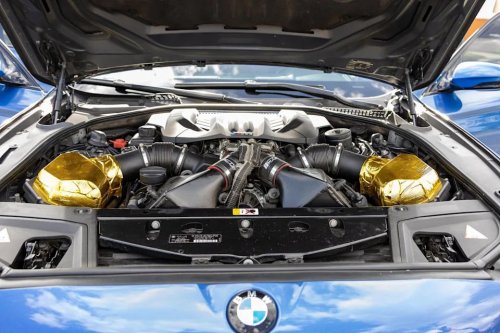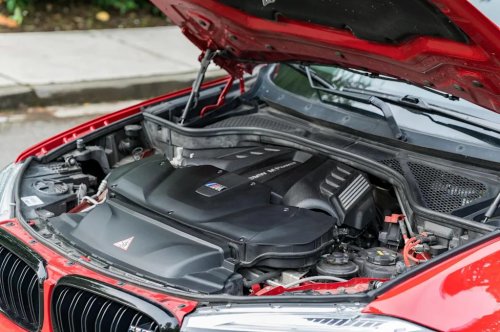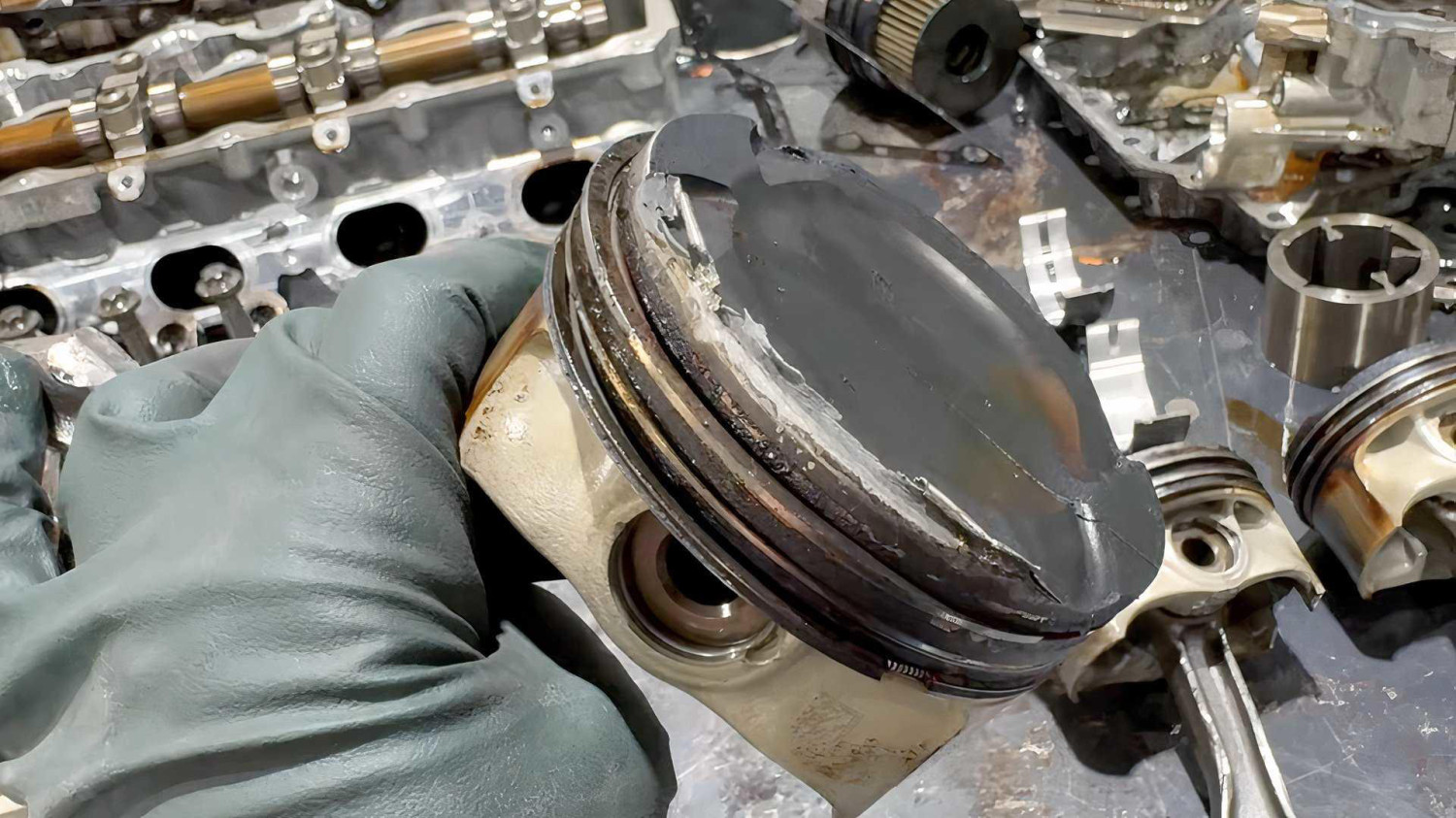
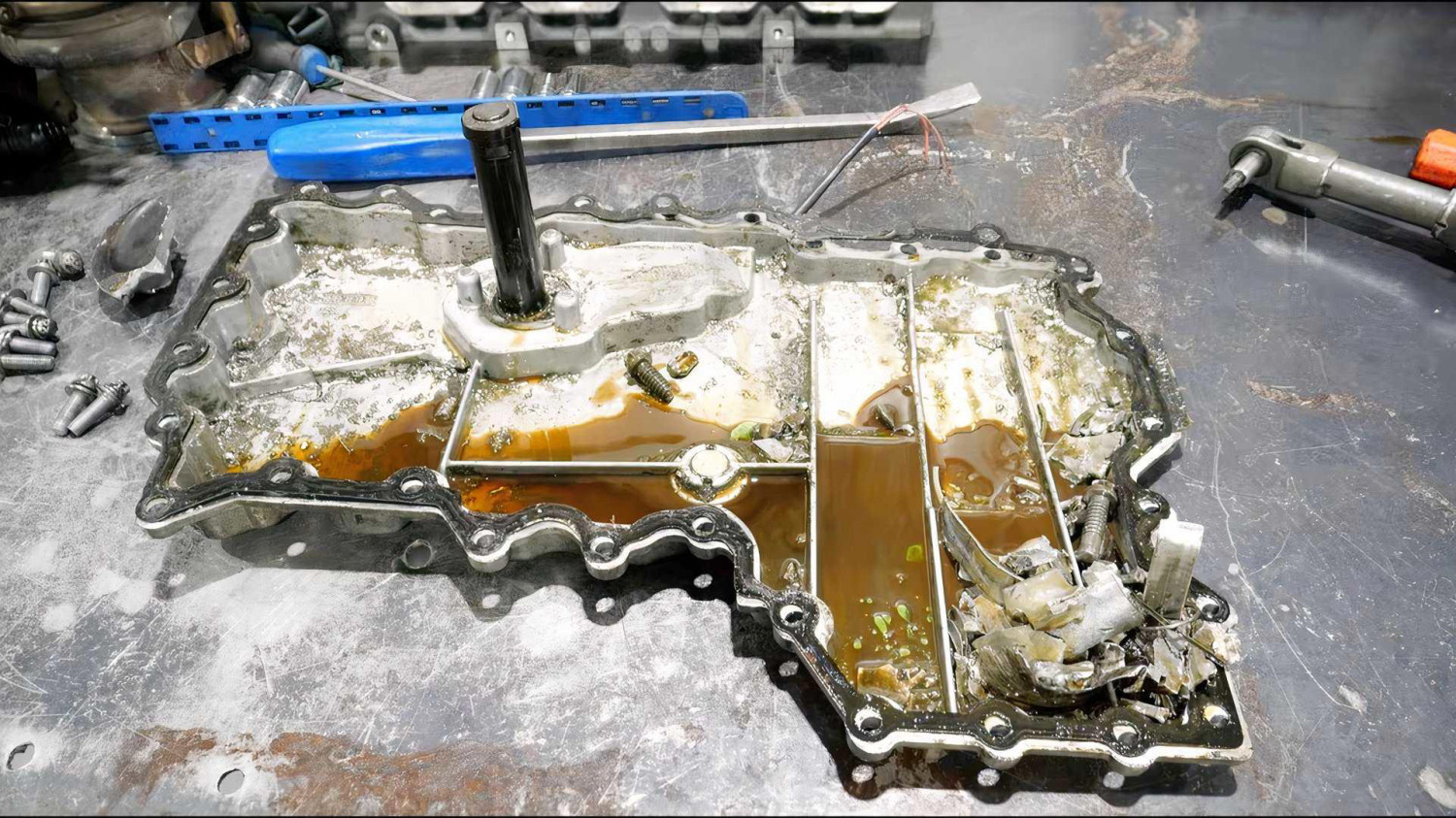



















BMW has a history of building brilliantly designed and built performance engines. Judging by this latest I Do Cars teardown video, the 4.0-liter twin-turbo V8, internal designation N63, is not one of them. At least, for the first part of its production run. The N63 and high-performance N63 went on to become game-changing engines.The best advice anyone can give about buying a used Bimmer with an N63 engine is don't. But the second-best piece of advice is to make sure it's from 2013 – a year after the N63's first "technical update." The absolutely wrecked engine featured here is from 2012, and as teardown-pro Eric fights through the disassembly, we get a very clear glimpse of the kind of carnage an early-run N63 is capable of. A Problematic Design I Love Cars/YouTube One of the most prominent design features of BMW's N63 V8 is the hot-vee configuration – meaning the intake manifolds, exhaust manifolds, and both turbochargers are located between the V formation of the cylinder banks. In the valley of the engine, if you prefer. The advantage is that the engine has a smaller footprint, a shorter exhaust system, and with the use of air-to-water intercoolers, excellent throttle response.The disadvantage of a hot-vee configuration is that a lot of heat is generated in a small area with little airflow, leading to a hot engine bay. The concept has been around in Formula 1 racing since Ferrari introduced it in 1981. The BMW N63 engine was first to use the concept in a road car when it debuted in the BMW X6. It went on to feature heavily in BMW's lineup, including the 5 Series and 7 Series models.Essentially, the problem with porting the concept to road cars is that after a race start, F1 cars maintain high speeds. Over an entire race, they could average 90 mph and reach around 200 mph on straights. Airflow isn't a big issue for F1 cars, but it is for a car that is limited by traffic laws and traffic. As the N63 was the first road-use hot-vee engine, it was a learning experience for BMW. On top of heat issues, the N63 was notorious for the timing chain stretching, leading to all sorts of serious and expensive issues. Way Of The Exploding V8 I Love Cars/YouTube Another common issue for the N63 is fuel injectors and the high pressure fuel pump, but it looks like this engine suffered from damaged rod bearings, setting off a chain of events leading to absolute failure. As we know, one problem with an engine can definitely lead to another, and if neglected, can result in catastrophic failure. As Eric points out, there were likely warning signs on this car, including excessive oil consumption. It always boils down to lubrication in the end.Ultimately, judging by the wrecked state of the pistons and wrecked sleeves, the bits of engine appearing in places they shouldn't be, then engine parts that shouldn't be in tiny pieces and in the oil pan, it must have been quite the event when the engine finally let go. And let go it did – nearly every cylinder shows some measure of damage, and one entire piston simply doesn't exist. Heads are wrecked, the oil pan is wrecked, and holes in the block render pretty much part in this engine completely useless.Could it have been avoided? Eric points out that the engine had minimal varnishing and appeared to be well-maintained. But it also appears that warning signs such as excessive oil consumption and nasty sounds were either ignored or went unrecognized. If caught early, maybe this engine could've been saved.Now, it's literally a big steel and aluminum paperweight.Source: I Do Cars / YouTube