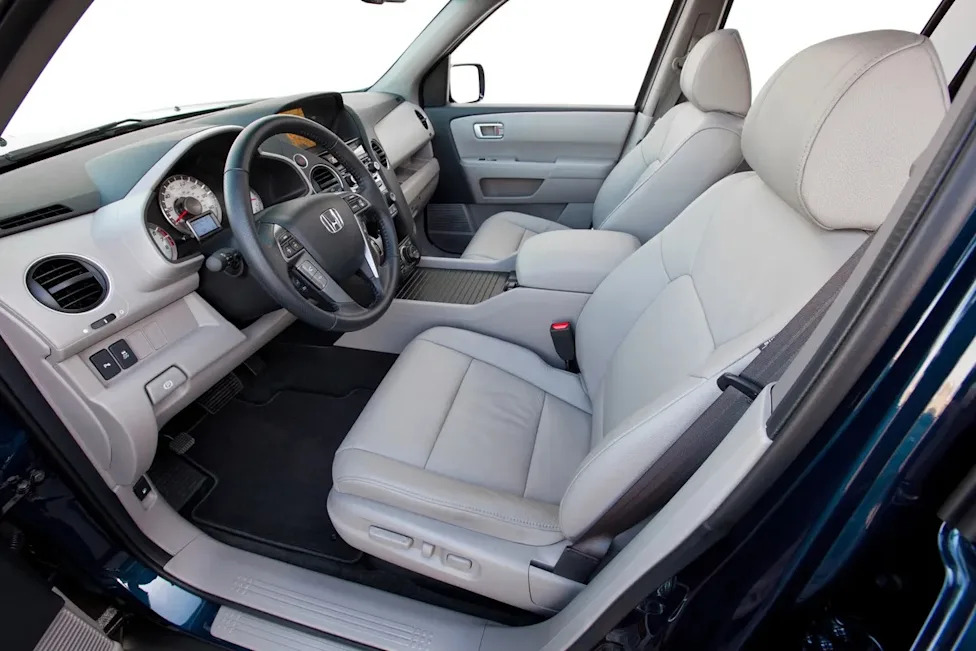



















This story was originally published on WardsAuto. To receive daily news and insights, subscribe to our free daily WardsAuto newsletter.Editor's note: This is a reported column, in which Steve Finlay periodically explores the relationship between automakers and dealers for WardsAuto.A typical modern vehicle contains about 30,000 individual parts, so it's no surprise something can go wrong at some point.AdvertisementAdvertisementBut when a safety issue involving particular models becomes widespread — worst-case affecting millions of vehicles dating from the present to way back — it triggers vehicle recalls. They can mar a brand image. They also can financially hit manufacturers hard.Safety recalls are initiated by the federal government and automakers themselves.The latter can get in trouble if they (or people within the organization) knew of a problem, but didn't jump on it. Case in point: the widespread General Motors ignition system disaster that led to fatal accidents.Nearly 12 million vehicles were recalled in the U.S. in this year's first quarter, one of the highest early-year totals in recent history.AdvertisementAdvertisementMassive recall campaigns drive up the numbers. A single Ford electrical-related recall affected more than 4.3 million trucks and SUVs.Some safety recalls are relatively minor; others are hair-raising, with NHTSA "Do Not Drive" warnings for affected owners.The worst of the worst is the Takata airbag debacle. It started in the early 2000s. It's still an "open" recall, meaning not every affected vehicle has been taken care of. It became the largest, most severe automotive safety recall ever, affecting tens of millions of vehicles across 19 major automakers, spreading like a virus through the industry.AdvertisementAdvertisementThe culprits were defective airbag inflators that, when exposed to high heat and moisture over time, could explode — shooting metal shrapnel into the cabin, causing fatal injuries.It's bitter irony when a safety feature, intended to save lives, ends up taking them. Yet airbags are a common cause for recalls.Horror stories like Takata's have triggered the National Highway Traffic Safety Administration to tighten its recall standards. That accounts for the record numbers in recent years, says Karl Brauer, executive analyst for iSeeCars.com, an online automotive marketplace."Definitely over the past 10 or 15 years there's been a paradigm shift by NHTSA on the standards for automakers to follow," he told me. "Everything is elevated. Standards. Awareness. The risk of what automakers must pay if NHTSA can document they were careless or lackadaisical in addressing potential recalls. It's led to more recalls."Expensive and painful to automakersNHTSA will throw the hammer if automakers don't follow proper recall procedures, said Von Lindsey, a recall compliance expert.AdvertisementAdvertisementIn some cases, NHTSA issues a consent order, which is a legal agreement between the agency and a manufacturer, often the result of alleged noncompliance with federal safety standards. Look out when that happens."A NHTSA consent order is painful," Lindsey said at the Annual State of Automotive Recalls Summit, recently held in Royal Oak, a Detroit suburb. Stout, a company that tracks recalls, hosted the event."Since 2014, consent orders have been NHTSA's go-to," Lindsey said. "The cost (to an automaker) can be astronomical."Manufacturers bear the reputational onus of recall campaigns even though a supplier may be responsible for a defective part or component. AdvertisementAdvertisement"Takata was causing those catastrophes, but many people were blaming it on the automakers," said Brauer. "It doesn't seem fair." The interior of the 2015 Honda Pilot. This family SUV was just one of the models affected by the largest automotive safety recall ever, related to Takata airbags installed in tens of millions of vehicles across 19 major automakers.Courtesy of HondaMandated recall notices sent to affected owners urge them to take their vehicle to a dealership for a fix and/or inspection. Many people see it as a hassle even though the service work is free to them."Car owners universally dread recall notices and the process of addressing them," said Brauer. "They think it's an inconvenience to them for a problem they didn't create."Ultimately a mixed bag to dealershipsDealership service departments financially benefit from recalls because manufacturers reimburse the stores for the fixes. But dealers also are the ones who interface with displeased customers, even though others are less peeved and more understanding.AdvertisementAdvertisement"It varies customer by customer," Raymond Roth, a Stout director, told me at the recall conference. "Some customers will say, 'Wow, the manufacturer is really looking out for me.' Others may feel it's an inconvenience. It's a wide spectrum."Dealer opinion can vary, too. Some dealers welcome the extra service revenue. Others sometimes think they're not being reimbursed enough, especially when an older car is concerned. "You'll get different viewpoints, dealer by dealer," Roth said. "Some will view it as a loss-leader in some ways, even if they don't disagree with the reimbursement rate."Facing a chronic shortage of qualified auto technicians, some dealers may feel their service capacity is stretched enough already without waves of recalled cars suddenly coming in.AdvertisementAdvertisementYet, Roth noted: "Some dealers pay consultants to help drive recall visits to their dealership."Dealers use various methods to appease customers affected by recalls."For many people, it's all about the loaner car" if a repair is going to take a while, Chris Reeves, a partner at Lee Johnson Mazda of Seattle and Lee Johnson Mazda of Kirkland, in Washington state, told me. "Having easy, free transportation helps."Recommended ReadingFCA US recalls over 1M Jeep Wranglers, Gladiator pickups over fire risk',