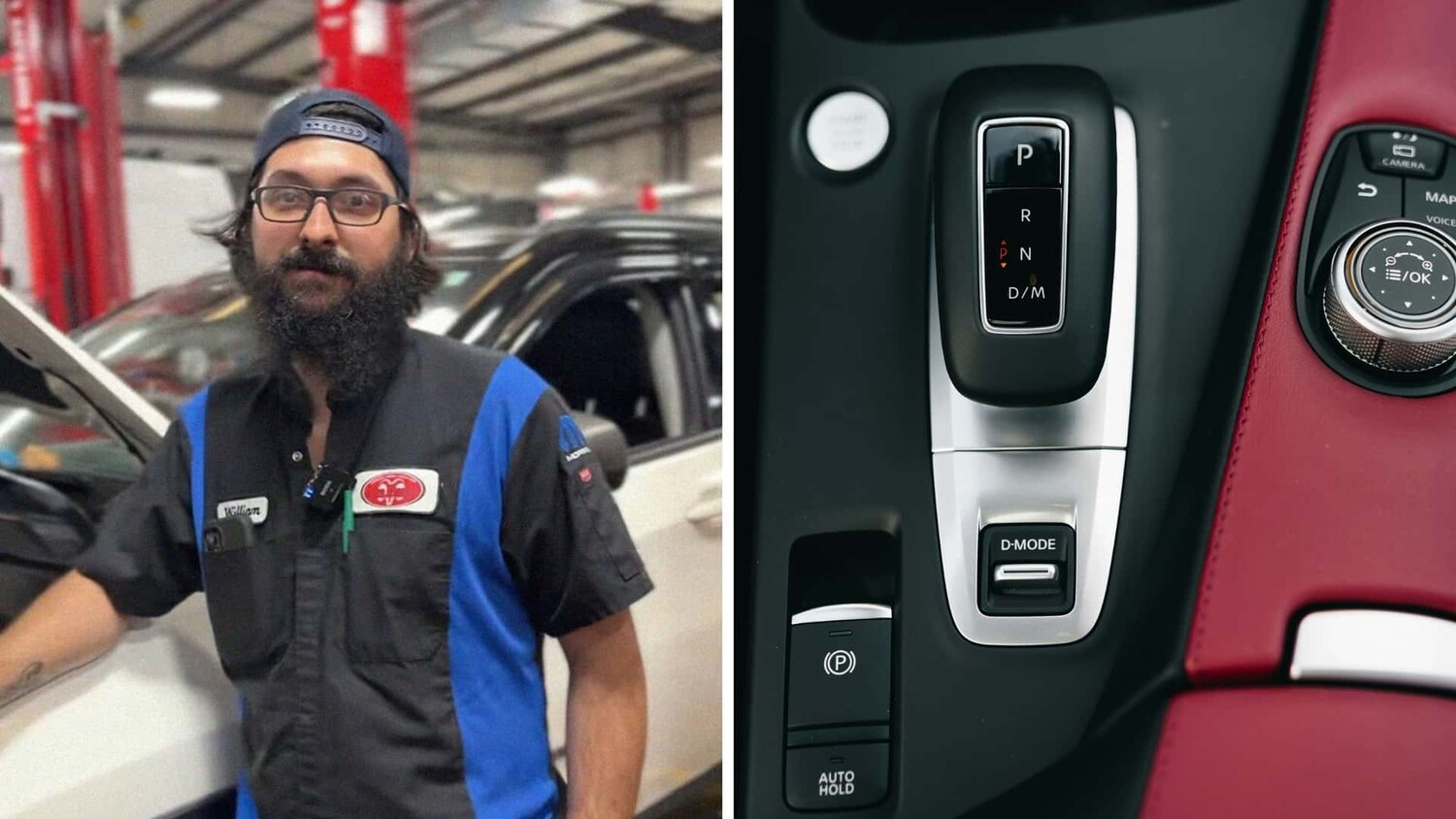
Connor Macdonald · 10 months ago@connormacdonald21‘Shouldn’t Be Called an Emergency Brake Then:’ Mechanic Explains Why Parking Brakes Are a Must Liked by+5 othersPost commentRelated PostsDrivers shouldn't swerve to avoid deer, road safety experts say 73 · Caleb Brown · 17 days ago"If You Can Afford a Porsche, the Price of Gas Shouldn't Be a Big Deal": Woman Buys a New Porsche, But Is Then Shocked by the Cost To Fill It Up 23 · Victoria Smith · 23 days agoEV owners say charging speed shouldn't decide a car if you plug in at home 36 · Lauren Clark · 27 days agoHome Heating Oil Is Basically Diesel, But You Shouldn't Use It In Your Truck 84 · Mia Wilson · 28 days agoA Man Has Warned That We Shouldn't Trust Tesla's Smart Summon Feature 16 · Annabelle Roy · 1 months ago4 Parts Of Your Car You Probably Shouldn't Use Power Tools On 93 · Kayla King · 1 months agoCheck Engine Light Flashing? Why Drivers Shouldn’t Ignore This Dashboard Warning 52 · Camille Brown · 1 months agoHere's Why You Shouldn't Jump A Car With A Power Tool Battery 79 · Lucas Turner · 1 months agoThese Ordinary Cars Really Shouldn't Have Had a V10 Engine 19 · Oliver Smith · 1 months agoRoundabout Rules: What You Should and Shouldn’t Do Explained 24 · Adam Scott · 2 months agoTesla's 'Insane' Mode Is On Trial For A Salon Crash. It Shouldn't Be The Only Defendant 51 · Amélie Brown · 2 months ago7 Car Parts You Can 3D Print (And 6 You Probably Shouldn't) 97 · Sophie Hall · 2 months agoCan You Replace EV Batteries Yourself? 3 Reasons You Shouldn't Try It 72 · Isabelle Rogers · 2 months agoThe Phantom 300: What a Chrysler That 'Shouldn't Exist' Teaches Collectors About Documentation 81 · Mia Lee · 2 months ago2027 Mercedes-Maybach GLS First Look: Shouldn’t Luxury Be Delightful Too? 26 · Mia Macdonald · 2 months agoToyota Prius vs. the Plug-in Hybrid: why you probably shouldn't spend the extra $5,000 84 · William Girard · 2 months agoToyota Drops Hot RAV4 Zero-Down Lease Offer You Shouldn’t Miss 90 · Caleb Carter · 3 months agoThe Blue Angels' Too-Low Beach Flyover Was Dangerous As Hell And Shouldn't Have Happened, But The Video Still Kicks Ass 87 · Sophie Macdonald · 3 months agoHere's Some Stuff You Can Tow With A Slate Truck (And Some You Probably Shouldn't Try) 18 · Audrey Clark · 3 months agoThe Aircraft That Shouldn’t Have Been Able To Fly - But Did 19 · Justin Johnson · 3 months ago

 +5 others+5 others
 +5 others