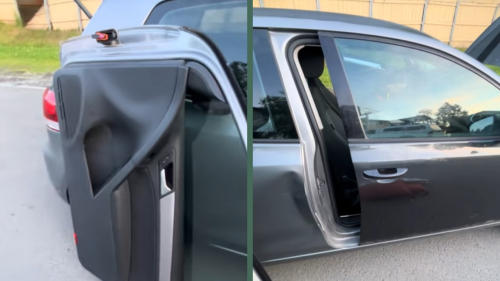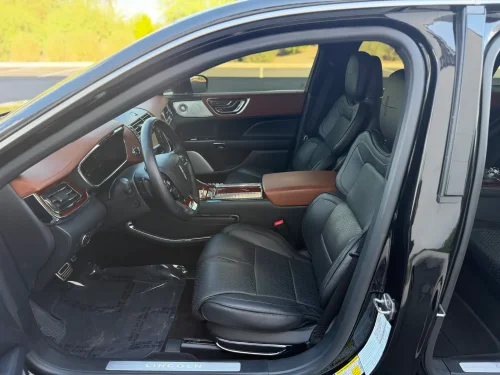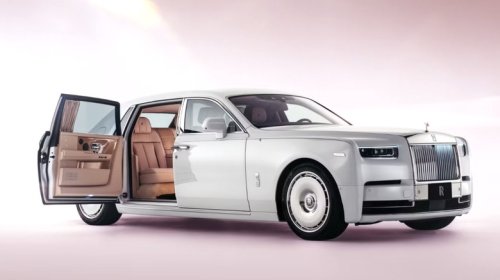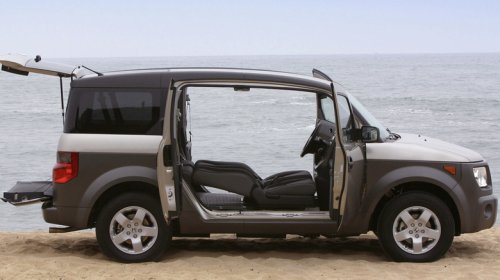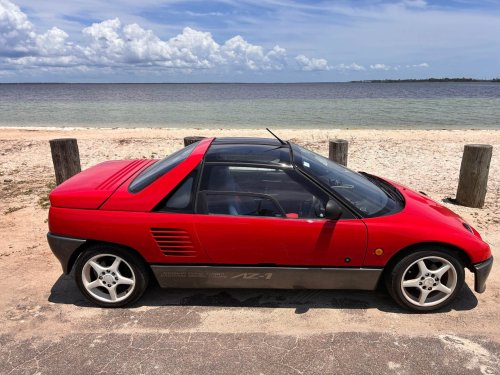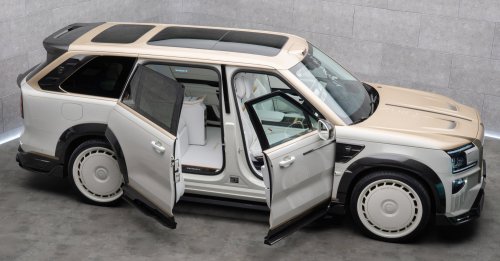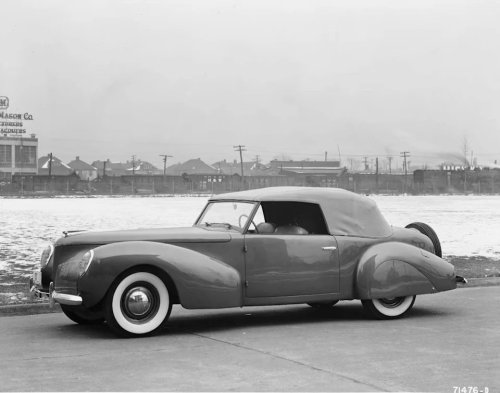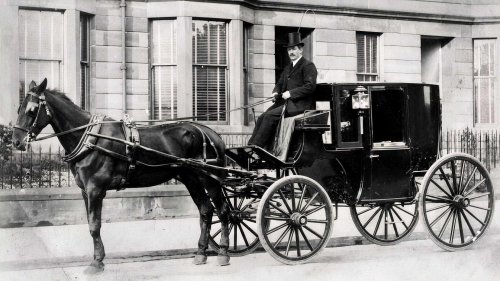
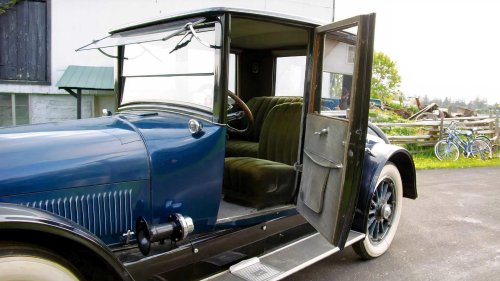
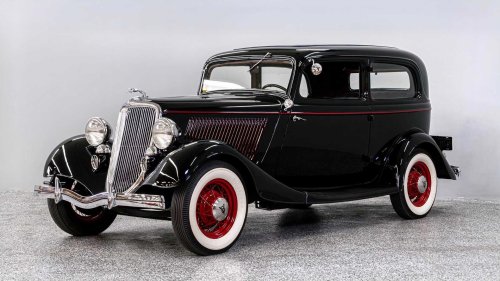
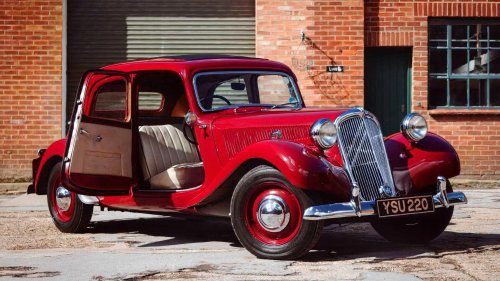

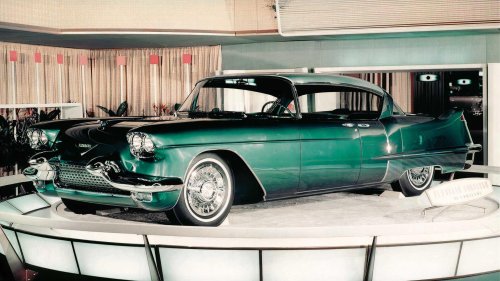
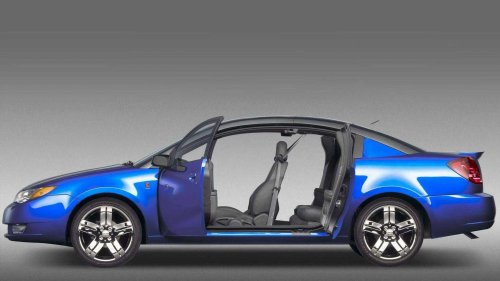
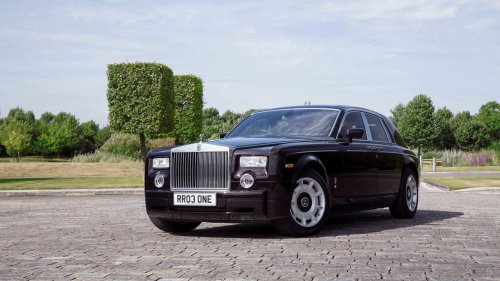
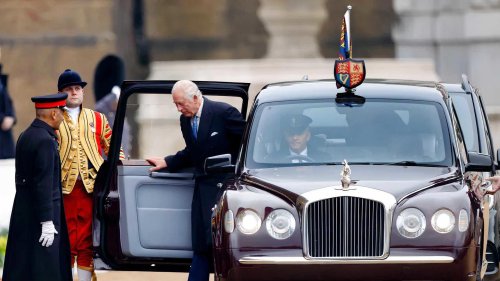



















Jump LinksRear-hinged Doors Actually Pre-date The Automobile AltogetherTheory 1: The Physics ArgumentTheory 2: The Gangster TheoryTheory 3: The Street-side Exit ArgumentRalph Nader ConnectionSome Key American Icons That Featured 'Suicide DoorsThe Ultra-luxury RenaissanceThe most obvious questions here and perhaps something to address before we continue further are, what is a suicide door, and why are they called suicide doors? A suicide door is a door that is hinged at the rear as opposed to the front, meaning it opens from the front edge outwards, opposite to how a conventional door opens.There are a number of theories as to where the name comes from. However, the most likely reason dates back to an era before seatbelts. The name supposedly hints at how, in the unfortunate event of a rear-hinged door unlatching at speed, the laws of physics would run their course, potentially with an unfavorable outcome... Manufacturers have always tried to steer clear of all suggestions of suicide, instead opting for nomeclature along the lines of 'coach doors' on a Rolls-Royce, 'freestyle doors' on a Mazda, and 'clamshell doors' on a Toyota amongst others. A noble attempt by manufacturers, but ask any stranger on the pavement what doors a Rolls-Royce has, and the "S-word" is the most likely response you'll receive. Carriages To Classics: A Brief History Of Rear-hinged Doors Gail Thornton Rear-hinged Doors Actually Pre-date The Automobile Altogether Horse-drawn carriages made use of rear-hinged doors as standard, the idea being borrowed from French doors in architecture. The configuration was center-opening, which looked elegant and allowed for wide, unobstructed entry for passengers. This proved to be particularly practical for upper-class women dressed in long, full-skirted dresses and for formal arrivals that required exiting forwards in a dignified fashion as opposed to the more common shuffle and pivot out of a carriage.It would make sense, then, that when automobiles first landed on the scene, they were predominantly built for the same wealthy elite as fine carriages were, and, as such, the door design was directly transferred - safety had yet to become a concern at all. Through the 1920s and 1930s, suicide doors on a car were the norm rather than the exception on European and American models and not just a styling choice. In short, it was just the way that cars were built. Additionally, a rearward hinge allowed for the windscreen to be raked more steeply which was of aerodynamic benefit, too.Notable pre-war vehicles with suicide doors as standard were the Citroën Traction Avant, Lincoln Zephyr, Bugatti Type 57, Packard One-Ten, Peugeot 301, Chrysler Royal, Cadillac Series 65, Cadillac LaSalle, Chevrolet Biscayne and the Chevrolet Master/Master Deluxe. Why "Suicide"? The Grim Reasoning Behind The Name As it turns out, there is no single verified origin for the name - disagreement amongst automotive historians, as well as the ambiguity of the name just adds to the lore. There are three rather solid theories, though. Theory 1: The Physics Argument The most cited argument leans into the physics explanation of the name. Aerodynamic drag acts on a front-hinged, conventional door in such a way that it pushes the door closed. On a rear-hinged door, however, that very same airflow acts as a lever, thus wrenching it further open. In a time before reliable door latches and seatbelts, a passenger leaning on the door or reaching to close it at speed could in fact have been pulled out of the vehicle, along with the door potentially being ripped clean off its hinges.Steve Hepburn/RM Sotheby's Theory 2: The Gangster Theory The former editor of Hemmings Motor News, David Brownell, attributed the term "Suicide Doors" to 1930s American organized crime culture. It was reported that rear-hinged doors were favored by gangsters due to the airflow at speed holding the doors open with minimal effort, thus making it rather straight forward to eject an unwanted passenger from the vehicle and leaving the dirty work to the forward motion of the vehicle. The Ford Deluxe Sedan was a firm favorite in the 1930s underworld.dealaccelerate.com Theory 3: The Street-side Exit Argument In the event that a passenger were to be exiting curbside and a rear-hinged door was struck by another vehicle from behind, the passenger could be crushed between the door and the car's body - the hinge geometry is such that the door folds in toward the passenger and not away from them.Auto Evolution Ralph Nader Connection Unsafe at Any Speed, Nader's 1965 necessary rant at the motor industry's safety standards listed rear-hinged doors as one of his specific concerns. The book's cultural impact was such that it accelerated the move toward mandatory seatbelts and safety regulations, along with formally cementing the name 'suicide doors' into public consciousness.Raptis Rare Books The Golden Era: When Suicide Doors Were A Status Symbol Some Key American Icons That Featured 'Suicide Doors' 1957-Cadillac-Eldorado-Brougham Cadillac Eldorado Brougham (1957–1959): This was a limited-production showcase of Cadillac's engineering ambition. It featured a hardtop body with no B-pillar, and rear-hinged doors. It was highly advanced for its time and is already considered to be collectible as a result. Lincoln Continental (1961–1969): Perhaps the most iconic American vehicle to feature suicide doors, the Continental was launched for the 1961 model year with rear-hinged doors and no coupe model available until 1966. If you wanted a Continental in the '60s, you had no choice but to have suicide doors. The Continental was the car of presidents, celebrities, and cultural power. Ford Thunderbird (1967–1971): In 1967, Ford added a rear bench and two extra doors to the Thunderbird, the rear doors being rear-hinged. This would be the last mass-produced American car to feature independently opening suicide doors, with production ending in 1971. 1950s and '60s Hollywood cemented suicide doors as a kind of shorthand for power and menace in equal measure. From film and television to political prowess, they became a sign of not-so-quiet luxury. Regulations That Nearly Killed The Suicide Door The suicide door endured through the twentieth century, despite many challenges that increasingly highlighted why it just didn't make sense. Post-WWII, American highways expanded significantly, which meant longer roads, increased speeds, and greater consequences in the event that things were to go wrong.Seatbelts became mandatory from 1968 thanks to Federal Motor Vehicle Safety Standards (FMVSS), with door latch and retention standards following shortly afterward in the same year. While rear-hinged doors may not have been explicitly banned, the compliance with retention under crash loads, seatbelt anchor points relative to the B-pillar and the door latches themselves resulted in the engineering for rear-hinged doors becoming more complex and ultimately more expensive to certify. Add to this the industry's sensitivity to any door configuration that the public could perceive as dangerous - in great part thanks to Nader's book, Unsafe at Any Speed (1965) - and the suicide door just seemed less feasible as time went by. The Modern Revival Of The Suicide Door Come the 1990s, we started to see somewhat of a revival brewing for the suicide door, albeit with a safety modification whereby the rear-hinged doors cannot open unless the front door has been opened first, the mechanical interlock thus eliminating the aerodynamic risk entirely. Below is a list of relatively commonplace vehicles that have featured suicide doors since.2003 Saturn Ion Quad Coupe sideSaturn SC (1998-2004) / Saturn Ion Quad Coupe (2003-2007): the SC was one of the first modern mass-market vehicles to feature suicide doors, launched in 1998, and was replaced by the Ion in 2002 for the 2003 model year. Honda Element (2003–2011): a utilitarian SUV that made use of its suicide door configuration for practical access to the rear seats/cargo hauling. The Element ended up becoming somewhat of a cult vehicle, in part because of its doors. Mazda RX-8 (2003–2011): perhaps the most driver-focused modern vehicle with suicide doors; the rear doors were essentially hidden behind the sloping roofline. This meant that, from the outside, the RX-8 just looked like a conventional coupe. Clever packaging resulted in a genuine sports car with four doors, albeit a little less sporty when carrying four occupants... Toyota FJ Cruiser (2006–2014): referred to as 'clamshell doors' by Toyota, the doors were made from high-strength steel in lieu of a structural B pillar. It eventually became an off-road icon with a distinctive design thanks to its wide-opening doors and retro styling. BMW i3 (2013–2022): possibly the most design-conscious application of the 'clamshell door' approach, the rear-hinged doors played a significant role in the i3's pillarless, airy cabin concept. BMW was trying to prove that an EV could be architecturally interesting. Mazda MX-30 (2020–present): revisiting the RX-8's design ethos, Mazda's new EV also features 'freestyle doors' as a throwback. MINI Clubman (2007–2024): both the R55 and F54 MINI Clubmans made use of rear 'clamshell doors,' with the former having a suicide door (Clubdoor) on the passenger side of the vehicle, too. Fiat 500 3+1 (2020–present): Fiat decided to include a rather clever solution to the 500's tight dimensions by way of a single, small rear-hinged door only found on the passenger side of the vehicle. The Ultra-luxury Renaissance The leader of the pack here and the dominant force in the full suicide door revival (independently locking with no overlapping) is Rolls-Royce, the Phantom VII setting the tone going forward and showing everyone that it can be done safely.Rolls-Royce Phantom (2003–present): at its Goodwood launch in 2003, the rear-hinged 'coach doors' proved to be an immediate talking point, deliberate on BMW's part when envisioning how they might differentiate the Phantom from everything else and a ceremonial nod to the carriage heritage. What many people don't know is that Marek Reichman, of Aston Martin fame, penned and shaped the first iteration of the Phantom VII. Lincoln Continental Coach Door Edition (2019): to mark the 80th anniversary of the Continental nameplate, Lincoln produced just 80 limited-edition Continentals featuring rear-hinged doors, a direct throwback to the 1961–1969 Lincoln Continental. The center-opening doors opened to 90 degrees and also featured a soft-close mechanism. Ferrari Purosangue (2023–present): Ferrari's first official production vehicle with four doors, the Purosangue makes use of rear-hinged 'clamshell doors,' which function as suicide doors in the truest sense of the term. The doors were perhaps one way in which Ferrari could stand by its argument that the Purosangue is in fact an FUV (Ferrari Utility Vehicle) as opposed to a conventional SUV, the doors differentiating the model from competitors in the super SUV segment. 2003-2012 Rolls-Royce Phantom VII Still Dying To Have Suicide Doors? With the safety issues having effectively been solved thanks to modern speed-triggered door locks, crash-load compliance, and advanced door latches, suicide doors are now just as safe as any other car door, as evidenced by the numerous models above that feature them. Having made appearances in many less-expensive cars, the suicide door is almost exclusively reserved as a signal of luxury in the modern motoring landscape, as evidenced by Rolls-Royce's entire lineup, as well as the British Monarchy's State Bentley. From questionable safety to a door fit for a King, the suicide door has certainly made quite the comeback.GB News